Macmaster's dwarf cichlid
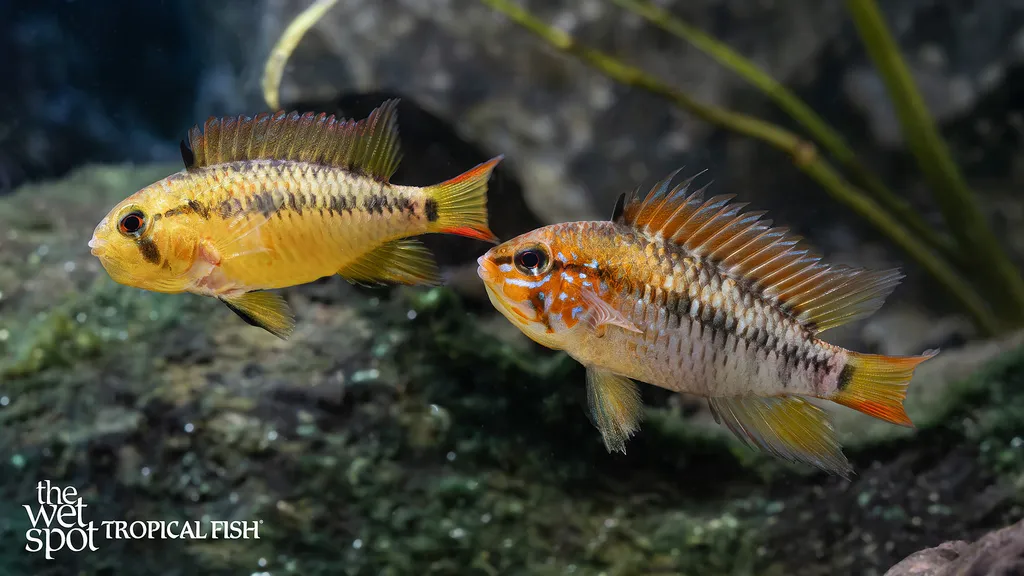
Apistogramma macmasteri
Also known as Macmasteri apisto, Red Neck
FreshwaterFish
Care at a glance
- Temperature
- 75–82°F
- 24–28°C
- pH
- 5.0–7.0
- Adult size
- 2.4 in
- 6 cm
- Minimum tank
- 20 gal
- 75 L
- Temperament
- Mostly peaceful
- Social behavior
- Social
- Swim level
- Bottom
- Difficulty
- Medium
- Breeding
- Cave spawner · Medium
- Rarity
- Common
- Family
- Cichlidae
- Origin
- Meta and Orinoco river basin, Colombia
Overview
Macmaster's dwarf cichlid is a small Colombian cichlid for the bottom of a soft, acidic blackwater tank. It suits a keeper ready to move past beginner fish.
Did you know
A female Macmaster's dwarf cichlid changes color when she takes on a brood, going bright yellow with dark markings. Her temper changes with it, and she guards the eggs and fry hard. She drives off fish many times her size, even her own mate if he wanders too close to the cave.
Caring for the Macmaster's dwarf cichlid
Give Macmaster's dwarf cichlids a tank of at least 20 gal (75 L), with fine sand, a few caves or upturned pots, and driftwood. Add leaf litter to stain the water and break up sightlines, so the females can hold separate territories.
Keep the water soft and acidic, at 75 to 82°F (24 to 28°C) and a pH of 5.0 to 7.0. Feed small sinking foods along with frozen or live treats such as daphnia, baby brine shrimp and bloodworms.
Keep a single pair, or a harem of one male with two or three females. They are mostly peaceful and spend their time near the bottom, working the sand and patrolling around caves and wood. Pick calm tank mates that swim higher up, since a breeding female turns very defensive near her fry.
Males grow larger, while females stay noticeably smaller. They are cave spawners, laying their eggs inside a sheltered hollow where the female tends them. Breeding is of medium difficulty.
Good to know
Macmaster's dwarf cichlid is a dwarf cichlid in the family Cichlidae. Most fish in the trade are tank-bred, and a healthy adult lives several years.
In the wild
Macmaster's dwarf cichlid comes from the Meta and Orinoco river basin in Colombia. It lives over fine sand among driftwood and fallen leaves, in soft, acidic blackwater stained with tannins.
Weekly picks
Tank mates
The Macmaster's dwarf cichlid is a mostly peaceful, social species that keeps to the bottom. These picks share a community profile with it, are safe together in both directions, and overlap on water type, temperature and pH.
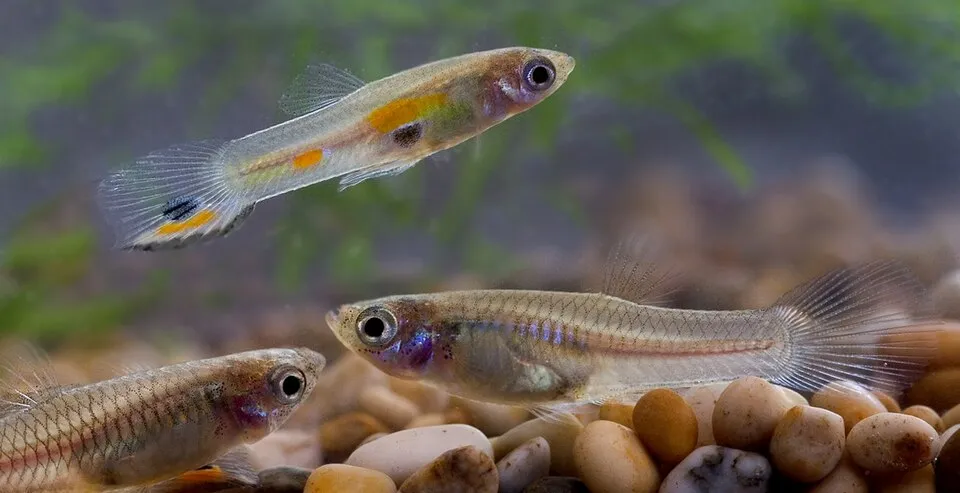
Guppy
Poecilia reticulata
FreshwaterBrackish2.4 in (6 cm) · 10 gal (38 L)64–82°F (18–28°C)
Neon tetra
Paracheirodon innesi
Freshwater1.5 in (3.8 cm) · 11 gal (40 L)70–77°F (21–25°C)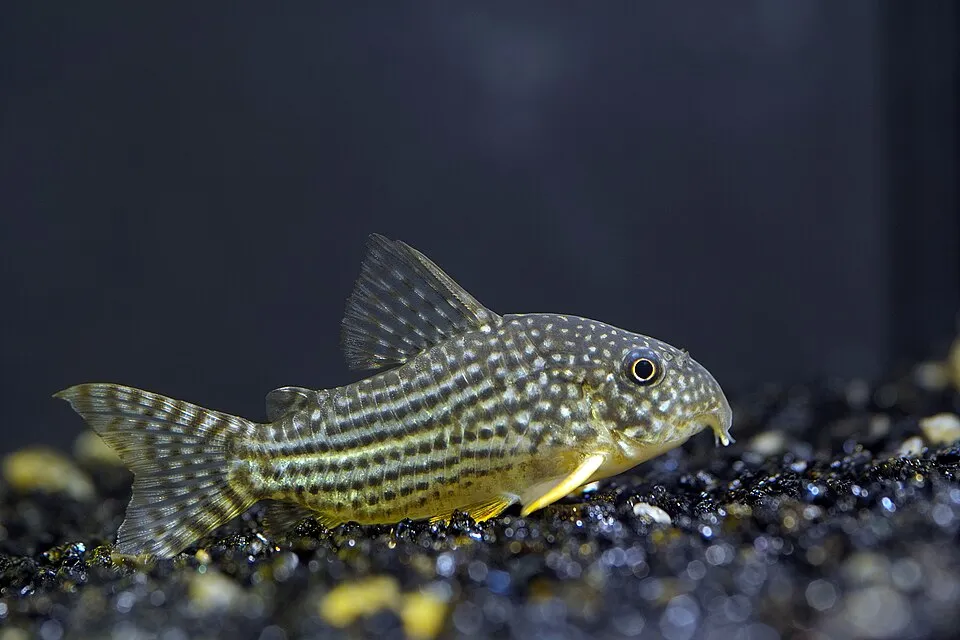
Sterba's cory
Hoplisoma sterbai
Freshwater2.6 in (6.5 cm) · 20 gal (75 L)75–82°F (24–28°C)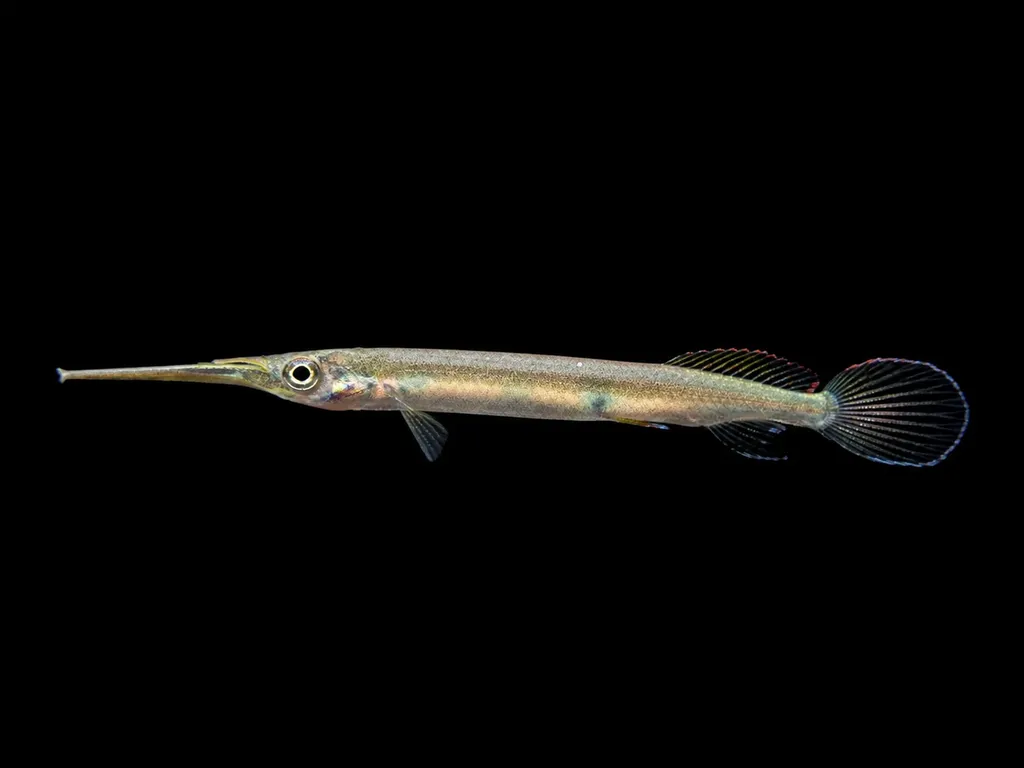
Kuekenthal's halfbeak
Hemirhamphodon kuekenthali
Freshwater3.3 in (8.5 cm) · 20 gal (75 L)73–81°F (23–27°C)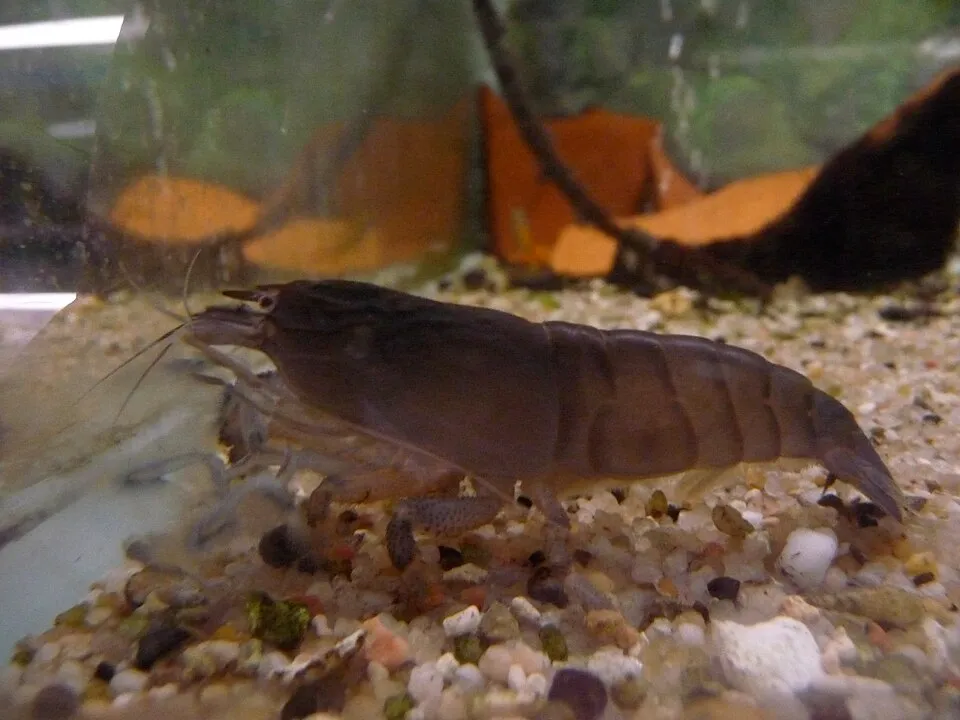
Vampire shrimp
Atya gabonensis
Freshwater5.1 in (13 cm) · 20 gal (75 L)75–82°F (24–28°C)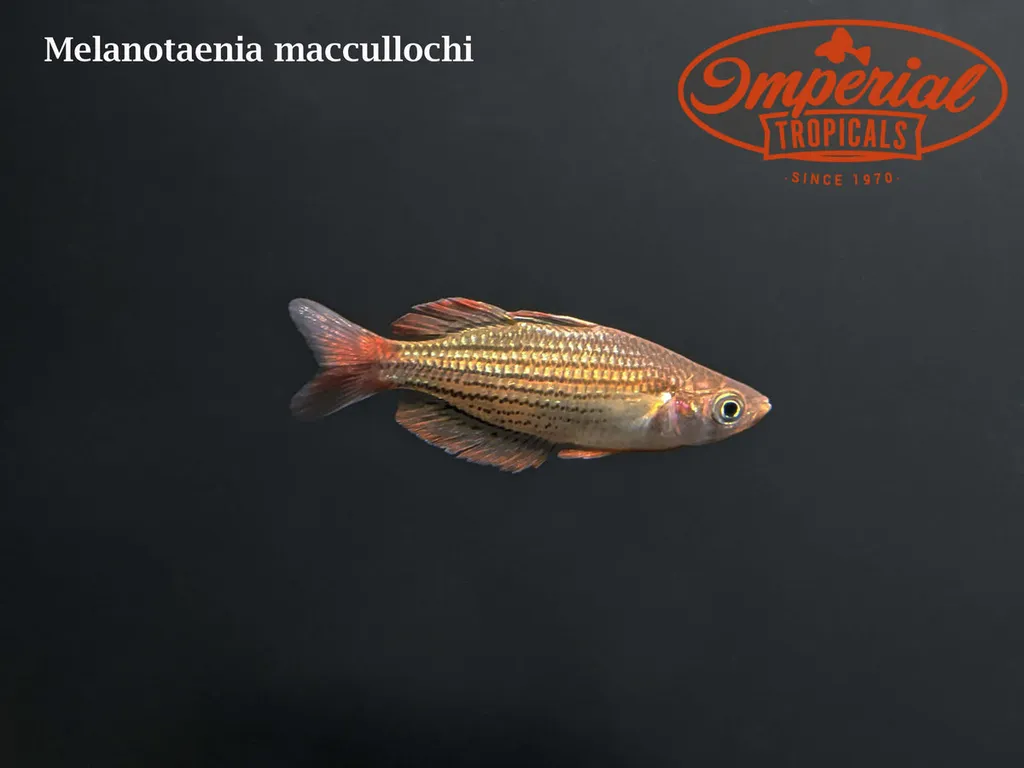
Dwarf rainbowfish
Melanotaenia maccullochi
Freshwater2.8 in (7 cm) · 20 gal (75 L)72–82°F (22–28°C)
Common questions
What size tank does a Macmaster's dwarf cichlid need?
A Macmaster's dwarf cichlid needs at least 20 gal (75 L). It spends most of its time in the bottom.
What temperature and pH does a Macmaster's dwarf cichlid need?
A Macmaster's dwarf cichlid is comfortable at 75–82°F (24–28°C) with a pH of 5.0–7.0.
What does a Macmaster's dwarf cichlid eat?
A Macmaster's dwarf cichlid eats small sinking foods, with frozen or live treats such as daphnia, baby brine shrimp and bloodworms.
How big does a Macmaster's dwarf cichlid get?
An adult Macmaster's dwarf cichlid reaches about 2.4 in (6 cm).
How can you tell a male Macmaster's dwarf cichlid from a female?
Males grow larger, and females stay noticeably smaller.
How does a Macmaster's dwarf cichlid breed?
Macmaster's dwarf cichlids are cave spawners. They lay their eggs inside a sheltered hollow, where the female tends them, and breeding is of medium difficulty.
Related species
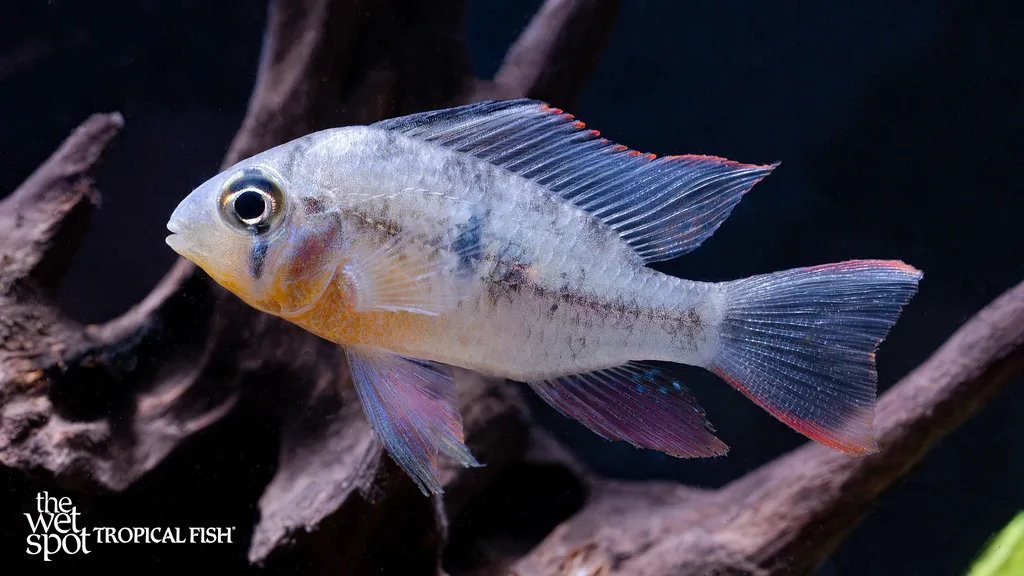 2.6 in (6.5 cm)16 gal (60 L)77–84°F (25–29°C)
Bigfin dwarf cichlid
Apistogramma megaptera
2.6 in (6.5 cm) · 16 gal (60 L)
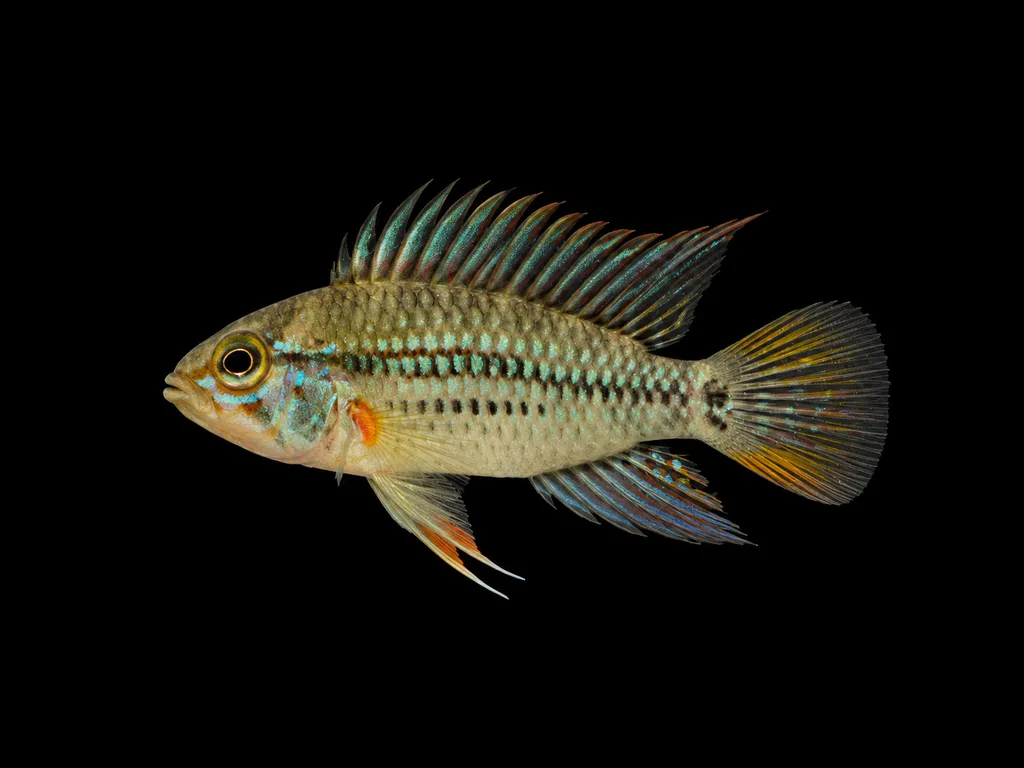 2.6 in (6.5 cm)20 gal (75 L)73–82°F (23–28°C)
Blue-cheek dwarf cichlid
Apistogramma eunotus
2.6 in (6.5 cm) · 20 gal (75 L)
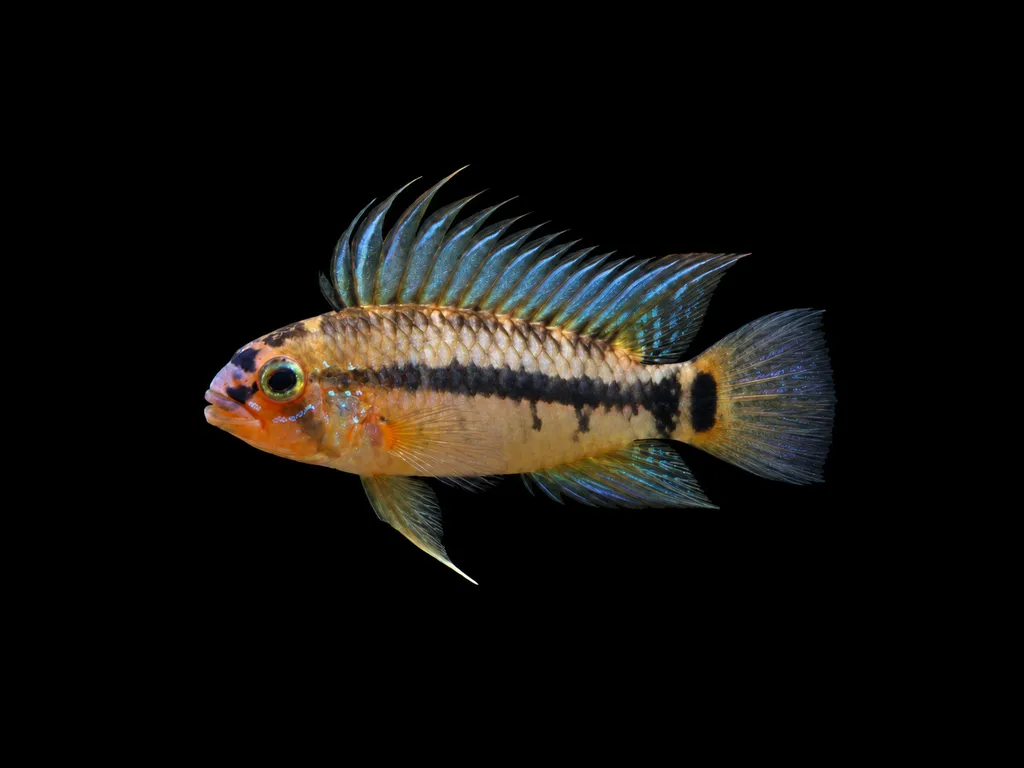 2.6 in (6.5 cm)16 gal (60 L)77–84°F (25–29°C)
Masked dwarf cichlid
Apistogramma personata
2.6 in (6.5 cm) · 16 gal (60 L)
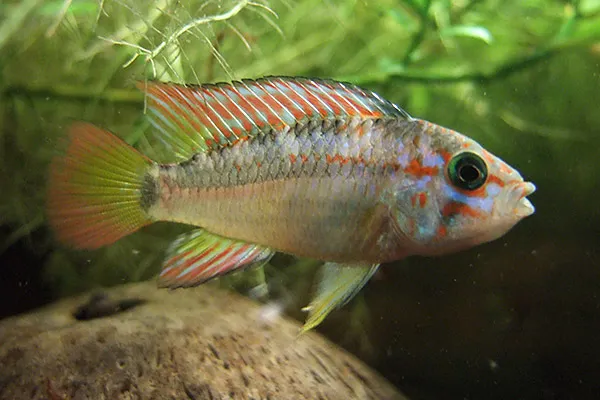 2.6 in (6.5 cm)16 gal (60 L)75–82°F (24–28°C)
Ortega's dwarf cichlid
Apistogramma ortegai
2.6 in (6.5 cm) · 16 gal (60 L)
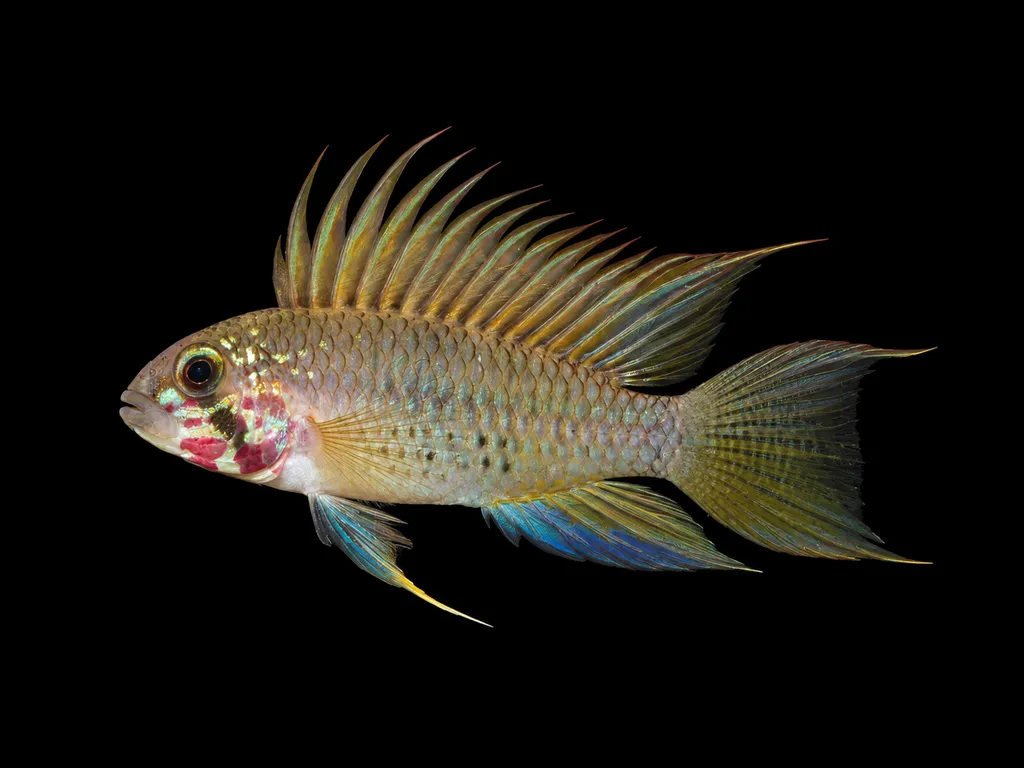 2.2 in (5.5 cm)16 gal (60 L)77–84°F (25–29°C)
Piaroa dwarf cichlid
Apistogramma piaroa
2.2 in (5.5 cm) · 16 gal (60 L)
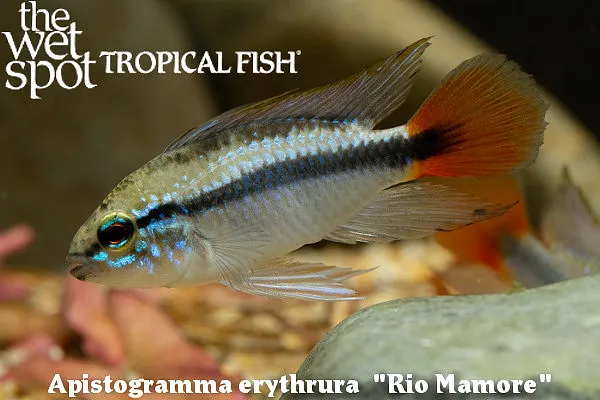 2.2 in (5.5 cm)16 gal (60 L)73–81°F (23–27°C)
Red-tail dwarf cichlid
Apistogramma erythrura
2.2 in (5.5 cm) · 16 gal (60 L)