Yellow-cheek dwarf cichlid
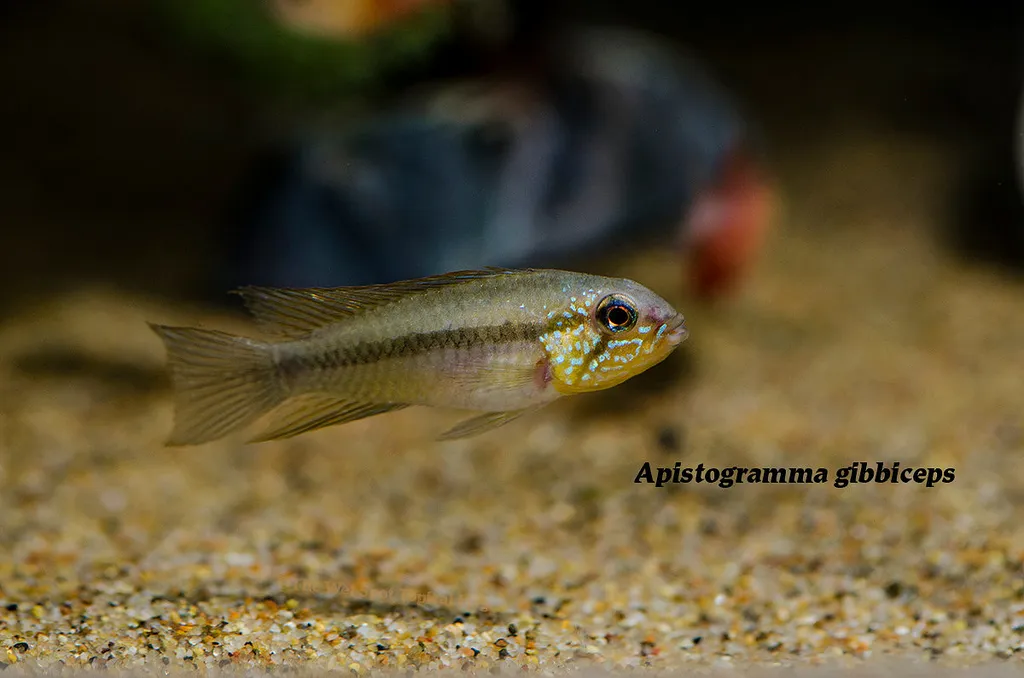
Apistogramma gibbiceps
Also known as Gibbiceps apisto
FreshwaterFish
Care at a glance
- Temperature
- 77–84°F
- 25–29°C
- pH
- 5.0–6.5
- Adult size
- 2.2 in
- 5.5 cm
- Minimum tank
- 16 gal
- 60 L
- Temperament
- Mostly peaceful
- Social behavior
- Social
- Swim level
- Bottom
- Difficulty
- Medium
- Breeding
- Cave spawner · Hard
- Rarity
- Rare
- Family
- Cichlidae
- Origin
- Middle Rio Negro and Rio Branco basins, Brazil
Overview
The yellow-cheek dwarf cichlid is a soft-water apisto that spends its time near the bottom of a calm, shaded tank. It is best with a little experience.
Did you know
Old hobby literature carried the yellow-cheek dwarf cichlid for decades under the wrong identities. Its formal name finally pinned down what importers had been shipping, mixed into Rio Negro apisto hauls.
Caring for the yellow-cheek dwarf cichlid
Keep a pair of yellow-cheek dwarf cichlids in 16 gal (60 L) of soft blackwater, with cover. Several females can share a larger tank if each one gets a cave. Give them sand, heavy leaf litter and tangles of twigs, with shade over the tank.
Hold the water at 77 to 84°F (25 to 29°C) and a pH of 5.0 to 6.5, with gentle flow. Feed live and frozen foods as the first choice.
This apisto is mostly peaceful but easily bullied, so avoid boisterous tank mates entirely. Breeding is standard cave spawning, made harder by its need for genuinely soft, acidic, warm water and patient conditioning.
Good to know
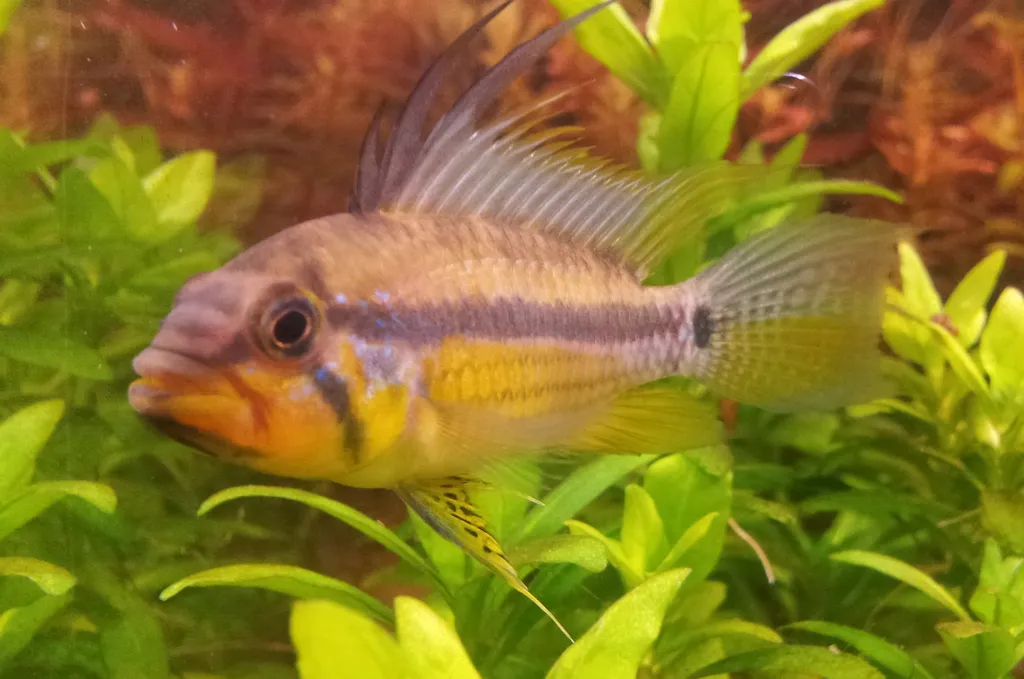
Meinken described Apistogramma gibbiceps in 1969. Males are marked by vertical bars on the lower tail and a zigzag lateral line. Breeding males show a humped nape, which gives the species its name. It has been in and out of the hobby for decades, but never in numbers.
In the wild
The yellow-cheek dwarf cichlid comes from blackwater streams of the middle Rio Negro and Rio Branco systems in Brazil. It lives along litter banks in warm, acidic water, and males patrol small territories between the leaf piles.
Weekly picks
Tank mates
The yellow-cheek dwarf cichlid is a mostly peaceful, social species that keeps to the bottom. These picks share a community profile with it, are safe together in both directions, and overlap on water type, temperature and pH.
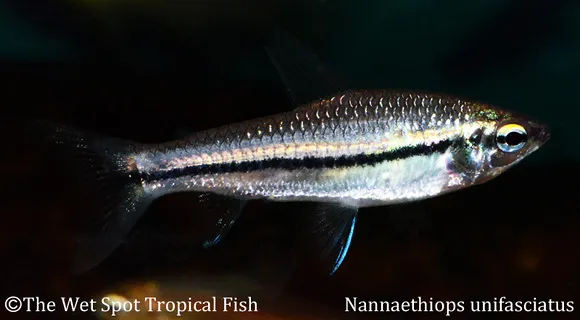
African oneline tetra
Nannaethiops unitaeniatus
Freshwater2.6 in (6.5 cm) · 16 gal (60 L)72–79°F (22–26°C)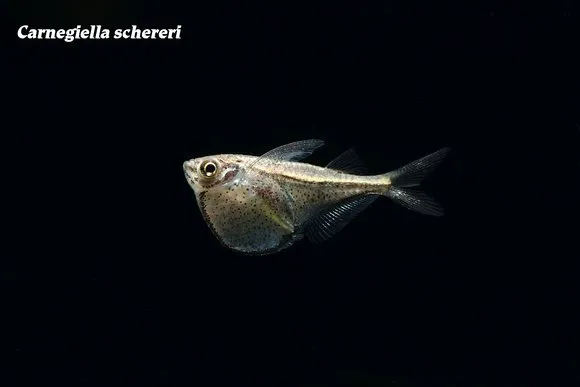
Scherer's hatchetfish
Carnegiella schereri
Freshwater1 in (2.6 cm) · 14 gal (54 L)73–82°F (23–28°C)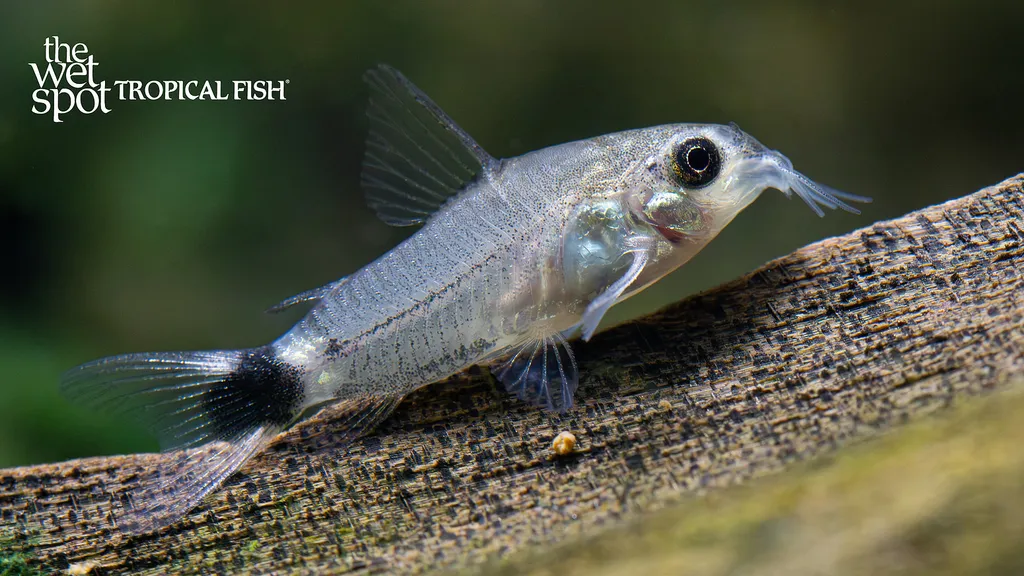
Sarare cory
Corydoras sarareensis
Freshwater2 in (5 cm) · 16 gal (60 L)75–82°F (24–28°C)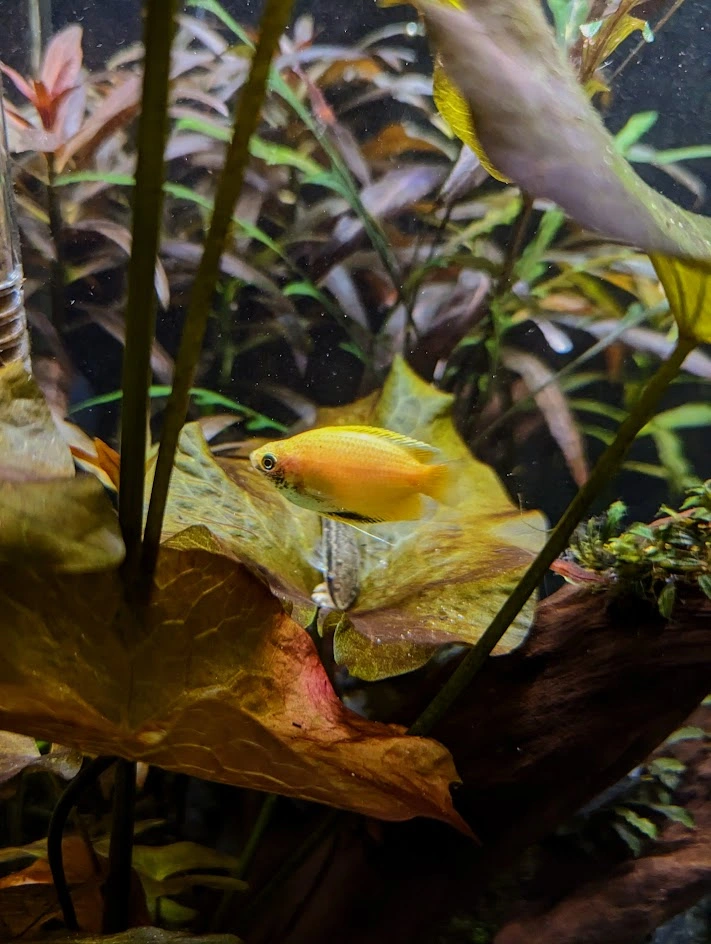
Honey gourami
Trichogaster chuna
Freshwater2 in (5 cm) · 14 gal (54 L)72–82°F (22–28°C)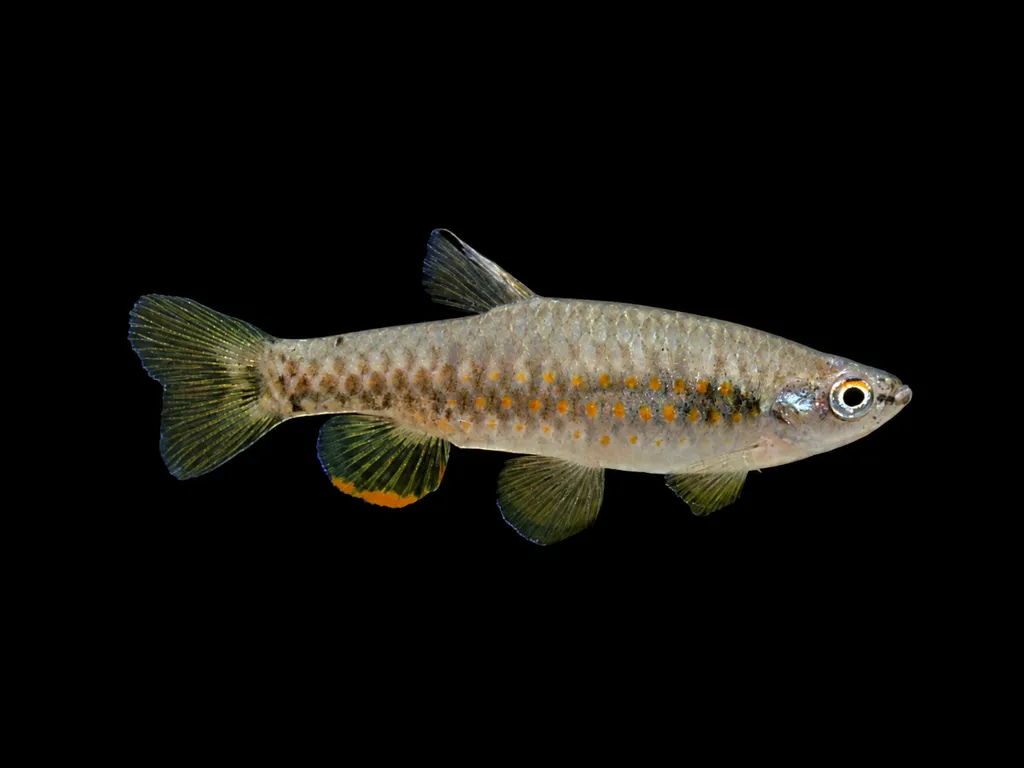
Fanning characin
Pyrrhulina rachoviana
Freshwater2 in (5 cm) · 16 gal (60 L)68–79°F (20–26°C)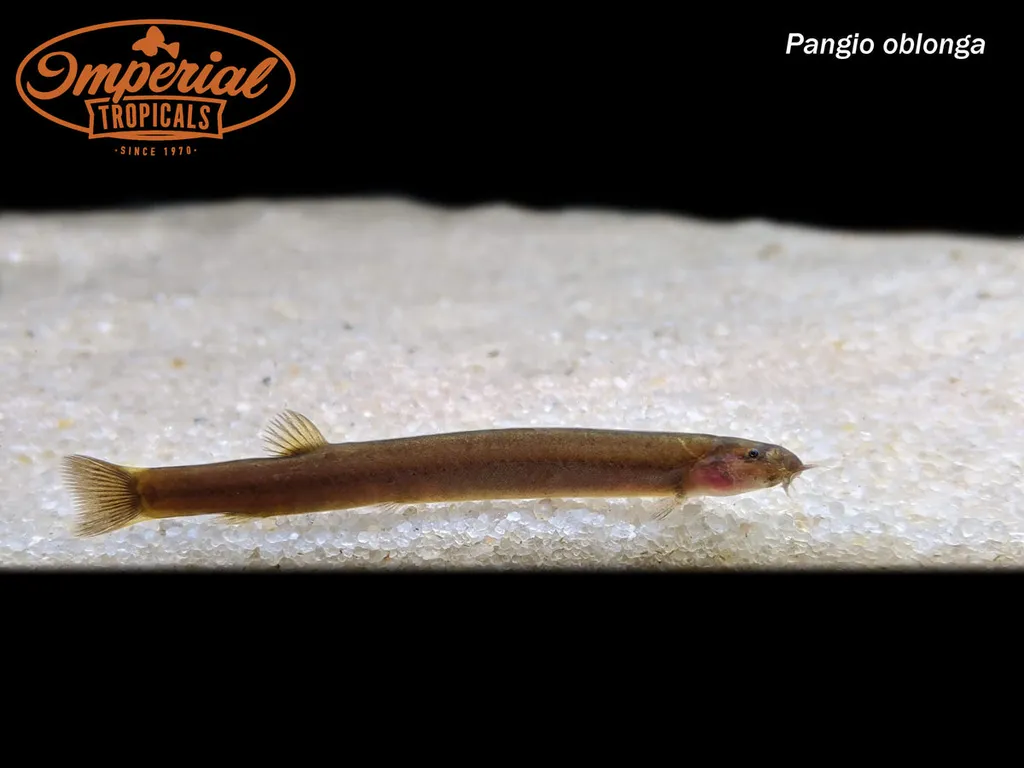
Java loach
Pangio oblonga
Freshwater3.1 in (8 cm) · 15 gal (55 L)70–79°F (21–26°C)
Common questions
What size tank does a yellow-cheek dwarf cichlid need?
A yellow-cheek dwarf cichlid needs at least 16 gal (60 L). It spends most of its time in the bottom.
What temperature and pH does a yellow-cheek dwarf cichlid need?
A yellow-cheek dwarf cichlid is comfortable at 77–84°F (25–29°C) with a pH of 5.0–6.5.
What does a yellow-cheek dwarf cichlid eat?
A yellow-cheek dwarf cichlid eats live and frozen foods. Offer those first.
How big does a yellow-cheek dwarf cichlid get?
An adult yellow-cheek dwarf cichlid reaches about 2.2 in (5.5 cm).
How does a yellow-cheek dwarf cichlid breed?
A yellow-cheek dwarf cichlid is a standard cave spawner. Breeding it is hard, because it needs genuinely soft, acidic, warm water and patient conditioning.
Related species
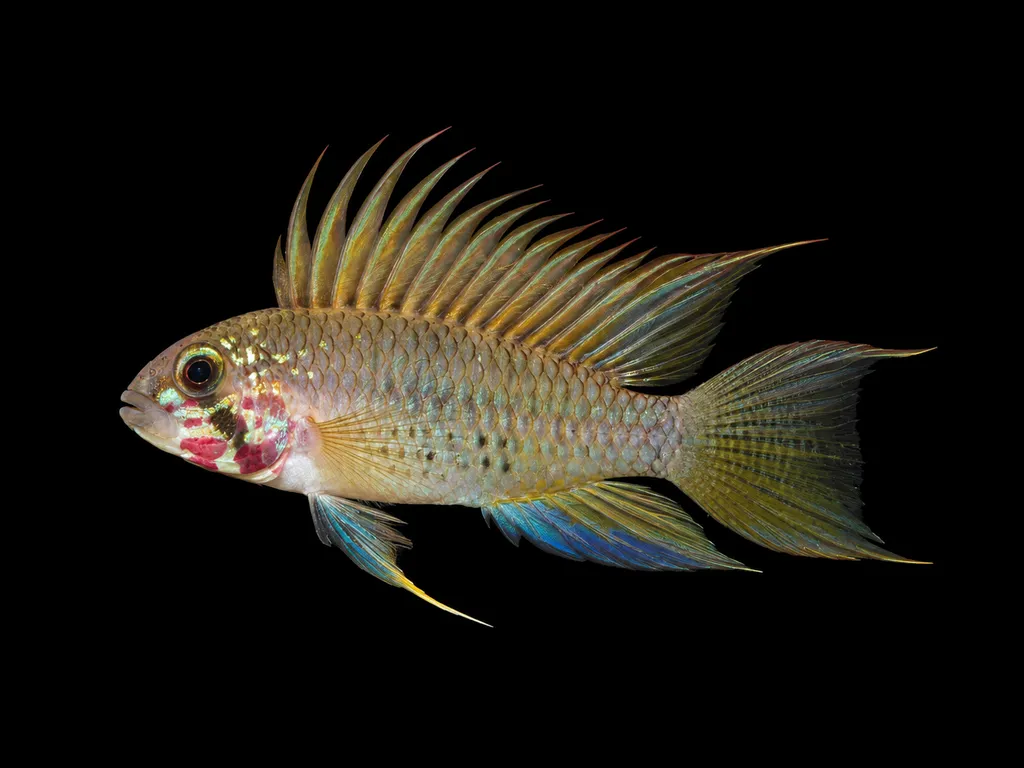 2.2 in (5.5 cm)16 gal (60 L)77–84°F (25–29°C)
Piaroa dwarf cichlid
Apistogramma piaroa
2.2 in (5.5 cm) · 16 gal (60 L)
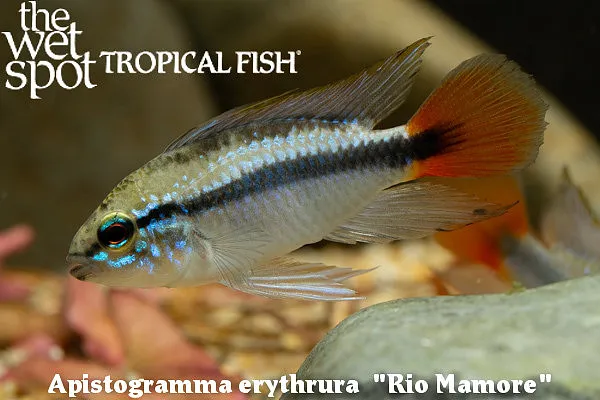 2.2 in (5.5 cm)16 gal (60 L)73–81°F (23–27°C)
Red-tail dwarf cichlid
Apistogramma erythrura
2.2 in (5.5 cm) · 16 gal (60 L)
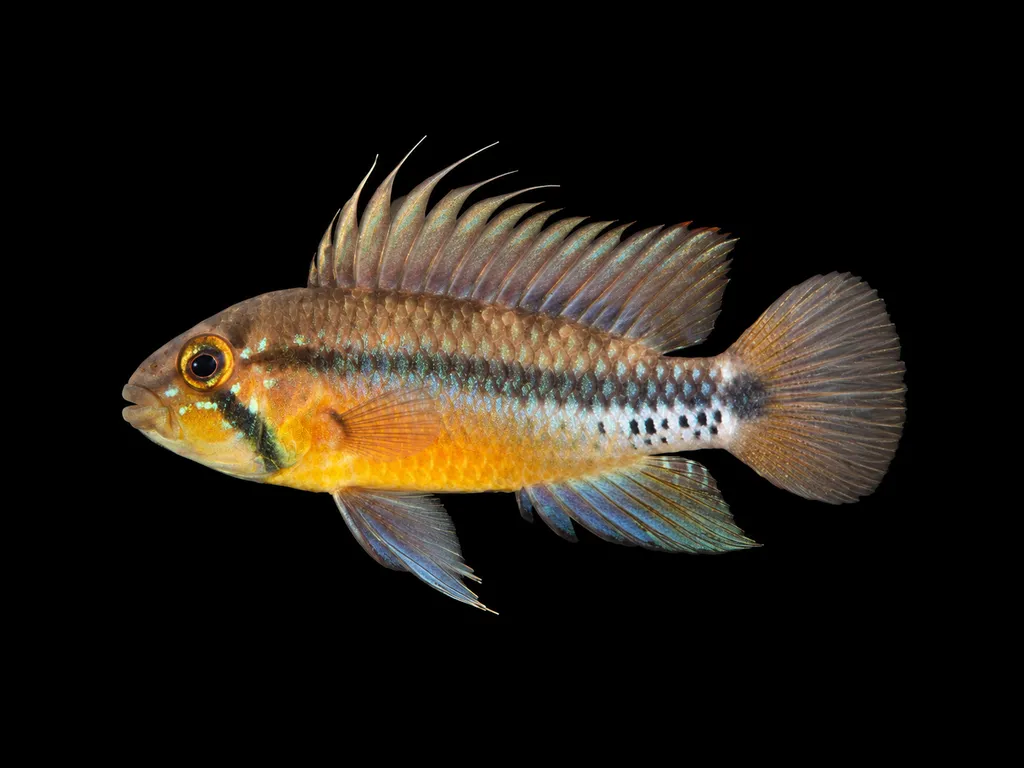 2.2 in (5.5 cm)16 gal (60 L)75–82°F (24–28°C)
Sunset dwarf cichlid
Apistogramma atahualpa
2.2 in (5.5 cm) · 16 gal (60 L)
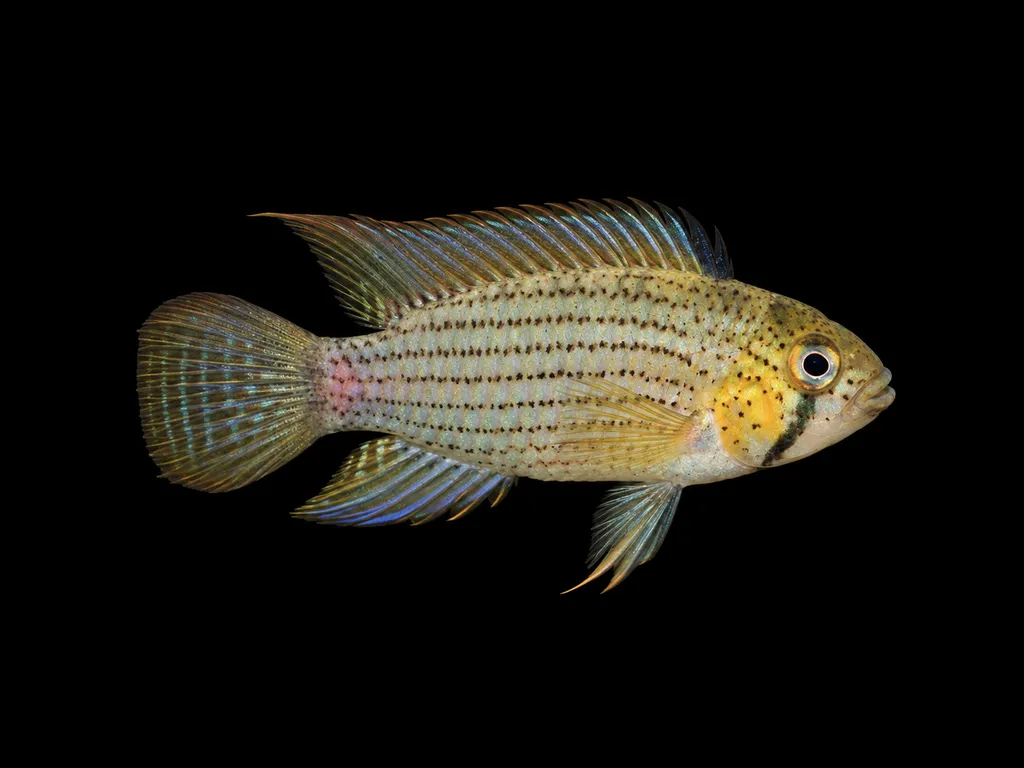 2.2 in (5.5 cm)16 gal (60 L)77–84°F (25–29°C)
Tucurui dwarf cichlid
Apistogramma tucurui
2.2 in (5.5 cm) · 16 gal (60 L)
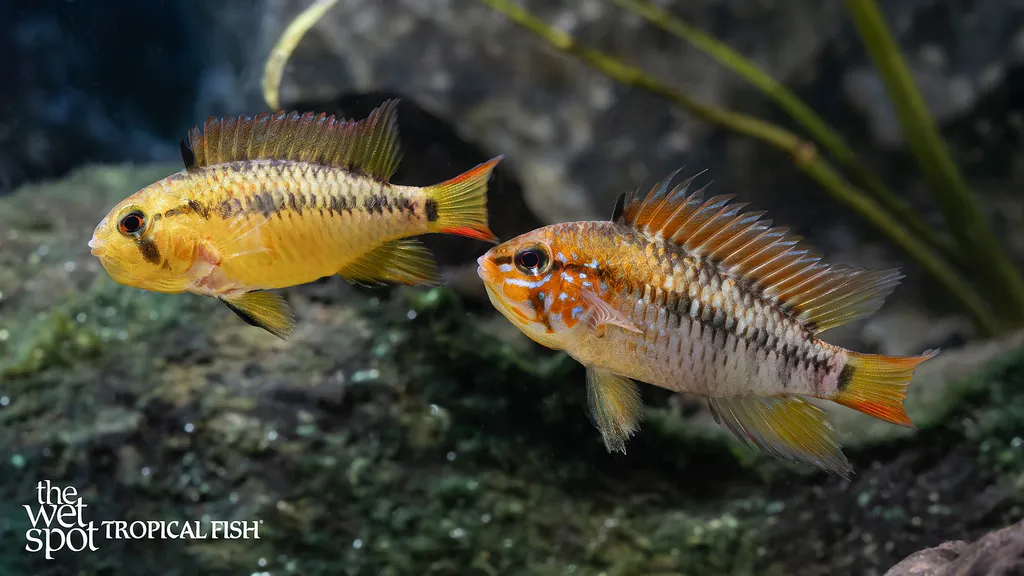 2.4 in (6 cm)20 gal (75 L)75–82°F (24–28°C)
Macmaster's dwarf cichlid
Apistogramma macmasteri
2.4 in (6 cm) · 20 gal (75 L)
 2 in (5 cm)16 gal (60 L)75–82°F (24–28°C)
Allpahuayo dwarf cichlid
Apistogramma allpahuayo
2 in (5 cm) · 16 gal (60 L)