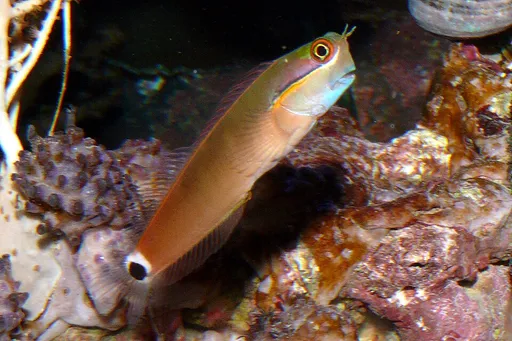
Tailspot blenny
Ecsenius stigmatura
Also known as Tail-spot blenny, Tailspot combtooth blenny
SaltwaterFish
Care at a glance
- Temperature
- 72–79°F
- 22–26°C
- pH
- 8.1–8.4
- Adult size
- 2.4 in
- 6 cm
- Minimum tank
- 20 gal
- 75 L
- Temperament
- Peaceful
- Social behavior
- Solitary
- Swim level
- Bottom
- Difficulty
- Easy
- Breeding
- Hard
- Rarity
- Common
- Reef safe
- Reef safe
- Family
- Blenniidae
- Origin
- Western Pacific reefs around the Philippines, Indonesia, and nearby waters
Overview
Keep one per tank, since tailspots are solitary and can be territorial toward their own kind and toward similar small perching blennies unless the tank is large enough for separate territories. Toward unrelated fish they are genuinely peaceful and among the easier small blennies to house. They are reef safe and reliably leave corals, clams, and inverts alone, which makes them one of the safer picks for a small reef. They perch and graze on the bottom and rockwork rather than swimming in the open. Hold stable marine water at a pH of 8.1 to 8.4 and 22 to 26 C, give them plenty of live rock, and feed a mostly herbivorous diet of marine algae and spirulina with some meaty foods, supplemented by the film algae they pick at.
In the wild
Tailspot blennies come from shallow western Pacific reefs around the Philippines and Indonesia, where they perch among rubble and branching corals and dart back into a hole when startled. Like other Ecsenius blennies they are small, bottom-oriented perching fish that want plenty of live rock with nooks to hide in and surfaces to graze, rather than open swimming room. Keep them in stable marine water at a pH of 8.1 to 8.4 and a temperature of 22 to 26 C. A mature tank with some algae growth suits them, since they graze film algae along with prepared foods.
Good to know
This is a small combtooth blenny in the family Blenniidae, reaching only about 6 cm, named for the dark spot at the base of the tail. It has the big-eyed, blunt-nosed face typical of the genus and often shows a soft blue and gold wash over the body. Like most Ecsenius it has not been reliably bred in home aquaria, so trade fish are wild-caught.
Did you know
It is one of the best-behaved small blennies for a reef tank, since unlike the lawnmower and bicolor blennies it rarely bothers corals or clams even when its algae runs low. Its small size and calm nature make it a common choice for nano reefs where a bigger grazing blenny would not fit.
Weekly picks
Tank mates
Tailspot blenny is a peaceful, solitary species that keeps to the bottom. These picks share a community profile with it, are safe together in both directions, and overlap on water type, temperature and pH.
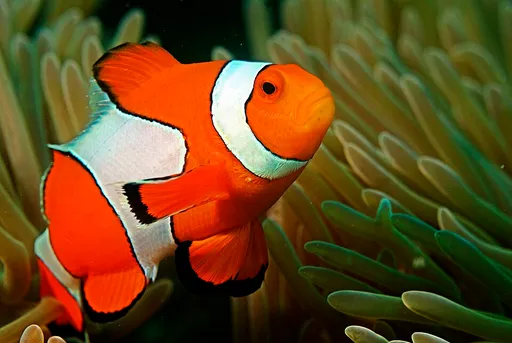
Ocellaris clownfish
Amphiprion ocellaris
Saltwater3.1 in (8 cm) · 20 gal (75 L)75–82°F (24–28°C)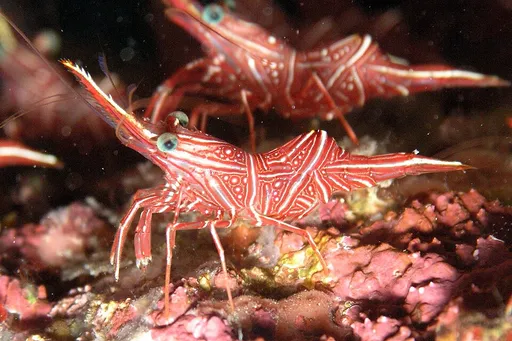
Camel / dancing shrimp
Rhynchocinetes durbanensis
Saltwater2 in (5 cm) · 16 gal (60 L)75–81°F (24–27°C)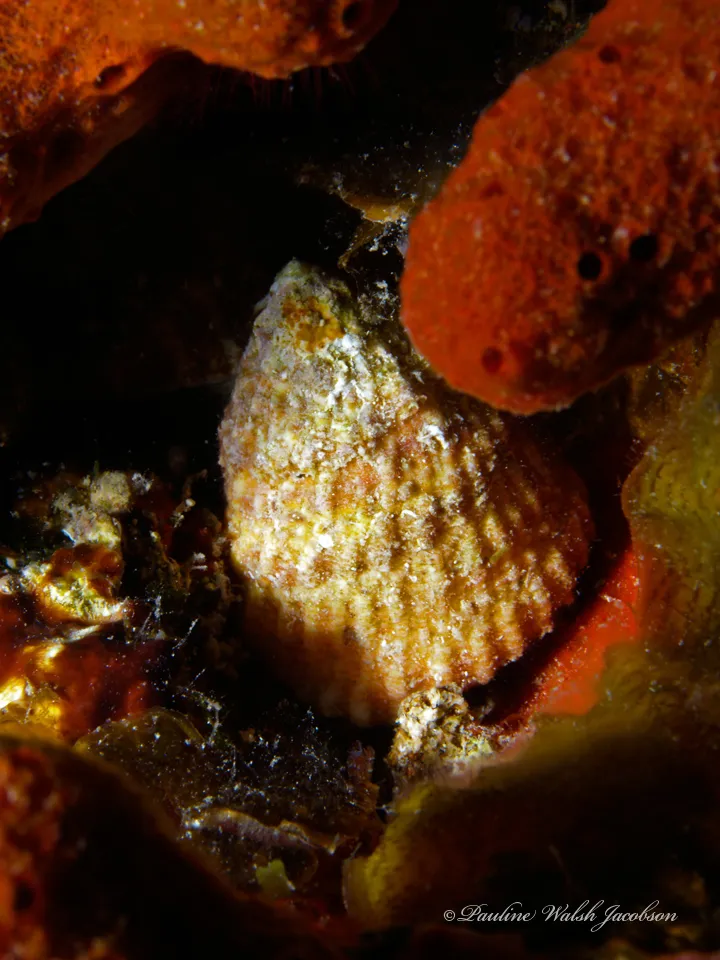
Astraea turbo snail
Astraea tecta
Saltwater1 in (2.5 cm) · 11 gal (40 L)72–79°F (22–26°C)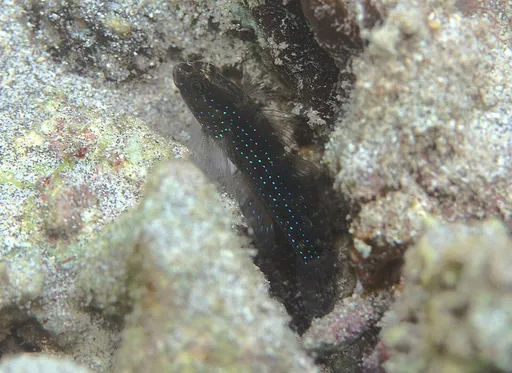
Starry goby
Asterropteryx semipunctata
Saltwater2.8 in (7 cm) · 13 gal (50 L)73–81°F (23–27°C)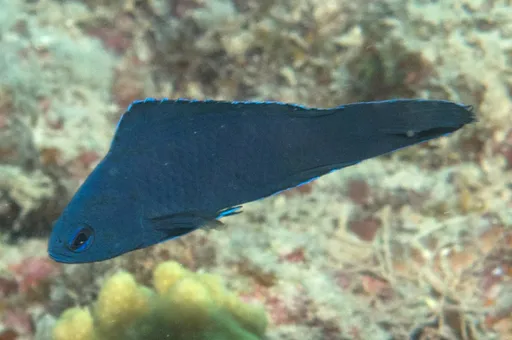
Blue assessor
Assessor macneilli
Saltwater2.8 in (7 cm) · 29 gal (110 L)72–79°F (22–26°C)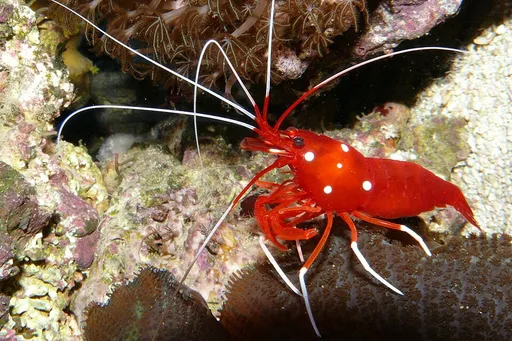
Fire shrimp
Lysmata debelius
Saltwater2.4 in (6 cm) · 20 gal (75 L)72–79°F (22–26°C)
Common questions
What size tank does a Tailspot blenny need?
A Tailspot blenny needs at least 20 gal (75 L). It spends most of its time in the bottom.
What temperature and pH does a Tailspot blenny need?
A Tailspot blenny is comfortable at 72–79°F (22–26°C) with a pH of 8.1–8.4.
How big does a Tailspot blenny get?
An adult Tailspot blenny reaches about 2.4 in (6 cm).
Related species
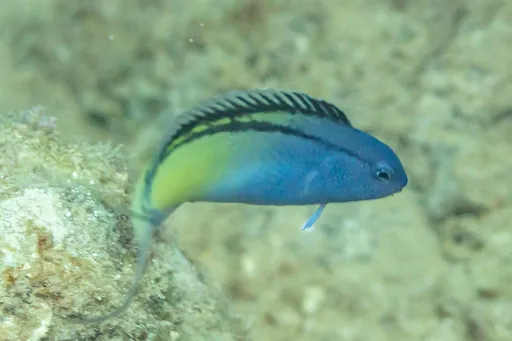
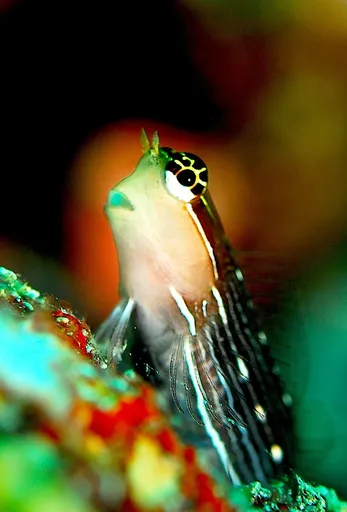 2 in (5 cm)20 gal (75 L)73–81°F (23–27°C)
Pictus blenny
Ecsenius pictus
2 in (5 cm) · 20 gal (75 L)
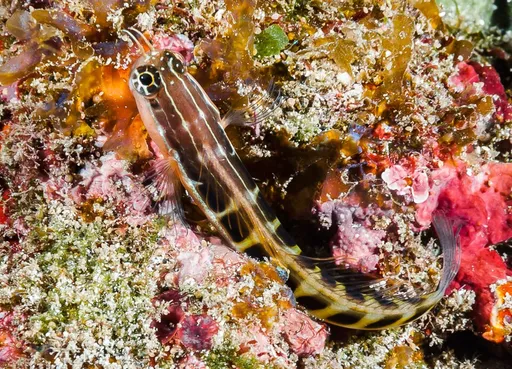
 3.1 in (8 cm)20 gal (75 L)75–81°F (24–27°C)
Red Sea mimic blenny
Ecsenius gravieri
3.1 in (8 cm) · 20 gal (75 L)
 3.5 in (9 cm)20 gal (75 L)72–79°F (22–26°C)
Lined blenny
Ecsenius lineatus
3.5 in (9 cm) · 20 gal (75 L)
 3.9 in (10 cm)29 gal (110 L)72–79°F (22–26°C)
Bicolor blenny
Ecsenius bicolor
3.9 in (10 cm) · 29 gal (110 L)
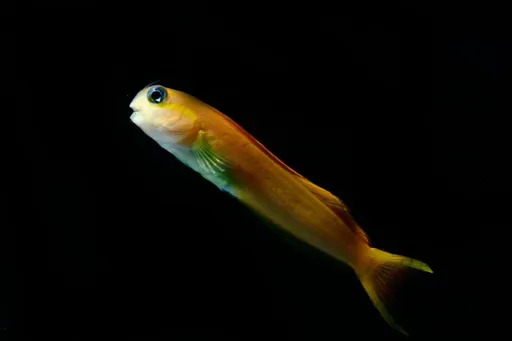 5.1 in (13 cm)29 gal (110 L)72–79°F (22–26°C)
Midas blenny
Ecsenius midas
5.1 in (13 cm) · 29 gal (110 L)
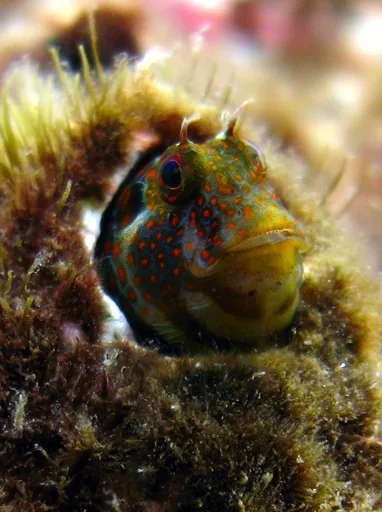 2.4 in (6 cm)20 gal (75 L)73–79°F (23–26°C)
Tessellated blenny
Hypsoblennius invemar
2.4 in (6 cm) · 20 gal (75 L)