Firefish
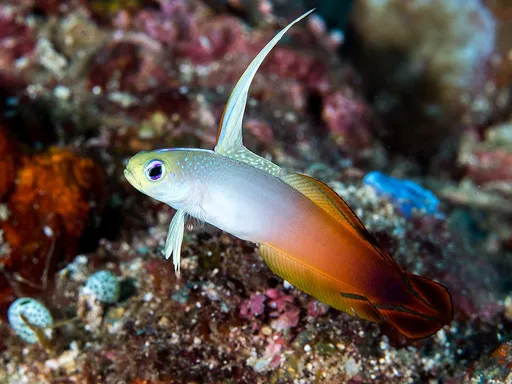
Nemateleotris magnifica
Also known as Firefish Goby, Fire Dartfish, Magnificent Dartfish, Fire Goby
SaltwaterFish
Care at a glance
- Temperature
- 72–81°F
- 22–27°C
- pH
- 8.1–8.4
- Adult size
- 3.5 in
- 9 cm
- Minimum tank
- 20 gal
- 75 L
- Temperament
- Mostly peaceful
- Social behavior
- Social
- Swim level
- Middle
- Difficulty
- Easy
- Breeding
- Hard
- Rarity
- Very common
- Reef safe
- Reef safe
- Family
- Microdesmidae
- Origin
- Indo-Pacific (East Africa to Hawaii)
Overview
Firefish are reef safe and completely trustworthy around corals and invertebrates. They are shy and docile toward other fish, but they can be aggressive toward their own kind, so keep a single fish or a bonded pair rather than several loose individuals in a smaller tank. Their standout trait is that they are champion jumpers that will squeeze through the smallest gap when startled, so a secure lid is not optional. Feed small meaty foods and frozen preparations for carnivores.
In the wild
Firefish hover just above the substrate near the reef, facing into the current to pick plankton out of the water, and each fish keeps a bolt hole in the rock or rubble that it dives into the instant it feels threatened. In the aquarium they want a tank of around 75 liters or more with plenty of rockwork full of crevices, and above all a tight fitting lid. They are dartfish rather than true gobies and stay near the bottom third of the tank until they feel secure, then hold in open water.
Good to know
The tall first dorsal fin flicks up and down almost constantly, which may help firefish signal to each other and judge distances near their burrows. The species is a plankton picker built for hovering rather than resting on the bottom. Spawning has been observed but rearing the tiny pelagic larvae is very difficult, so almost all firefish in the trade are wild collected.
Did you know
When a firefish spooks it collapses that tall dorsal fin and rockets straight into its bolt hole in the rock, and if the tank is not covered that same escape reflex sends it straight out through any gap in the lid instead.
Weekly picks
Tank mates
Firefish is a mostly peaceful, social species that keeps to the middle. These picks share a community profile with it, are safe together in both directions, and overlap on water type, temperature and pH.
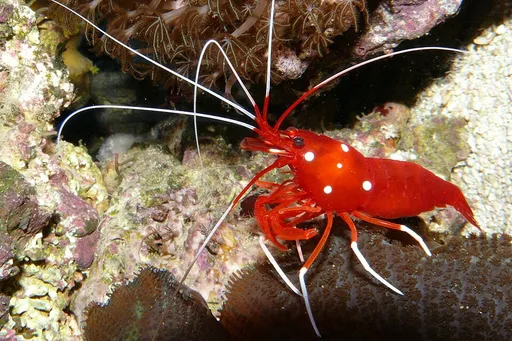
Fire shrimp
Lysmata debelius
Saltwater2.4 in (6 cm) · 20 gal (75 L)72–79°F (22–26°C)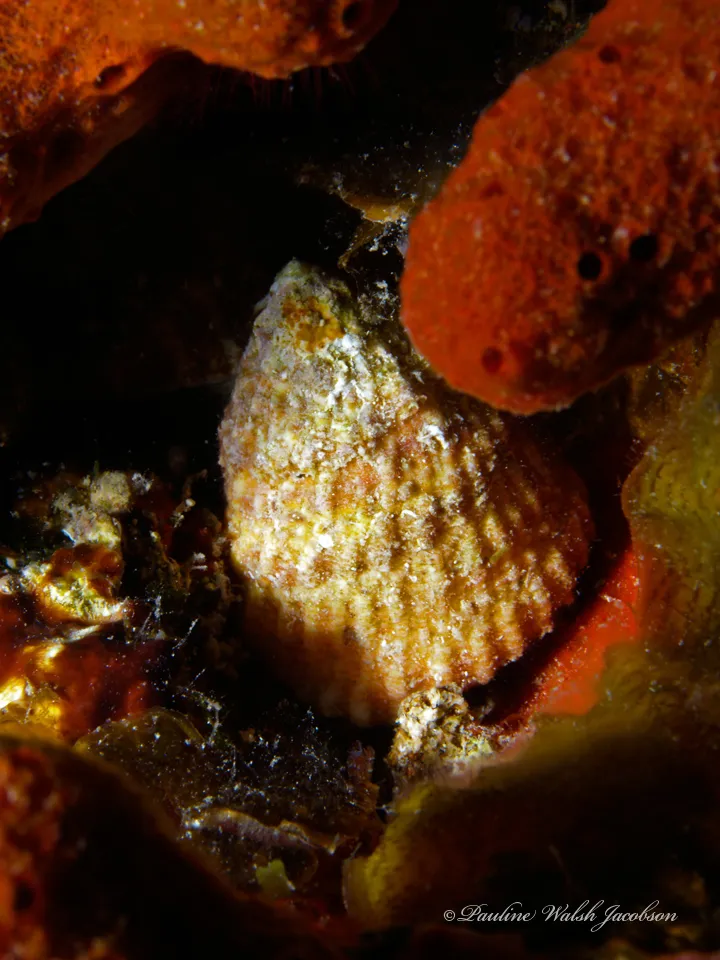
Astraea turbo snail
Astraea tecta
Saltwater1 in (2.5 cm) · 11 gal (40 L)72–79°F (22–26°C)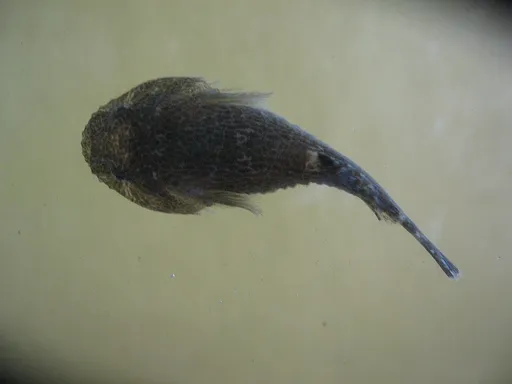
Skilletfish
Gobiesox strumosus
Saltwater3.1 in (8 cm) · 20 gal (76 L)72–79°F (22–26°C)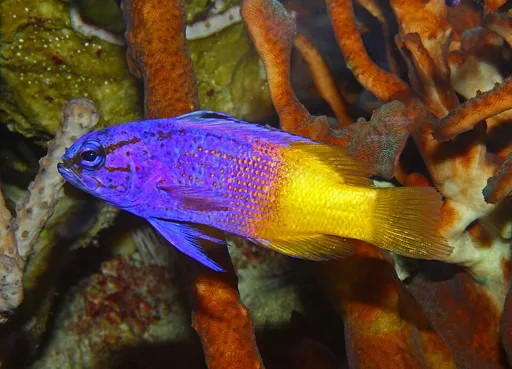
Royal gramma
Gramma loreto
Saltwater3.1 in (8 cm) · 29 gal (110 L)72–81°F (22–27°C)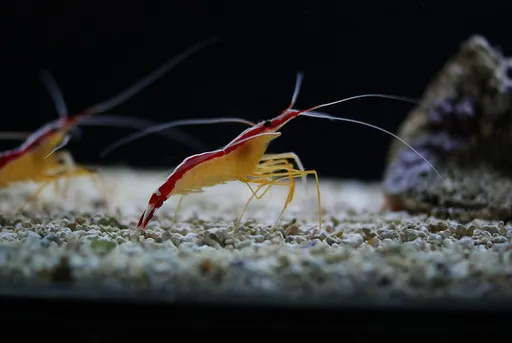
Skunk cleaner shrimp
Lysmata amboinensis
Saltwater2.4 in (6 cm) · 20 gal (75 L)73–81°F (23–27°C)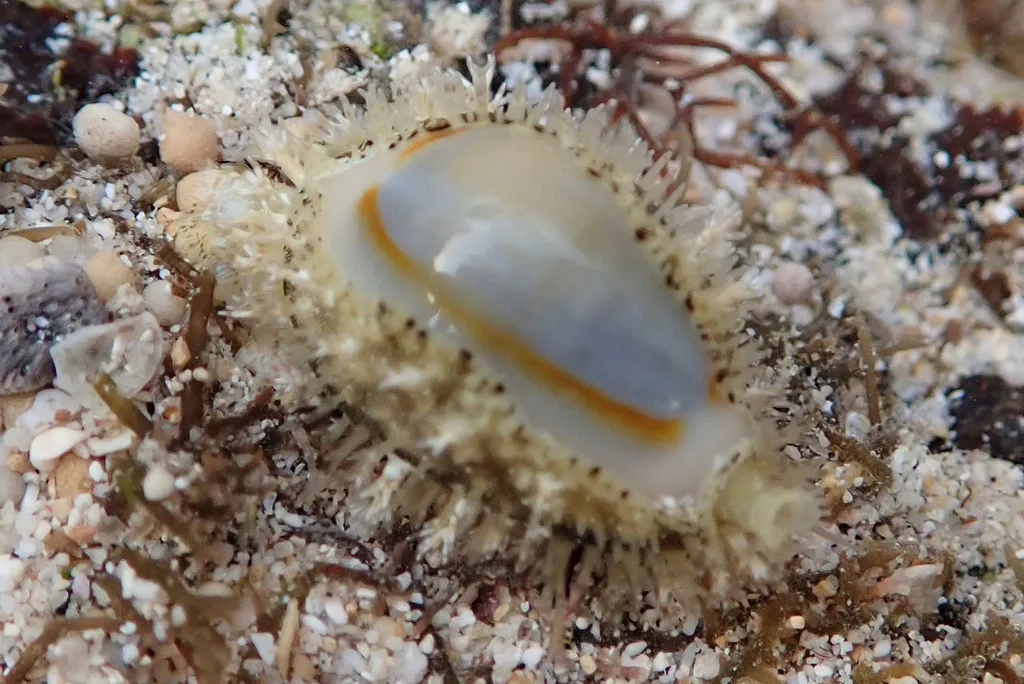
Ring cowrie
Monetaria annulus
Saltwater1.2 in (3 cm) · 20 gal (75 L)75–81°F (24–27°C)
Common questions
What size tank does a Firefish need?
A Firefish needs at least 20 gal (75 L). It spends most of its time in the middle.
What temperature and pH does a Firefish need?
A Firefish is comfortable at 72–81°F (22–27°C) with a pH of 8.1–8.4.
How big does a Firefish get?
An adult Firefish reaches about 3.5 in (9 cm).
Related species
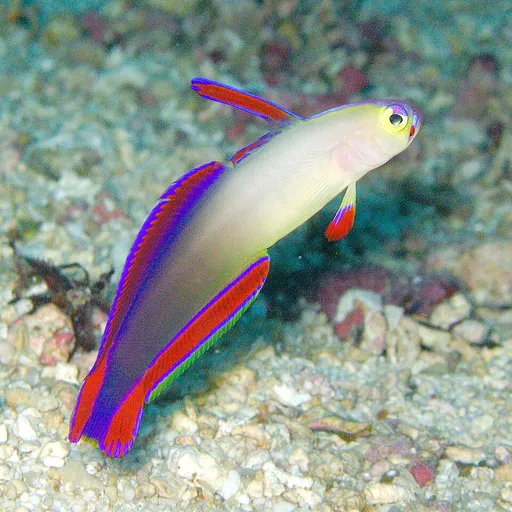 3.5 in (9 cm)20 gal (75 L)72–79°F (22–26°C)
Purple firefish
Nemateleotris decora
3.5 in (9 cm) · 20 gal (75 L)
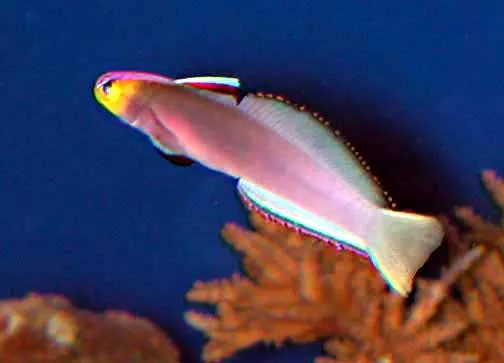 2.4 in (6 cm)20 gal (75 L)73–81°F (23–27°C)
Helfrich's firefish
Nemateleotris helfrichi
2.4 in (6 cm) · 20 gal (75 L)
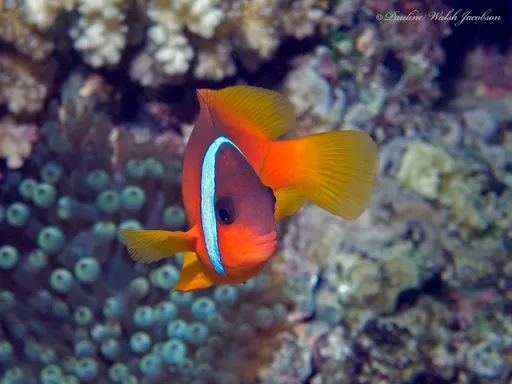 3.5 in (9 cm)30 gal (115 L)75–81°F (24–27°C)
Barberi clownfish
Amphiprion barberi
3.5 in (9 cm) · 30 gal (115 L)
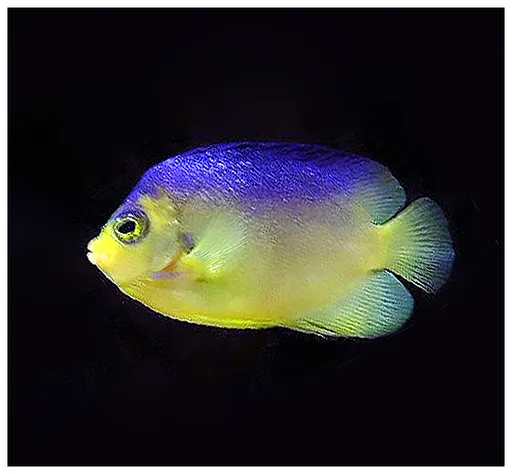 3.5 in (9 cm)55 gal (210 L)72–79°F (22–26°C)
Colin's angelfish
Centropyge colini
3.5 in (9 cm) · 55 gal (210 L)
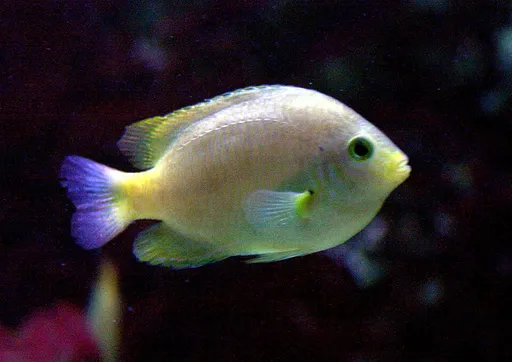 3.5 in (9 cm)29 gal (110 L)75–81°F (24–27°C)
Lemon damsel
Pomacentrus moluccensis
3.5 in (9 cm) · 29 gal (110 L)
 3.9 in (10 cm)29 gal (110 L)72–81°F (22–27°C)
Blackcap basslet
Gramma melacara
3.9 in (10 cm) · 29 gal (110 L)