Midas blenny
Ecsenius midas
Also known as Golden blenny, Persian blenny, Lyretail blenny
SaltwaterFish
Care at a glance
- Temperature
- 72–79°F
- 22–26°C
- pH
- 8.1–8.4
- Adult size
- 5.1 in
- 13 cm
- Minimum tank
- 29 gal
- 110 L
- Temperament
- Mostly peaceful
- Social behavior
- Solitary
- Tankmates
- With caution
- Swim level
- Middle
- Difficulty
- Easy
- Breeding
- Hard
- Rarity
- Common
- Reef safe
- Reef safe
- Family
- Blenniidae
- Origin
- Indo-Pacific reefs from the Red Sea and East Africa to the central Pacific
Overview
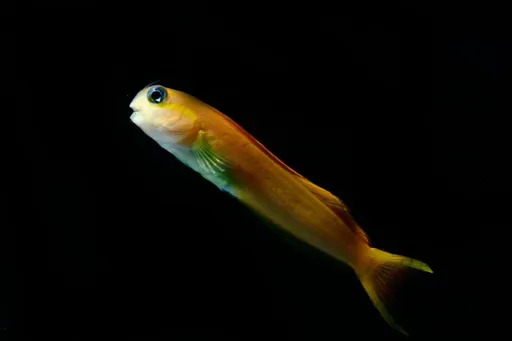
Keep one per tank unless you have a bonded pair or add two small ones together, since Midas blennies fight with their own kind. They are reef safe and leave corals, clams, and inverts alone, so they suit a reef tank well. The temperament caveat is with small fish: a Midas is mostly peaceful but has a habit of vexing small planktivores and nipping at firefish, gobies, and dartfish, so it maps to mostly peaceful rather than fully peaceful. It swims out in the open water column above the rock, retreating to a hole when startled, so it needs both caves and open swimming room. Hold stable marine water at a pH of 8.1 to 8.4 and 22 to 26 C. Unlike grazing blennies it needs a meaty diet, so feed mysis, enriched brine, and finely chopped seafood alongside herbivore preparations.
In the wild
Midas blennies live on Indo-Pacific reefs from the Red Sea and East Africa across to the central Pacific, where they shelter in rock holes and dart out into open water to pick plankton from the current. This is the unusual part of their behavior: unlike the bottom-grazing blennies, the Midas hangs in the water column above the reef and feeds like a planktivore, often swimming alongside anthias. Give them a tank with plenty of live rock and cave-like holes to bolt into, plus open water above the rock, at a pH of 8.1 to 8.4 and a temperature of 22 to 26 C.
Good to know
This is a combtooth blenny in the family Blenniidae, reaching about 13 cm, colored a deep golden yellow with blue-rimmed eyes and a forked, lyre-shaped tail that sets it apart from the round-tailed grazing blennies. It can shift its color darker toward brown or purple depending on mood and surroundings. Its plankton-picking, water-column lifestyle is unusual for the genus. It is only rarely bred in captivity, so most fish are wild-caught.
Did you know
It is the blenny that acts like an anthias. Instead of scraping algae off rock, it hovers out in the current picking plankton and will often join a shoal of anthias, using their movements as cover while it feeds. Its golden color and lyre tail make it look more like a basslet than a typical blenny.
Common questions
What size tank does a Midas blenny need?
A Midas blenny needs at least 29 gal (110 L). It spends most of its time in the middle.
What temperature and pH does a Midas blenny need?
A Midas blenny is comfortable at 72–79°F (22–26°C) with a pH of 8.1–8.4.
How big does a Midas blenny get?
An adult Midas blenny reaches about 5.1 in (13 cm).
Related species
 3.9 in (10 cm)29 gal (110 L)72–79°F (22–26°C)
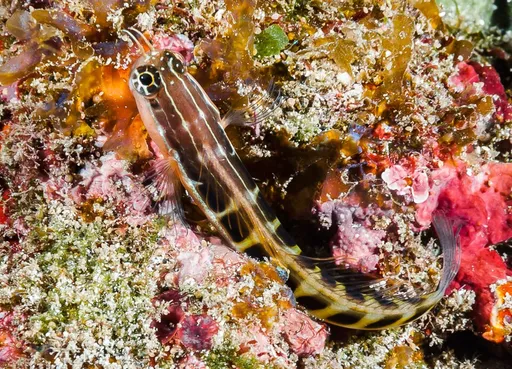
Bicolor blenny
Ecsenius bicolor
3.9 in (10 cm) · 29 gal (110 L)
 3.5 in (9 cm)20 gal (75 L)72–79°F (22–26°C)
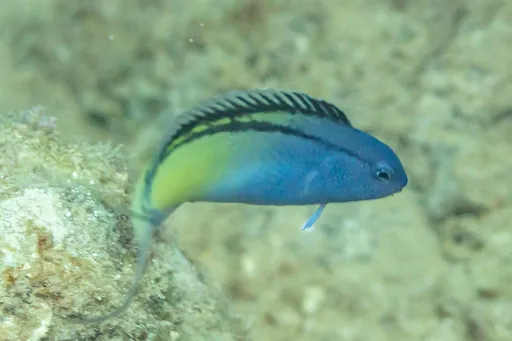
Lined blenny
Ecsenius lineatus
3.5 in (9 cm) · 20 gal (75 L)
 3.1 in (8 cm)20 gal (75 L)75–81°F (24–27°C)
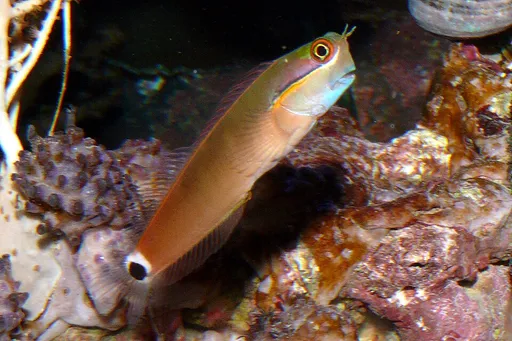
Red Sea mimic blenny
Ecsenius gravieri
3.1 in (8 cm) · 20 gal (75 L)
 2.4 in (6 cm)20 gal (75 L)72–79°F (22–26°C)
Tailspot blenny
Ecsenius stigmatura
2.4 in (6 cm) · 20 gal (75 L)
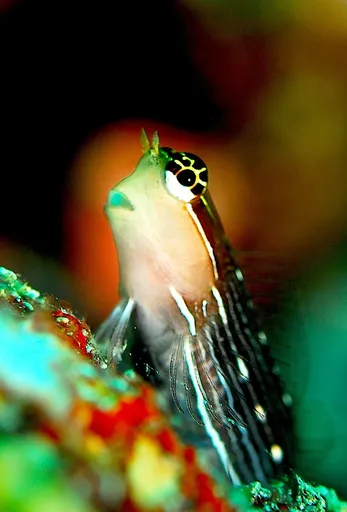 2 in (5 cm)20 gal (75 L)73–81°F (23–27°C)
Pictus blenny
Ecsenius pictus
2 in (5 cm) · 20 gal (75 L)
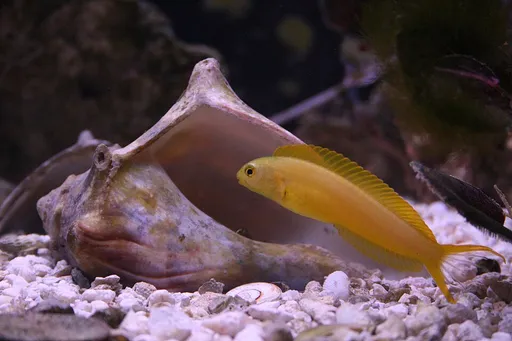 3.9 in (10 cm)40 gal (150 L)72–79°F (22–26°C)
Canary fang blenny
Meiacanthus oualanensis
3.9 in (10 cm) · 40 gal (150 L)