Bicolor blenny
Ecsenius bicolor
Also known as Two-colored blenny
SaltwaterFish

Care at a glance
- Temperature
- 72–79°F
- 22–26°C
- pH
- 8.1–8.4
- Adult size
- 3.9 in
- 10 cm
- Minimum tank
- 29 gal
- 110 L
- Temperament
- Mostly peaceful
- Social behavior
- Solitary
- Own kind
- One male per tank
- Tankmates
- With caution
- Swim level
- Bottom
- Difficulty
- Easy
- Breeding
- Hard
- Rarity
- Very common
- Reef safe
- Reef safe with caution
- Family
- Blenniidae
- Origin
- Indo-Pacific reefs from the Maldives and eastern Indian Ocean to the western Pacific
Overview
Keep one per tank, since bicolors are solitary and quarrel with their own kind and with other small perching blennies. Toward unrelated fish they are mostly peaceful, but they have a known habit of picking at other blennies, small gobies, and dartfish, which is why they land at mostly peaceful rather than fully peaceful. The reef-safe verdict needs care: in a large well-fed reef they usually behave, but an underfed bicolor has a documented habit of nipping clam mantles and picking at fleshy LPS polyps, so treat it as reef-safe with caution and keep it well fed. It perches and grazes on the bottom and rockwork. Hold stable marine water at a pH of 8.1 to 8.4 and 22 to 26 C, provide plenty of live rock, and feed a mostly herbivorous diet of marine and blue-green algae plus some meaty foods, supplemented by the film algae it grazes.
In the wild
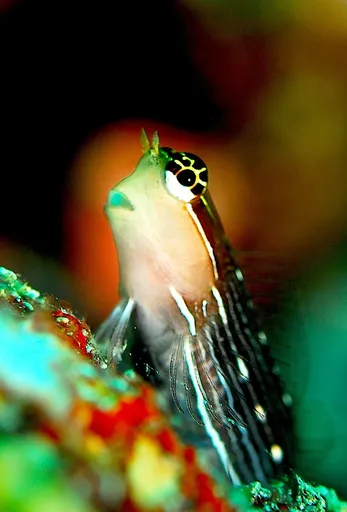
Bicolor blennies live on Indo-Pacific reefs from the Maldives and eastern Indian Ocean to the western Pacific, perching in rock crevices and grazing film algae off nearby surfaces. They are small, bottom-oriented perching fish that spend their time hopping among the rockwork and ducking into holes, so they want a mature tank with plenty of live rock and some algae growth rather than open swimming space. Keep them in stable marine water at a pH of 8.1 to 8.4 and a temperature of 22 to 26 C. As the name says, the fish is two-toned, a bluish to brown front half shading into a dull orange or red rear half.
Good to know
This is a combtooth blenny in the family Blenniidae, reaching about 10 cm, with the blunt-nosed face and eye cirri typical of the genus. Its colors are variable and change with mood, and breeding males can flush a bright orange-red across the back half. It grazes with fine comb-like teeth. Like most Ecsenius it is only rarely bred in home aquaria, so trade stock is wild-caught.
Did you know
It is one of the most common and affordable marine blennies in the trade, which is why it often ends up in tanks too small or too clean to support it. A well-fed bicolor in a mature reef is a peaceful algae grazer, but the same fish gone hungry is the one that starts sampling clam mantles and coral polyps, so its reputation swings on how well it is fed.
Common questions
What size tank does a Bicolor blenny need?
A Bicolor blenny needs at least 29 gal (110 L). It spends most of its time in the bottom.
What temperature and pH does a Bicolor blenny need?
A Bicolor blenny is comfortable at 72–79°F (22–26°C) with a pH of 8.1–8.4.
How big does a Bicolor blenny get?
An adult Bicolor blenny reaches about 3.9 in (10 cm).
Related species
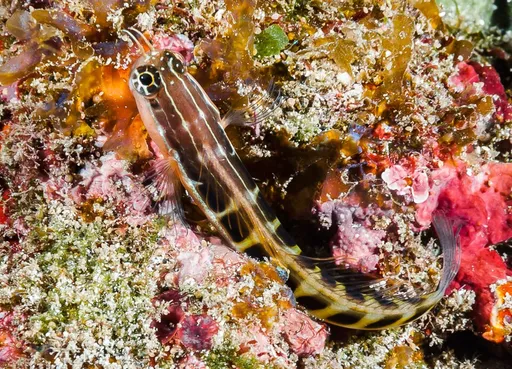 3.5 in (9 cm)20 gal (75 L)72–79°F (22–26°C)
Lined blenny
Ecsenius lineatus
3.5 in (9 cm) · 20 gal (75 L)
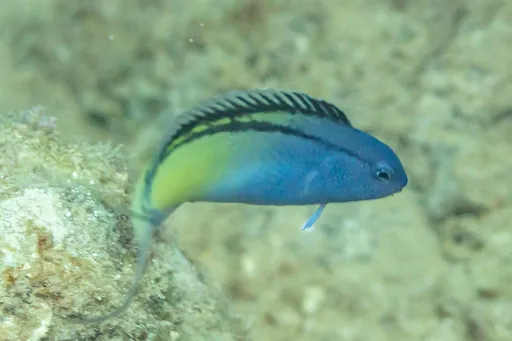 3.1 in (8 cm)20 gal (75 L)75–81°F (24–27°C)
Red Sea mimic blenny
Ecsenius gravieri
3.1 in (8 cm) · 20 gal (75 L)
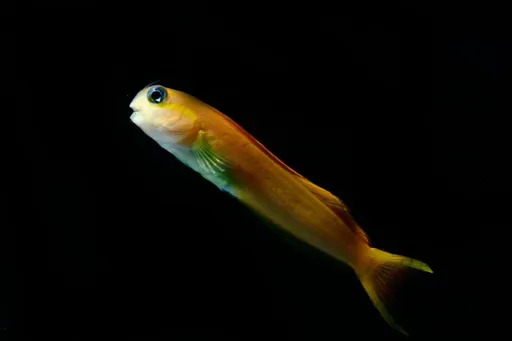 5.1 in (13 cm)29 gal (110 L)72–79°F (22–26°C)
Midas blenny
Ecsenius midas
5.1 in (13 cm) · 29 gal (110 L)
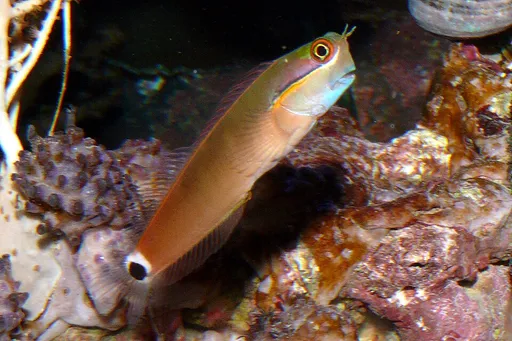 2.4 in (6 cm)20 gal (75 L)72–79°F (22–26°C)
Tailspot blenny
Ecsenius stigmatura
2.4 in (6 cm) · 20 gal (75 L)
 2 in (5 cm)20 gal (75 L)73–81°F (23–27°C)
Pictus blenny
Ecsenius pictus
2 in (5 cm) · 20 gal (75 L)
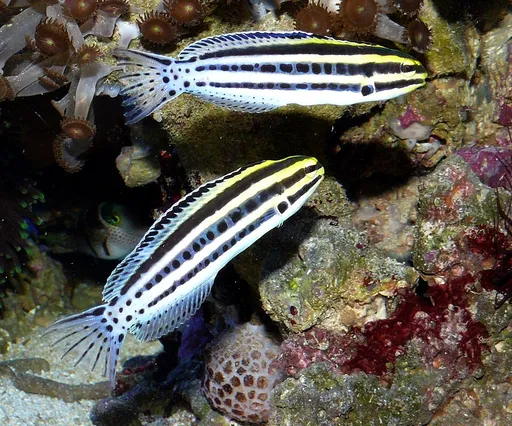 4.3 in (11 cm)29 gal (110 L)73–79°F (23–26°C)
Striped poison-fang blenny
Meiacanthus grammistes
4.3 in (11 cm) · 29 gal (110 L)