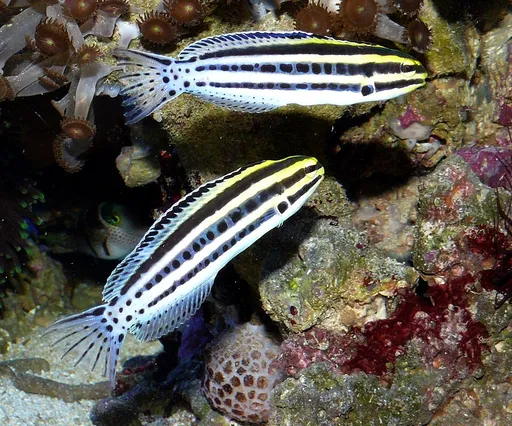
Striped poison-fang blenny
Meiacanthus grammistes
Also known as Striped Blenny, Striped Fang Blenny, Grammistes Blenny, Line-spot Harptail Blenny
SaltwaterFish
Care at a glance
- Temperature
- 73–79°F
- 23–26°C
- pH
- 8.1–8.4
- Adult size
- 4.3 in
- 11 cm
- Minimum tank
- 29 gal
- 110 L
- Temperament
- Mostly peaceful
- Social behavior
- Solitary
- Own kind
- One per tank
- Tankmates
- With caution
- Swim level
- Bottom
- Difficulty
- Easy
- Breeding
- Medium
- Rarity
- Common
- Reef safe
- Reef safe with caution
- Family
- Blenniidae
- Origin
- Western Pacific
Overview
A hardy, generally peaceful blenny that swims and hovers in open water more than most bottom-dwellers. It is coral safe and will not touch corals, but it may eat small ornamental shrimp and feather dusters, which is why it rates caution in a reef. It can turn territorial toward other blennies, gobies and dartfish in smaller tanks, so keep one per tank unless it is a bonded pair. Feeds well on chopped mysis, brine and other meaty foods a few times a day.
In the wild
Native to the western Pacific around Indonesia, the Philippines and northern Australia, living over coral-rich reef and rubble. It shelters in rock caves, overhangs and empty tube worm holes, hovering just above cover. A mature tank with plenty of live rock arranged into caves and crevices gives it nesting and hiding spots.
Good to know
A member of the family Blenniidae, genus Meiacanthus, the fang blennies. It has grooved venom fangs in the lower jaw used purely for defense, delivering a venom that makes predators spit it out. It is routinely captive-bred (for example by ORA), and captive-bred specimens are hardy and well adapted to aquarium food.
Did you know
Its venomous bite makes it nearly untouchable, so several harmless mimic species have evolved to copy its black-and-yellow striped pattern to borrow the protection without having the fangs to back it up.
Common questions
What size tank does a Striped poison-fang blenny need?
A Striped poison-fang blenny needs at least 29 gal (110 L). It spends most of its time in the bottom.
What temperature and pH does a Striped poison-fang blenny need?
A Striped poison-fang blenny is comfortable at 73–79°F (23–26°C) with a pH of 8.1–8.4.
How big does a Striped poison-fang blenny get?
An adult Striped poison-fang blenny reaches about 4.3 in (11 cm).
Related species
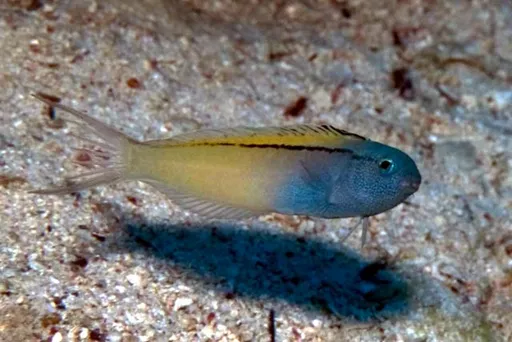 3.5 in (9 cm)20 gal (75 L)75–81°F (24–27°C)
Blackline fang blenny
Meiacanthus nigrolineatus
3.5 in (9 cm) · 20 gal (75 L)
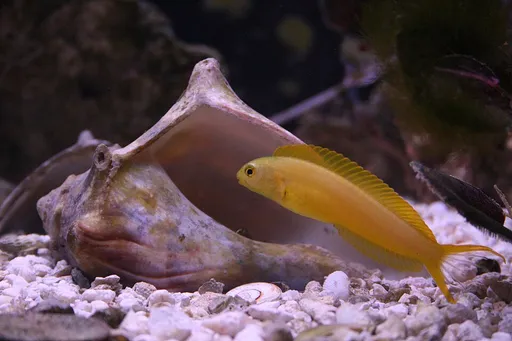 3.9 in (10 cm)40 gal (150 L)72–79°F (22–26°C)
Canary fang blenny
Meiacanthus oualanensis
3.9 in (10 cm) · 40 gal (150 L)
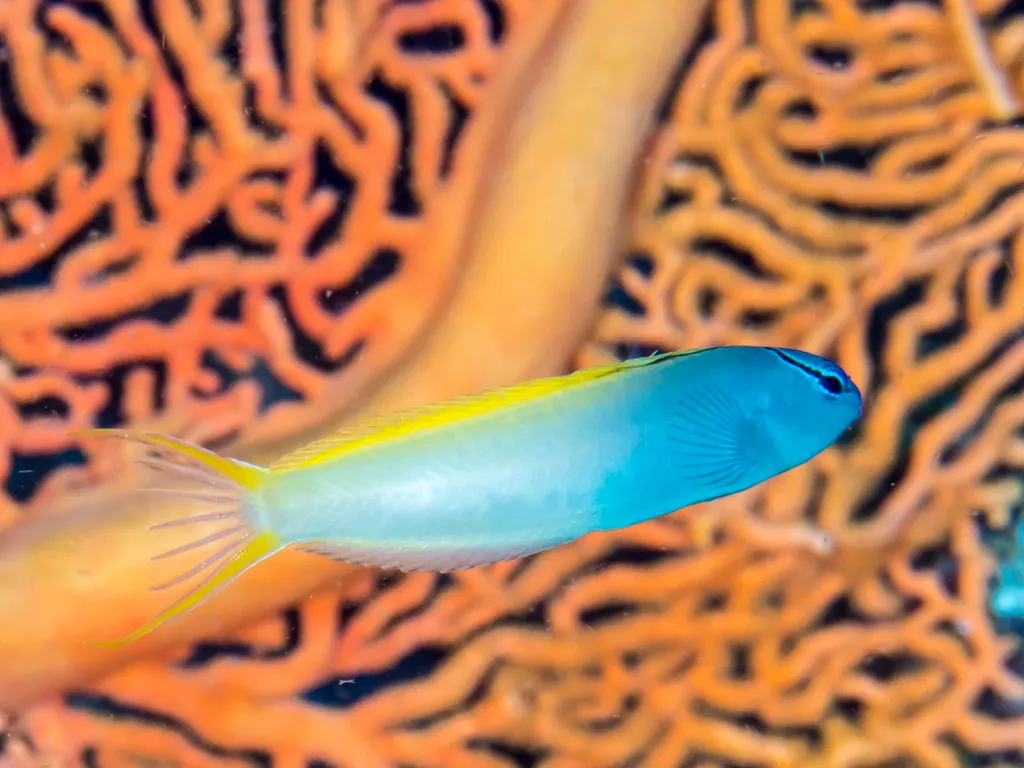 4.3 in (11 cm)30 gal (114 L)72–79°F (22–26°C)
Forktail fang blenny
Meiacanthus atrodorsalis
4.3 in (11 cm) · 30 gal (114 L)
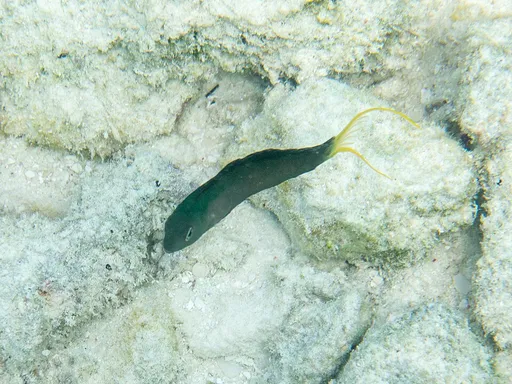 3.5 in (9 cm)29 gal (110 L)72–79°F (22–26°C)
Mozambique fangblenny
Meiacanthus mossambicus
3.5 in (9 cm) · 29 gal (110 L)
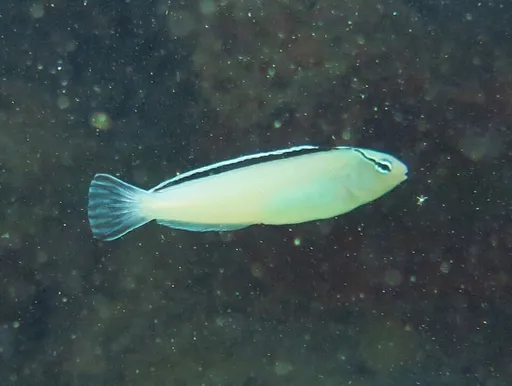 3.1 in (8 cm)26 gal (100 L)73–81°F (23–27°C)
Disco blenny
Meiacanthus smithi
3.1 in (8 cm) · 26 gal (100 L)
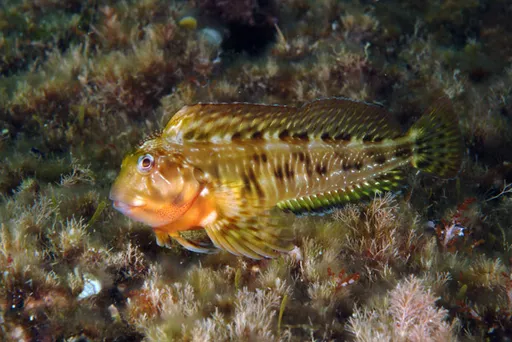 4.7 in (12 cm)30 gal (114 L)72–79°F (22–26°C)
Molly Miller blenny
Scartella cristata
4.7 in (12 cm) · 30 gal (114 L)