Snakeskin gourami
Trichopodus pectoralis
FreshwaterFish
Care at a glance
- Temperature
- 72–86°F
- 22–30°C
- pH
- 6.0–7.5
- Adult size
- 9.8 in
- 25 cm
- Minimum tank
- 61 gal
- 230 L
- Temperament
- Peaceful
- Social behavior
- Social
- Swim level
- Middle
- Diet
- Omnivore
- Difficulty
- Medium
- Breeding
- Bubble nester · Hard
- Rarity
- Rare
- Family
- Osphronemidae
- Origin
- Thailand, Laos, Cambodia, Vietnam
Overview
The snakeskin gourami is a big, mild-mannered gourami for a roomy community tank. It is a step up from the easiest fish.
Did you know
The snakeskin gourami is one of the most important farmed food fish in Southeast Asia. It is raised in huge numbers in rice fields and ponds, valued for its size and easygoing nature.
Caring for the snakeskin gourami
Snakeskin gouramis grow large, so give a group a roomy tank of at least 61 gal (230 L). A planted tank with floating cover, gentle flow and a soft substrate suits them. Leave a warm, humid gap beneath the lid, and keep the current calm.
They are warmth-loving fish, so keep the temperature at 72 to 86°F (22 to 30°C) and the pH at 6.0 to 7.5. Feed a varied diet of pellet or flake, frozen bloodworm and brine shrimp. Add plenty of vegetable matter, since they graze on soft plant growth and algae.
The snakeskin gourami is large but peaceful, and you can keep it as a pair or a group. It rarely troubles tank mates and makes a good companion for other large, calm community fish.
Males build a bubble nest and guard the eggs and fry. Breeding is rated hard, mostly because of the space needed and the many tiny fry to raise.
Good to know
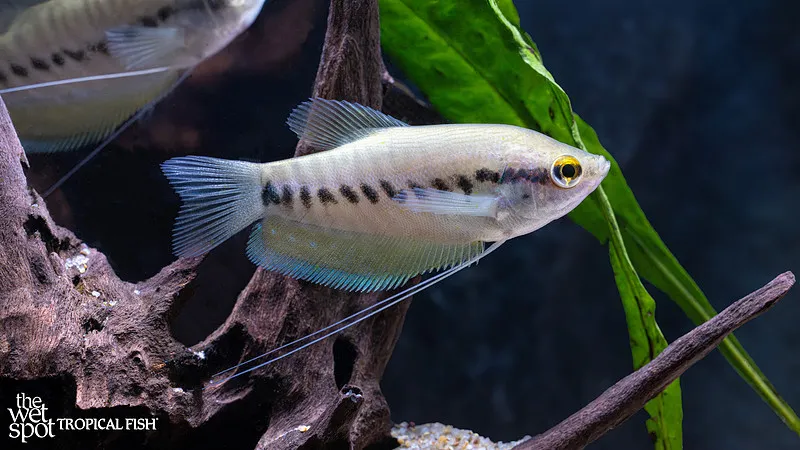
The snakeskin gourami is a member of the gourami family Osphronemidae. Its faint, snakeskin-like diagonal barring and reticulated pattern along the silvery-green flanks give it both its common name and its understated looks. It uses its long pelvic fins to feel around plants and decor. As a labyrinth fish, it breathes at the surface.
In the wild
The snakeskin gourami is native to the lowlands of Thailand, Laos, Cambodia and Vietnam. It lives in still and slow waters such as swamps, canals, ponds and flooded fields.
Weekly picks
Tank mates
The snakeskin gourami is a peaceful, social species that keeps to the middle. These picks share a community profile with it, are safe together in both directions, and overlap on water type, temperature and pH.
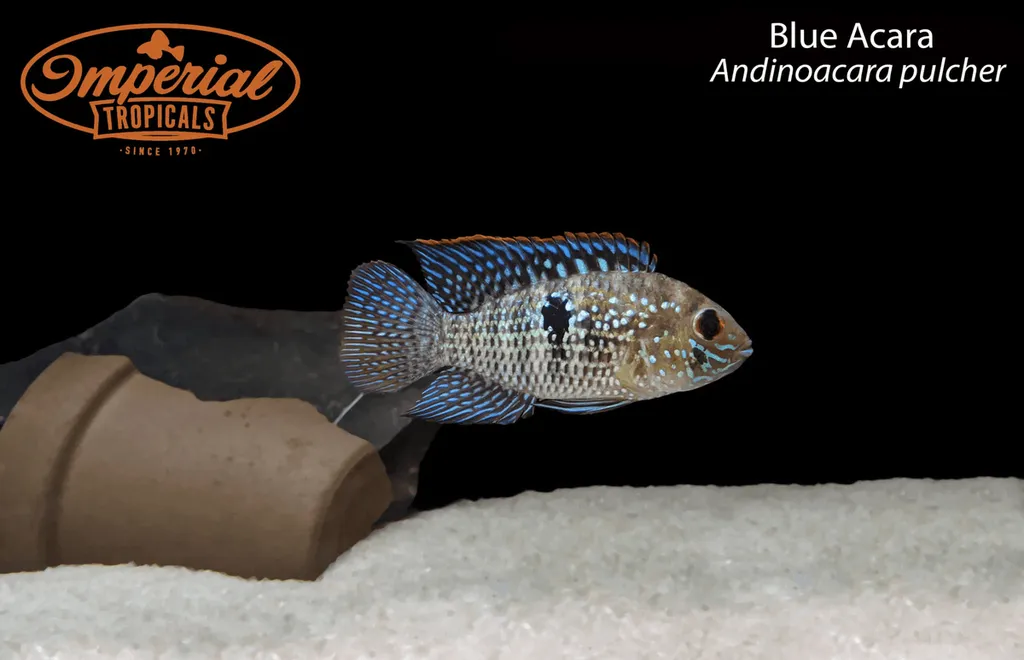
Blue acara
Andinoacara pulcher
Freshwater5.9 in (15 cm) · 42 gal (160 L)72–82°F (22–28°C)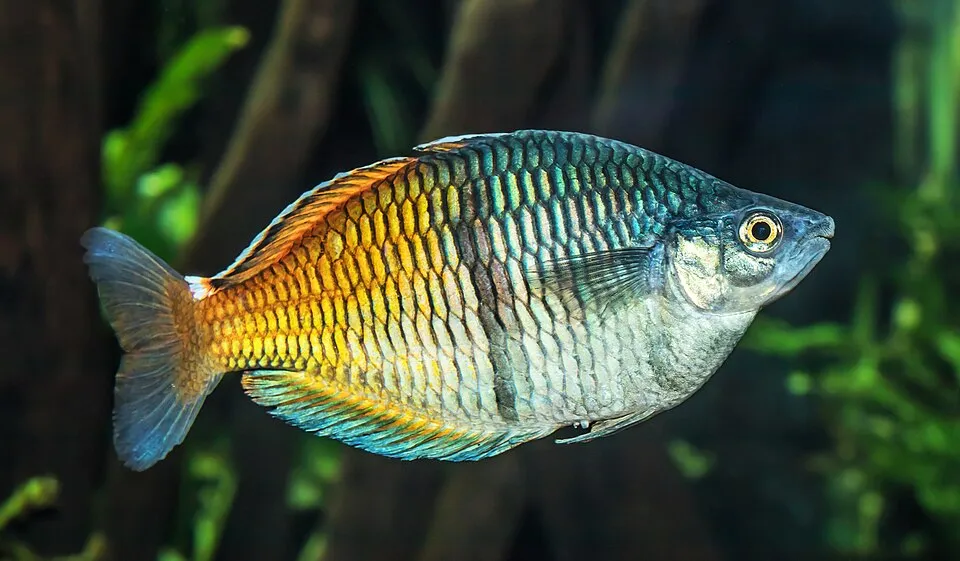
Boeseman's rainbowfish
Melanotaenia boesemani
Freshwater4.3 in (11 cm) · 29 gal (108 L)81–86°F (27–30°C)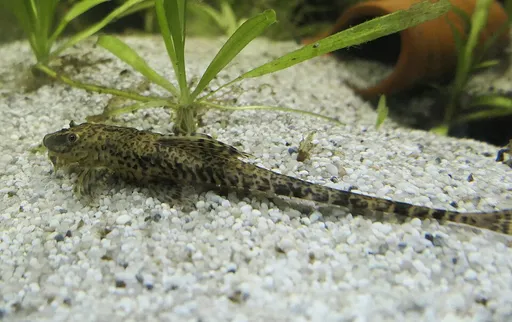
Red lizard whiptail
Rineloricaria lanceolata
Freshwater3.9 in (10 cm) · 24 gal (90 L)77–82°F (25–28°C)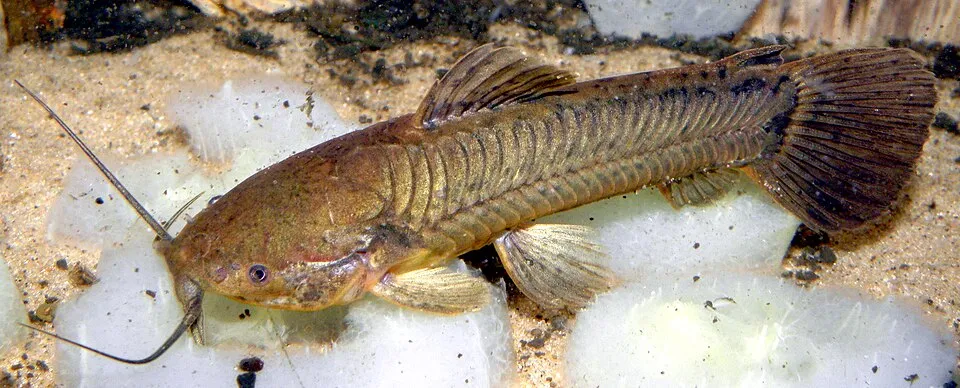
Cascarudo
Callichthys callichthys
Freshwater7.9 in (20 cm) · 63 gal (240 L)66–81°F (19–27°C)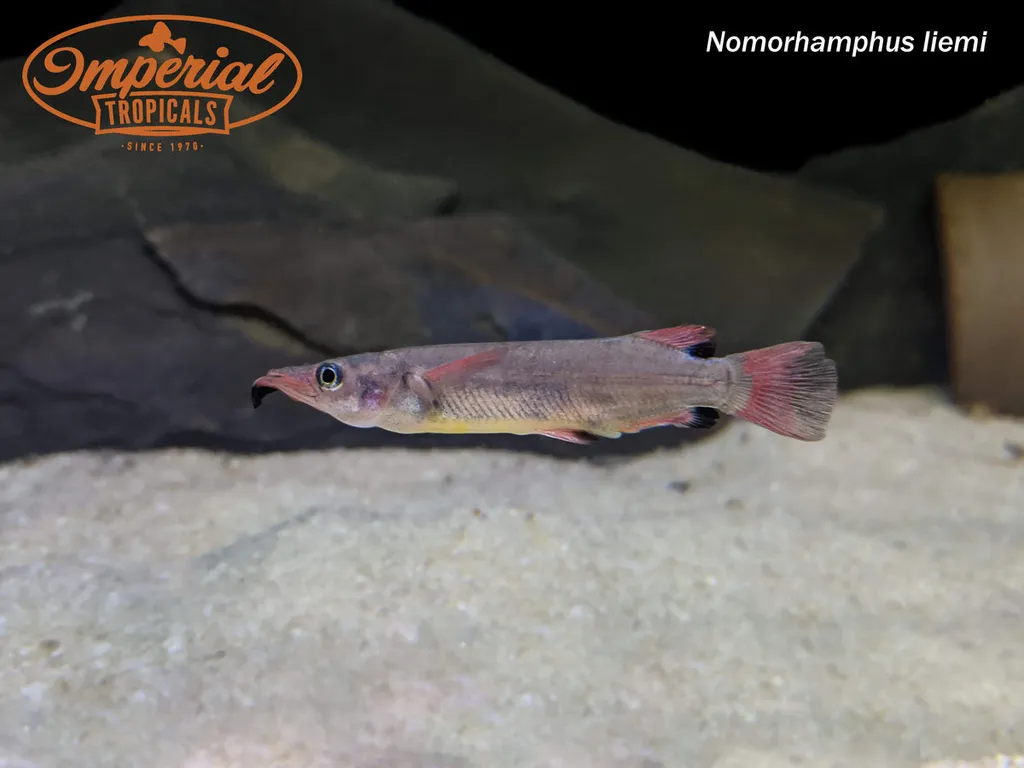
Celebes halfbeak
Nomorhamphus liemi
Freshwater3.5 in (9 cm) · 40 gal (150 L)68–77°F (20–25°C)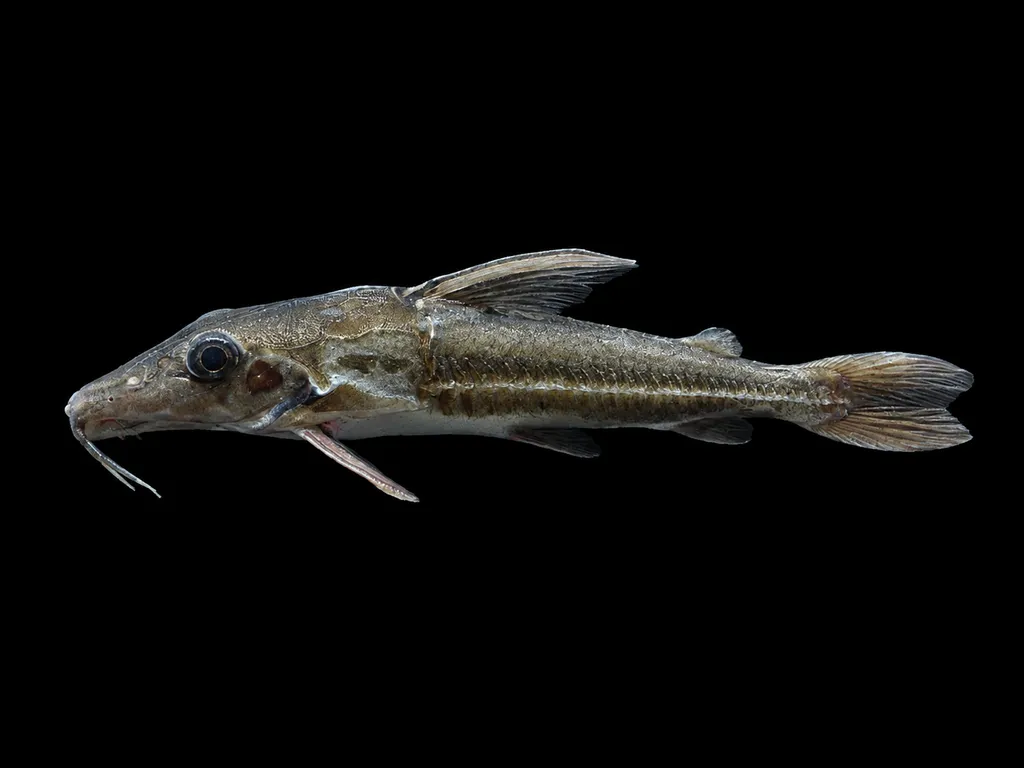
Green turushuki catfish
Hemidoras morrisi
Freshwater6.3 in (16 cm) · 53 gal (200 L)73–82°F (23–28°C)
Common questions
What size tank does a snakeskin gourami need?
A snakeskin gourami needs at least 61 gal (230 L). It spends most of its time in the middle.
What temperature and pH does a snakeskin gourami need?
A snakeskin gourami is comfortable at 72–86°F (22–30°C) with a pH of 6.0–7.5.
What does a snakeskin gourami eat?
A snakeskin gourami eats a varied diet of pellet or flake, frozen bloodworm and brine shrimp. It also needs plenty of vegetable matter, since it grazes on soft plant growth and algae.
How big does a snakeskin gourami get?
An adult snakeskin gourami reaches about 9.8 in (25 cm).
How does a snakeskin gourami breed?
Males build a bubble nest and guard the eggs and fry. Breeding the snakeskin gourami is rated hard, mostly because of the space needed and the many tiny fry to raise.
Related species
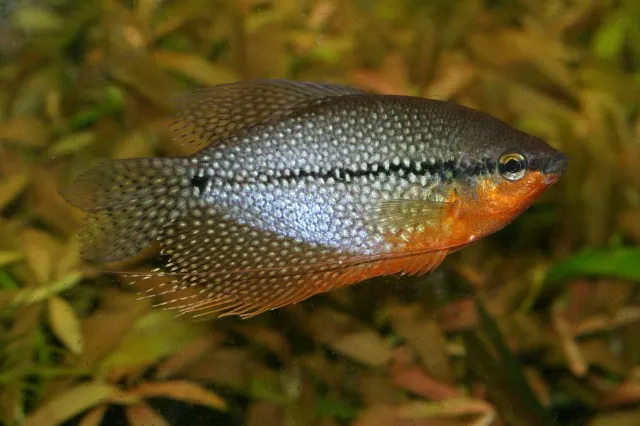 4.7 in (12 cm)29 gal (111 L)75–86°F (24–30°C)
Pearl gourami
Trichopodus leerii
4.7 in (12 cm) · 29 gal (111 L)
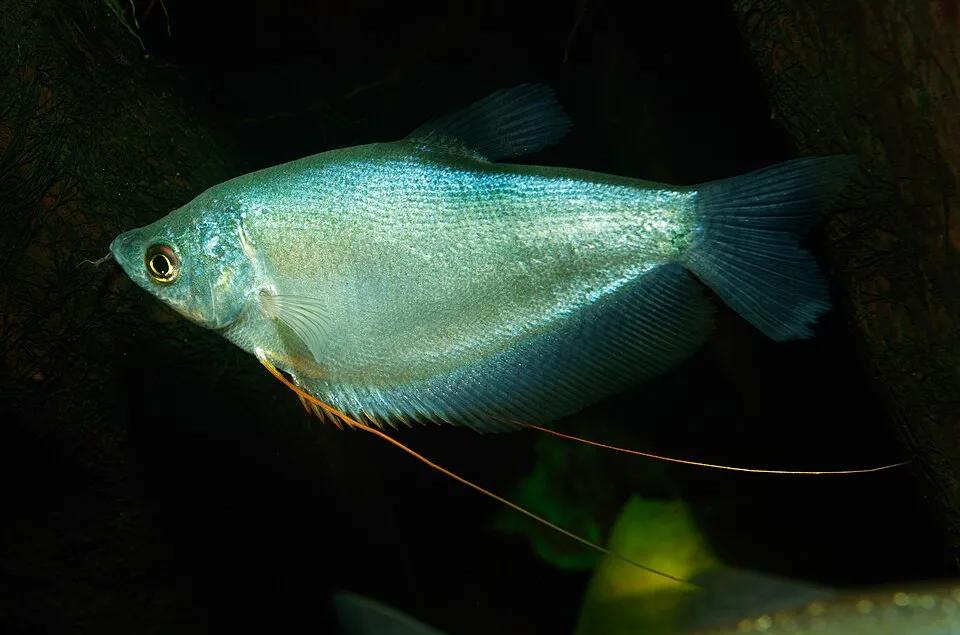 5.9 in (15 cm)30 gal (115 L)77–86°F (25–30°C)
Moonlight gourami
Trichopodus microlepis
5.9 in (15 cm) · 30 gal (115 L)
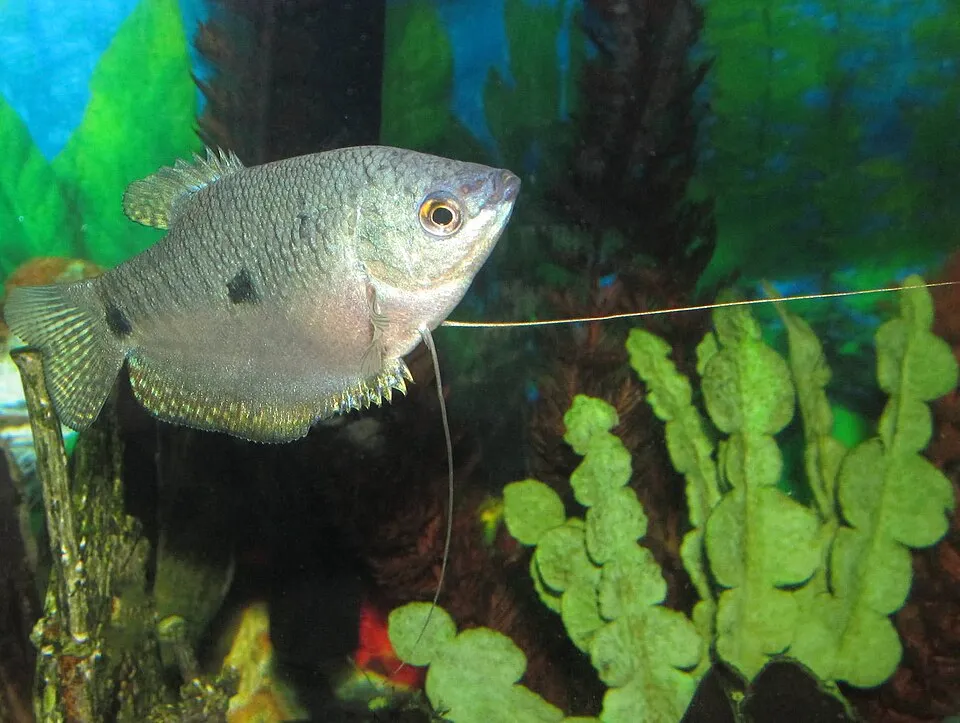 5.1 in (13 cm)30 gal (115 L)75–86°F (24–30°C)
Three spot gourami
Trichopodus trichopterus
5.1 in (13 cm) · 30 gal (115 L)
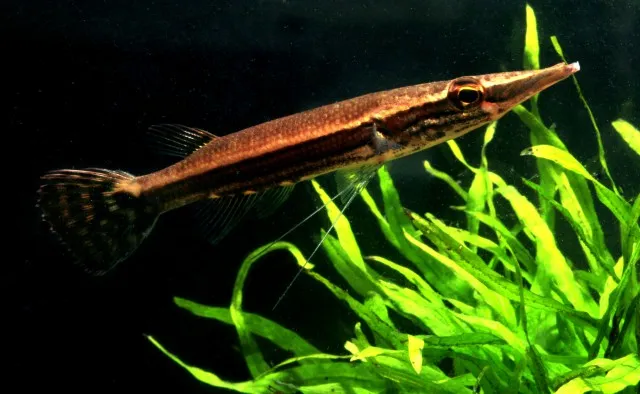 7.9 in (20 cm)36 gal (135 L)72–79°F (22–26°C)
Giant pikehead
Luciocephalus pulcher
7.9 in (20 cm) · 36 gal (135 L)
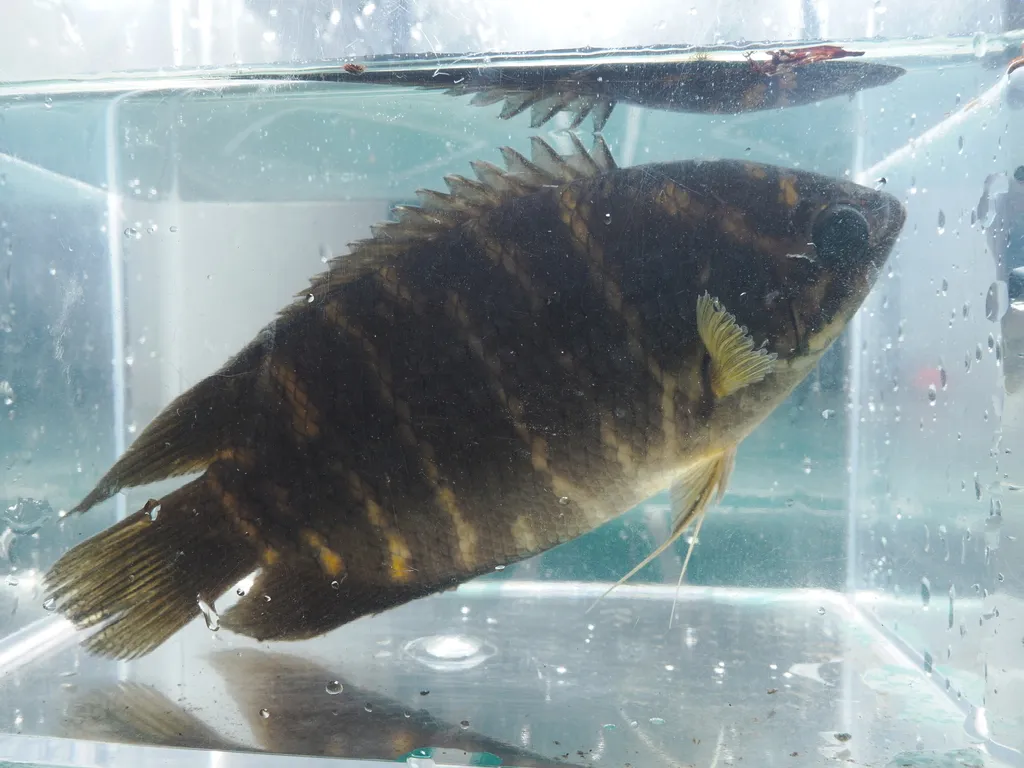 7.9 in (20 cm)45 gal (170 L)70–79°F (21–26°C)
Malay combtail gourami
Belontia hasselti
7.9 in (20 cm) · 45 gal (170 L)
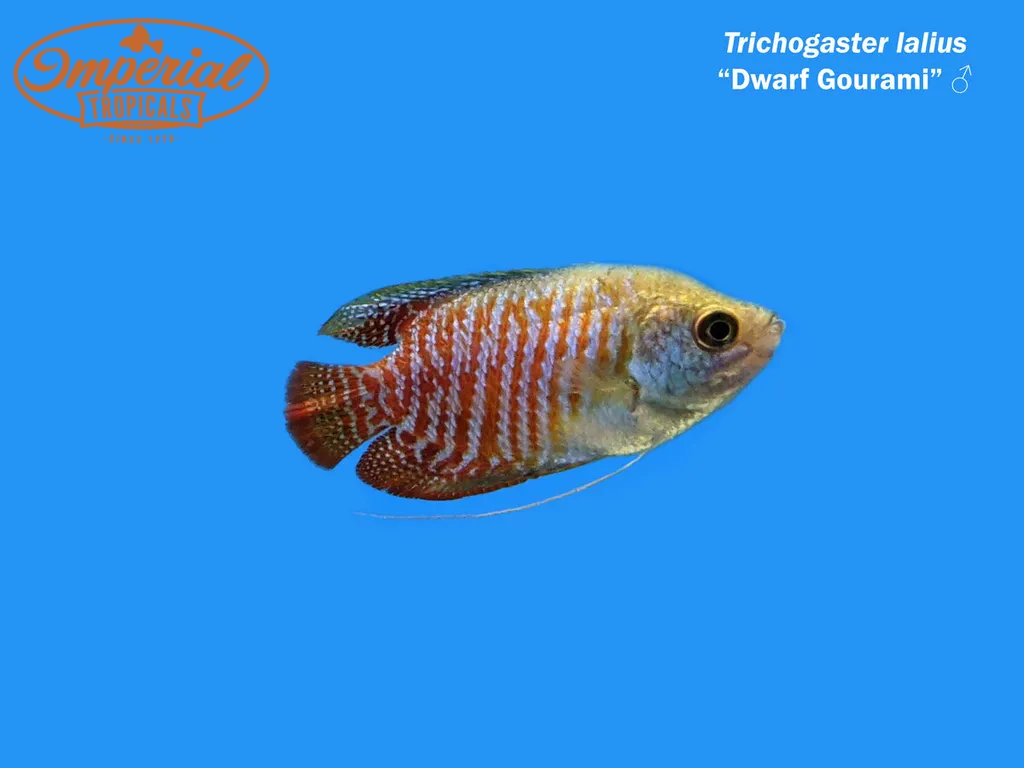 3 in (7.5 cm)10 gal (38 L)72–81°F (22–27°C)
Dwarf gourami
Trichogaster lalius
3 in (7.5 cm) · 10 gal (38 L)