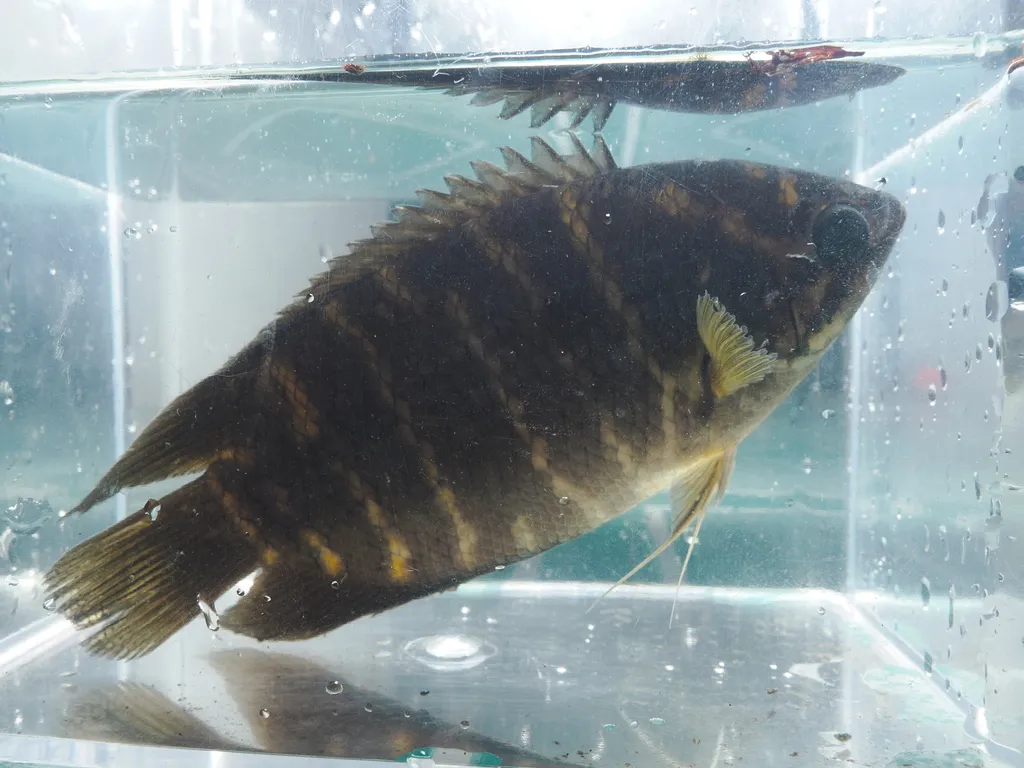
Malay combtail gourami
Belontia hasselti
Also known as Java combtail
FreshwaterFish
Care at a glance
- Temperature
- 70–79°F
- 21–26°C
- pH
- 6.0–7.5
- Adult size
- 7.9 in
- 20 cm
- Minimum tank
- 45 gal
- 170 L
- Temperament
- Mostly peaceful
- Social behavior
- Social
- Tankmates
- With caution
- Swim level
- Middle
- Difficulty
- Medium
- Breeding
- No record
- Rarity
- Very rare
- Family
- Osphronemidae
- Origin
- Thailand, Sunda Islands
Overview
The Malay combtail is a large, sturdy gourami with a bold personality that can be kept singly, as a pair, or in a group in a big tank with room to establish territories. It cruises the middle water and can be pushy at feeding time or when spawning, so give it robust, similar-sized tankmates rather than timid ones. Plenty of wood, plants and broken sight lines help keep the peace. It is an unfussy eater, taking pellets, frozen bloodworm, prawn and other meaty foods along with some greens. Provide a tank of at least 170 liters, as adults need space to avoid squabbling.
In the wild
Belontia hasselti is found from Thailand through the Sunda Islands, in slow streams, ponds, ditches and swampy pools, often among dense plants. A spacious, well-structured tank suits it, with driftwood, hardy plants and a soft substrate, plus floating cover to soften the light. Keep the temperature between 21 and 26 degrees Celsius and the pH from 6.0 to 7.5, in soft to moderately hard water. As a labyrinth fish it takes air from the surface, so leave a warm, humid gap beneath the lid and keep the flow gentle.
Good to know
A member of the gourami family Osphronemidae, the Malay combtail reaches about 20 centimeters and is also known as the Java combtail. Its common name comes from the caudal fin, whose rays extend past the membrane into a comb-like fringe. Males guard the eggs, which float at the surface, and may build only a loose bubble nest or none at all; home breeding is not widely recorded. It is one of the larger and more robust gouramis kept in the hobby.
Did you know
The combtail gets its name from its tail: the fin rays reach beyond the webbing to form a comb-like edge. Unusually for a gourami, males often skip the bubble nest and simply guard a raft of floating eggs at the surface.
Common questions
What size tank does a Malay combtail gourami need?
A Malay combtail gourami needs at least 45 gal (170 L). It spends most of its time in the middle.
What temperature and pH does a Malay combtail gourami need?
A Malay combtail gourami is comfortable at 70–79°F (21–26°C) with a pH of 6.0–7.5.
How big does a Malay combtail gourami get?
An adult Malay combtail gourami reaches about 7.9 in (20 cm).
Related species
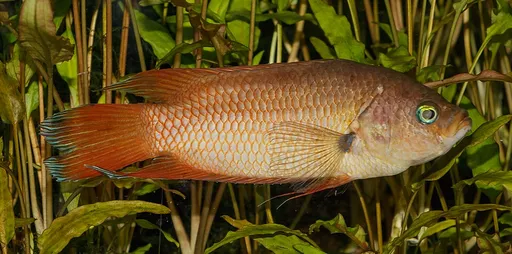 4.7 in (12 cm)53 gal (200 L)72–82°F (22–28°C)
Combtail gourami
Belontia signata
4.7 in (12 cm) · 53 gal (200 L)
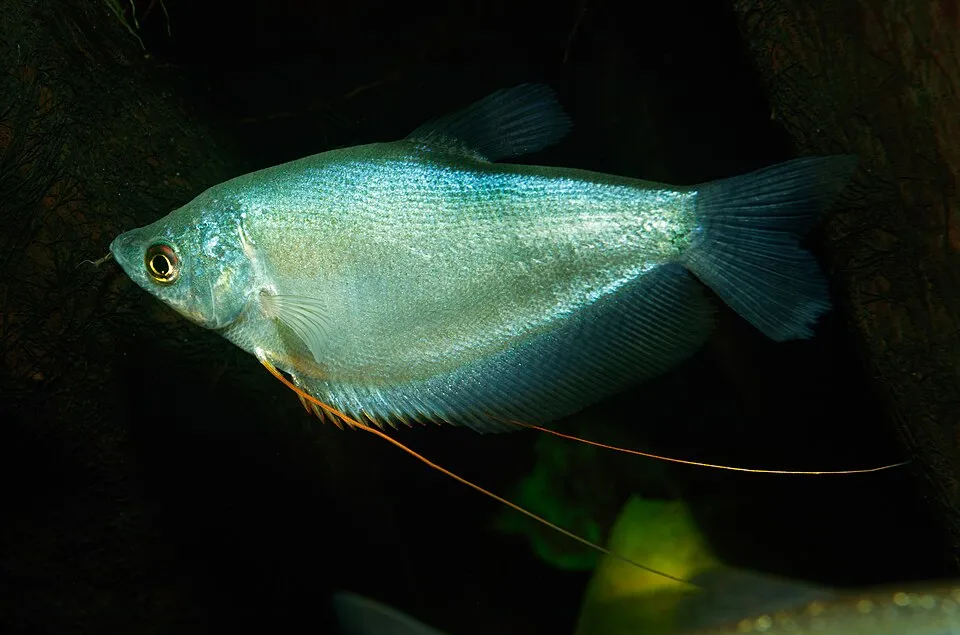 5.9 in (15 cm)30 gal (115 L)77–86°F (25–30°C)
Moonlight gourami
Trichopodus microlepis
5.9 in (15 cm) · 30 gal (115 L)
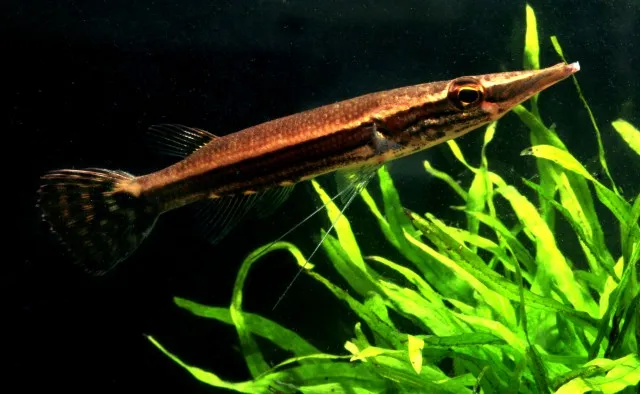 7.9 in (20 cm)36 gal (135 L)72–79°F (22–26°C)
Giant pikehead
Luciocephalus pulcher
7.9 in (20 cm) · 36 gal (135 L)
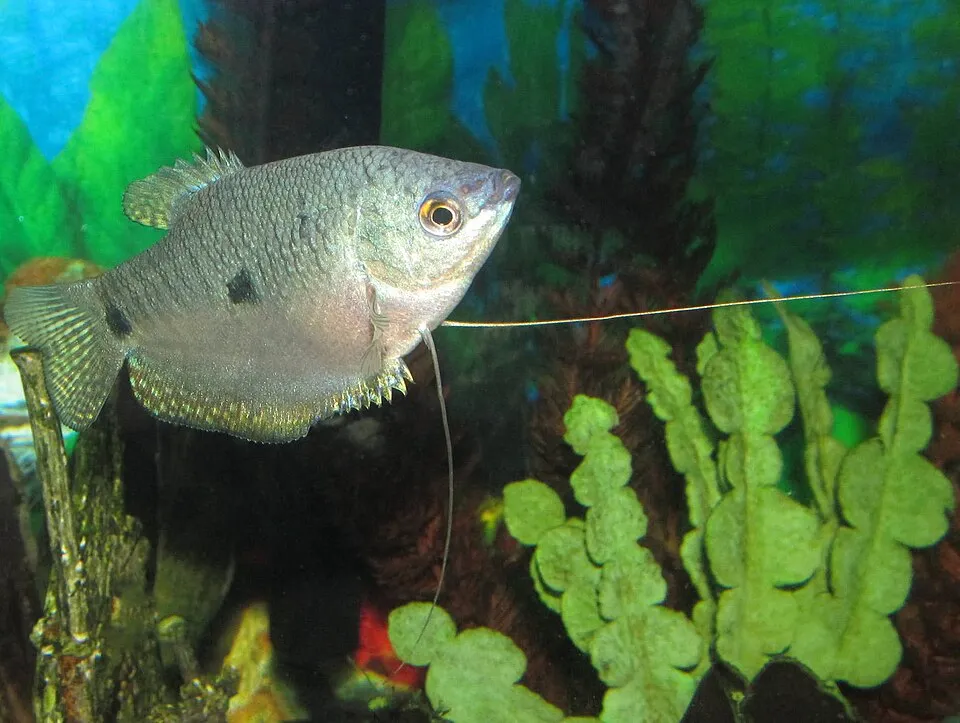 5.1 in (13 cm)30 gal (115 L)75–86°F (24–30°C)
Three spot gourami
Trichopodus trichopterus
5.1 in (13 cm) · 30 gal (115 L)
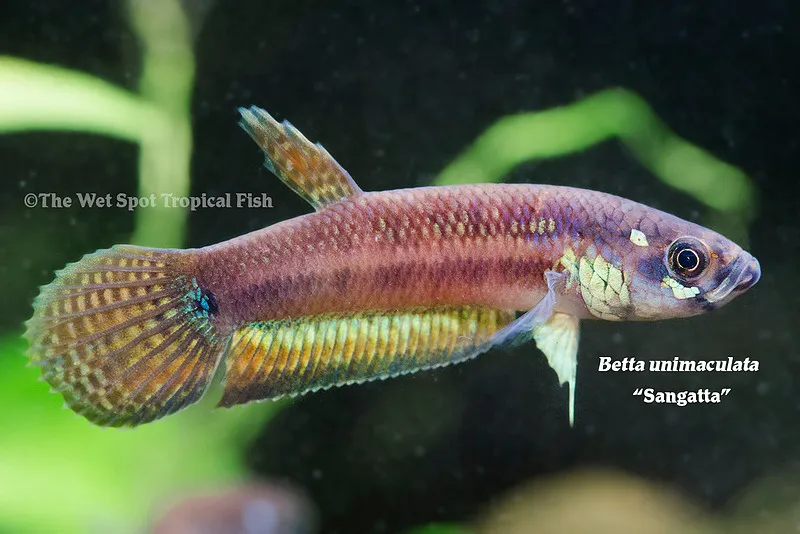 4.5 in (11.5 cm)29 gal (110 L)70–79°F (21–26°C)
One-spot betta
Betta unimaculata
4.5 in (11.5 cm) · 29 gal (110 L)
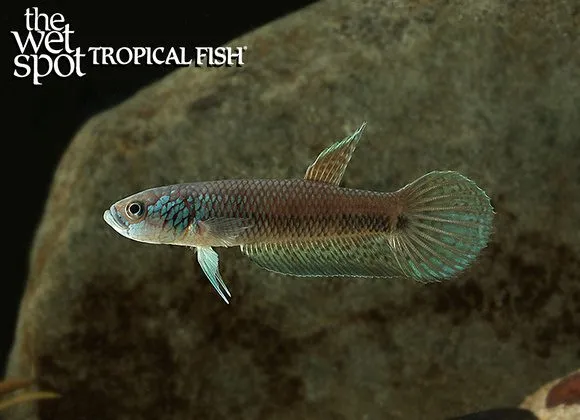 3.9 in (10 cm)26 gal (100 L)70–81°F (21–27°C)
Antuta betta
Betta sp. 'Antuta'
3.9 in (10 cm) · 26 gal (100 L)