Green throat mouthbrooder
Betta chloropharynx
Also known as Green-throated mouthbrooding betta
FreshwaterFish
Care at a glance
- Temperature
- 75–82°F
- 24–28°C
- pH
- 3.5–6.0
- Adult size
- 2.3 in
- 5.9 cm
- Minimum tank
- 21 gal
- 80 L
- Temperament
- Mostly peaceful
- Social behavior
- Social
- Own kind
- One male per tank
- Tankmates
- With caution
- Swim level
- Middle
- Difficulty
- Difficult
- Breeding
- Medium
- Rarity
- Very rare
- Family
- Osphronemidae
- Origin
- Bangka Island, Indonesia
Overview
A calm fish that lives in a pair or a group in a large tank with cover, one male per tank at this size, and never a community fish. It keeps to the middle of the water in very soft acidic water, pH 3.5 to 6, at 24 to 28 C, with 30 percent weekly water changes. Feed bloodworm, brine shrimp, mysis, krill and small insects, live or frozen. It eats dwarf shrimp and any fish it can swallow, so keep it alone or with calm fish its own size.
In the wild
The green throat mouthbrooder comes from Bangka Island off the east coast of Sumatra, where it lives in peat swamp forest and its blackwater streams and pools, in tannin stained water with almost no minerals and a pH that can fall to 3 or 4; the type specimens came from leaf litter in a single pool in secondary forest. Set it up as a blackwater tank: very soft water, pH 3.5 to 6, dark with leaf litter and botanicals, dim light, wood and heavy cover. A pair or small group needs about 80 liters and a tight lid.
Good to know
Betta chloropharynx is a paternal mouthbrooder in the Betta waseri group of the family Osphronemidae. The type specimens were small, and the largest on record from the description is 5.9 cm standard length, but aquarium fish are reported at 8 cm and more, so plan for the larger figure. Kottelat and Ng described it in 1994, and its throat mark looks like a horizontal figure eight or a lower case Greek mu. The IUCN lists it as Critically Endangered because so little of Bangka's peat swamp forest is left.
Did you know
Its name is Greek for green throat: the head can be dark with black spots and the throat a clear green, which no other member of the waseri group shows. The male broods for around 19 days depending on temperature, and one recorded spawn produced more than 110 fry.
Common questions
What size tank does a Green throat mouthbrooder need?
A Green throat mouthbrooder needs at least 21 gal (80 L). It spends most of its time in the middle.
What temperature and pH does a Green throat mouthbrooder need?
A Green throat mouthbrooder is comfortable at 75–82°F (24–28°C) with a pH of 3.5–6.0.
How big does a Green throat mouthbrooder get?
An adult Green throat mouthbrooder reaches about 2.3 in (5.9 cm).
Related species
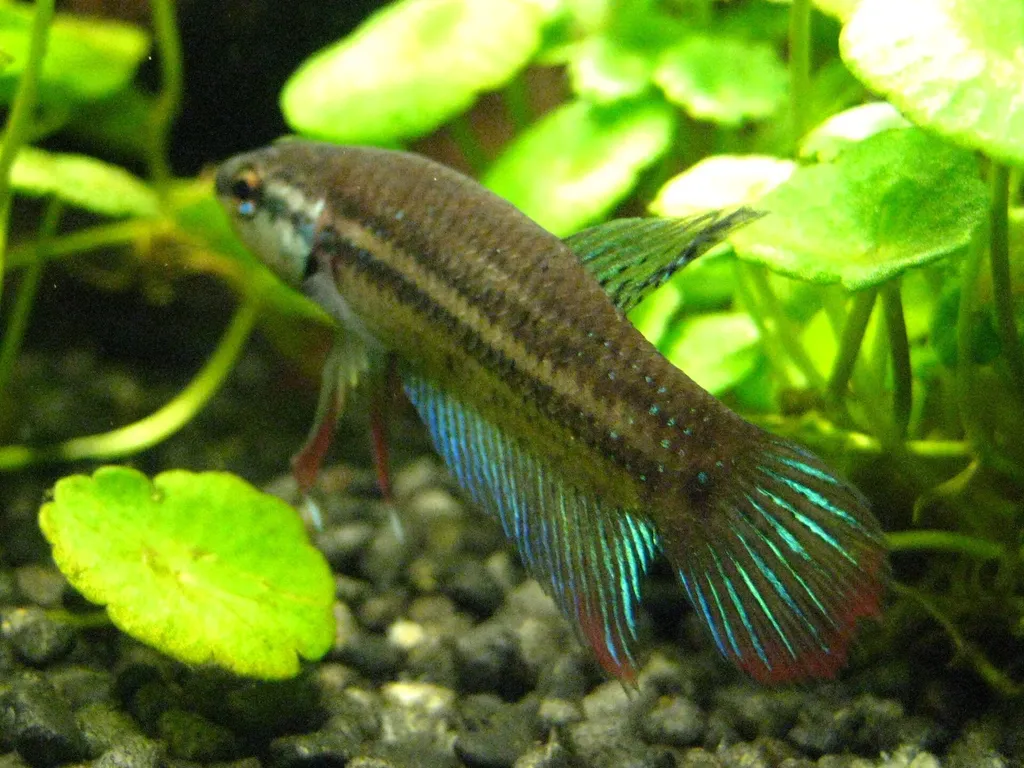 2.4 in (6 cm)12 gal (45 L)68–82°F (20–28°C)
Crescent betta
Betta imbellis
2.4 in (6 cm) · 12 gal (45 L)
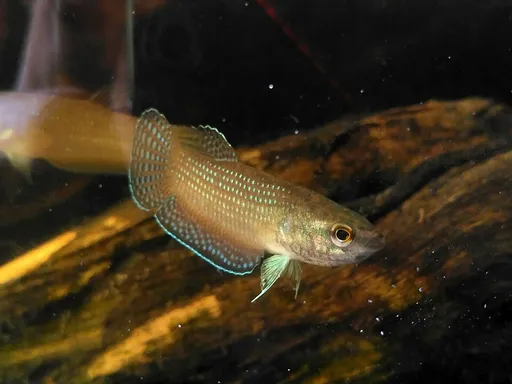 2.4 in (6 cm)20 gal (75 L)72–81°F (22–27°C)
Edith's betta
Betta edithae
2.4 in (6 cm) · 20 gal (75 L)
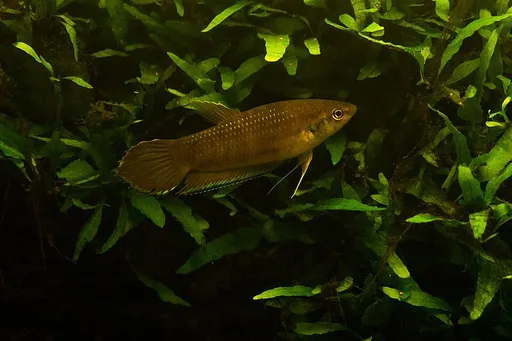 2.4 in (6 cm)16 gal (60 L)70–77°F (21–25°C)
Enisae betta
Betta enisae
2.4 in (6 cm) · 16 gal (60 L)
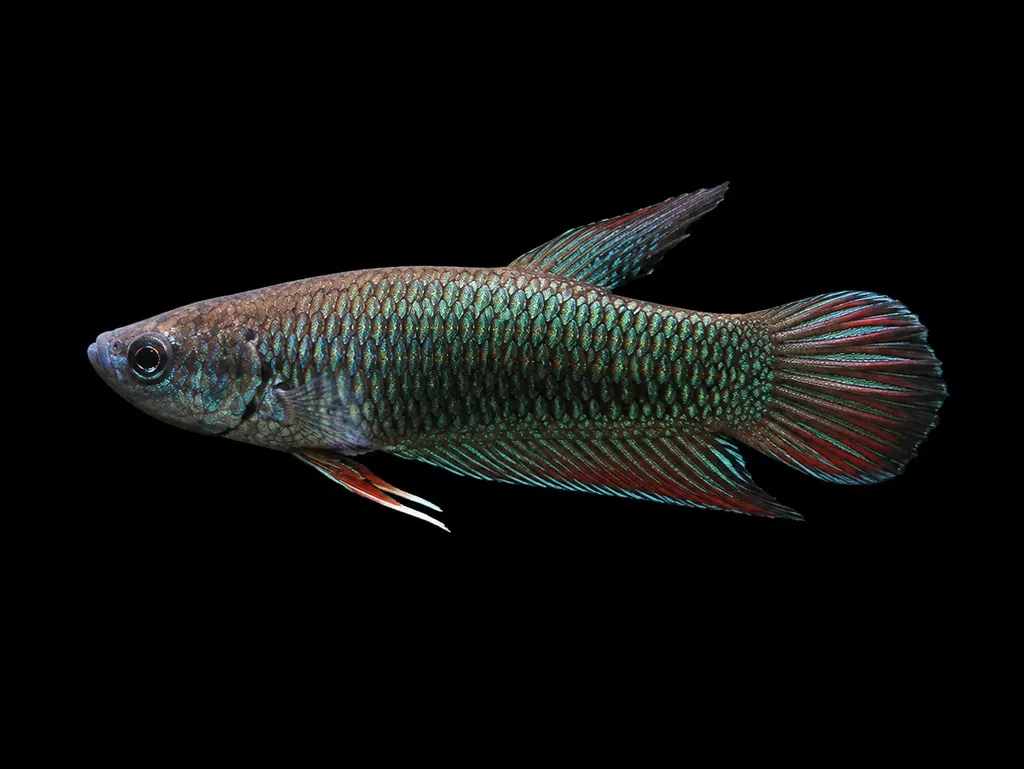 2.4 in (6 cm)20 gal (75 L)73–81°F (23–27°C)
Pulchra betta
Betta pulchra
2.4 in (6 cm) · 20 gal (75 L)
- 2.5 in (6.3 cm)21 gal (80 L)73–79°F (23–26°C)
Ferox betta
Betta ferox
2.5 in (6.3 cm) · 21 gal (80 L)
- 2.5 in (6.3 cm)16 gal (60 L)72–79°F (22–26°C)
Nuluhon betta
Betta nuluhon
2.5 in (6.3 cm) · 16 gal (60 L)