Waseri betta
Betta waseri
FreshwaterFish
Care at a glance
- Temperature
- 72–81°F
- 22–27°C
- pH
- 4.0–6.0
- Adult size
- 3.6 in
- 9.1 cm
- Minimum tank
- 26 gal
- 100 L
- Temperament
- Mostly peaceful
- Social behavior
- Social
- Own kind
- One male per tank
- Tankmates
- With caution
- Swim level
- Middle
- Difficulty
- Difficult
- Breeding
- Mouthbrooder · Medium
- Rarity
- Very rare
- Family
- Osphronemidae
- Origin
- Pahang and Terengganu peat swamps, Peninsular Malaysia
Overview
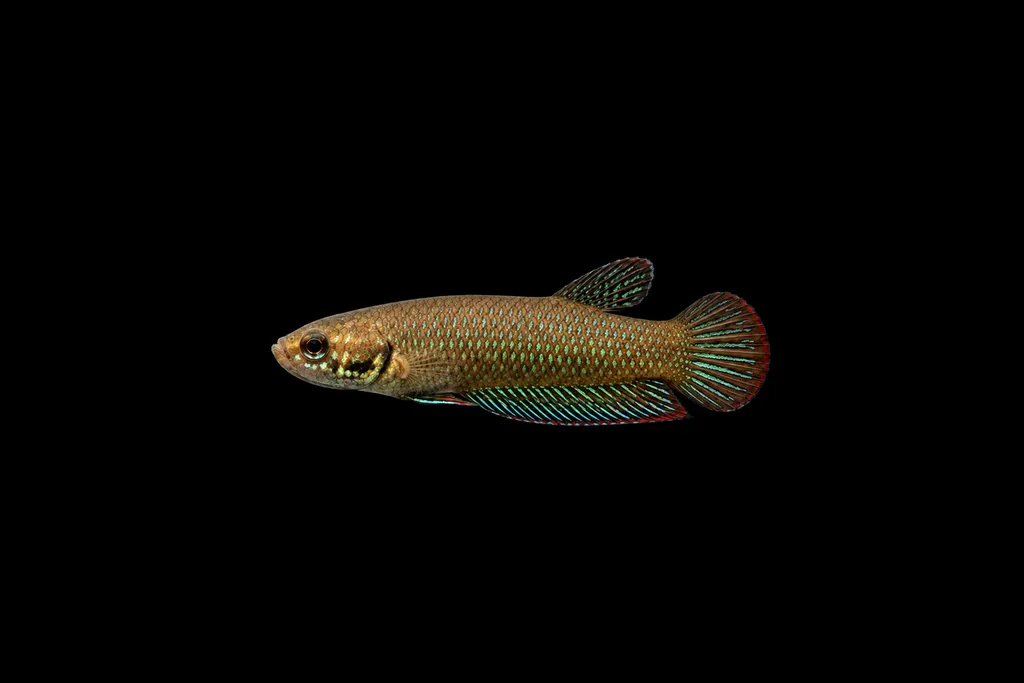
The Waseri betta is a large blackwater betta, calm and slow for its size. It suits experienced keepers rather than beginners.
Did you know
The Waseri betta was described in 1986 from aquarium fish collected near Kuantan, on a trip led by the aquarist Alfred Waser. Only one large male, the holotype, was preserved from that batch.
Caring for the Waseri betta
Give Waseri bettas a large planted tank of at least 26 gal (100 L), with caves, heavy cover and a tight lid. Keep the light dim, and let leaf litter and botanicals stain the water dark with tannins.
They need very soft, acidic water at 72 to 81°F (22 to 27°C) and a pH of 4.0 to 6.0. Keep it clean and well filtered, with steady small water changes. Feed live and frozen foods such as bloodworm, brine shrimp, mysis and small insects, with dried foods as a supplement.
Waseri bettas are mostly peaceful and can live as a pair or a group. Keep only one male per tank at this size. They use the middle of the water, and they will eat dwarf shrimp and fish small enough to swallow. Keep them alone or with calm fish of similar size.
Males carry scattered gold scales on the front of the flanks. Waseri bettas are paternal mouthbrooders, so the male holds the eggs in his mouth. Breeding them is of medium difficulty.
Good to know
Betta waseri is the name species of the Betta waseri group, in the family Osphronemidae. For years it was filed under the wrong name, Betta macrophthalma, until a 1994 revision showed that name belongs to a juvenile Betta pugnax. That revision gave the waseri group its own home. Members of the group are stout blackwater fish with black marks on the throat and lower lip. Its own mark is a pair of black tear drop spots on the throat that do not touch the black lower lip. The holotype measures 9.1 cm standard length, though the original description gave 9.8 cm by measuring to the tail scales, so both figures circulate. The IUCN lists it as Endangered.
In the wild
The Waseri betta is a blackwater specialist from the peat swamp forests of Pahang and Terengganu, on the east coast of Peninsular Malaysia. It was taken in well-shaded streams with dense leaf litter, mud and root tangles, at pH 3.4 to 4.
Common questions
What size tank does a Waseri betta need?
A Waseri betta needs at least 26 gal (100 L). It spends most of its time in the middle.
What temperature and pH does a Waseri betta need?
A Waseri betta is comfortable at 72–81°F (22–27°C) with a pH of 4.0–6.0.
What does a Waseri betta eat?
A Waseri betta eats live and frozen foods such as bloodworm, brine shrimp, mysis and small insects. Dried foods work as a supplement.
How big does a Waseri betta get?
An adult Waseri betta reaches about 3.6 in (9.1 cm).
How can you tell a male Waseri betta from a female?
Males carry scattered gold scales on the front of the flanks.
How does a Waseri betta breed?
Waseri bettas are paternal mouthbrooders, so the male holds the eggs in his mouth. Breeding them is of medium difficulty.
Related species
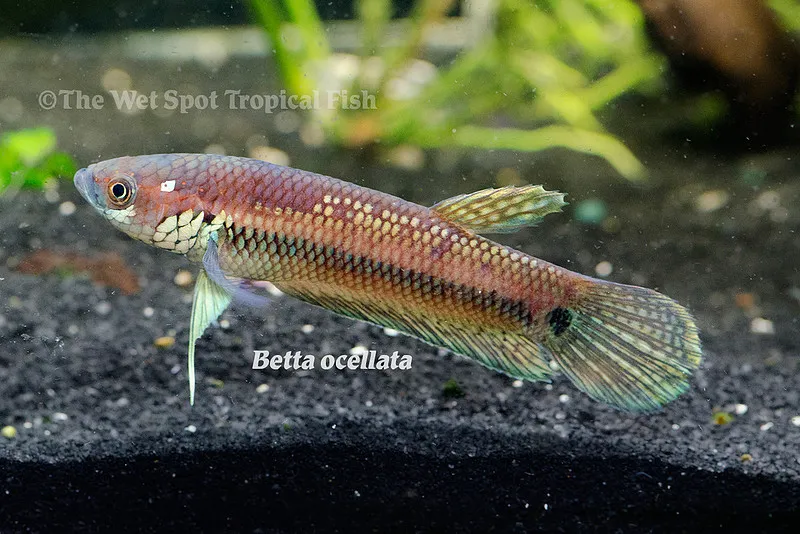 3.5 in (9 cm)24 gal (90 L)70–77°F (21–25°C)
Eyespot betta
Betta ocellata
3.5 in (9 cm) · 24 gal (90 L)
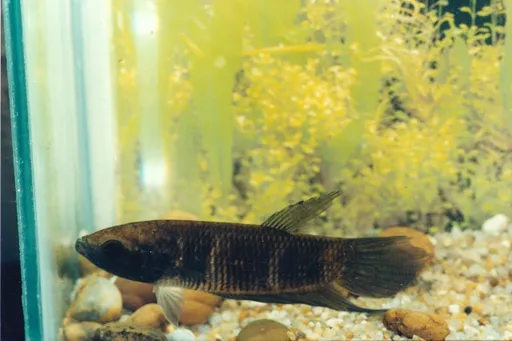 3.5 in (9 cm)26 gal (100 L)73–81°F (23–27°C)
Pi betta
Betta pi
3.5 in (9 cm) · 26 gal (100 L)
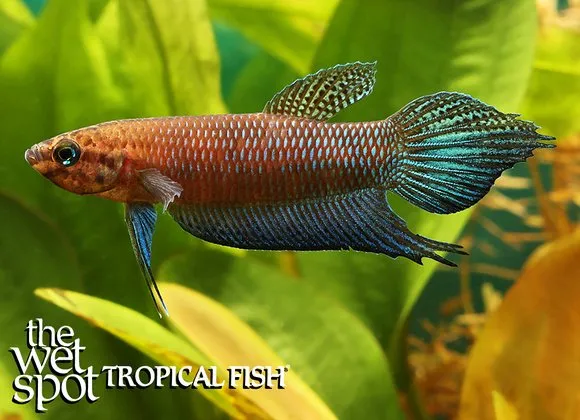 3.5 in (9 cm)20 gal (75 L)73–81°F (23–27°C)
Sims' betta
Betta simorum
3.5 in (9 cm) · 20 gal (75 L)
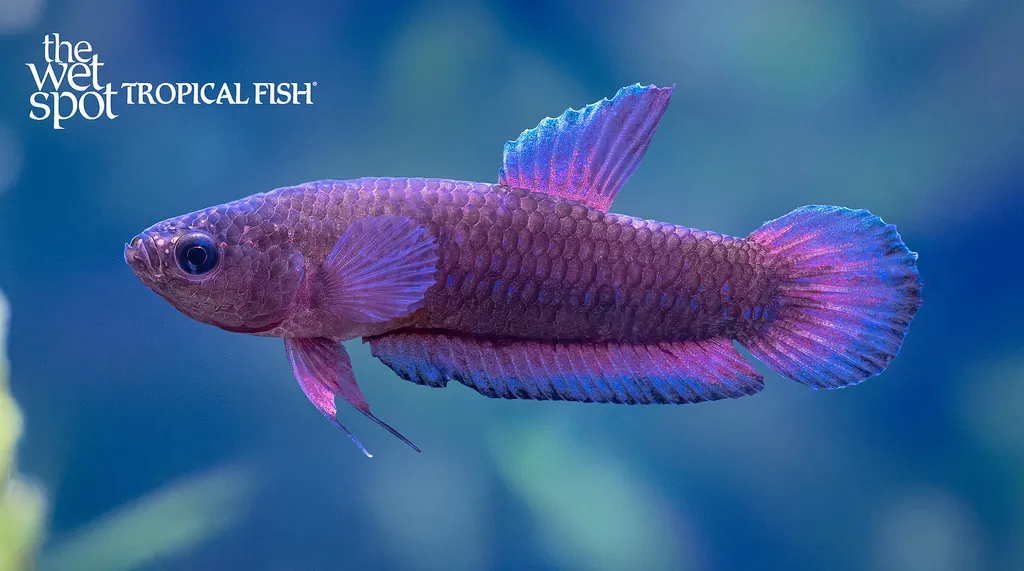 3.5 in (9 cm)20 gal (75 L)77–86°F (25–30°C)
Slender betta
Betta bellica
3.5 in (9 cm) · 20 gal (75 L)
 3.7 in (9.5 cm)20 gal (75 L)73–81°F (23–27°C)
Renata betta
Betta renata
3.7 in (9.5 cm) · 20 gal (75 L)
- 3.3 in (8.3 cm)21 gal (80 L)68–79°F (20–26°C)
Ideii betta
Betta ideii
3.3 in (8.3 cm) · 21 gal (80 L)