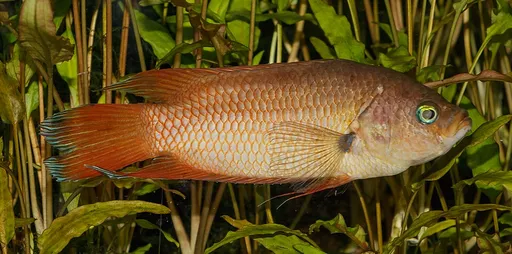
Combtail gourami
Belontia signata
Also known as Ceylonese combtail, Red combtail
FreshwaterFish
Care at a glance
- Temperature
- 72–82°F
- 22–28°C
- pH
- 6.0–7.5
- Adult size
- 4.7 in
- 12 cm
- Minimum tank
- 53 gal
- 200 L
- Temperament
- Aggressive
- Social behavior
- Solitary
- Tankmates
- With caution
- Swim level
- Middle
- Difficulty
- Medium
- Breeding
- Medium
- Rarity
- Common
- Family
- Osphronemidae
- Origin
- Endemic to Sri Lanka (central and southern river systems: Mahaweli, Kelani, Kalu, Nilwala drainages)
Overview
Keep a single fish or one bonded pair in a tank of 200 liters or more, never a group. Males are aggressive toward their own kind, including non-breeding females, and the fish is predatory toward smaller or similarly shaped tankmates, which may be bullied, injured, or eaten. That rules it out of the usual community tank. It tends to hold in the middle of the water column. Keep the water from 22 to 28 C with a pH of 6 to 7.5. Feed it as a carnivore, mostly larger live and frozen foods. Never release one into local waters, since this is a non-native predatory fish outside Sri Lanka, and check your local rules before keeping it.
In the wild
Combtail gouramis are endemic to Sri Lanka, where they live in the central and southern river systems including the Mahaweli, Kelani, Kalu, and Nilwala drainages. Give them a tank of at least 200 liters with a long footprint, soft sandy substrate, and plenty of cover from driftwood, roots, and branches. Keep the lighting dim and add floating plants up top. Water should run from 22 to 28 C with a pH of 6 to 7.5, gentle flow, and efficient filtration. As a labyrinth breather, this fish needs to gulp air, so leave a small warm, humid gap between the water surface and the cover glass.
Good to know
This is a labyrinth fish in the family Osphronemidae, the same anabantoid group as other gouramis. Most adults settle around 12 cm, though the species can reach close to 18 cm. It breathes air at the surface through an accessory organ called the labyrinth. It's a bubble nester with biparental care, and both parents tend the eggs and fry.
Did you know
The name comes from the tail. The rays of the caudal fin extend past the webbing into separate points, giving the back edge a ragged, comb-like look. Despite the aggression, breeding pairs are attentive parents and both the male and female guard the bubble nest and fry together.
Common questions
What size tank does a Combtail gourami need?
A Combtail gourami needs at least 53 gal (200 L). It spends most of its time in the middle.
What temperature and pH does a Combtail gourami need?
A Combtail gourami is comfortable at 72–82°F (22–28°C) with a pH of 6.0–7.5.
How big does a Combtail gourami get?
An adult Combtail gourami reaches about 4.7 in (12 cm).
Related species
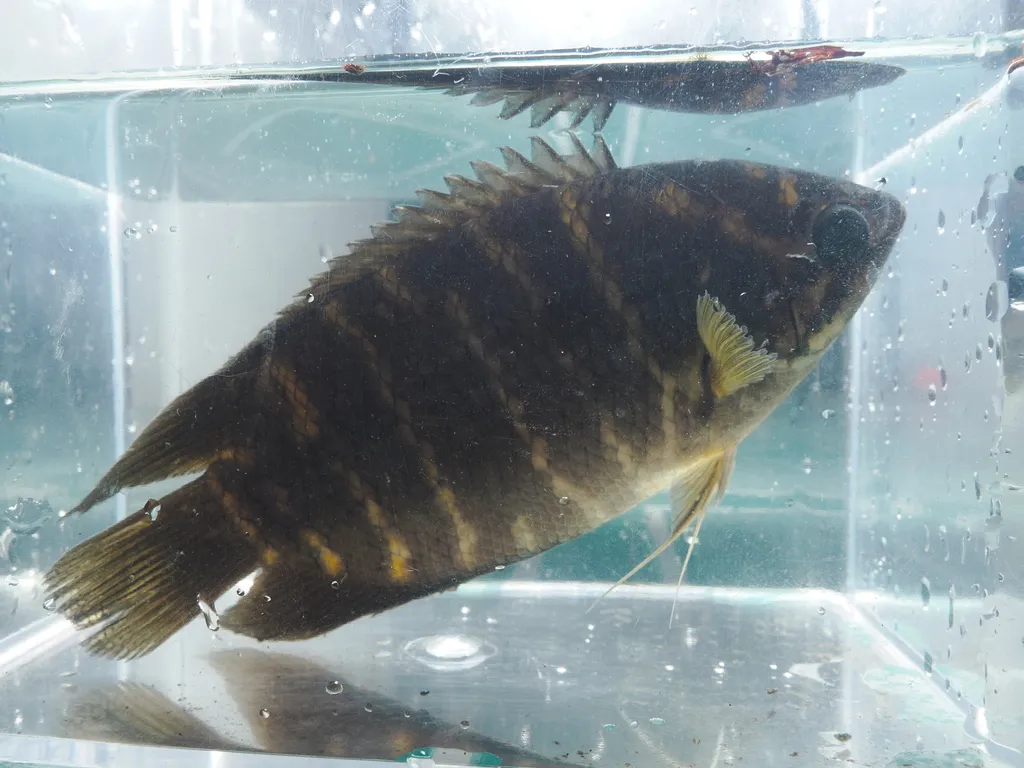 7.9 in (20 cm)45 gal (170 L)70–79°F (21–26°C)
Malay combtail gourami
Belontia hasselti
7.9 in (20 cm) · 45 gal (170 L)
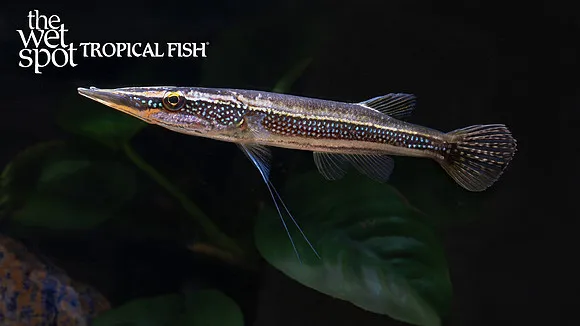 4.7 in (12 cm)29 gal (110 L)72–79°F (22–26°C)
Peppermint pikehead
Luciocephalus aura
4.7 in (12 cm) · 29 gal (110 L)
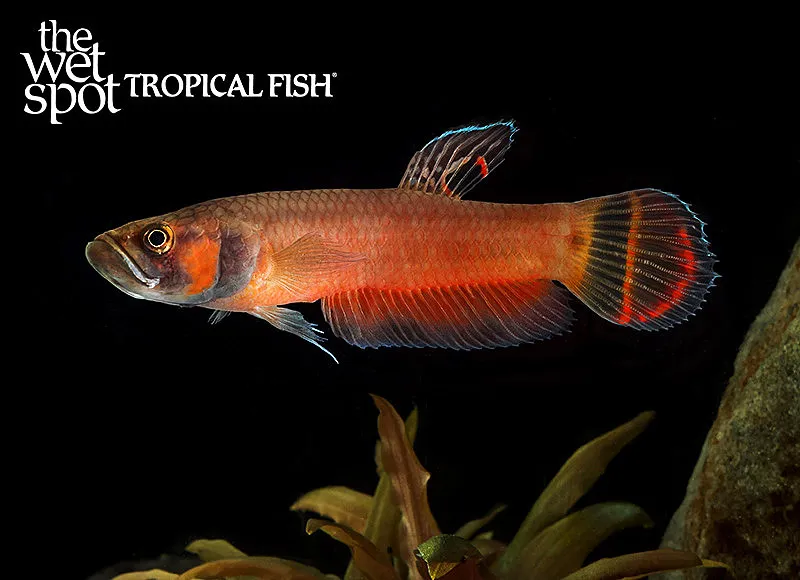 3.9 in (10 cm)20 gal (75 L)72–79°F (22–26°C)
Brunei beauty betta
Betta macrostoma
3.9 in (10 cm) · 20 gal (75 L)
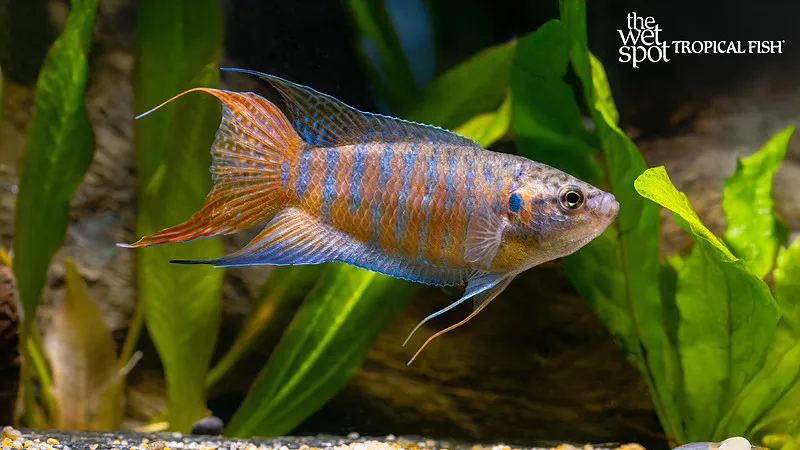 3.1 in (8 cm)25 gal (95 L)50–72°F (10–22°C)
Paradise fish
Macropodus opercularis
3.1 in (8 cm) · 25 gal (95 L)
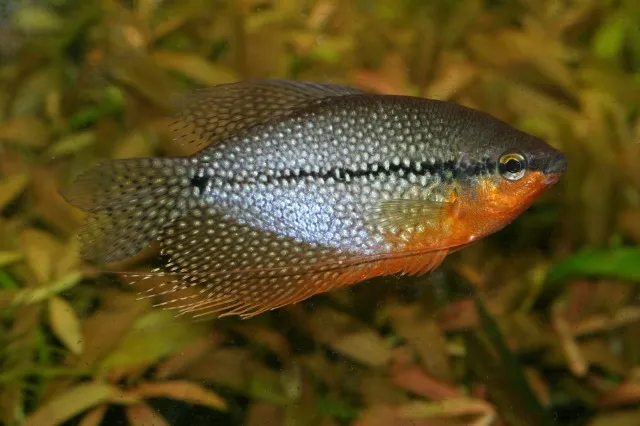 4.7 in (12 cm)30 gal (115 L)75–86°F (24–30°C)
Pearl gourami
Trichopodus leerii
4.7 in (12 cm) · 30 gal (115 L)
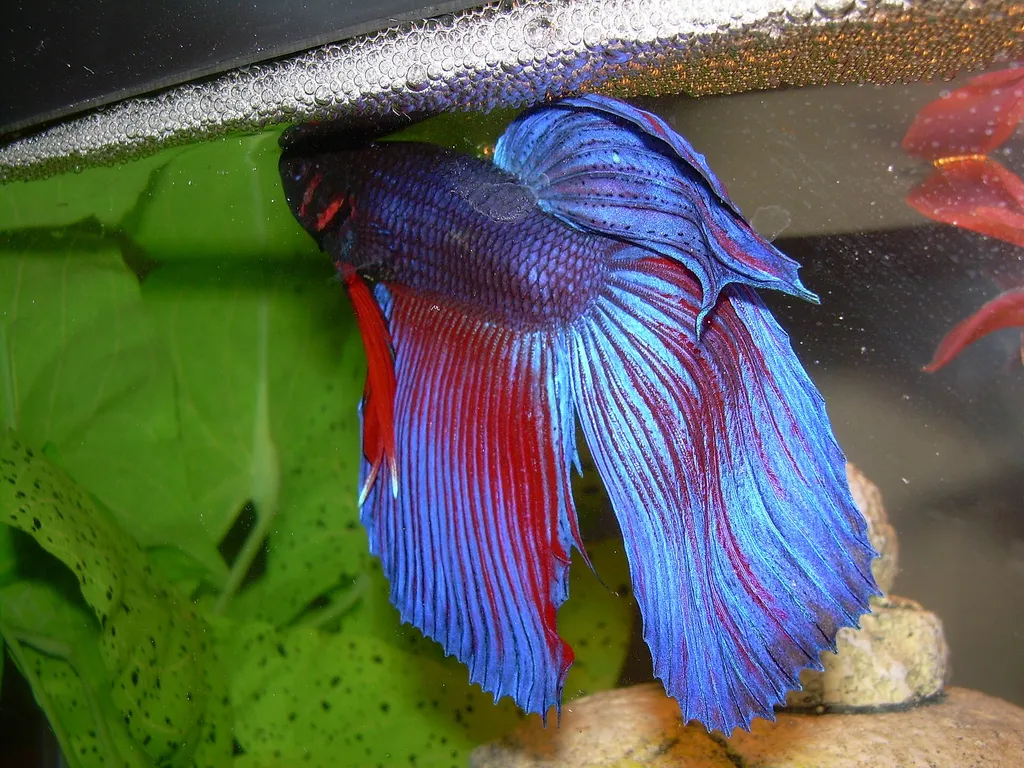 3 in (7.5 cm)7 gal (25 L)72–86°F (22–30°C)
Betta
Betta splendens
3 in (7.5 cm) · 7 gal (25 L)