Rose flame glassfish
Gymnochanda verae
Also known as Vera's glassfish, Rose flame glass fish
FreshwaterFish
Care at a glance
- Temperature
- 75–82°F
- 24–28°C
- pH
- 4.5–6.5
- Adult size
- 1.2 in
- 3 cm
- Minimum tank
- 11 gal
- 40 L
- Temperament
- Peaceful
- Social behavior
- Schooling
- Swim level
- Middle
- Difficulty
- Difficult
- Breeding
- Hard
- Rarity
- Rare
- Family
- Ambassidae
- Origin
- Blackwater streams of Belitung Island, Indonesia
Overview
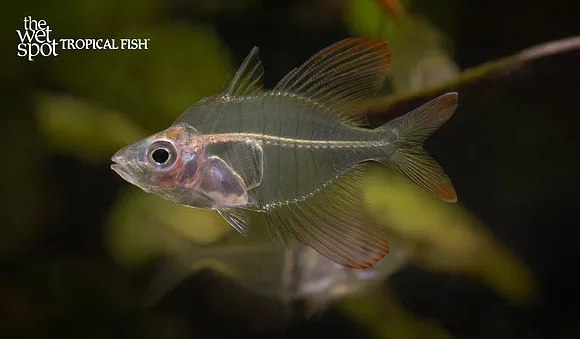
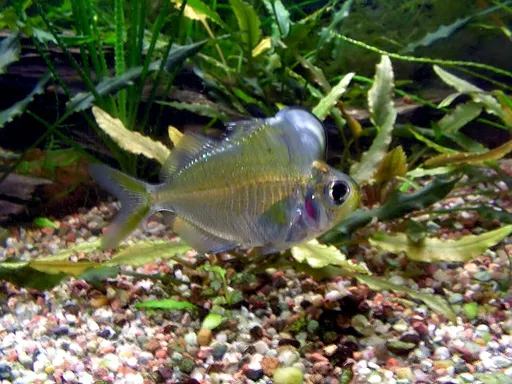
The rose flame glassfish is a tiny, transparent blackwater fish kept for the display of its red-finned males. It is demanding and suits only experienced keepers.
Did you know
The rose flame glassfish's entire known range is a handful of streams on one Indonesian island. Aquarium-bred fish may end up mattering for the survival of a species with almost nowhere else to live.
Caring for the rose flame glassfish
Rose flame glassfish need a group of at least eight to ten, which settles them and sets the males showing to one another. A dim, planted blackwater tank of 11 gal (40 L) or more suits a group. Leaf litter and wood add tannins, and the flow should stay gentle.
Keep the water soft and acidic, with very low mineral content, at 75 to 82°F (24 to 28°C) and a pH of 4.5 to 6.5. This fragile fish depends on stable water and mature blackwater conditions.
Feed live and frozen micro-foods, especially newly hatched brine shrimp, since they rarely touch dry food. They are peaceful but shy and easily outcompeted. House them only with very small, calm soft-water fish, or keep a species tank.
Males carry broad red dorsal and anal fins and red tail lobes, with the long rays joined by membrane into flags. Females stay plain and clear. Captive breeding is difficult.
Good to know
Gymnochanda verae is a glassperch in the family Ambassidae, described in 2011. Like others in its genus, it is nearly scaleless and transparent.
In the wild
The rose flame glassfish is found only in the blackwater streams around Gantung on Belitung Island, Indonesia. The water there is soft, acidic and stained dark by peat.
Weekly picks
Tank mates
The rose flame glassfish is a peaceful, schooling species that keeps to the middle. These picks share a community profile with it, are safe together in both directions, and overlap on water type, temperature and pH.
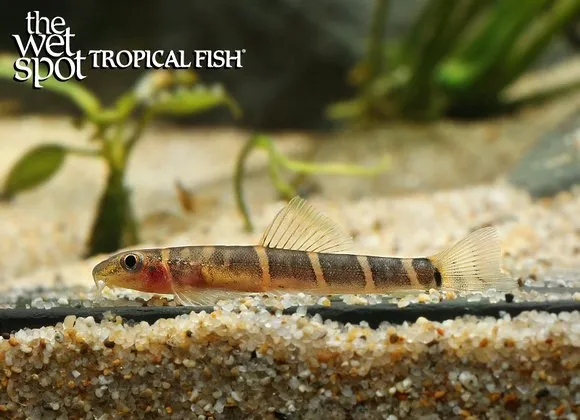
Fire-eyed loach
Barbucca diabolica
Freshwater1.2 in (3 cm) · 11 gal (40 L)72–79°F (22–26°C)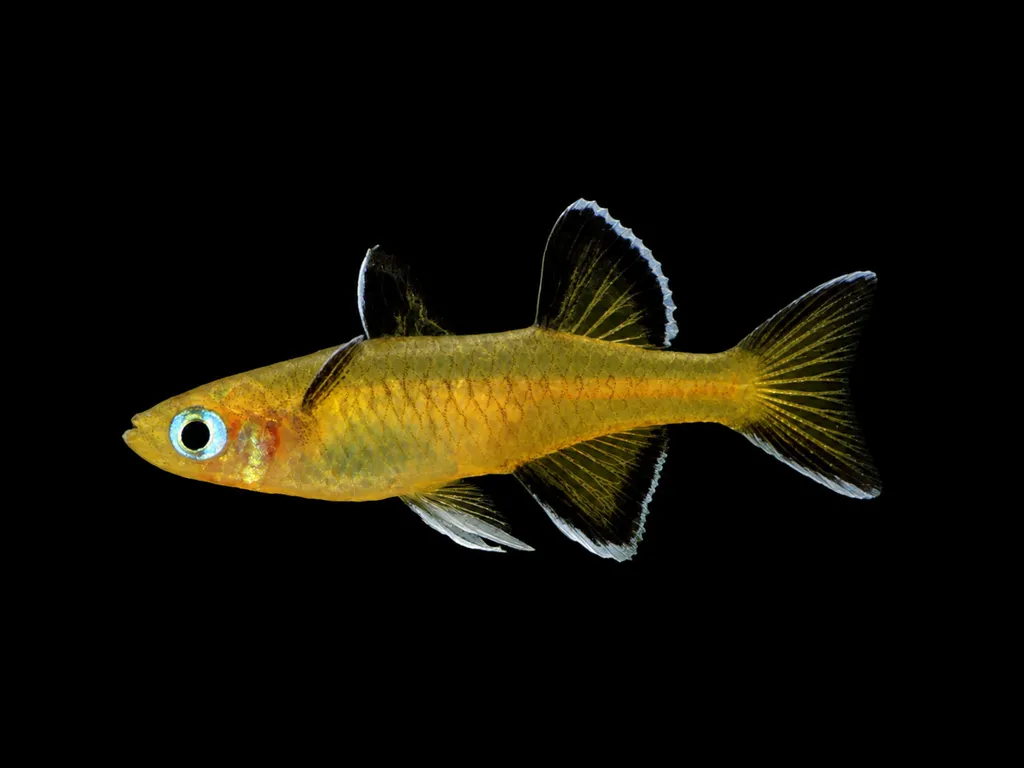
Honey blue-eye
Pseudomugil mellis
Freshwater1.4 in (3.5 cm) · 11 gal (40 L)68–82°F (20–28°C)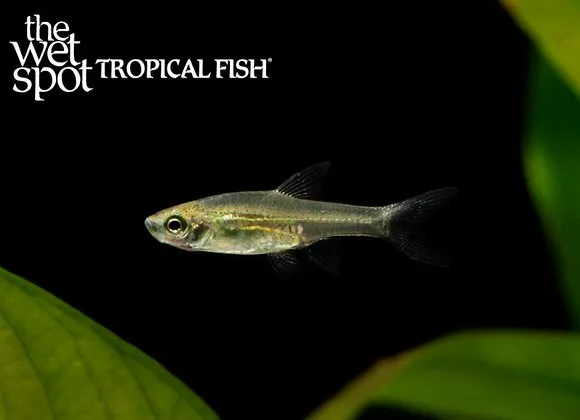
Indian glowlight carplet
Horadandia brittani
Freshwater1 in (2.5 cm) · 11 gal (40 L)75–82°F (24–28°C)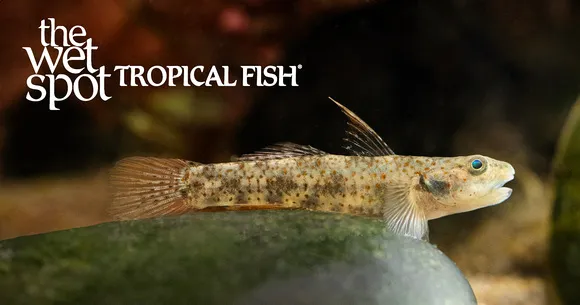
Lumbantobing goby
Pseudogobiopsis lumbantobing
Freshwater1.6 in (4 cm) · 11 gal (40 L)75–82°F (24–28°C)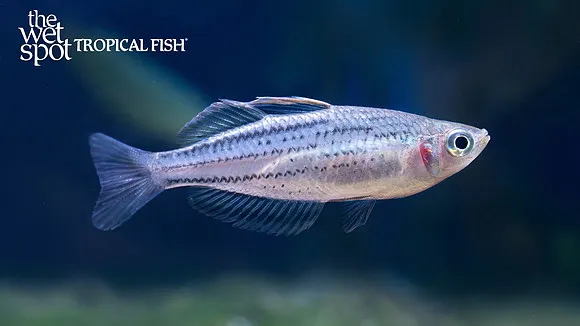
Green panchax
Aplocheilus blockii
Freshwater2 in (5 cm) · 11 gal (40 L)72–82°F (22–28°C)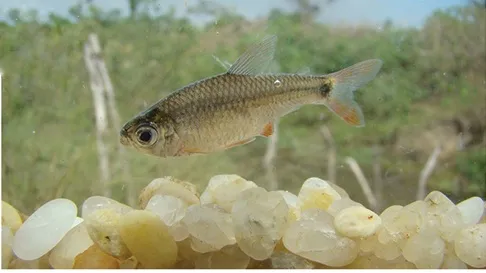
Piaba tetra
Serrapinnus piaba
Freshwater1.6 in (4 cm) · 11 gal (40 L)72–82°F (22–28°C)
Common questions
What size tank does a rose flame glassfish need?
A rose flame glassfish needs at least 11 gal (40 L). It spends most of its time in the middle.
What temperature and pH does a rose flame glassfish need?
A rose flame glassfish is comfortable at 75–82°F (24–28°C) with a pH of 4.5–6.5.
What does a rose flame glassfish eat?
A rose flame glassfish eats live and frozen micro-foods, especially newly hatched brine shrimp. It rarely touches dry food.
How big does a rose flame glassfish get?
An adult rose flame glassfish reaches about 1.2 in (3 cm).
Does a rose flame glassfish need a group?
Yes. A rose flame glassfish is a schooling species and should be kept in a group, not singly.
Related species
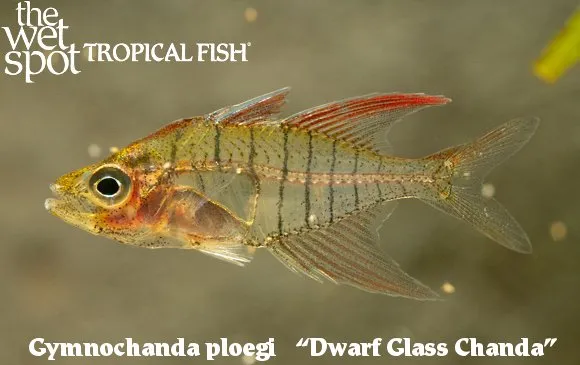 1.2 in (3 cm)11 gal (40 L)75–82°F (24–28°C)
Dwarf glass chanda
Gymnochanda ploegi
1.2 in (3 cm) · 11 gal (40 L)
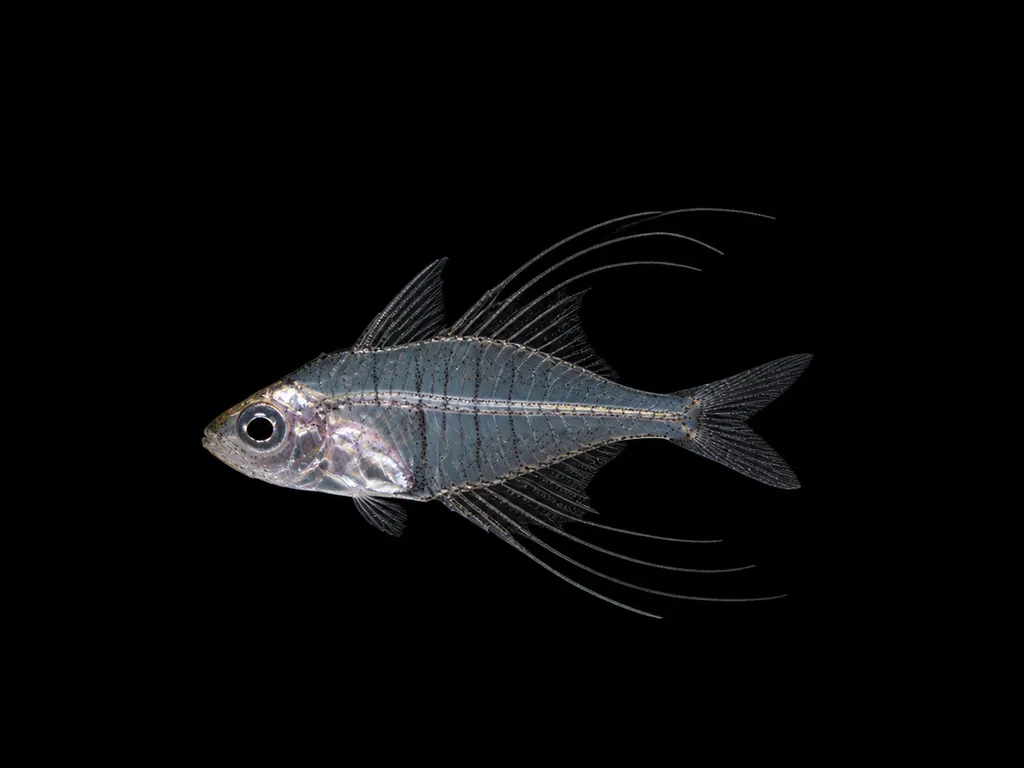 1.6 in (4 cm)16 gal (60 L)73–81°F (23–27°C)
Threadfin glassfish
Gymnochanda filamentosa
1.6 in (4 cm) · 16 gal (60 L)
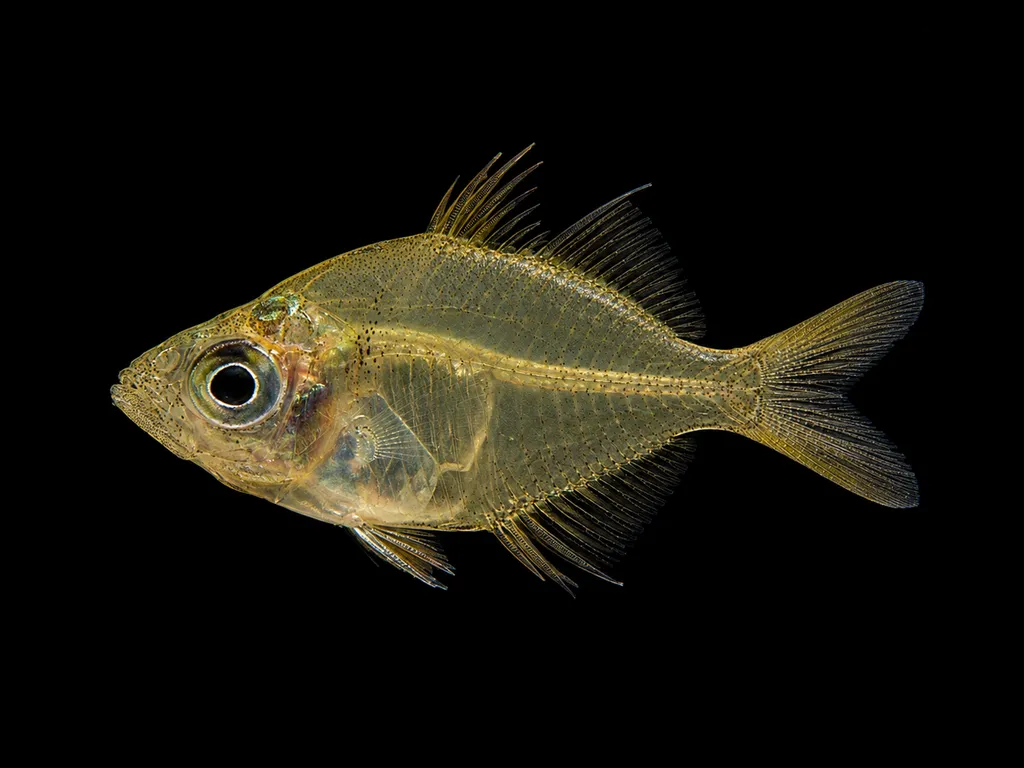 1.2 in (3 cm)11 gal (40 L)72–82°F (22–28°C)
Indian amber glassfish
Parambassis lala
1.2 in (3 cm) · 11 gal (40 L)
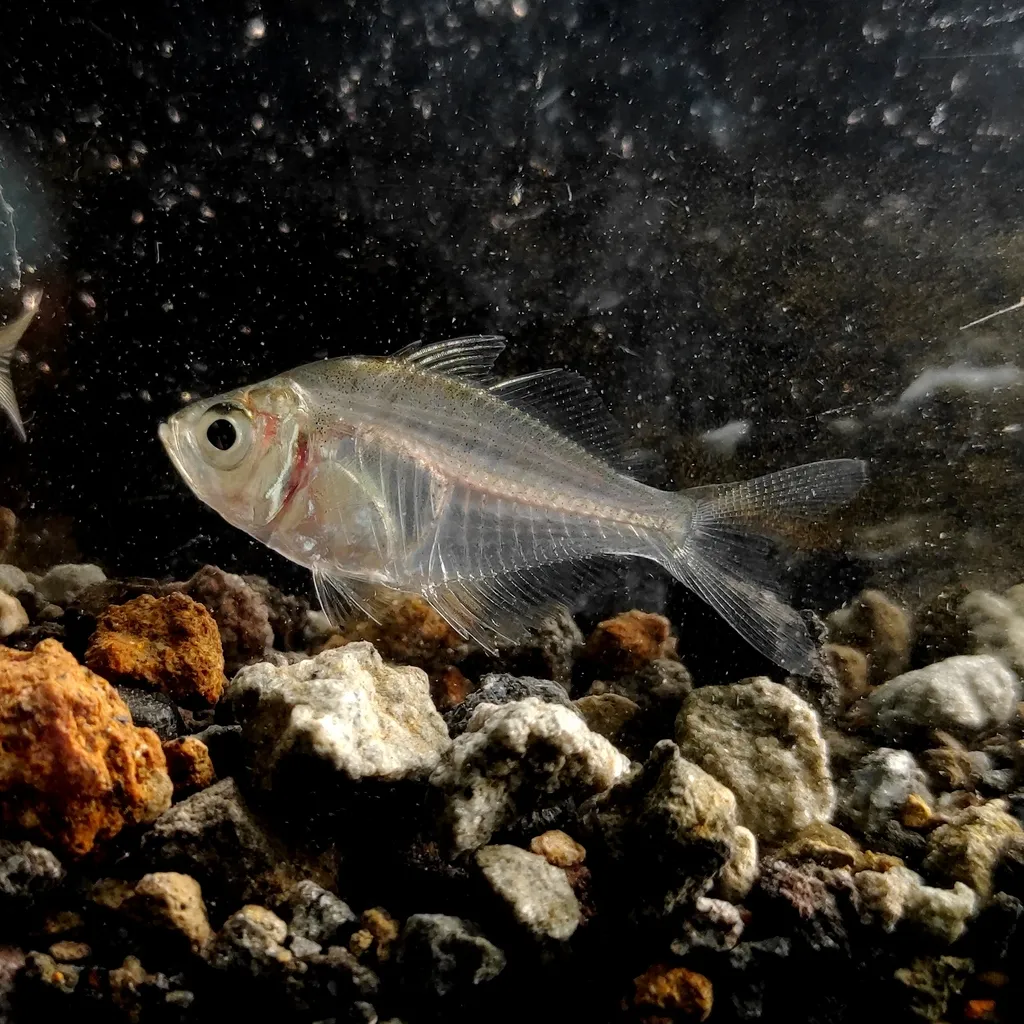 2.8 in (7 cm)21 gal (80 L)73–82°F (23–28°C)
Siamese glassfish
Parambassis siamensis
2.8 in (7 cm) · 21 gal (80 L)
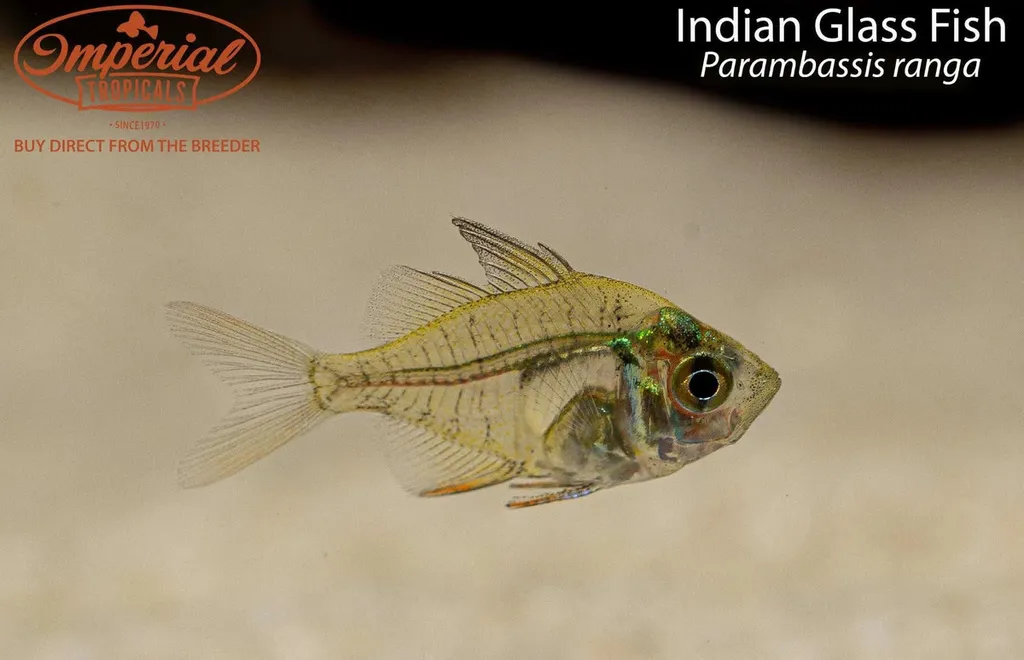 3.1 in (8 cm)20 gal (75 L)68–86°F (20–30°C)
Indian glassy fish
Parambassis ranga
3.1 in (8 cm) · 20 gal (75 L)
 3.9 in (10 cm)32 gal (120 L)73–81°F (23–27°C)
Humphead glassfish
Parambassis pulcinella
3.9 in (10 cm) · 32 gal (120 L)