Indian amber glassfish
Parambassis lala
Also known as Dwarf glassfish, Highfin glassy perchlet, Indian amber glass fish
FreshwaterFish
Care at a glance
- Temperature
- 72–82°F
- 22–28°C
- pH
- 6.5–7.8
- Adult size
- 1.2 in
- 3 cm
- Minimum tank
- 11 gal
- 40 L
- Temperament
- Peaceful
- Social behavior
- Schooling
- Swim level
- Middle
- Diet
- Carnivore
- Difficulty
- Medium
- Breeding
- Egg scatterer · Hard
- Rarity
- Rare
- Family
- Ambassidae
- Origin
- Ganges and Brahmaputra lowlands, India and Bangladesh
Overview
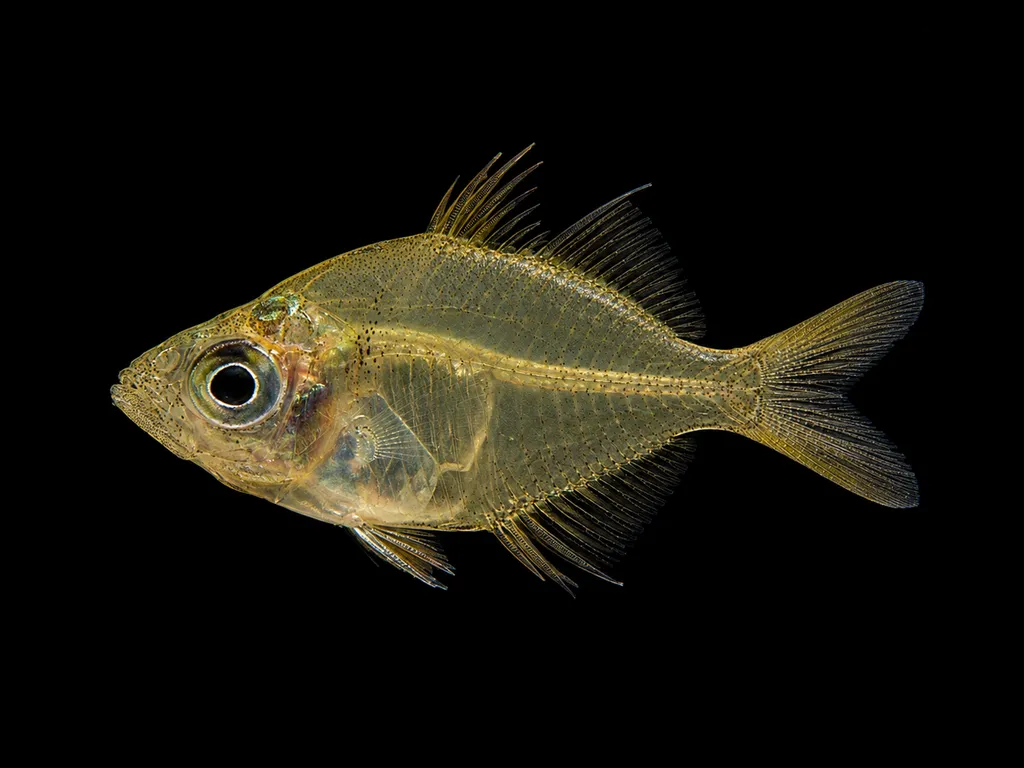
The Indian amber glassfish is a naturally colored dwarf glassfish for the middle of a peaceful planted tank. It is a step up from the easiest fish.
Did you know
Dyed glassfish were sold for years in injected neon colors that harmed the fish. The Indian amber glassfish arrived already wearing a soft natural amber, with no needle required.
Caring for the Indian amber glassfish
Keep Indian amber glassfish in a group of at least six to eight, in a planted tank of 11 gal (40 L) or more. Leave open midwater between the plants, add some floating cover to soften the light and keep the flow gentle. A mature tank with fine live foods drifting in the water suits its constant grazing.
It does well in slightly hard, near-neutral water at 72 to 82°F (22 to 28°C) and a pH of 6.5 to 7.8. It is a micropredator with a tiny mouth, so feed small foods. Offer newly hatched brine shrimp, daphnia, micro-worms, frozen cyclops and finely crushed dry food.
The Indian amber glassfish is peaceful, so keep it with other small, gentle fish that will not outcompete it. A group brings out the males, which take on a warm amber body and orange-edged fins when breeding. It spawns by scattering eggs, which is possible but not easy in aquariums.
Good to know
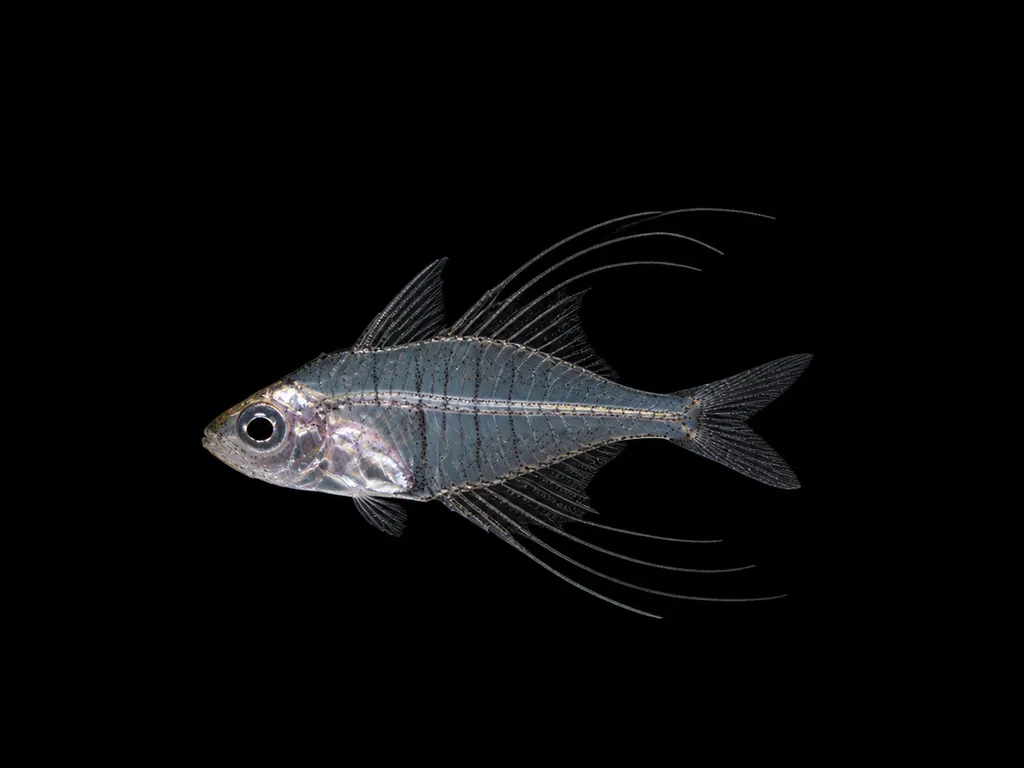
Parambassis lala is the true dwarf glassfish of the family Ambassidae. It is smaller than the common Indian glassfish it is often confused with. Three faint bars sit behind the eye, and its transparent flanks show the backbone and swim bladder.
In the wild
The Indian amber glassfish lives in the weedy backwaters, ponds and slow channels of the Ganges and Brahmaputra lowlands in India and Bangladesh.
Weekly picks
Tank mates
The Indian amber glassfish is a peaceful, schooling species that keeps to the middle. These picks share a community profile with it, are safe together in both directions, and overlap on water type, temperature and pH.
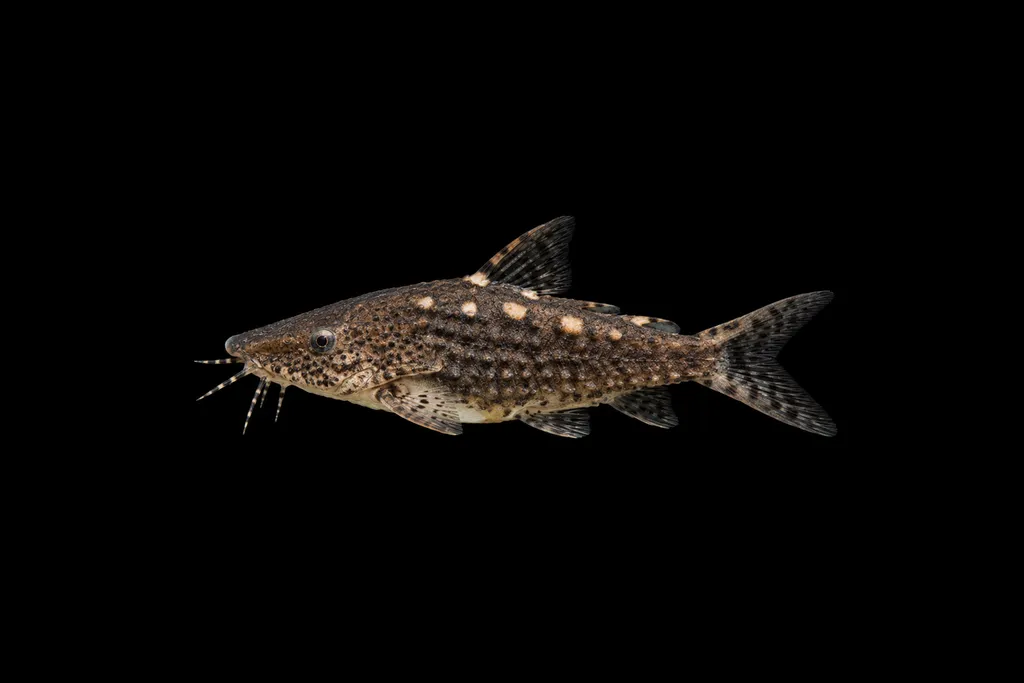
Dwarf warty catfish
Parakysis notialis
Freshwater1 in (2.5 cm) · 11 gal (40 L)73–82°F (23–28°C)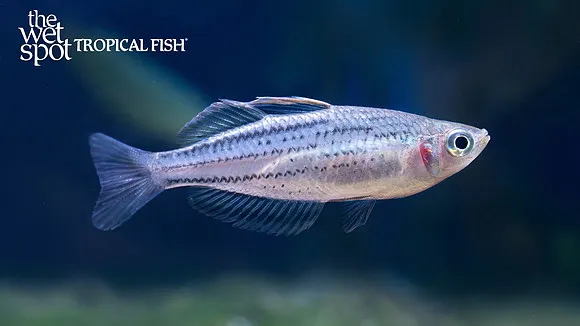
Green panchax
Aplocheilus blockii
Freshwater2 in (5 cm) · 11 gal (40 L)72–82°F (22–28°C)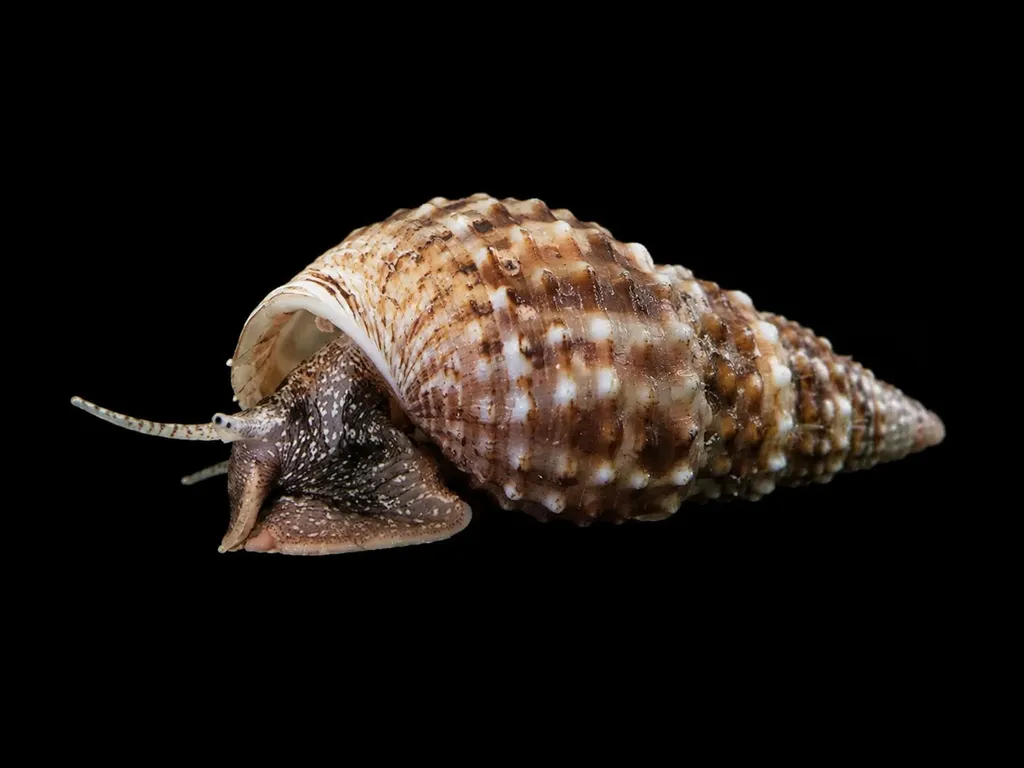
Prambanan snail
Thiara winteri
Freshwater1.6 in (4 cm) · 11 gal (40 L)73–82°F (23–28°C)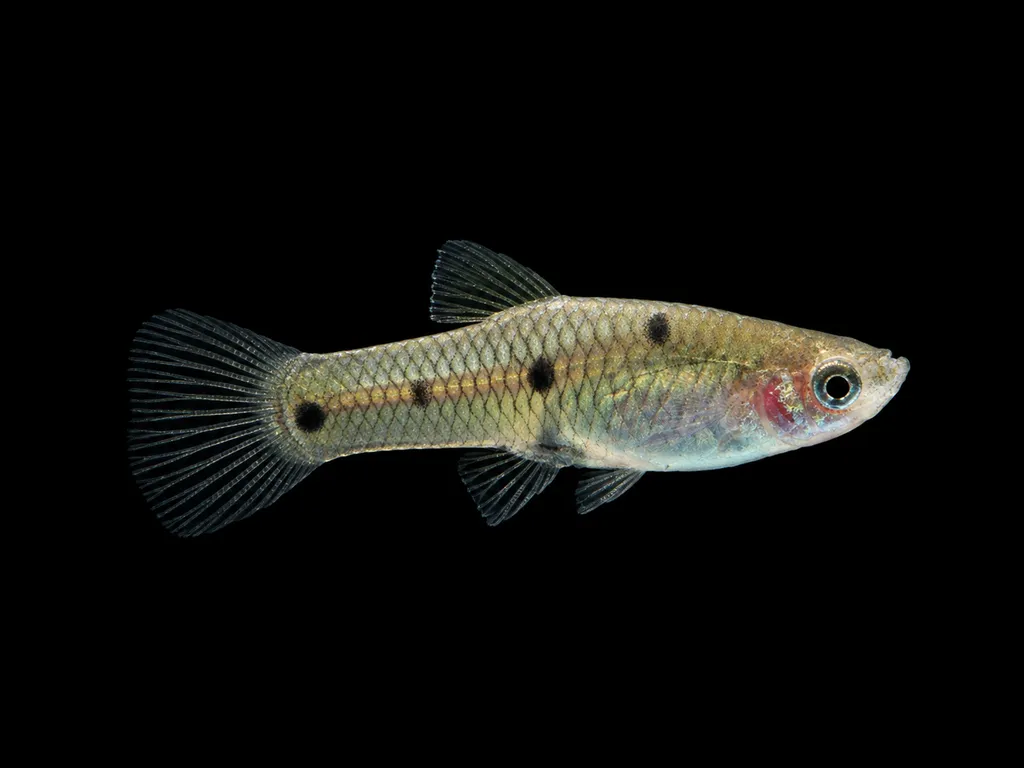
Fourspotted toothcarp
Phallichthys quadripunctatus
Freshwater1.4 in (3.5 cm) · 11 gal (40 L)68–86°F (20–30°C)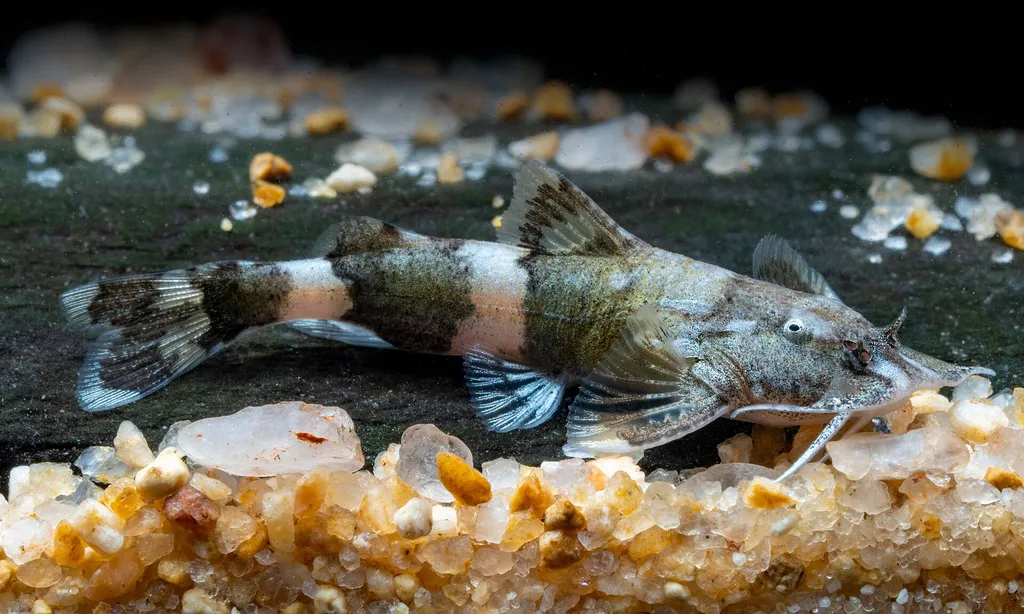
Cheetah moth catfish
Pseudolaguvia shawi
Freshwater1.5 in (3.8 cm) · 11 gal (40 L)68–79°F (20–26°C)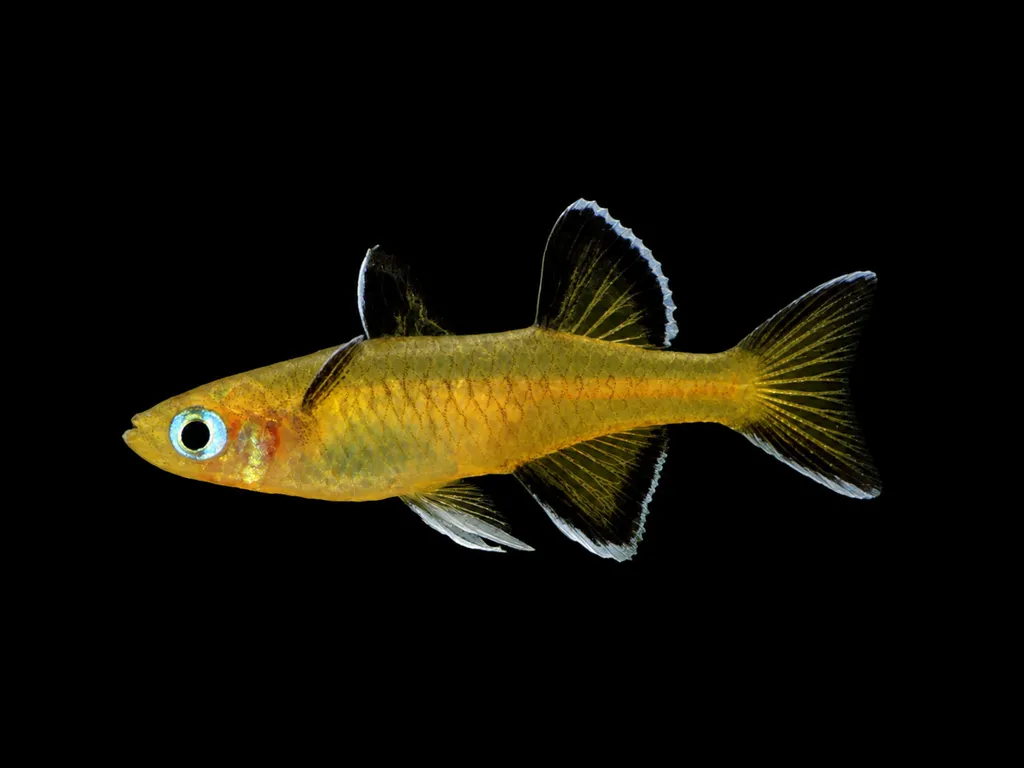
Honey blue-eye
Pseudomugil mellis
Freshwater1.4 in (3.5 cm) · 11 gal (40 L)68–82°F (20–28°C)
Common questions
What size tank does an Indian amber glassfish need?
An Indian amber glassfish needs at least 11 gal (40 L). It spends most of its time in the middle.
What temperature and pH does an Indian amber glassfish need?
An Indian amber glassfish is comfortable at 72–82°F (22–28°C) with a pH of 6.5–7.8.
What does an Indian amber glassfish eat?
An Indian amber glassfish is a micropredator with a tiny mouth, so it eats small foods. Give it newly hatched brine shrimp, daphnia, micro-worms, frozen cyclops and finely crushed dry food.
How big does an Indian amber glassfish get?
An adult Indian amber glassfish reaches about 1.2 in (3 cm).
Does an Indian amber glassfish need a group?
Yes. An Indian amber glassfish is a schooling species and should be kept in a group, not singly.
How can you tell a male Indian amber glassfish from a female?
Males take on a warm amber body and orange-edged fins when they come into breeding condition.
How does an Indian amber glassfish breed?
The Indian amber glassfish spawns by scattering its eggs. Breeding it in the aquarium is possible but not easy.
Related species
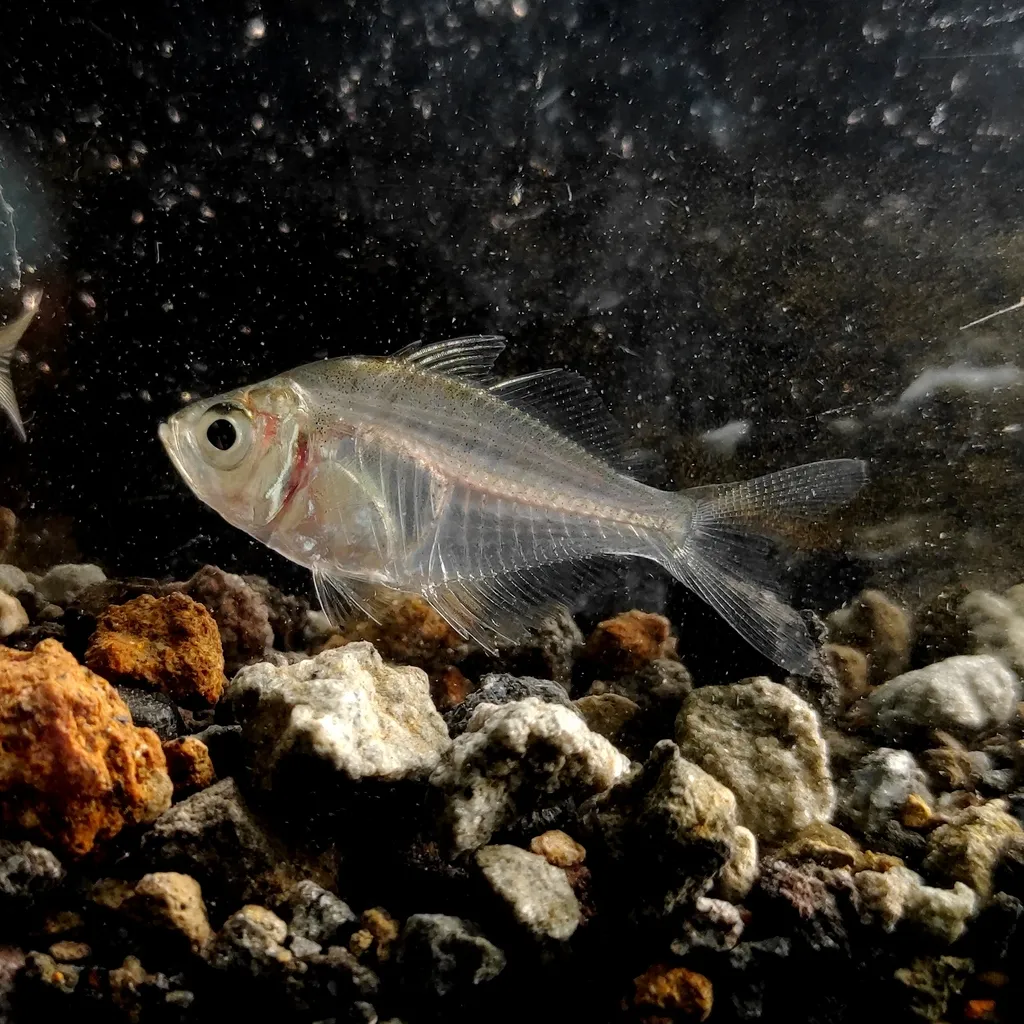 2.8 in (7 cm)21 gal (80 L)73–82°F (23–28°C)
Siamese glassfish
Parambassis siamensis
2.8 in (7 cm) · 21 gal (80 L)
 3.1 in (8 cm)20 gal (75 L)68–86°F (20–30°C)
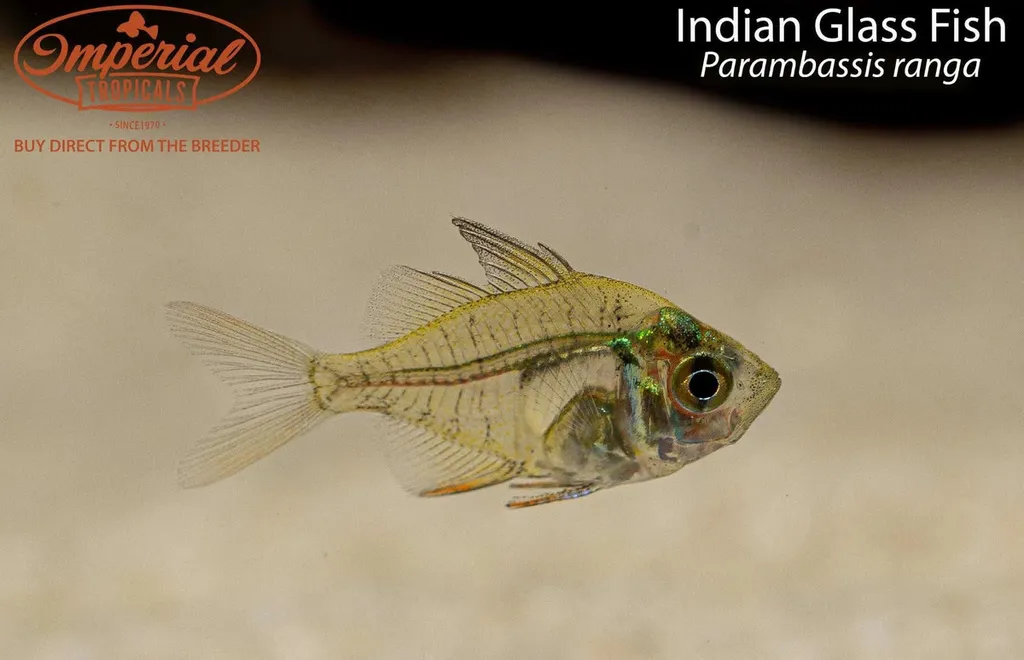
Indian glassy fish
Parambassis ranga
3.1 in (8 cm) · 20 gal (75 L)
 3.9 in (10 cm)32 gal (120 L)73–81°F (23–27°C)
Humphead glassfish
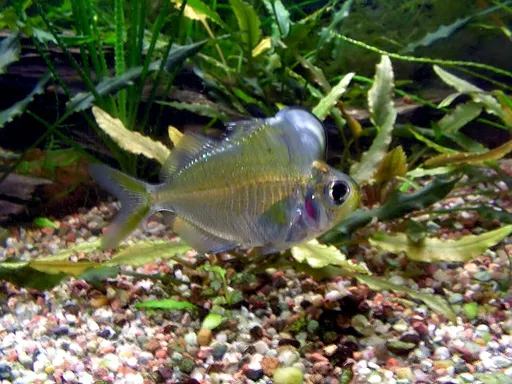
Parambassis pulcinella
3.9 in (10 cm) · 32 gal (120 L)
 1.2 in (3 cm)11 gal (40 L)75–82°F (24–28°C)
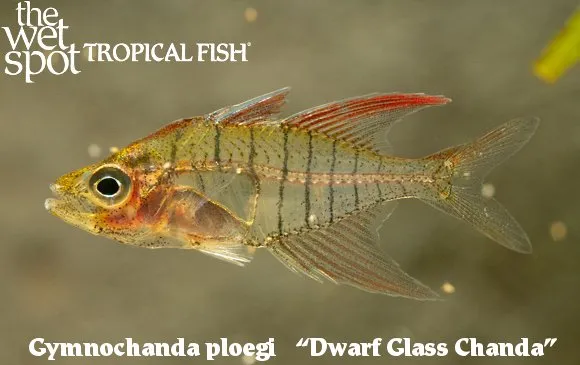
Dwarf glass chanda
Gymnochanda ploegi
1.2 in (3 cm) · 11 gal (40 L)
 1.2 in (3 cm)11 gal (40 L)75–82°F (24–28°C)
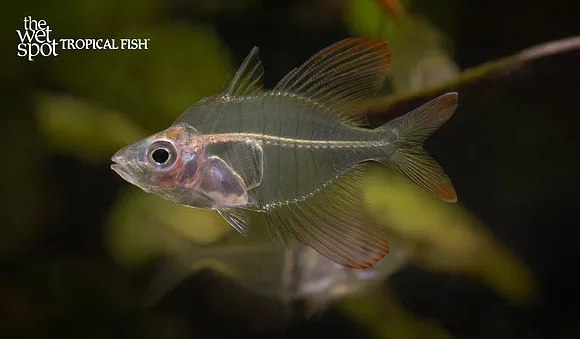
Rose flame glassfish
Gymnochanda verae
1.2 in (3 cm) · 11 gal (40 L)
 1.6 in (4 cm)16 gal (60 L)73–81°F (23–27°C)
Threadfin glassfish
Gymnochanda filamentosa
1.6 in (4 cm) · 16 gal (60 L)