Dwarf glass chanda
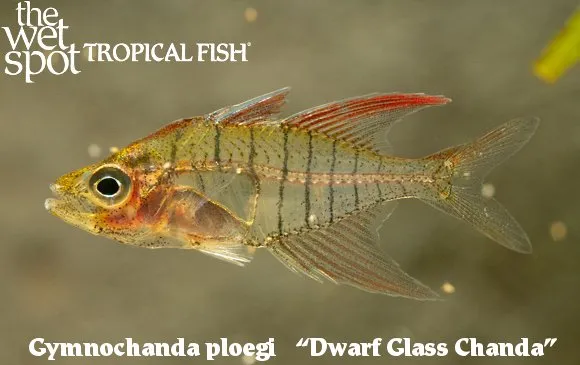
Gymnochanda ploegi
Also known as Ploeg's glassfish
FreshwaterFish
Care at a glance
- Temperature
- 75–82°F
- 24–28°C
- pH
- 4.5–6.5
- Adult size
- 1.2 in
- 3 cm
- Minimum tank
- 11 gal
- 40 L
- Temperament
- Peaceful
- Social behavior
- Schooling
- Swim level
- Middle
- Diet
- Carnivore
- Difficulty
- Difficult
- Breeding
- Hard
- Rarity
- Rare
- Family
- Ambassidae
- Origin
- Blackwater peat swamps of West Kalimantan, Borneo
Overview
The dwarf glass chanda is a tiny, delicate blackwater glassfish that schools in the middle of the tank. It is a fish for experienced keepers.
Did you know
The dwarf glass chanda is named in memory of Alex Ploeg, a conservationist and leader in the ornamental fish trade. He was killed in the July 2014 airliner disaster over eastern Ukraine, the same year the fish was described.
Caring for the dwarf glass chanda
Keep dwarf glass chandas in a group of at least eight to ten, which settles them and brings the males into display. A dim, densely planted blackwater tank of 11 gal (40 L) or more suits a group. Add leaf litter and wood for tannins, and keep the flow slow and the filtration gentle.
This fish must have soft, acidic water or it will not last. Keep it at 75 to 82°F (24 to 28°C) and a pH of 4.5 to 6.5, with very low hardness. Stable, mature blackwater chemistry matters most of all.
It rarely takes dry food and must have live food to last. Feed live and frozen tiny prey, above all newly hatched brine shrimp, plus copepods and micro-worms.
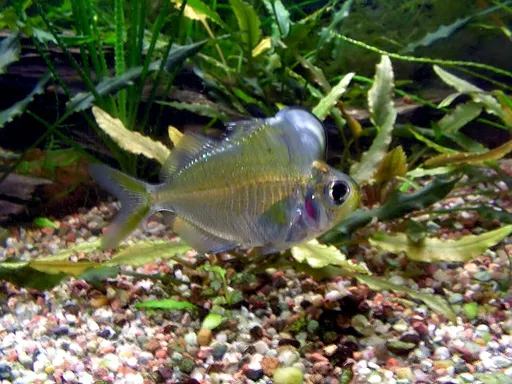
The dwarf glass chanda is peaceful but shy and easily outcompeted. Keep it only with very small, calm soft-water fish, or better still on its own. Males flush their fins deep maroon-red with black edges, while females stay clear. Breeding is difficult and seldom done in the hobby.
Good to know
The dwarf glass chanda, Gymnochanda ploegi, is a glassperch in the family Ambassidae. Its genus name means naked chanda, because its body carries almost no scales. That leaves the fish transparent.
In the wild
The dwarf glass chanda comes from peat-swamp forests and blackwater streams around the Kapuas lakes of West Kalimantan, Borneo. Its tea-dark water is very soft and acidic, with almost no minerals.
Weekly picks
Tank mates
The dwarf glass chanda is a peaceful, schooling species that keeps to the middle. These picks share a community profile with it, are safe together in both directions, and overlap on water type, temperature and pH.
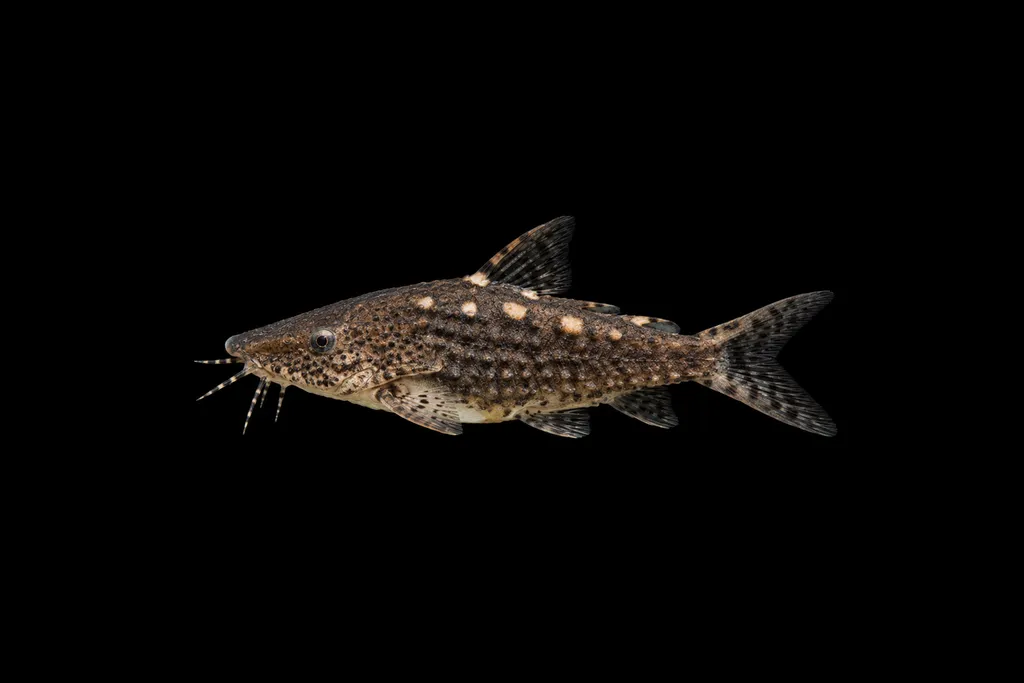
Dwarf warty catfish
Parakysis notialis
Freshwater1 in (2.5 cm) · 11 gal (40 L)73–82°F (23–28°C)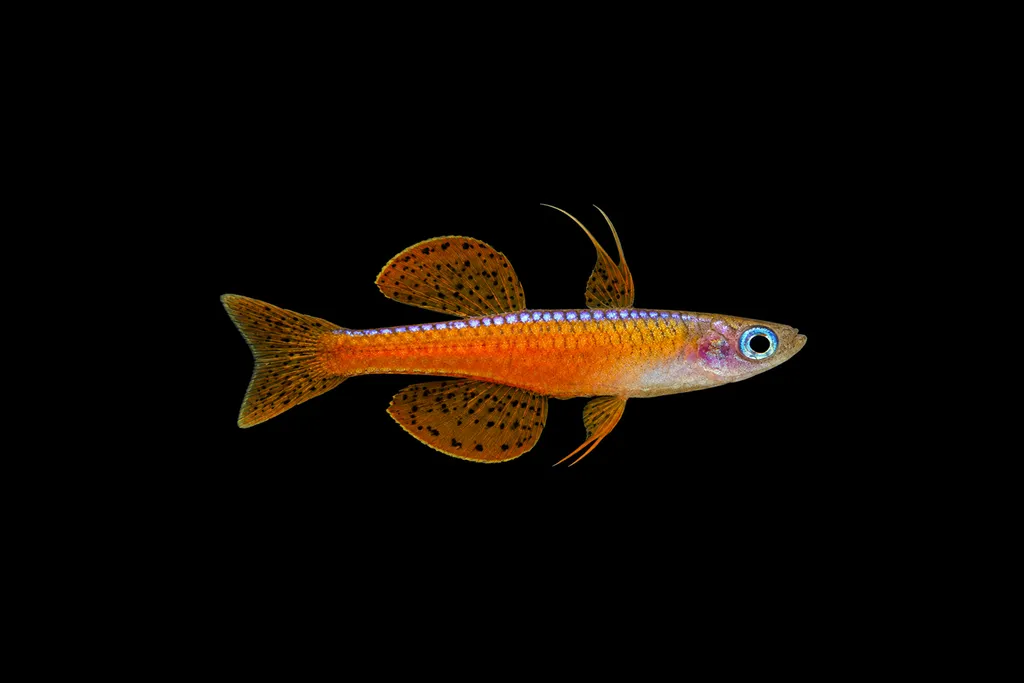
Paska's blue-eye
Pseudomugil paskai
Freshwater1.4 in (3.5 cm) · 11 gal (40 L)72–79°F (22–26°C)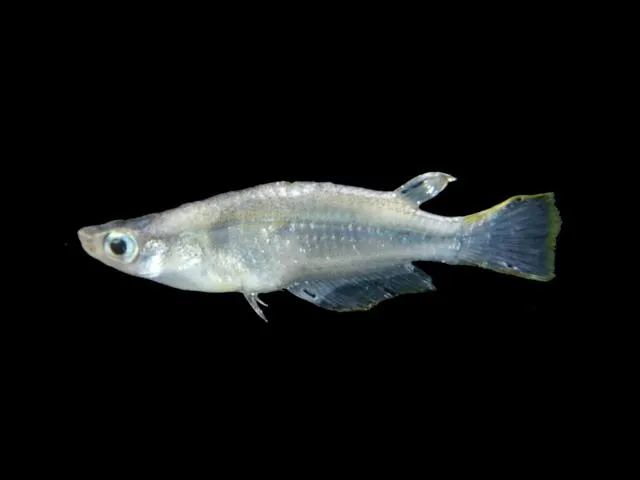
Javanese ricefish
Oryzias javanicus
Freshwater1.4 in (3.5 cm) · 11 gal (40 L)75–84°F (24–29°C)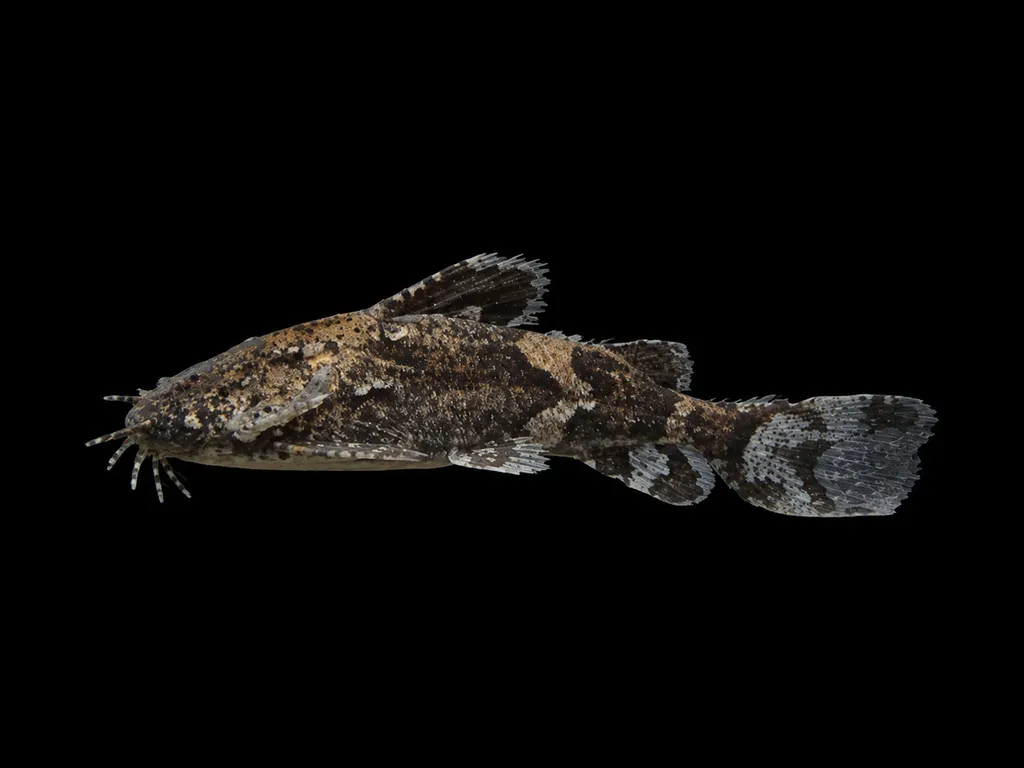
Burmese mini moth catfish
Hara minuscula
Freshwater1.2 in (3 cm) · 11 gal (40 L)68–79°F (20–26°C)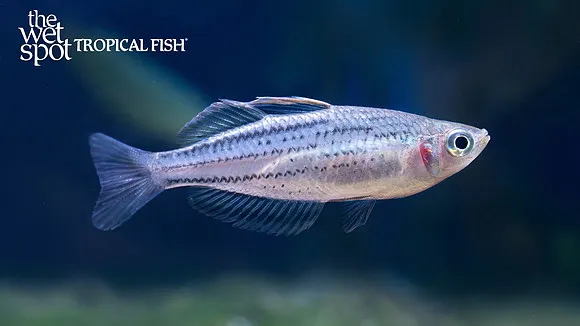
Green panchax
Aplocheilus blockii
Freshwater2 in (5 cm) · 11 gal (40 L)72–82°F (22–28°C)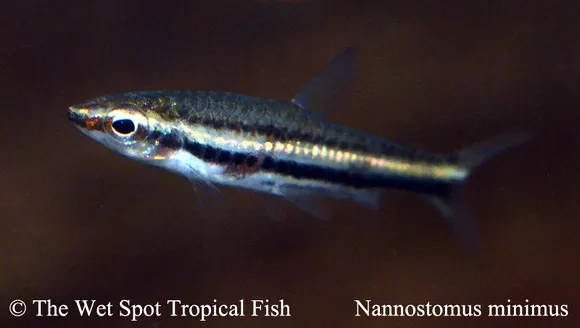
Least pencilfish
Nannostomus minimus
Freshwater1.1 in (2.8 cm) · 11 gal (40 L)75–82°F (24–28°C)
Common questions
What size tank does a dwarf glass chanda need?
A dwarf glass chanda needs at least 11 gal (40 L). It spends most of its time in the middle.
What temperature and pH does a dwarf glass chanda need?
A dwarf glass chanda is comfortable at 75–82°F (24–28°C) with a pH of 4.5–6.5.
What does a dwarf glass chanda eat?
A dwarf glass chanda eats live and frozen tiny prey, above all newly hatched brine shrimp, plus copepods and micro-worms. It rarely takes dry food.
How big does a dwarf glass chanda get?
An adult dwarf glass chanda reaches about 1.2 in (3 cm).
Does a dwarf glass chanda need a group?
Yes. A dwarf glass chanda is a schooling species and should be kept in a group, not singly.
How can you tell a male dwarf glass chanda from a female?
Males flush their fins deep maroon-red with black edges. Females stay clear.
Related species
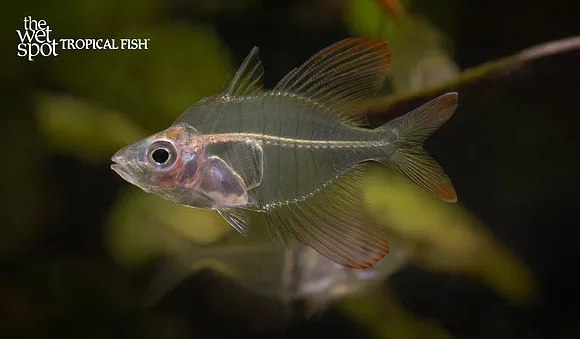 1.2 in (3 cm)11 gal (40 L)75–82°F (24–28°C)
Rose flame glassfish
Gymnochanda verae
1.2 in (3 cm) · 11 gal (40 L)
 1.6 in (4 cm)16 gal (60 L)73–81°F (23–27°C)
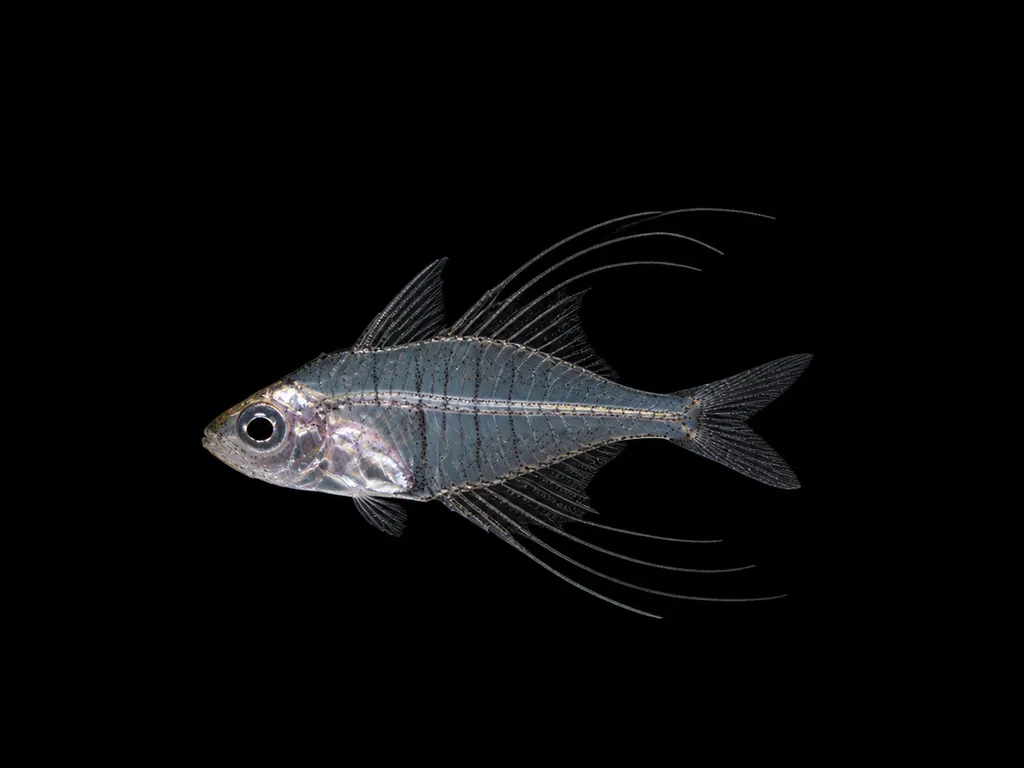
Threadfin glassfish
Gymnochanda filamentosa
1.6 in (4 cm) · 16 gal (60 L)
 1.2 in (3 cm)11 gal (40 L)72–82°F (22–28°C)
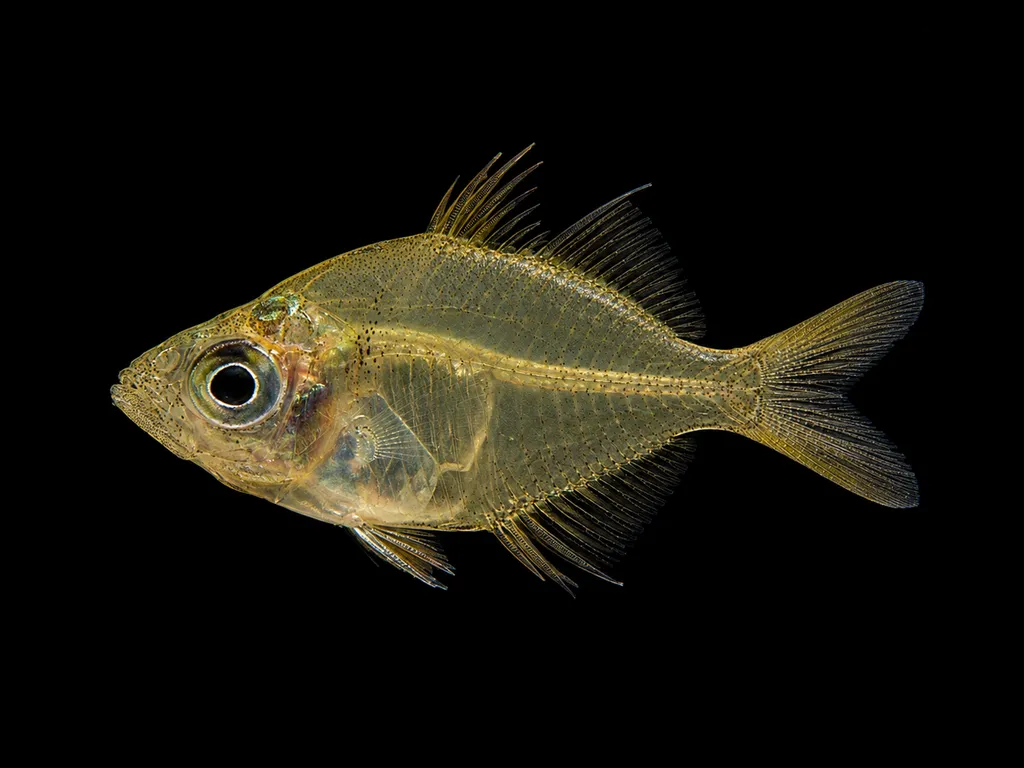
Indian amber glassfish
Parambassis lala
1.2 in (3 cm) · 11 gal (40 L)
 2.8 in (7 cm)21 gal (80 L)73–82°F (23–28°C)
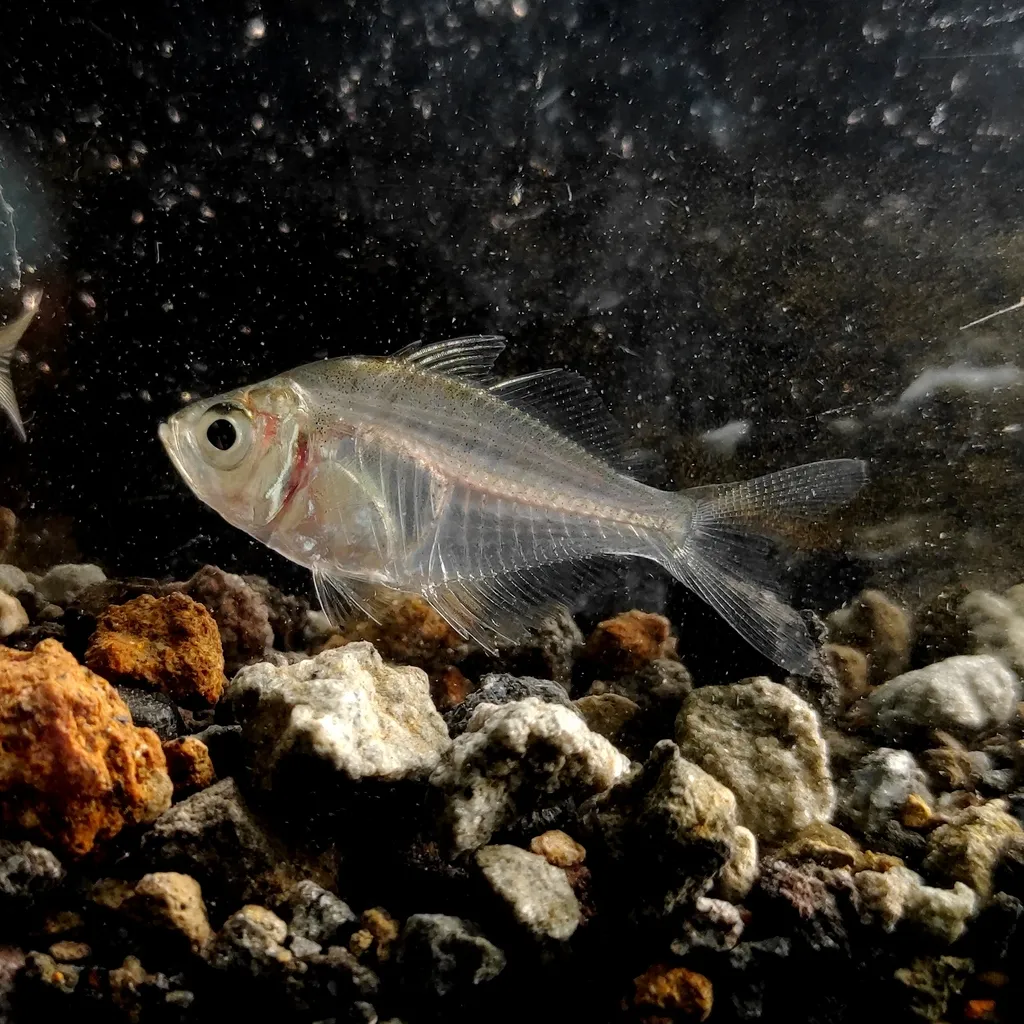
Siamese glassfish
Parambassis siamensis
2.8 in (7 cm) · 21 gal (80 L)
 3.1 in (8 cm)20 gal (75 L)68–86°F (20–30°C)
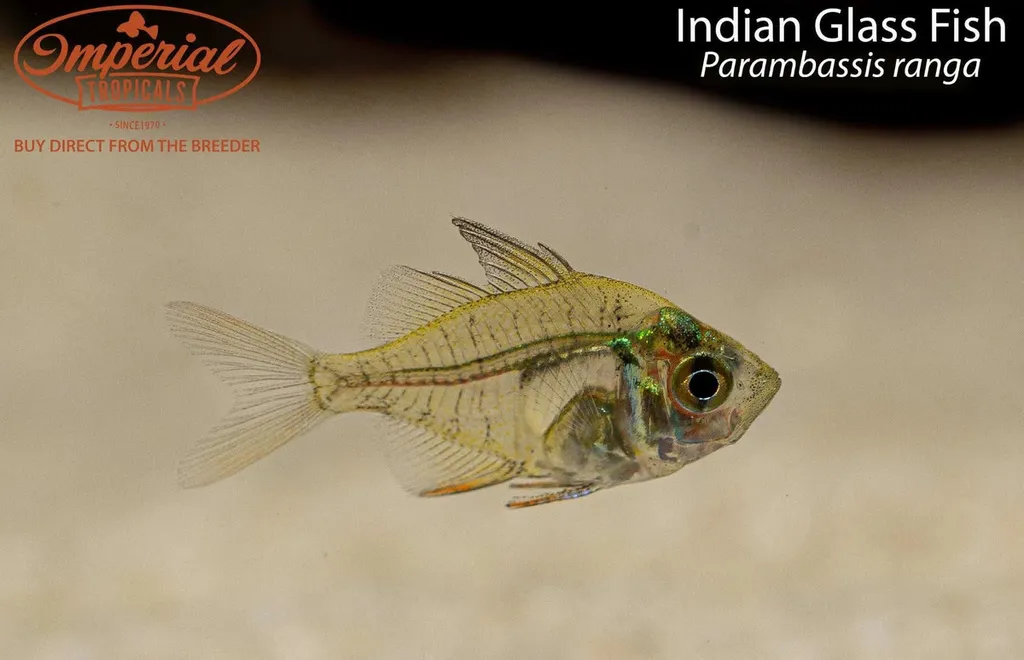
Indian glassy fish
Parambassis ranga
3.1 in (8 cm) · 20 gal (75 L)
 3.9 in (10 cm)32 gal (120 L)73–81°F (23–27°C)
Humphead glassfish
Parambassis pulcinella
3.9 in (10 cm) · 32 gal (120 L)