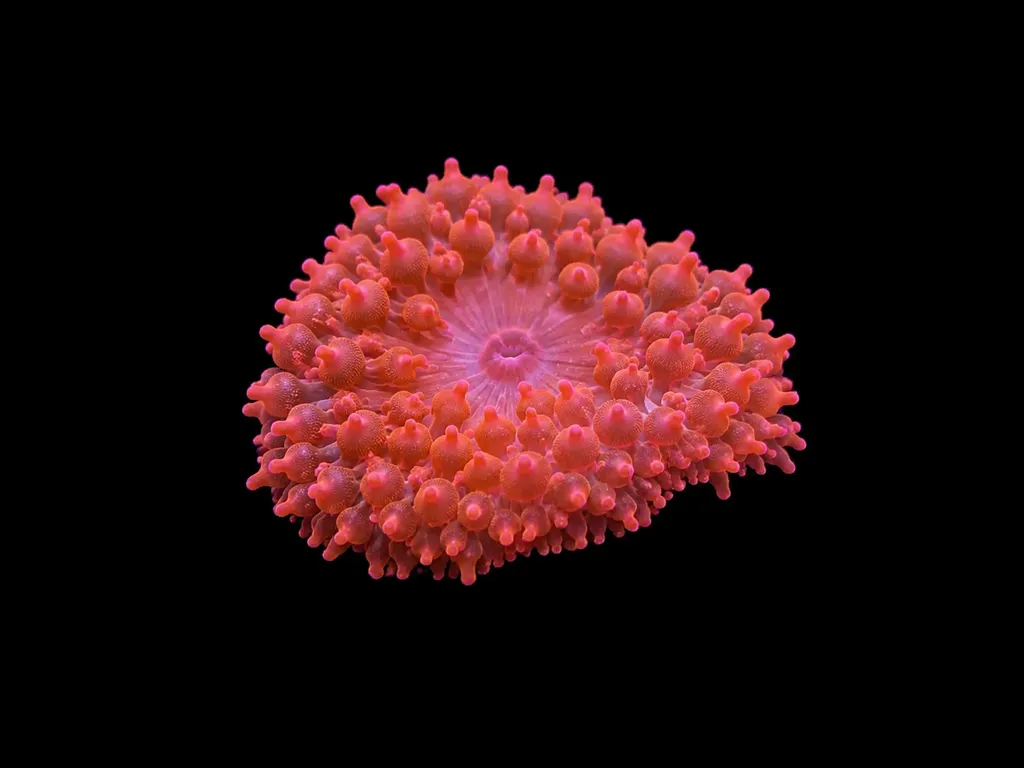
Shops sell rose bubble tips by size and color intensity, and LiveAquaria splits its stock into Grade A and Grade B listings. Almost every rose in the trade is a clone split off a captive animal, so you are buying into an existing colony. Expect to pay more than for a green one, and expect the red to shift as the animal settles under your lighting.
In the wild
Rose is a color morph rather than a bred line, and Wikipedia lists rose, orange, red and standard green among the morphs of this widespread Indo-Pacific anemone. The ones in the hobby are nearly all captive clones: an anemone splits lengthwise and each half grows into a whole animal. No founder colony, breeder or year is credited for the rose form, so the name describes a color and not a documented lineage.
Good to know
Color comes from pigment proteins in the anemone's tissue, layered over the golden brown of the zooxanthellae living inside it. Because rose animals spread by longitudinal fission, every split is genetically identical to its parent, so the strain holds the way clones do. No breeder selected the color, and asexual splitting is by far the more common route in captivity, so the trade runs on division rather than on spawning.
Did you know
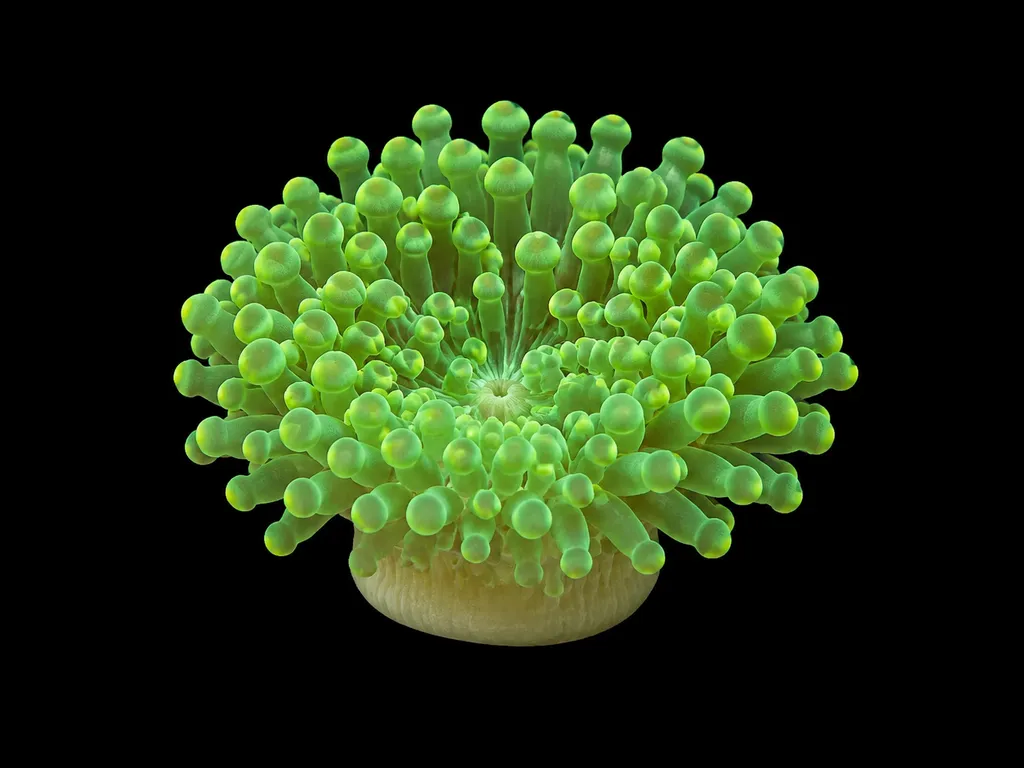
The bulb tips this anemone is named for come and go. Wikipedia ties their formation to flow, light and whether the animal is hosting, and notes that deeper specimens carry stringy tentacles with no bulbs at all, so a rose with smooth tentacles is not by itself a worry.
Symbiotic relationships
Clownfish and their host anemones
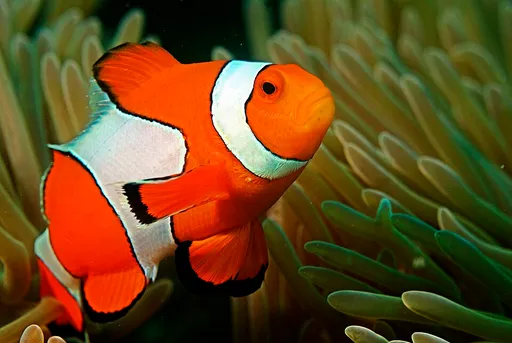
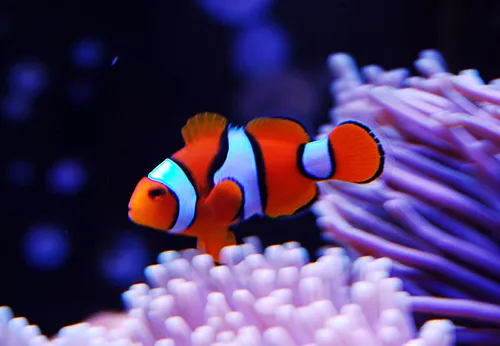
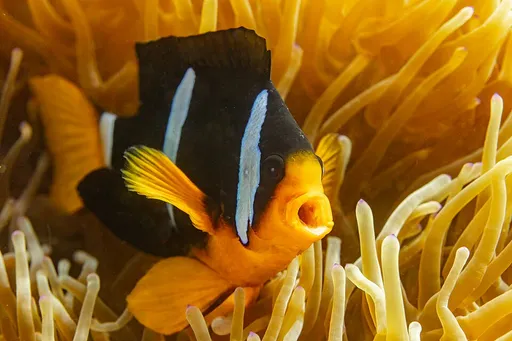
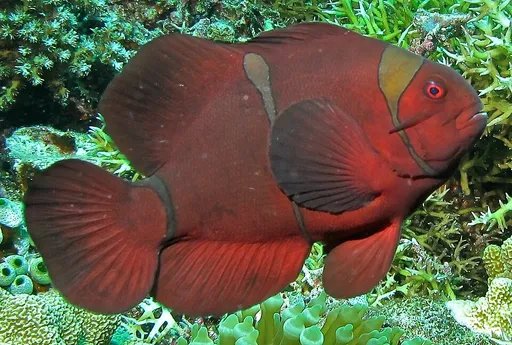
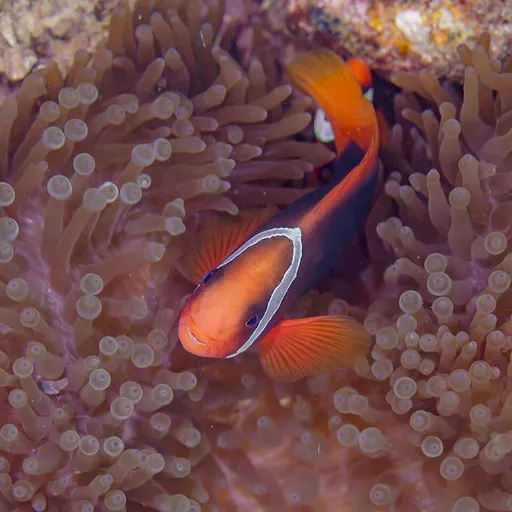
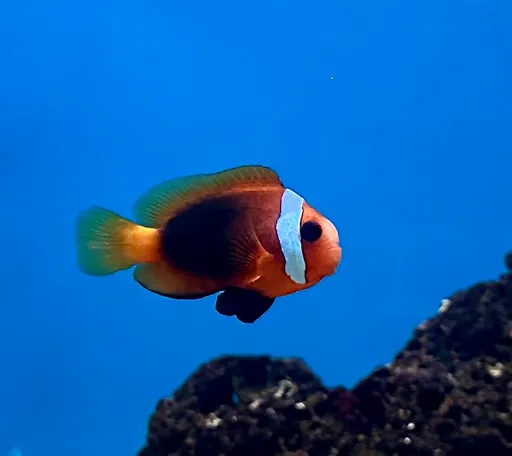
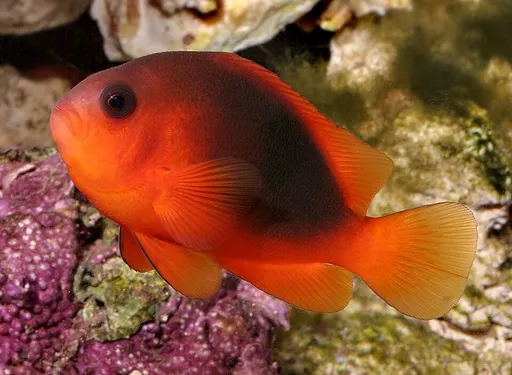
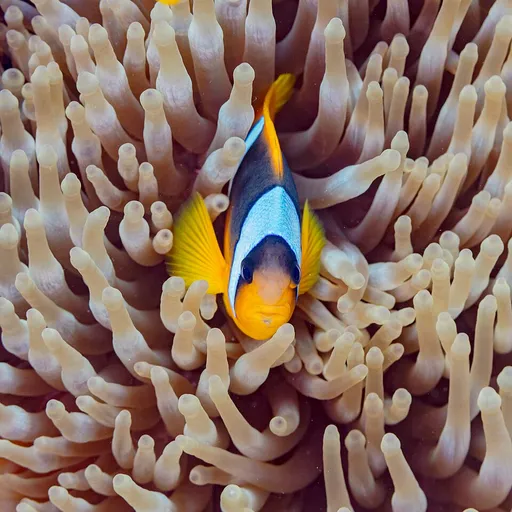
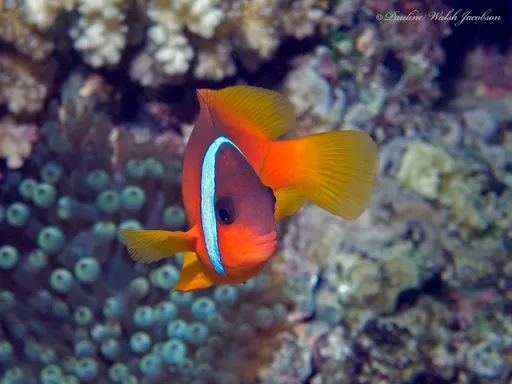
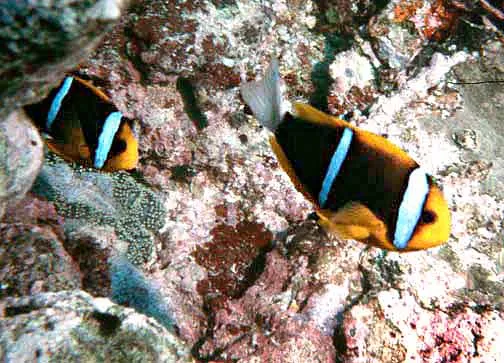
A clownfish lives inside an anemone that stings and eats other fish its size. Its mucus coat keeps the anemone's stinging cells from firing, and a new fish builds that protection up over hours of brief touches. The fish gets a refuge no predator will follow it into and a nest site at the anemone's base. The anemone gets a guard that drives off the butterflyfish that would graze its tentacles, a steady supply of nitrogen from the fish's waste, and water movement at night, when the fish fans its fins among the tentacles and the anemone takes up more oxygen. Only ten anemone species host clownfish in the wild, and each clownfish species uses its own short list of them.
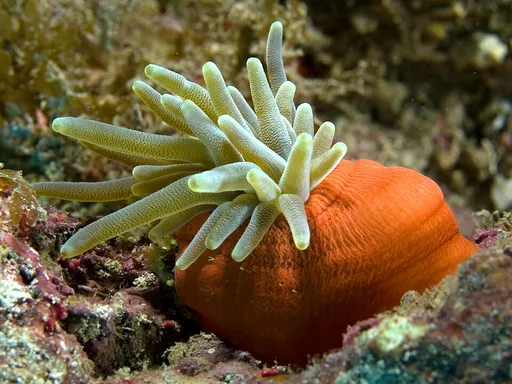
Captive-bred clownfish have never seen an anemone and do not need one; they settle for a coral, a powerhead or a corner of the tank. If you want the pairing, the anemone is the harder animal by far and goes in first, into a mature tank with strong light and stable water, at the tank size its own profile lists. The bubble tip anemone is the hardy host, and the one most clownfish accept in captivity even when it is not a natural host, so a clownfish profile lists it as the usual tank host where that is the case. The sebae, magnificent and carpet anemones are marked difficult, and the carpets eat fish. Expect a paired clownfish to defend its anemone against everything else in the tank.
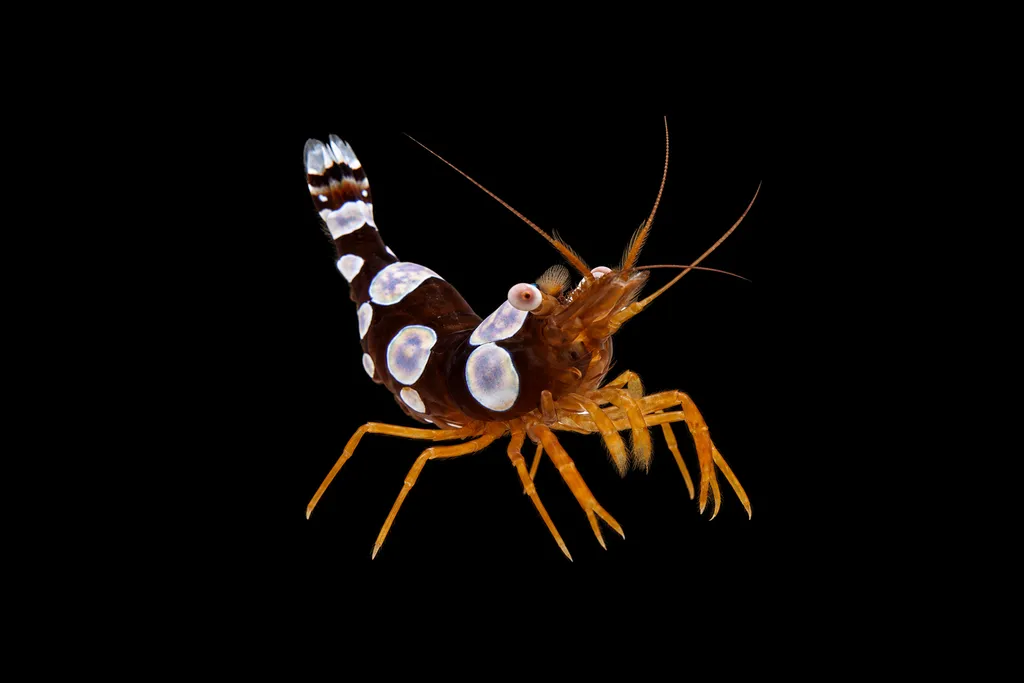
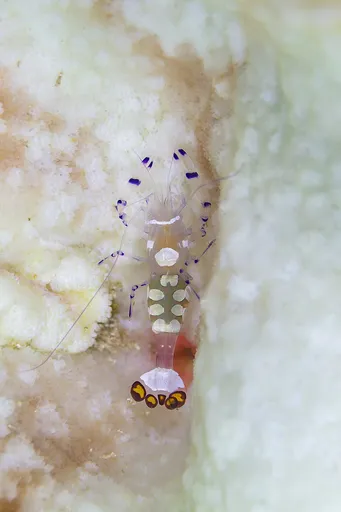
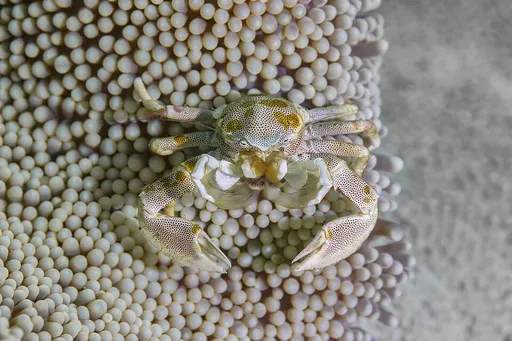
Several small crustaceans live where almost nothing else can: among the tentacles of an anemone. Sexy shrimp perch in the tentacles in a cluster, bobbing their tails in the display that named them. The white-spot anemone shrimp is near transparent apart from its spots and lives on carpet anemones. The porcelain anemone crab sits at the anemone's edge and filters plankton from the water with two fan-like arms. Pederson's cleaner shrimp lives in the Caribbean corkscrew anemone and cleans fish from there. In every case the anemone is a bodyguard: its sting keeps off the small fish that would eat the shrimp. The anemone gains little, and the white-spot shrimp will nibble its host's tentacles when it is hungry.
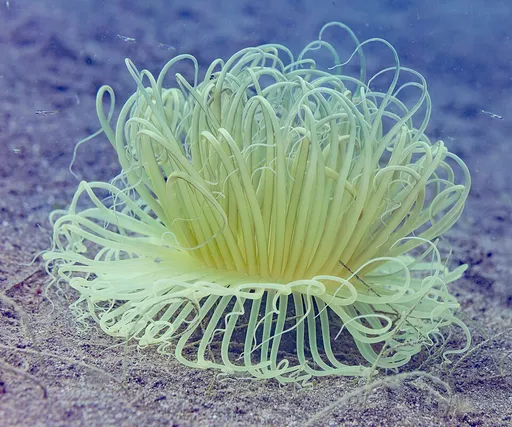
Give each of them its anemone. Sexy shrimp take a rock flower anemone, a bubble tip or a carpet. The white-spot shrimp and the porcelain crab want a carpet anemone or a long tentacle anemone, both of which need a mature tank at the tank size their profiles list. Pederson's shrimp wants a corkscrew anemone or a condy. Without a host they perch on a coral or hide in the rock and are picked off by any fish that eats shrimp, so they suit a peaceful nano reef. A clownfish will evict them from an anemone it has claimed.
Is a Rose bubble tip anemone a different species from the Bubble tip anemone?
No. A Rose bubble tip anemone is a variety of the Bubble tip anemone, Entacmaea quadricolor, and it wants the same tank, water and food as the species.
What size tank does a Rose bubble tip anemone need?
A Rose bubble tip anemone needs at least 30 gal (115 L). It spends most of its time in the bottom.
How big does a Rose bubble tip anemone get?
An adult Rose bubble tip anemone reaches about 11.8 in (30 cm).