Variety of Three spot gourami
Opaline gourami
Trichopodus trichopterus
One of 3 varieties of Trichopodus trichopterus · See all varieties →
FreshwaterFish
Varieties · Trichopodus trichopterus
See all 3 →
Care at a glance
- Temperature
- 75–86°F
- 24–30°C
- pH
- 6.0–7.5
- Adult size
- 5.1 in
- 13 cm
- Minimum tank
- 30 gal
- 115 L
- Temperament
- Mostly peaceful
- Social behavior
- Social
- Swim level
- Middle
- Difficulty
- Easy
- Breeding
- Medium
- Rarity
- Rare
- Family
- Osphronemidae
Overview
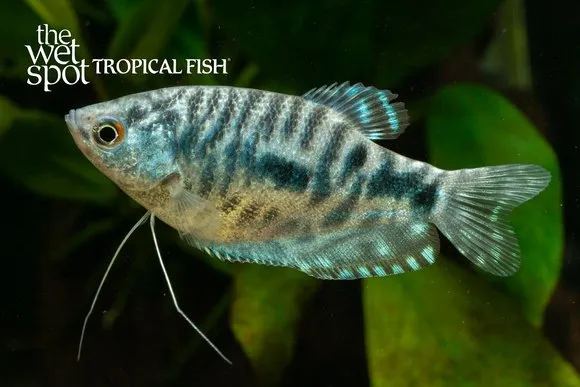
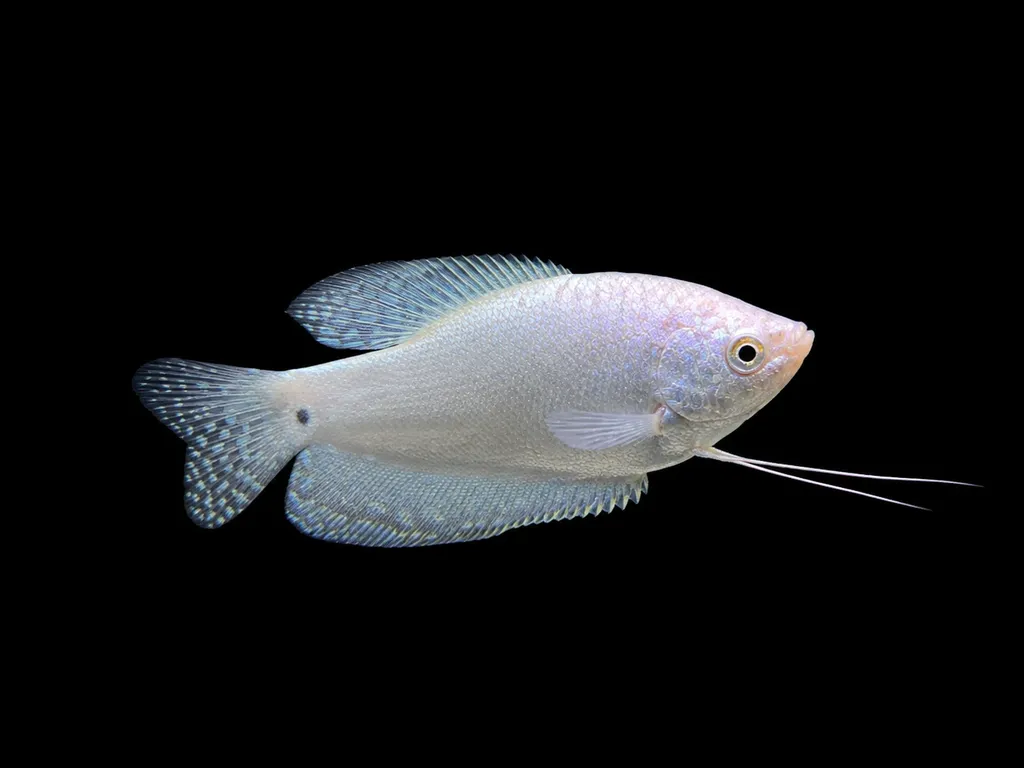
Opaline swaps the two body spots for swirled dark marbling over a blue-silver body, so the spots the species is named for are gone. Every fish is marked differently and shops rarely grade them, so pick by eye. Sold as opaline, marbled or cosby gourami depending on the store, and all three names cover the same fish.
In the wild
The marbled pattern was bred from the blue three-spot in captivity and does not occur in wild fish. Hobby references trace it through a strain called the cosby gourami, credited to an American breeder named Cosby and described as a silver-blue fish carrying darker blue markings. The opaline was developed on from there, and the sources repeating that account attach no date to it.
Good to know
Marbling comes from dark pigment spreading unevenly instead of gathering into the two flank spots, so the arrangement is individual to each fish. Opaline pairs give opaline fry, but the exact markings are not repeatable from one generation to the next. Body shape, finnage and the pointed male dorsal are unchanged; only the pigment layout differs.
Did you know
The species is called the three spot gourami because the eye counts as the third spot, next to two on the body. On an opaline the two body spots are lost in the marbling, so the eye is the only one left.
Weekly picks
Tank mates
Opaline gourami is a mostly peaceful, social species that keeps to the middle. These picks share a community profile with it, are safe together in both directions, and overlap on water type, temperature and pH.
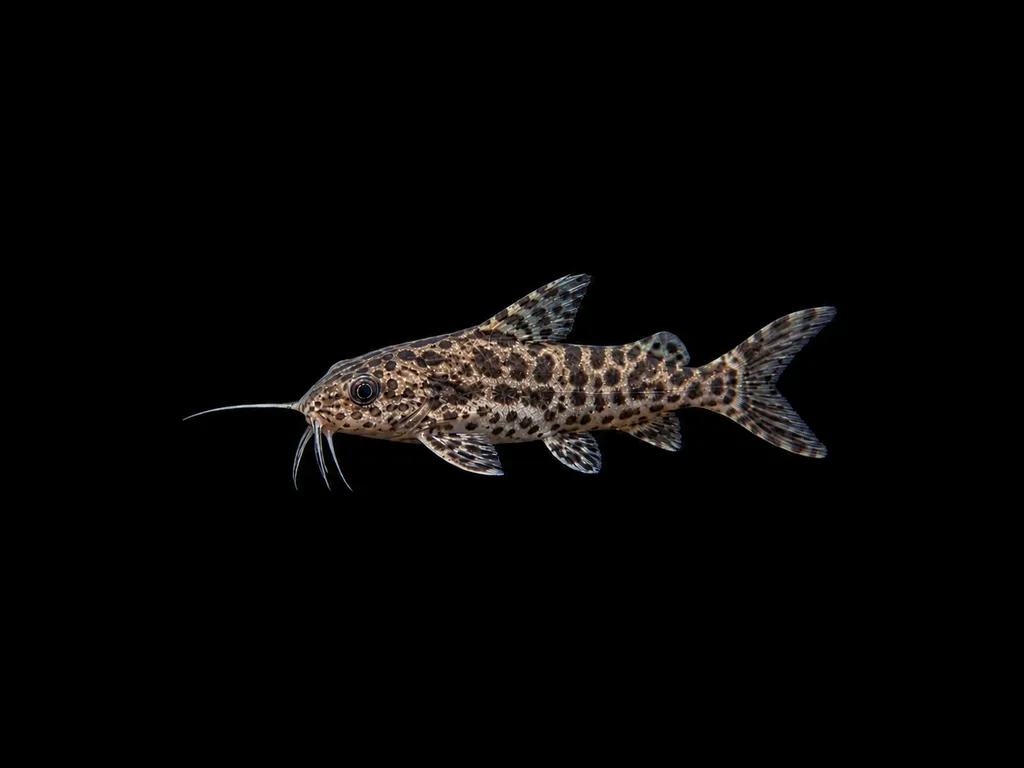
Bugeye squeaker
Synodontis contractus
Freshwater3.9 in (10 cm) · 30 gal (114 L)72–79°F (22–26°C)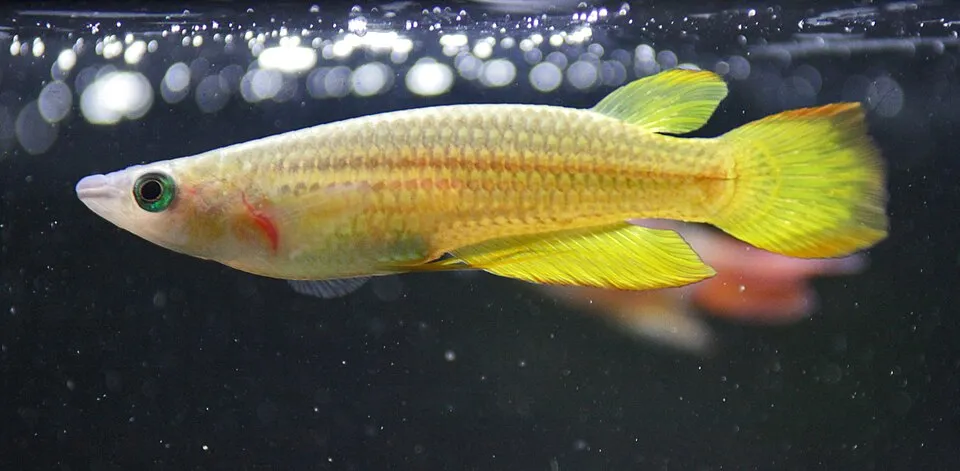
Striped panchax
Aplocheilus lineatus
Freshwater4.3 in (11 cm) · 30 gal (115 L)72–77°F (22–25°C)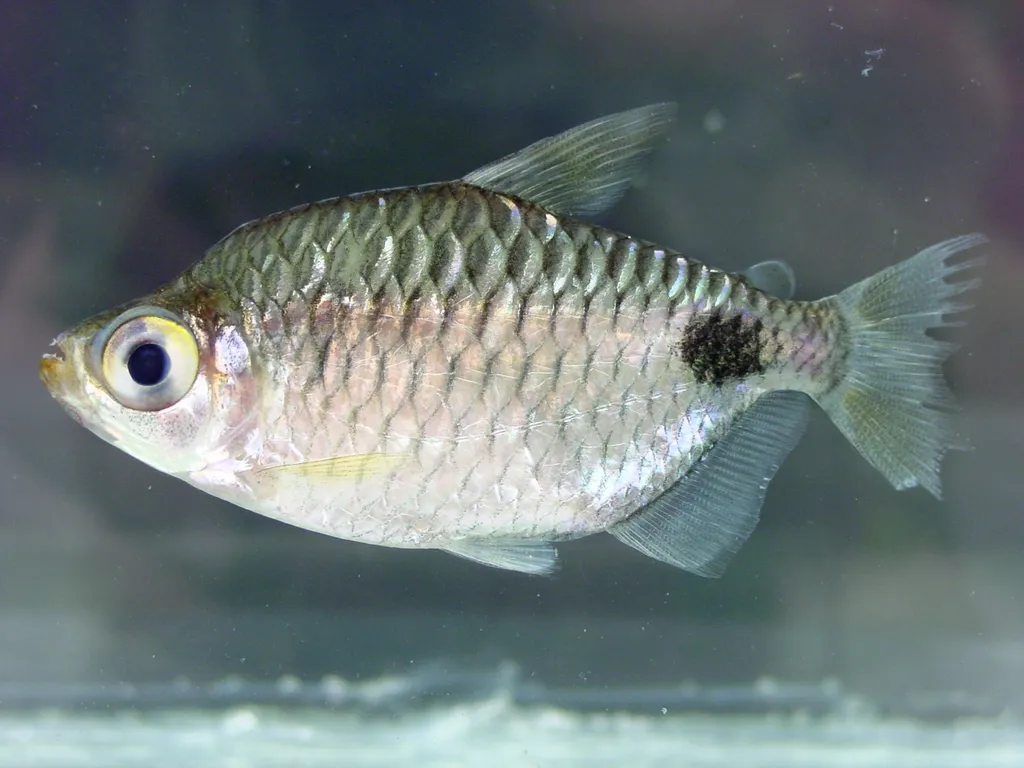
Altus tetra
Brachypetersius altus
Freshwater2.6 in (6.5 cm) · 30 gal (112 L)73–82°F (23–28°C)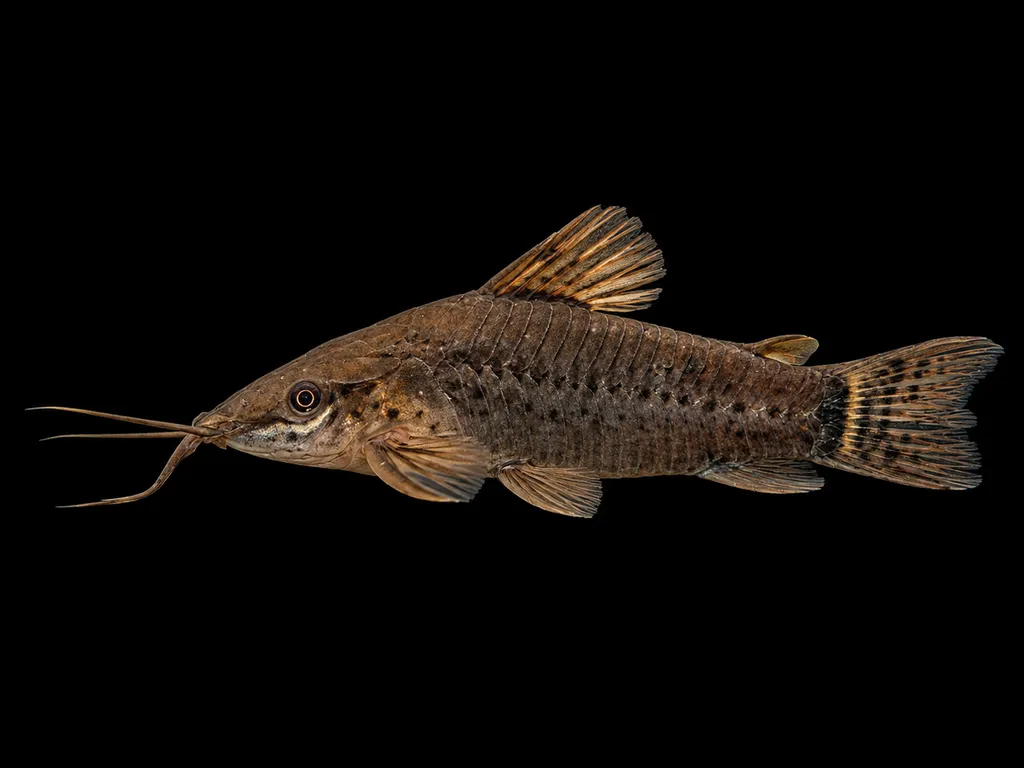
Panama hoplo
Hoplosternum punctatum
Freshwater3.1 in (8 cm) · 30 gal (115 L)72–79°F (22–26°C)
Redfin halfbeak
Nomorhamphus ebrardtii
Freshwater3.5 in (9 cm) · 29 gal (110 L)75–81°F (24–27°C)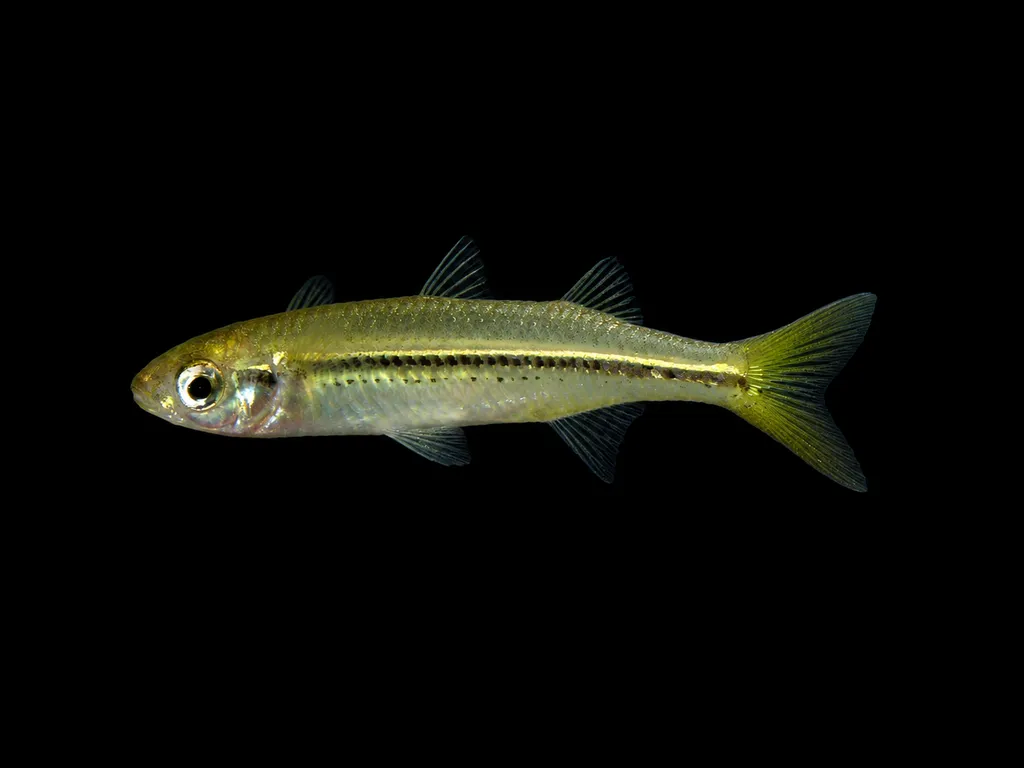
Kubuna hardyhead
Craterocephalus randi
Freshwater3.1 in (8 cm) · 30 gal (112 L)72–82°F (22–28°C)
Common questions
Is an Opaline gourami a different species from the Three spot gourami?
No. An Opaline gourami is a variety of the Three spot gourami, Trichopodus trichopterus, and it wants the same tank, water and food as the species.
What size tank does an Opaline gourami need?
An Opaline gourami needs at least 30 gal (115 L). It spends most of its time in the middle.
How big does an Opaline gourami get?
An adult Opaline gourami reaches about 5.1 in (13 cm).
Related species
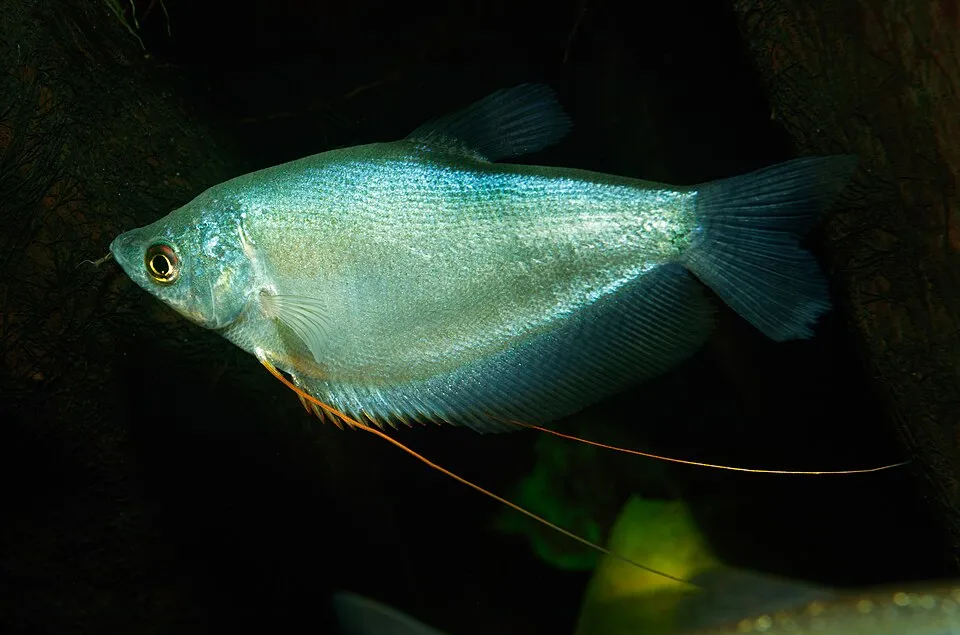 5.9 in (15 cm)30 gal (115 L)77–86°F (25–30°C)
Moonlight gourami
Trichopodus microlepis
5.9 in (15 cm) · 30 gal (115 L)
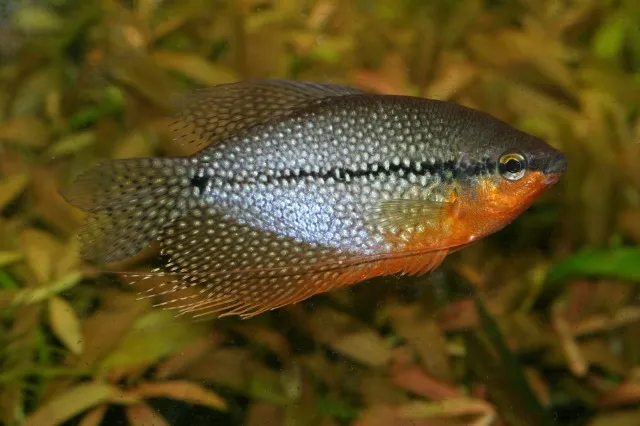 4.7 in (12 cm)30 gal (115 L)75–86°F (24–30°C)
Pearl gourami
Trichopodus leerii
4.7 in (12 cm) · 30 gal (115 L)
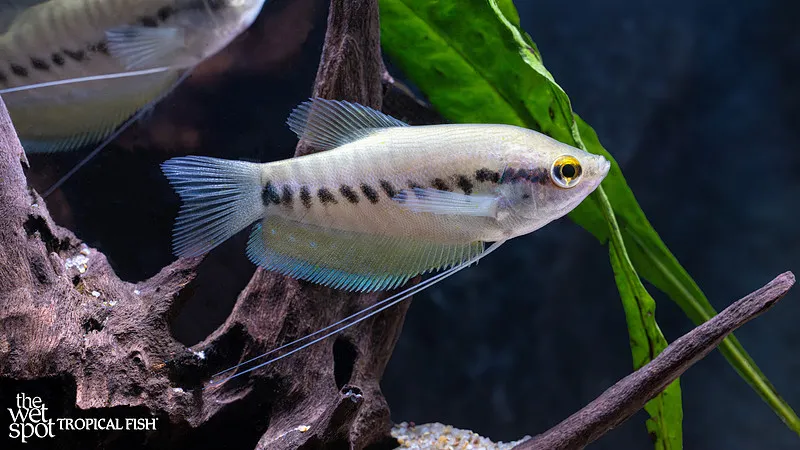 9.8 in (25 cm)61 gal (230 L)72–86°F (22–30°C)
Snakeskin gourami
Trichopodus pectoralis
9.8 in (25 cm) · 61 gal (230 L)
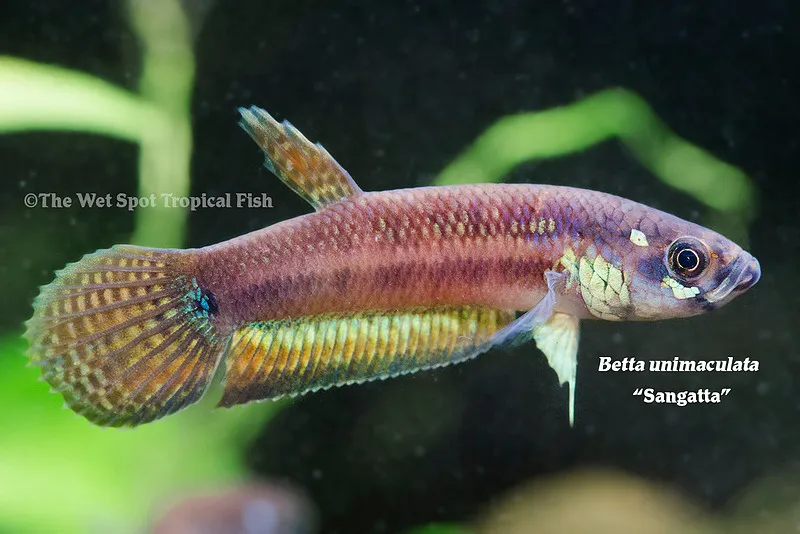 4.5 in (11.5 cm)29 gal (110 L)70–79°F (21–26°C)
One-spot betta
Betta unimaculata
4.5 in (11.5 cm) · 29 gal (110 L)
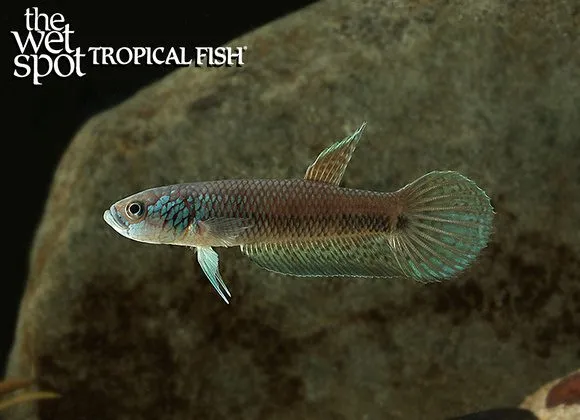 3.9 in (10 cm)26 gal (100 L)70–81°F (21–27°C)
Antuta betta
Betta sp. 'Antuta'
3.9 in (10 cm) · 26 gal (100 L)
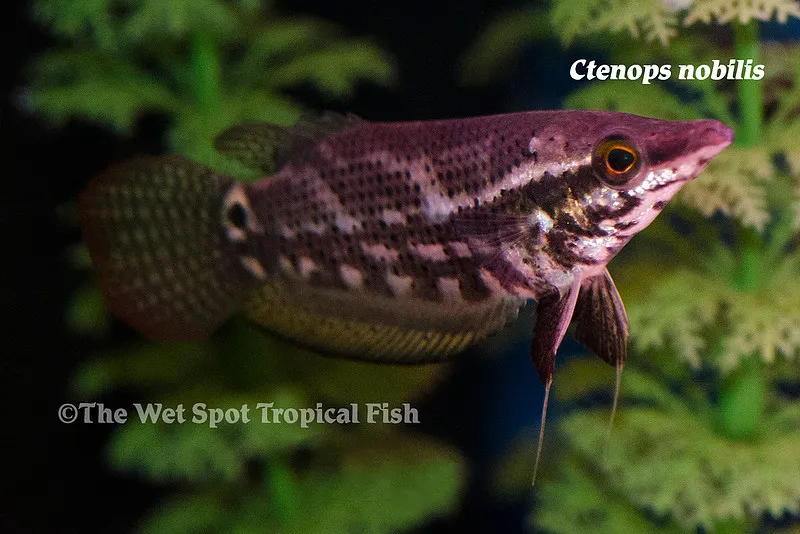 3.9 in (10 cm)24 gal (90 L)68–79°F (20–26°C)
Frail gourami
Ctenops nobilis
3.9 in (10 cm) · 24 gal (90 L)