Variety of Three spot gourami
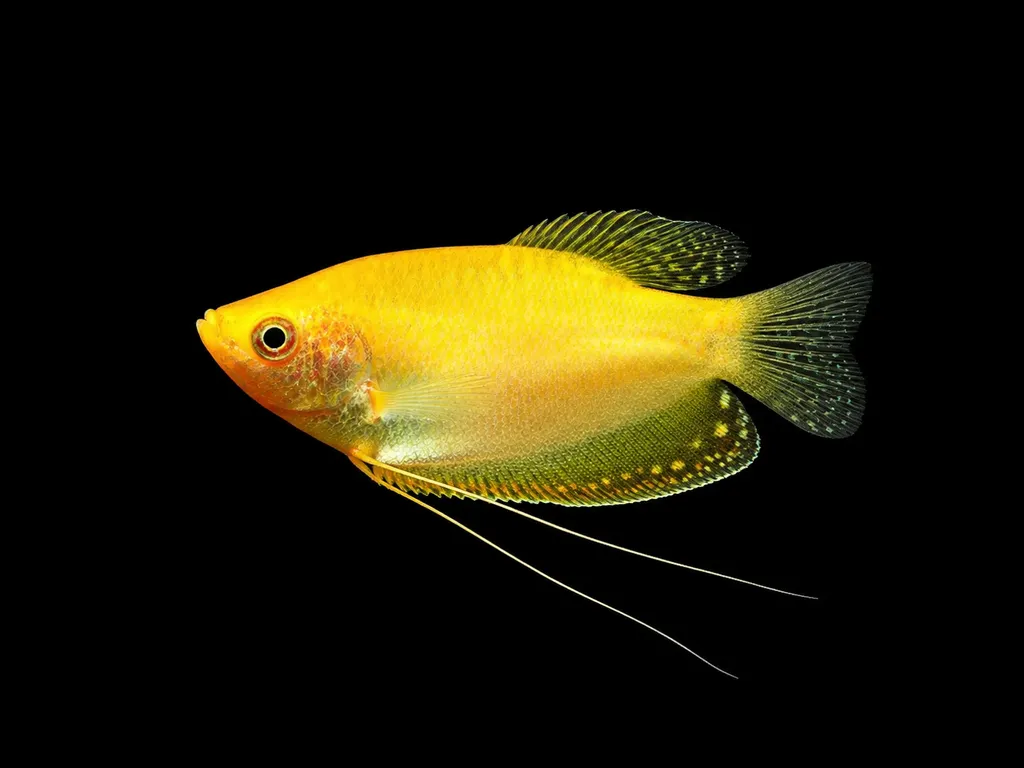
Gold gourami
Trichopodus trichopterus
One of 3 varieties of Trichopodus trichopterus · See all varieties →
FreshwaterFish
Varieties · Trichopodus trichopterus
See all 3 →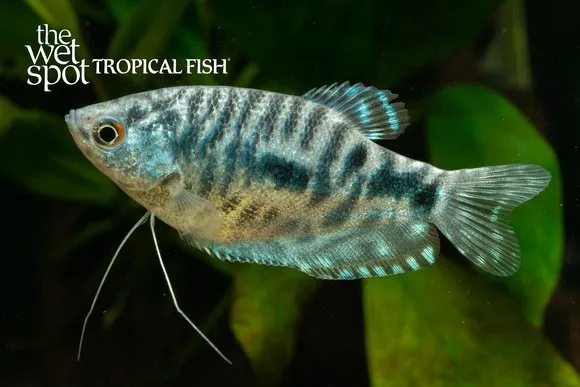
Care at a glance
- Temperature
- 75–86°F
- 24–30°C
- pH
- 6.0–7.5
- Adult size
- 5.1 in
- 13 cm
- Minimum tank
- 30 gal
- 115 L
- Temperament
- Mostly peaceful
- Social behavior
- Social
- Swim level
- Middle
- Diet
- Omnivore
- Difficulty
- Easy
- Breeding
- Bubble nester · Medium
- Rarity
- Rare
- Family
- Osphronemidae
Overview
The gold gourami runs amber to honey, with the two body spots faded or gone and the dark banding only faint. It is a hardy fish and easy for beginners.
Did you know
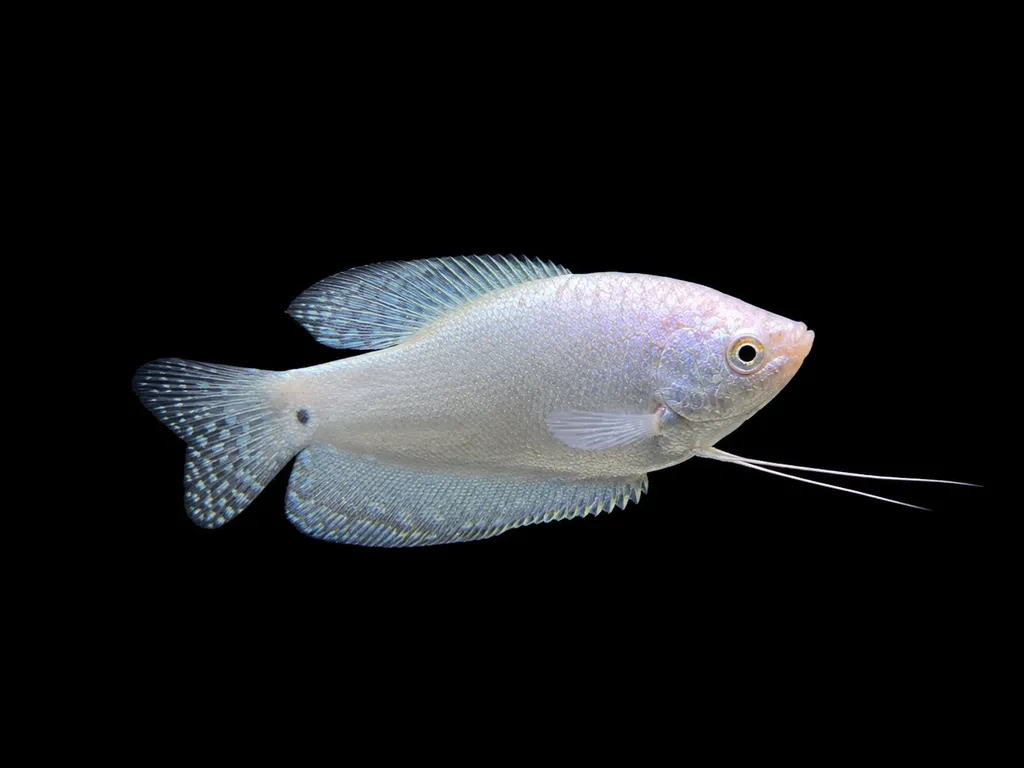
A gold gourami crossed to a blue gives the lavender, or amethyst, gourami that shops sell under its own name. It is not a separate line, just the two put together. Some sellers give opaline rather than blue as the other parent.
Caring for the gold gourami
A gold gourami needs a planted tank of at least 30 gal (115 L), with floating cover, a soft substrate and calm water. It swims in the middle and upper water, feeling around with its long, thread-like pelvic fins. Like other labyrinth fish, it breathes air at the surface, so leave a warm, humid gap under the lid.
Keep the water at 75 to 86°F (24 to 30°C) and a pH of 6.0 to 7.5. Feed a varied diet of flake or pellet with frozen bloodworm and brine shrimp, plus some greens.
Gold gouramis are mostly peaceful and generally mix well in a community tank. One can live alone, as a pair or in a small group. Adult males can turn territorial, so give plenty of space and cover and watch for bullying.
Males build a bubble nest and guard the brood. Breeding gold gouramis is of medium difficulty.
Good to know
The gold color reduces the dark pigment that would otherwise form the flank spots and banding, leaving the yellow layer to carry the fish. Tone varies a lot between suppliers, from pale straw to a deep orange-gold, so a shop tank rarely looks uniform. The color holds well enough that gold pairs give gold fry, though depth of color varies within a spawn.
In the wild
The gold line was fixed in captivity from the blue three-spot, and no wild fish looks like it. No source worth citing records which farm established it, or when, so it is a hobby line of uncertain origin. Shop stock comes from ornamental farm breeding rather than wild collection.
Weekly picks
Tank mates
The gold gourami is a mostly peaceful, social species that keeps to the middle. These picks share a community profile with it, are safe together in both directions, and overlap on water type, temperature and pH.
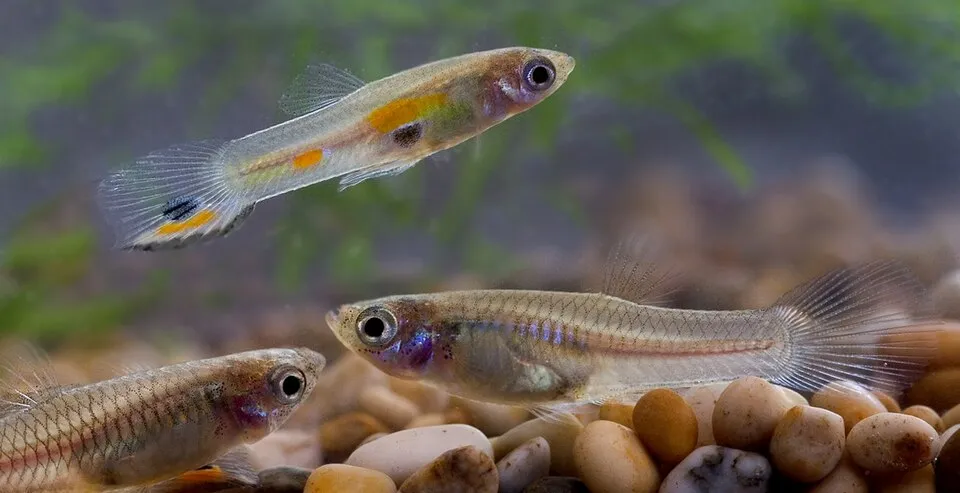
Guppy
Poecilia reticulata
FreshwaterBrackish2.4 in (6 cm) · 10 gal (38 L)64–82°F (18–28°C)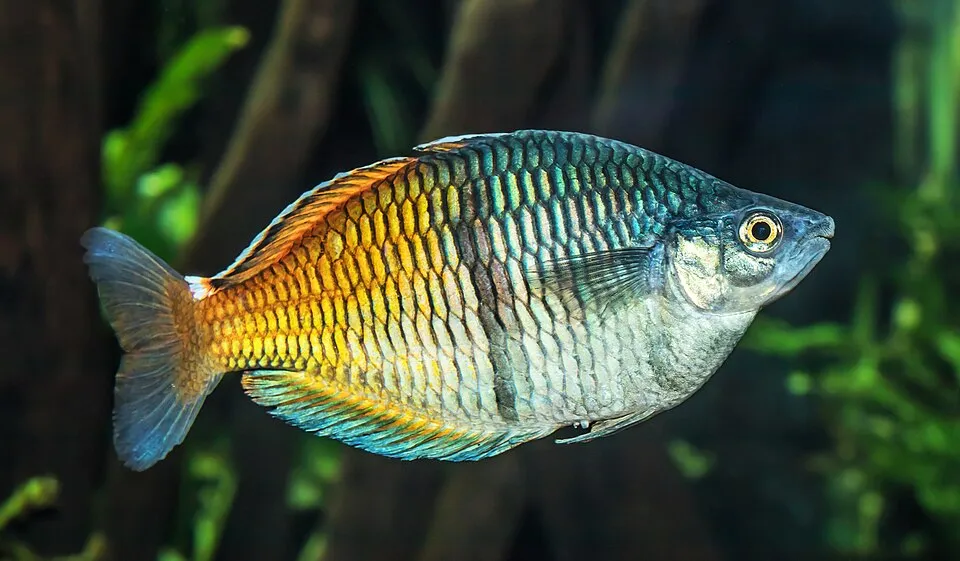
Boeseman's rainbowfish
Melanotaenia boesemani
Freshwater4.3 in (11 cm) · 29 gal (108 L)81–86°F (27–30°C)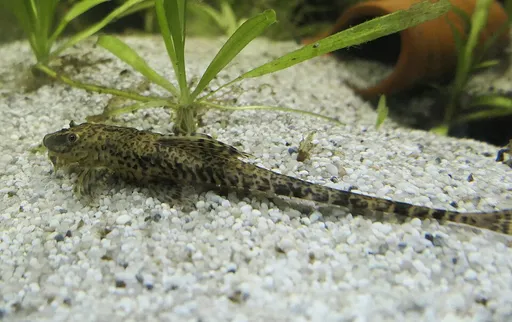
Red lizard whiptail
Rineloricaria lanceolata
Freshwater3.9 in (10 cm) · 24 gal (90 L)77–82°F (25–28°C)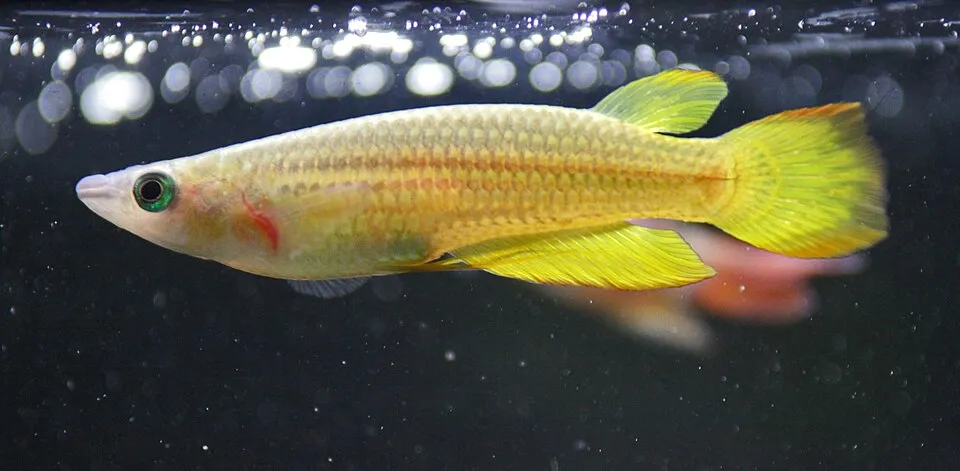
Striped panchax
Aplocheilus lineatus
Freshwater4.3 in (11 cm) · 30 gal (115 L)72–77°F (22–25°C)
Sterba's cory
Hoplisoma sterbai
Freshwater2.6 in (6.5 cm) · 20 gal (75 L)75–82°F (24–28°C)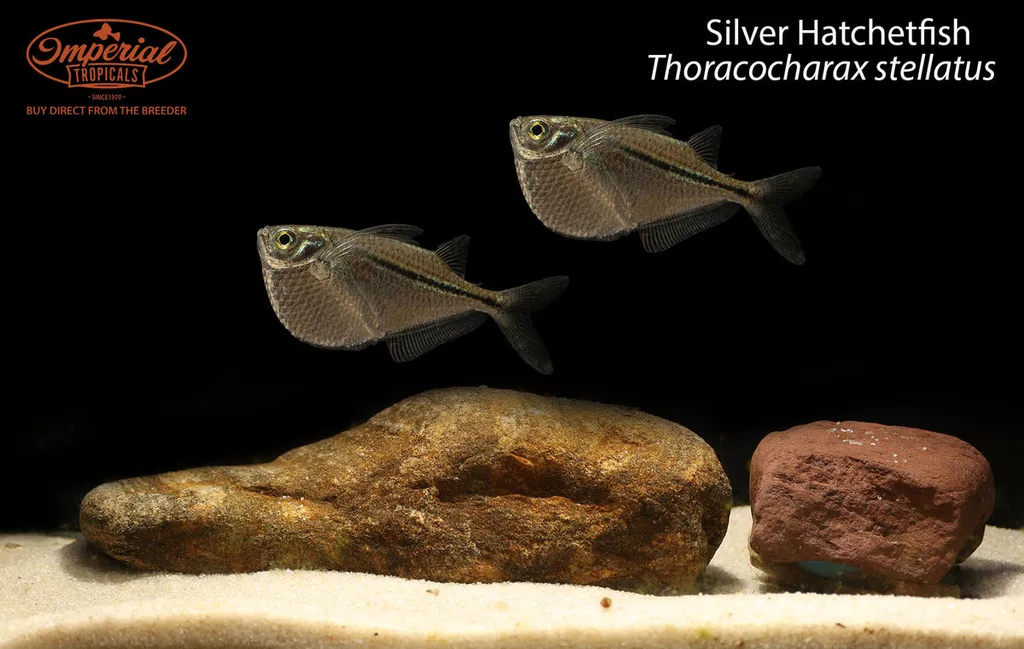
Spotfin hatchetfish
Thoracocharax stellatus
Freshwater3.5 in (9 cm) · 26 gal (100 L)73–82°F (23–28°C)
Common questions
Is a gold gourami a different species from the three spot gourami?
No. A gold gourami is a variety of the three spot gourami, Trichopodus trichopterus, and it wants the same tank, water and food as the species.
What size tank does a gold gourami need?
A gold gourami needs at least 30 gal (115 L). It spends most of its time in the middle.
What does a gold gourami eat?
A gold gourami eats flake or pellet foods along with frozen bloodworm and brine shrimp. Give it some greens as well, for a varied diet.
How big does a gold gourami get?
An adult gold gourami reaches about 5.1 in (13 cm).
How does a gold gourami breed?
Male gold gouramis build a bubble nest and stay on guard over the brood. Breeding them is of medium difficulty.
Related species
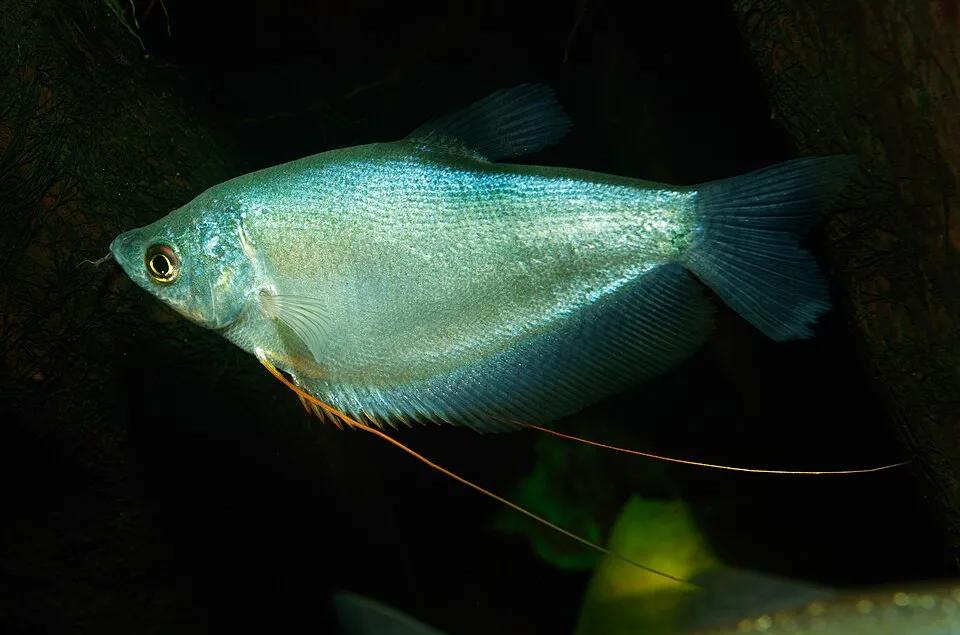 5.9 in (15 cm)30 gal (115 L)77–86°F (25–30°C)
Moonlight gourami
Trichopodus microlepis
5.9 in (15 cm) · 30 gal (115 L)
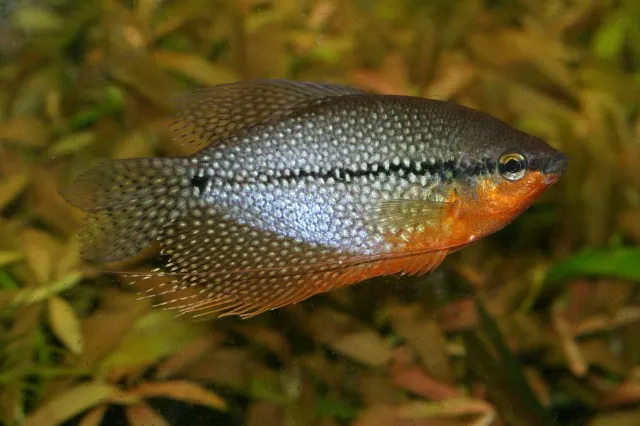 4.7 in (12 cm)29 gal (111 L)75–86°F (24–30°C)
Pearl gourami
Trichopodus leerii
4.7 in (12 cm) · 29 gal (111 L)
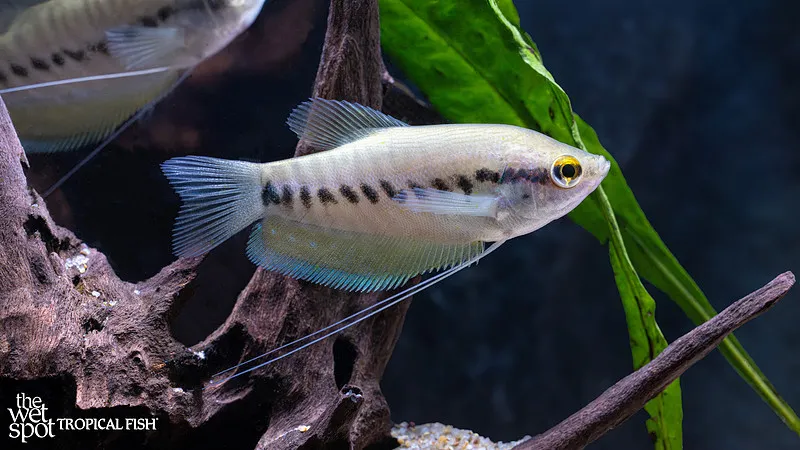 9.8 in (25 cm)61 gal (230 L)72–86°F (22–30°C)
Snakeskin gourami
Trichopodus pectoralis
9.8 in (25 cm) · 61 gal (230 L)
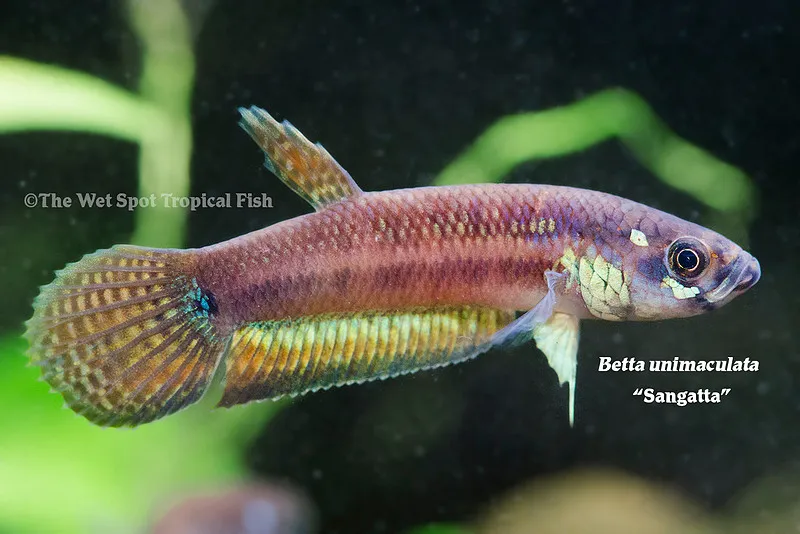 4.5 in (11.5 cm)29 gal (110 L)70–79°F (21–26°C)
One-spot betta
Betta unimaculata
4.5 in (11.5 cm) · 29 gal (110 L)
- 4.3 in (11 cm)21 gal (80 L)75–82°F (24–28°C)
Green throat mouthbrooder
Betta chloropharynx
4.3 in (11 cm) · 21 gal (80 L)
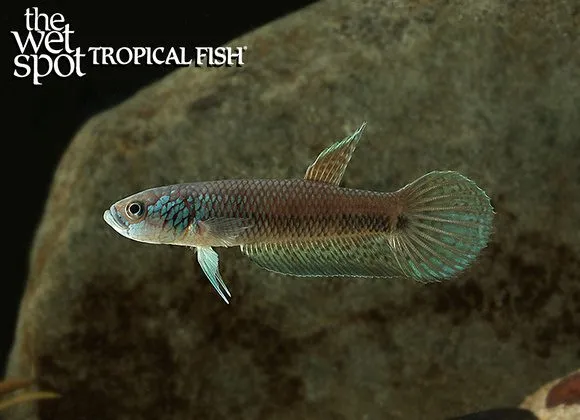 3.9 in (10 cm)26 gal (100 L)70–81°F (21–27°C)
Antuta betta
Betta sp. 'Antuta'
3.9 in (10 cm) · 26 gal (100 L)