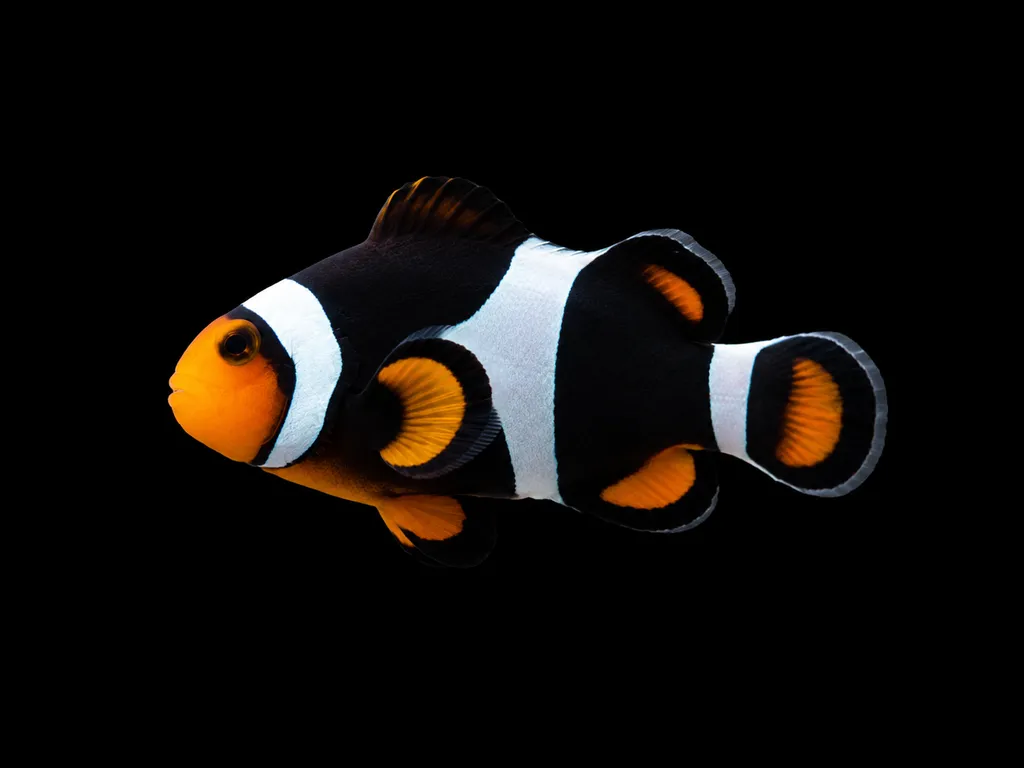
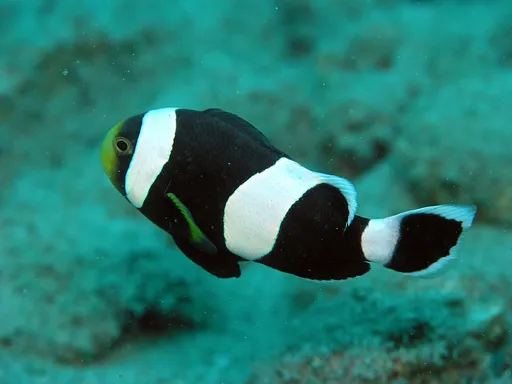
Black fills the body between broad white bars, but it arrives with age. Juveniles ship looking much like a normal percula and the flanks darken over months, so this is a fish you buy for what it becomes. Coverage varies between suppliers and between siblings, so ask for a photo of adult stock from the same line. Shops list it as Onyx or Onyx True Percula.
In the wild
The onyx look comes from wild percula populations around Papua New Guinea, where dark bodied fish occur naturally. Hatcheries built captive lines from that broodstock, so this sits closer to a regional wild pattern than to a designer cross. What the farms select for is how completely and how early the black fills in.
Good to know
The dark flanks are black pigment spreading between the bars as the fish matures, not a pattern present at hatching. That is why juveniles look ordinary and why a shop tank of young onyx can disappoint. Perculas in general darken with age, but onyx stock carries the trait much further, ending near solid black between the bars.
Did you know
Onyx sits in the pedigree of the designer perculas. ORA founded its Picasso line in 2004 by pairing a wild Solomon Islands male with a typical onyx female. The two families share a root.
Symbiotic relationships
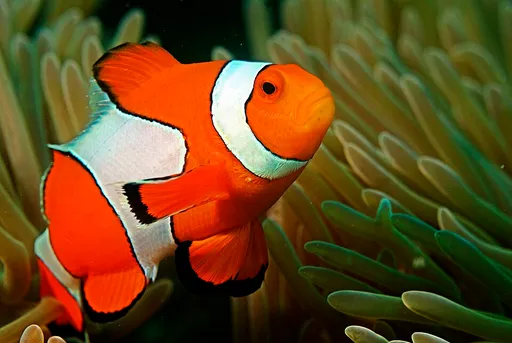
Clownfish and their host anemones
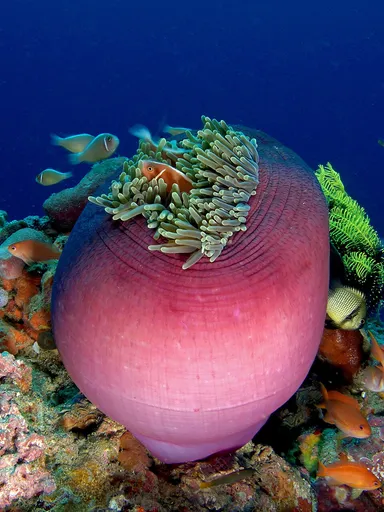
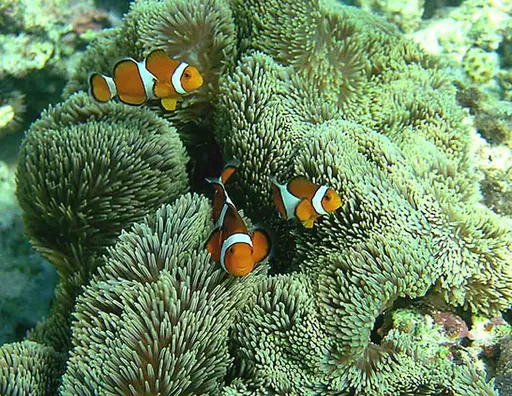
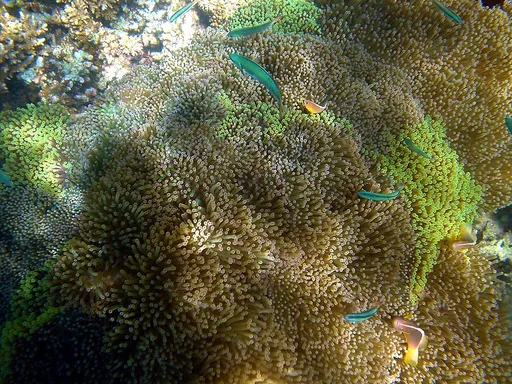
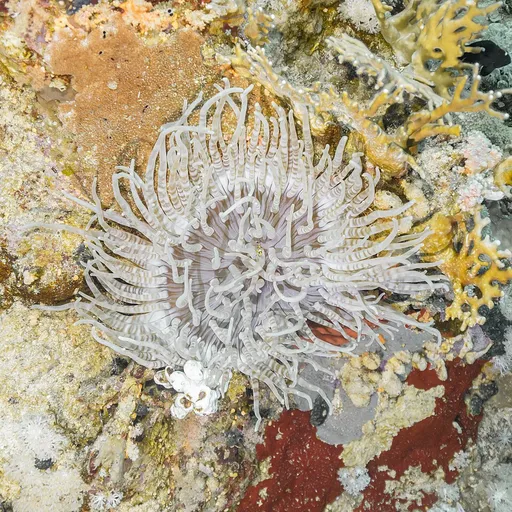
A clownfish lives inside an anemone that stings and eats other fish its size. Its mucus coat keeps the anemone's stinging cells from firing, and a new fish builds that protection up over hours of brief touches. The fish gets a refuge no predator will follow it into and a nest site at the anemone's base. The anemone gets a guard that drives off the butterflyfish that would graze its tentacles, a steady supply of nitrogen from the fish's waste, and water movement at night, when the fish fans its fins among the tentacles and the anemone takes up more oxygen. Only ten anemone species host clownfish in the wild, and each clownfish species uses its own short list of them.
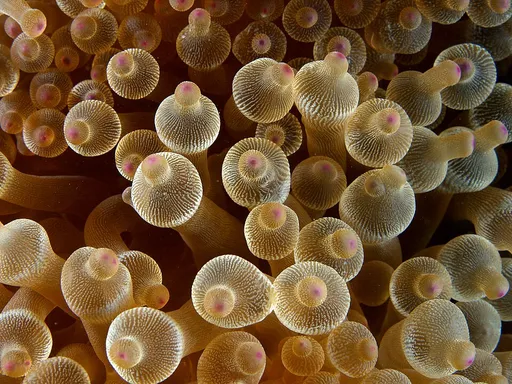
Captive-bred clownfish have never seen an anemone and do not need one; they settle for a coral, a powerhead or a corner of the tank. If you want the pairing, the anemone is the harder animal by far and goes in first, into a mature tank with strong light and stable water, at the tank size its own profile lists. The bubble tip anemone is the hardy host, and the one most clownfish accept in captivity even when it is not a natural host, so a clownfish profile lists it as the usual tank host where that is the case. The sebae, magnificent and carpet anemones are marked difficult, and the carpets eat fish. Expect a paired clownfish to defend its anemone against everything else in the tank.
Onyx clownfish is a mostly peaceful, social species that keeps to the middle. These picks share a community profile with it, are safe together in both directions, and overlap on water type, temperature and pH.
Is an Onyx clownfish a different species from the Percula clownfish?
No. An Onyx clownfish is a variety of the Percula clownfish, Amphiprion percula, and it wants the same tank, water and food as the species.
Is the Onyx clownfish a wild form?
Closer to one than most designer perculas. The onyx look comes from wild percula populations around Papua New Guinea where dark-bodied fish occur naturally, and hatcheries built captive lines from that broodstock. What farms select for is how completely and how early the black fills in.
When does an Onyx clownfish turn black?
Over months. Juveniles ship looking much like a normal percula and the flanks darken with age, ending near solid black between the bars. Coverage varies between suppliers and siblings, so ask for a photo of adult stock from the same line.
What size tank does an Onyx clownfish need?
An Onyx clownfish needs at least 20 gal (75 L). It spends most of its time in the middle.
How big does an Onyx clownfish get?
An adult Onyx clownfish reaches about 3.1 in (8 cm).
 3.1 in (8 cm)20 gal (75 L)75–82°F (24–28°C)
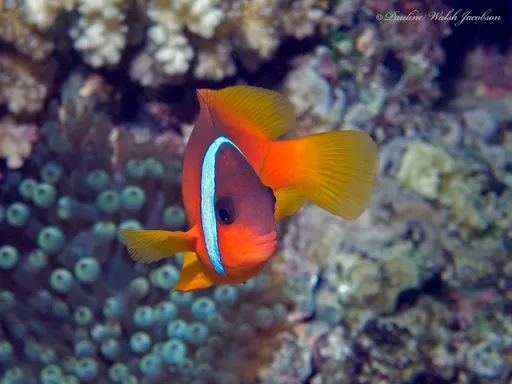 3.5 in (9 cm)30 gal (115 L)75–81°F (24–27°C)
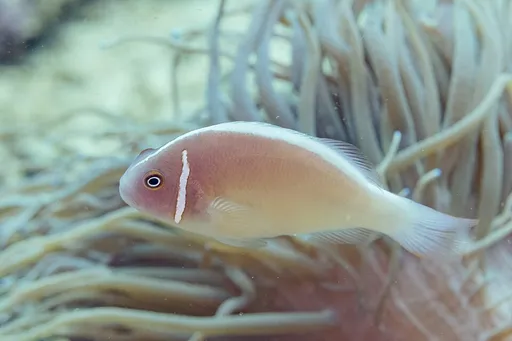 3.9 in (10 cm)30 gal (115 L)75–82°F (24–28°C)
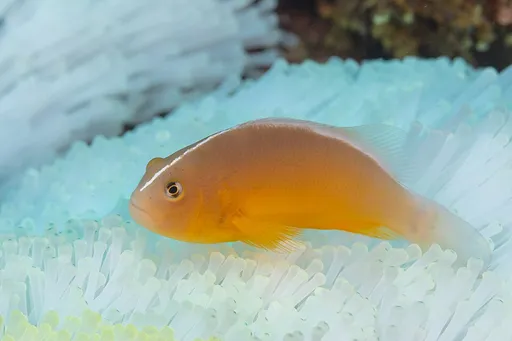 4.3 in (11 cm)26 gal (100 L)75–82°F (24–28°C)
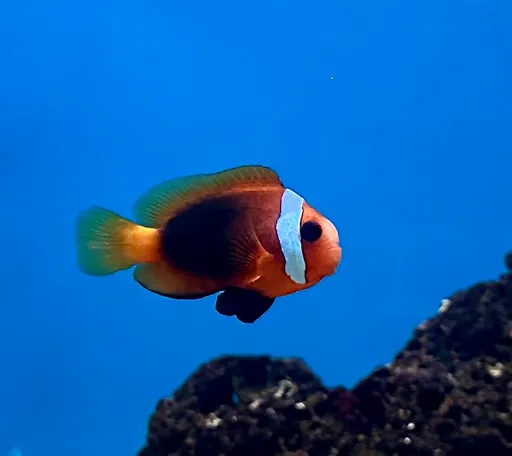 4.7 in (12 cm)30 gal (115 L)75–82°F (24–28°C)
 5.1 in (13 cm)40 gal (150 L)75–82°F (24–28°C)