Mosaic cory
Brochis haraldschultzi
Also known as Corydoras haraldschultzi, Reticulated cory
FreshwaterFish
Care at a glance
- Temperature
- 75–82°F
- 24–28°C
- pH
- 6.0–7.5
- Adult size
- 2.8 in
- 7 cm
- Minimum tank
- 20 gal
- 75 L
- Temperament
- Peaceful
- Social behavior
- Shoaling
- Swim level
- Bottom
- Difficulty
- Medium
- Breeding
- Easy
- Rarity
- Rare
- Family
- Callichthyidae
- Origin
- Bolivia, Brazil
Overview
The mosaic cory is a peaceful, good sized shoaler that should be kept in a group of at least six. It spends the day sifting sand with its barbels and mixes well with calm community fish that enjoy warm water. Feed sinking pellets, frozen bloodworm and daphnia, and a little wafer, making sure the food reaches the bottom. A group is comfortable in a tank of around 75 liters or larger with soft sand and some open foraging space.
In the wild
Corydoras haraldschultzi comes from the upper Amazon and Rio Guapore across Bolivia and Brazil, over sand in warm, soft, gently flowing water. Give it a soft sand bed, driftwood, and shaded planting, with clean, well filtered water. It prefers warmth, from about 24 to 28 C, with a pH from 6.0 to 7.5. Keep the water clean with steady changes to show off its fine markings.
Good to know
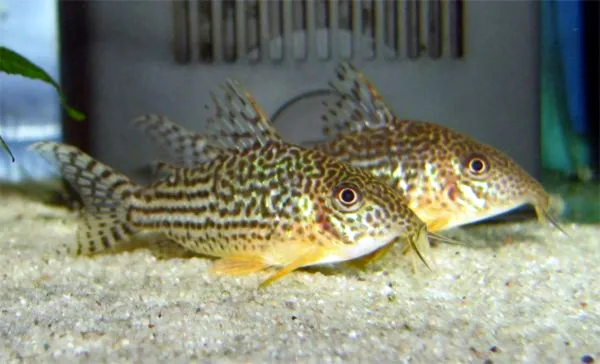
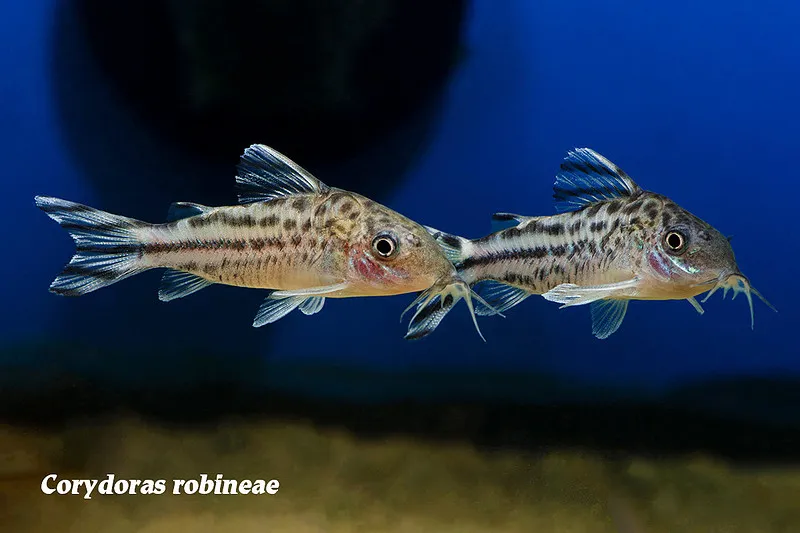
This armored catfish of the family Callichthyidae reaches about 7 cm and wears a dense mosaic of dark spots and lines on a pale head and body. It is a close look alike of Sterba's cory, but with the pattern reversed and a longer snout. It is one of the more willing spawners among the larger cories, laying adhesive eggs the female carries briefly between her pelvic fins before attaching them to firm surfaces.
Did you know
The mosaic cory is the mirror image of the popular Sterba's cory: haraldschultzi shows dark spots on a light head, while sterbai shows light spots on a dark head. A longer, straighter snout also helps tell haraldschultzi apart.
Weekly picks
Tank mates
Mosaic cory is a peaceful, shoaling species that keeps to the bottom. These picks share a community profile with it, are safe together in both directions, and overlap on water type, temperature and pH.
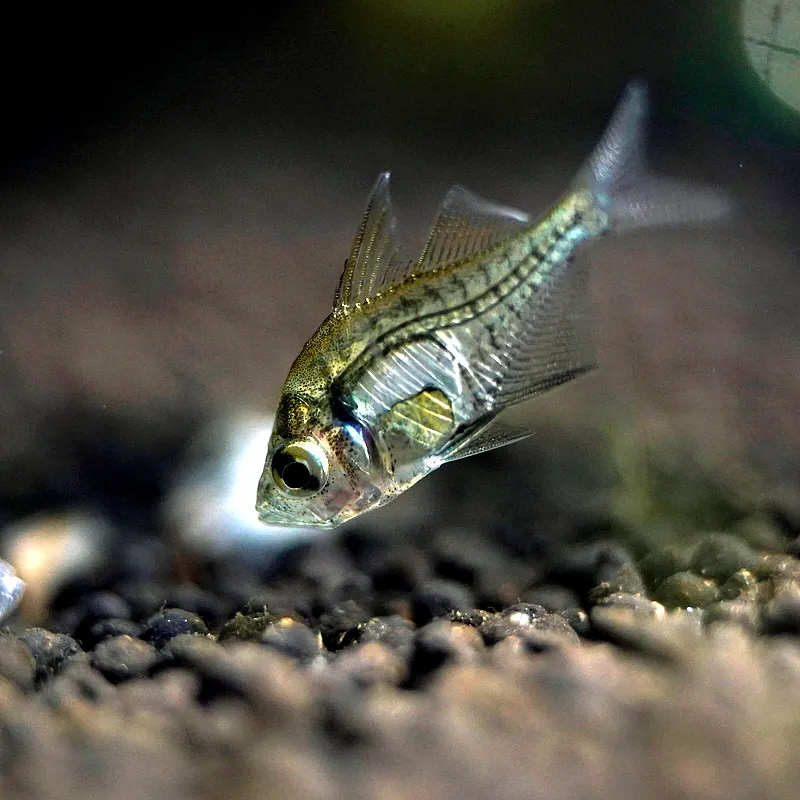
Indian glassy fish
Parambassis ranga
Freshwater3.1 in (8 cm) · 20 gal (75 L)68–86°F (20–30°C)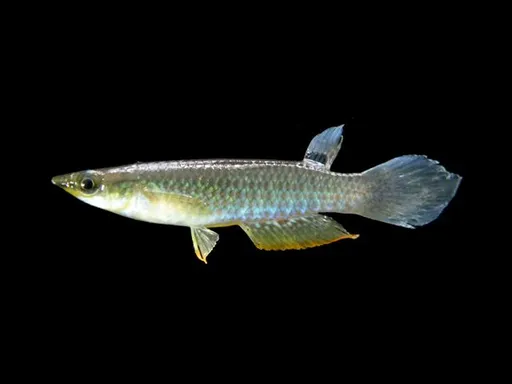
Blue panchax
Aplocheilus panchax
Freshwater3.5 in (9 cm) · 20 gal (75 L)72–82°F (22–28°C)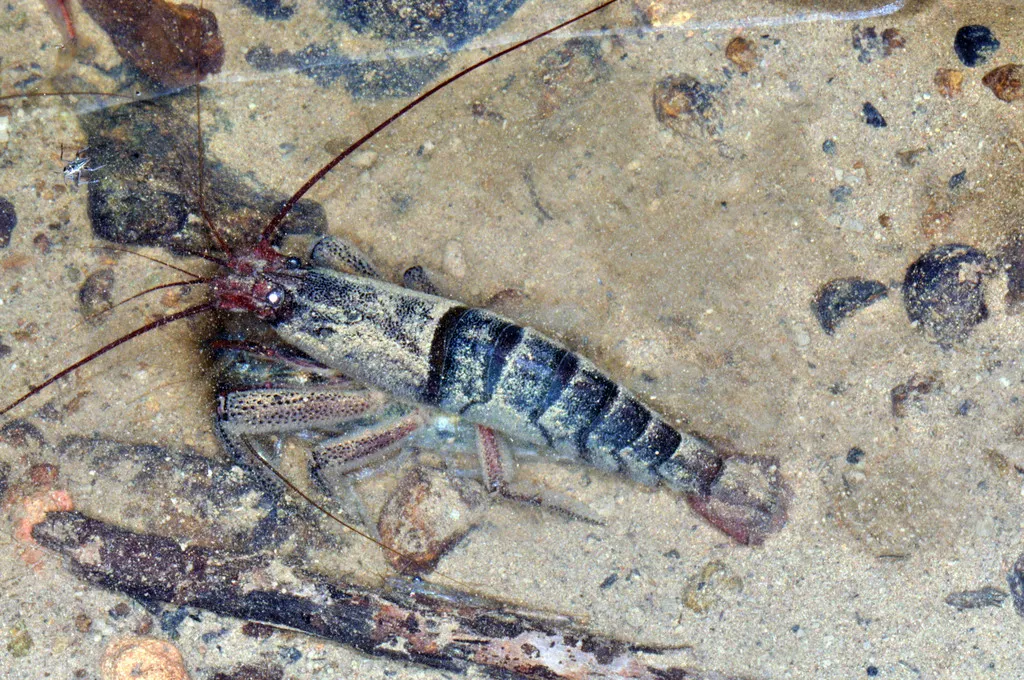
Marble wood shrimp
Atya scabra
Freshwater3.9 in (10 cm) · 20 gal (75 L)73–82°F (23–28°C)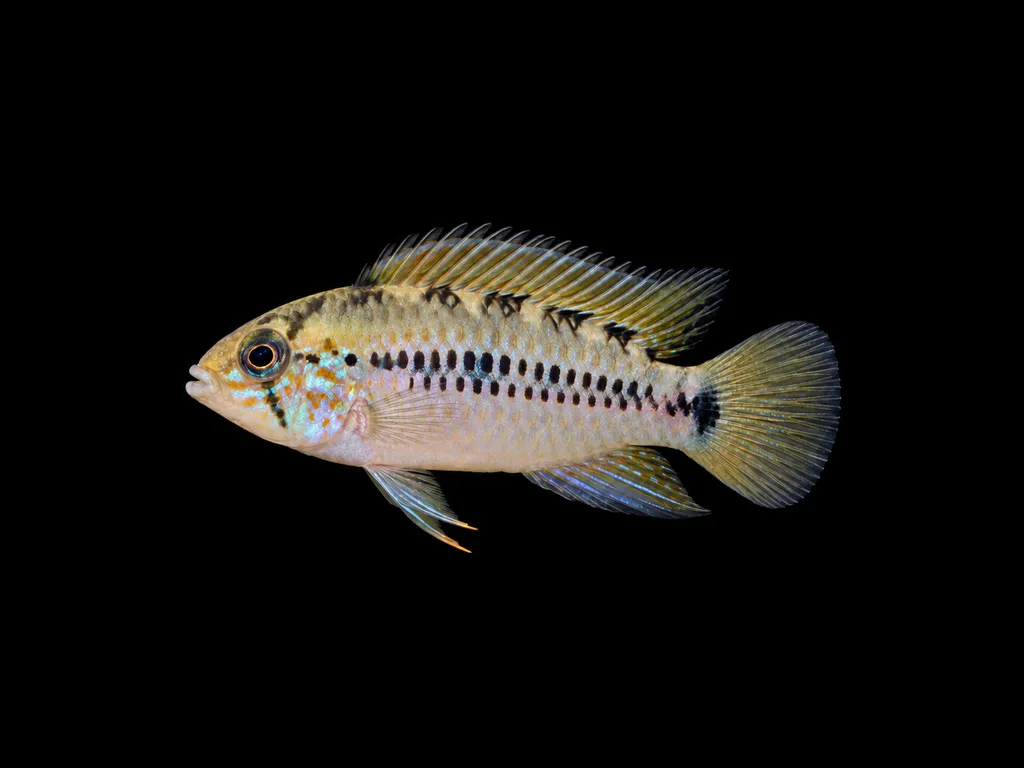
Alacrina dwarf cichlid
Apistogramma alacrina
Freshwater2.8 in (7 cm) · 20 gal (75 L)73–82°F (23–28°C)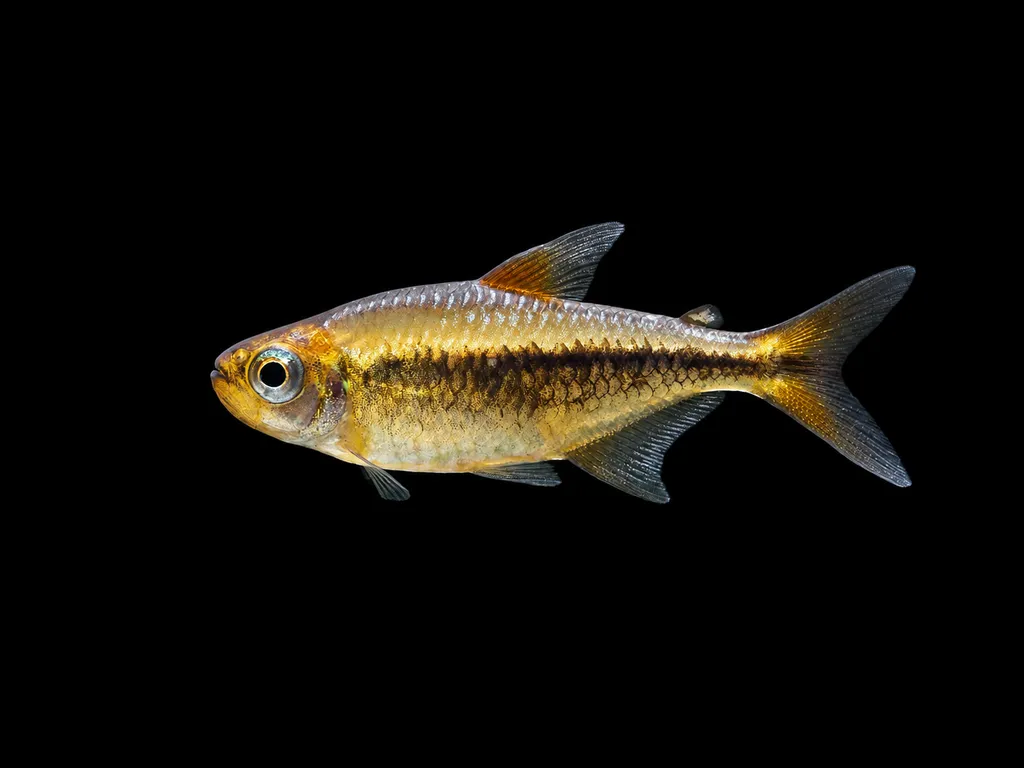
Blackmargin tetra
Moenkhausia nigromarginata
Freshwater2.1 in (5.3 cm) · 20 gal (75 L)73–82°F (23–28°C)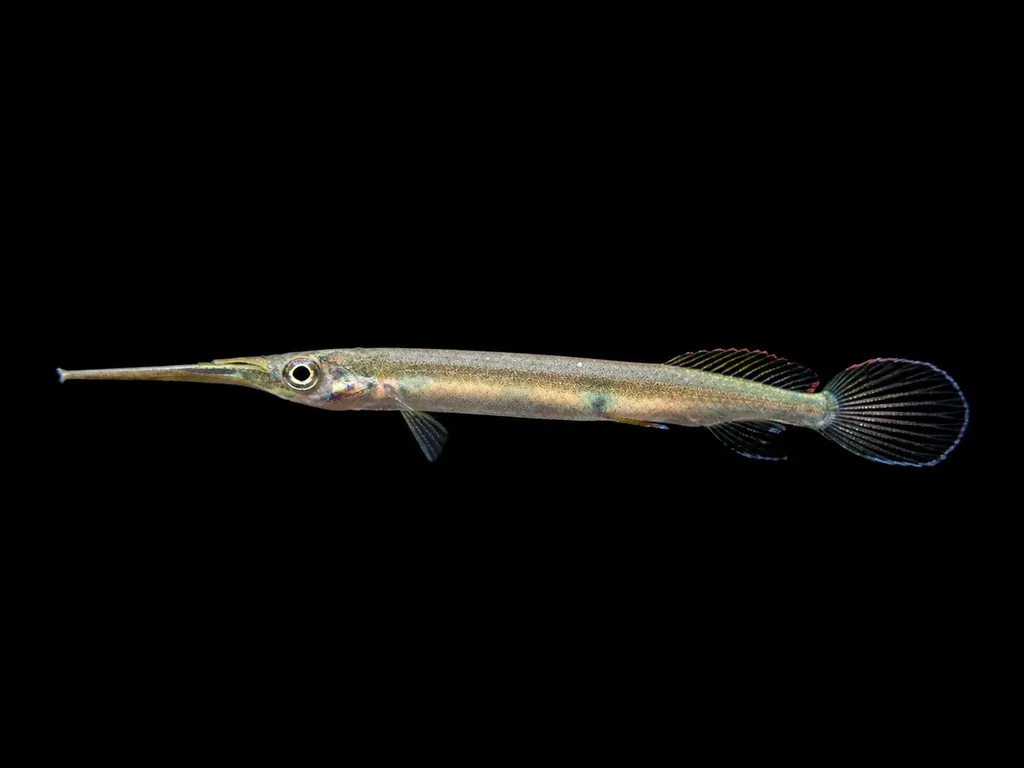
Kuekenthal's halfbeak
Hemirhamphodon kuekenthali
Freshwater3.3 in (8.5 cm) · 20 gal (75 L)73–81°F (23–27°C)
Common questions
What size tank does a Mosaic cory need?
A Mosaic cory needs at least 20 gal (75 L). It spends most of its time in the bottom.
What temperature and pH does a Mosaic cory need?
A Mosaic cory is comfortable at 75–82°F (24–28°C) with a pH of 6.0–7.5.
How big does a Mosaic cory get?
An adult Mosaic cory reaches about 2.8 in (7 cm).
Does a Mosaic cory need a group?
Yes. A Mosaic cory is a shoaling species and should be kept in a group, not singly.
Related species
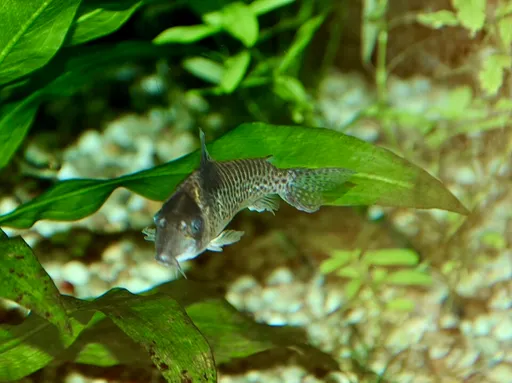 2.8 in (7 cm)24 gal (90 L)72–79°F (22–26°C)
Agassiz's cory
Brochis agassizii
2.8 in (7 cm) · 24 gal (90 L)
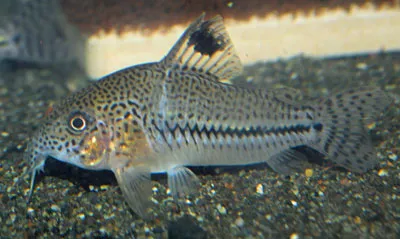 2.8 in (7 cm)24 gal (90 L)72–79°F (22–26°C)
Leopard cory
Brochis leopardus
2.8 in (7 cm) · 24 gal (90 L)
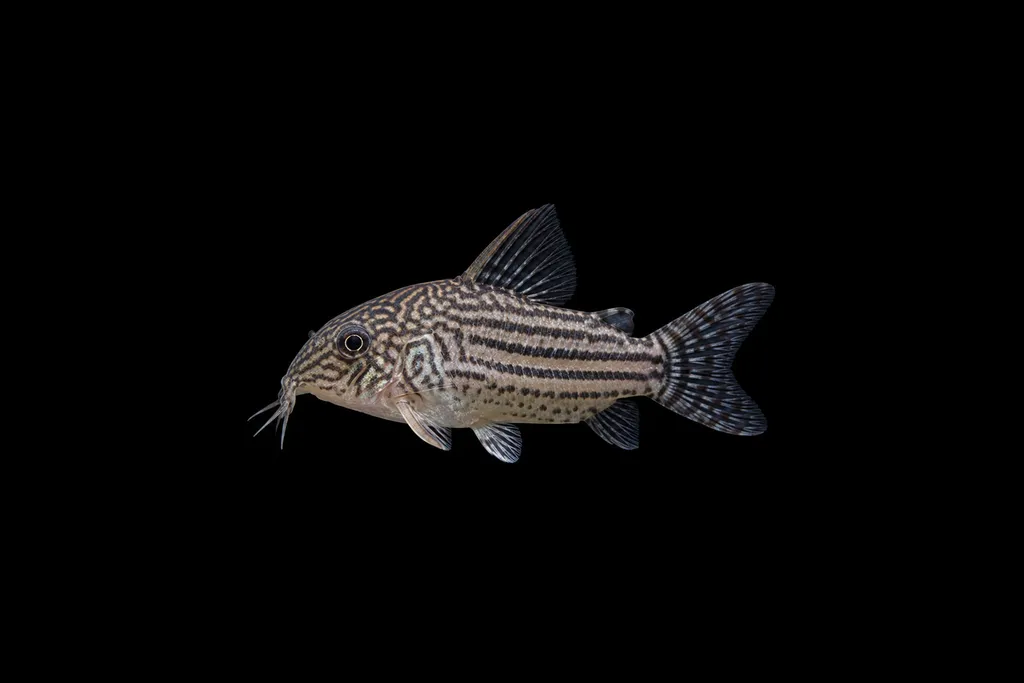 2.8 in (7 cm)24 gal (90 L)72–79°F (22–26°C)
Ornate cory
Brochis ornata
2.8 in (7 cm) · 24 gal (90 L)
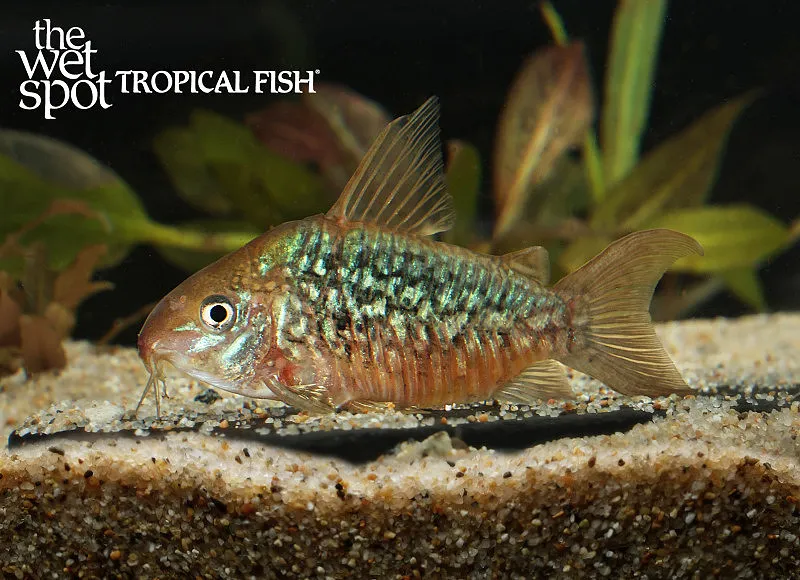 3 in (7.5 cm)26 gal (100 L)72–82°F (22–28°C)
Pantanal cory
Brochis pantanalensis
3 in (7.5 cm) · 26 gal (100 L)
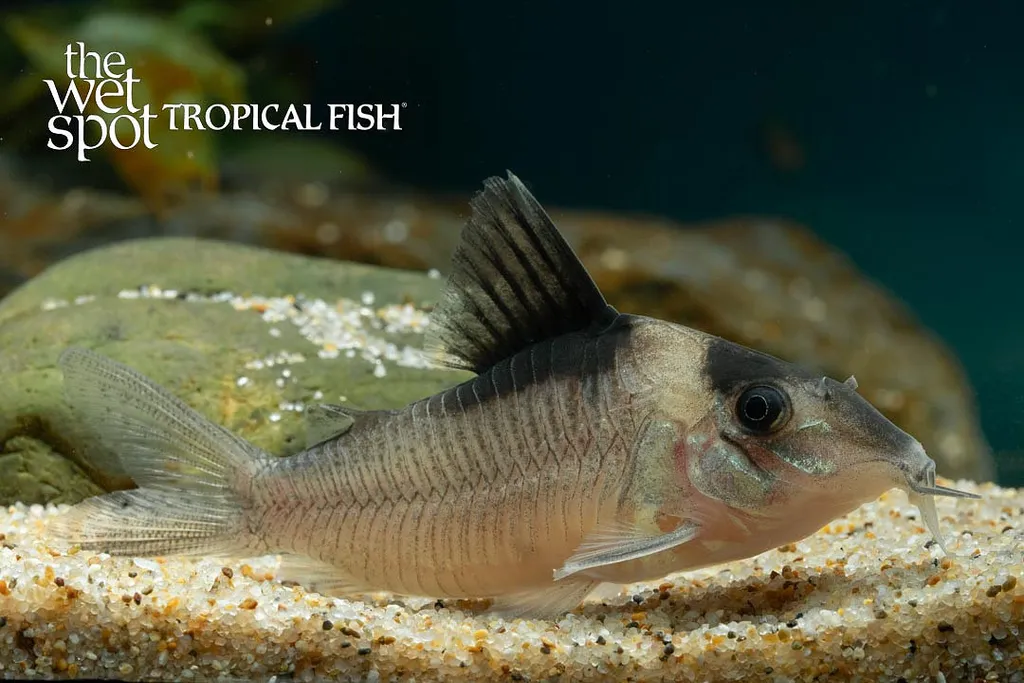 2.6 in (6.5 cm)20 gal (75 L)75–82°F (24–28°C)
Amanda Jane's cory
Brochis amandajanea
2.6 in (6.5 cm) · 20 gal (75 L)
 2.6 in (6.5 cm)20 gal (75 L)73–79°F (23–26°C)
Bannertail cory
Brochis robineae
2.6 in (6.5 cm) · 20 gal (75 L)