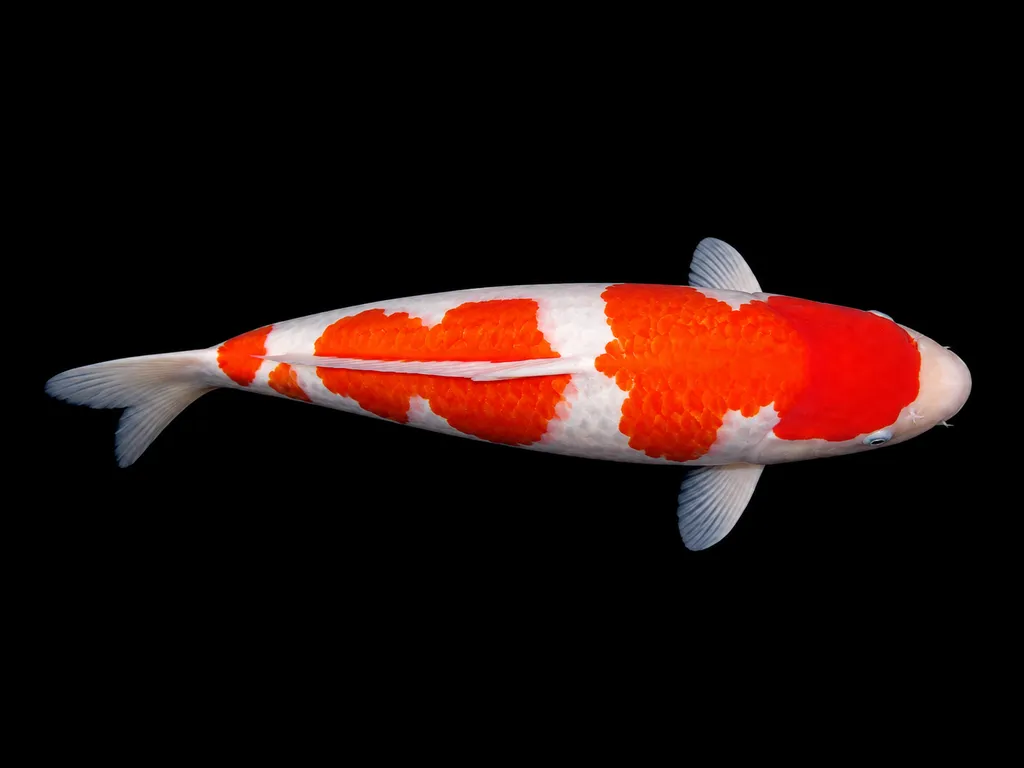
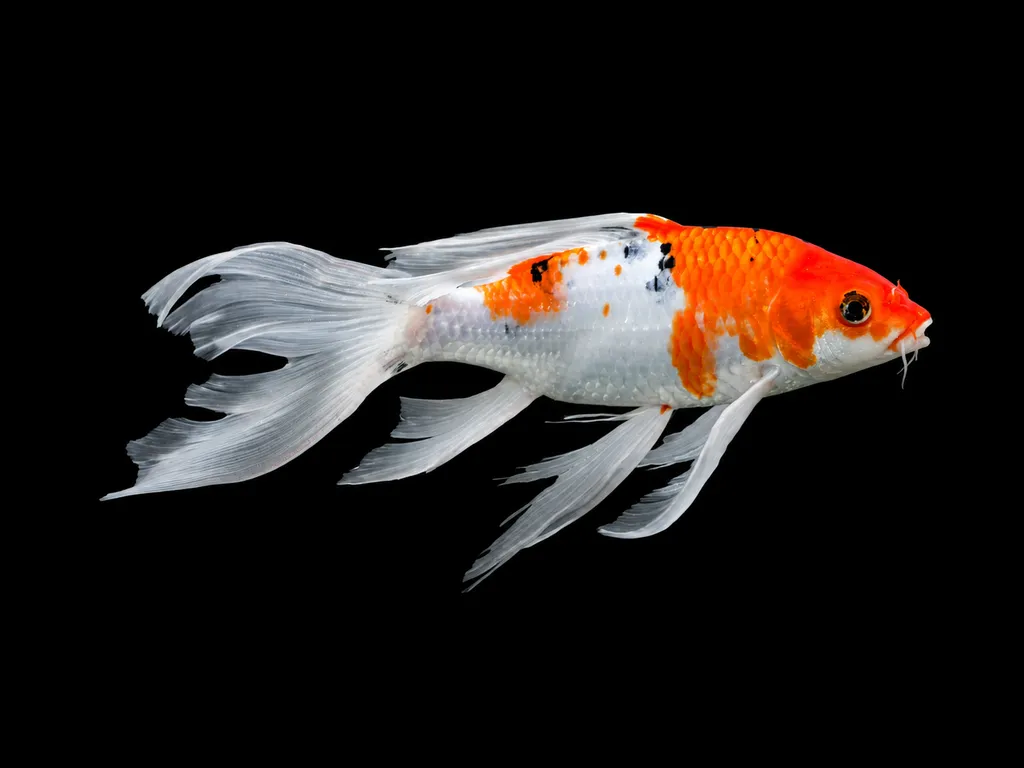
The Kohaku koi is a red and white pond koi that spends most of its time near the bottom. It suits a keeper with a little experience.
Did you know
Japanese hobbyists say koi keeping begins with Kohaku and ends with Kohaku. Beginners buy one first, and experienced keepers come back to it last. With Sanke and Showa, it makes up the gosanke, the three varieties that lead almost every show standard.
Caring for the Kohaku koi
Kohaku koi are pond fish rather than aquarium fish. A single fish needs at least 264 gal (1,000 L) to start, and a group needs several thousand liters. Koi are big, messy eaters, so filtration has to be strong.
The water can run anywhere from 39 to 81°F (4 to 27°C), with a pH of 7.0 to 8.5. Koi stay active through the summer and slow to near dormancy under winter ice. Keep the water stable, well oxygenated and well filtered rather than chasing narrow numbers.
Feed sinking koi pellets and greens as part of a varied omnivore diet, plus occasional live or frozen foods. Kohaku are peaceful and social, and they do fine alone or in a group. They mix well with goldfish and other large, peaceful pond fish. Koi uproot plants and eat anything small enough to swallow.
The Kohaku pattern is polygenic and does not breed true. A Kohaku pair throws white, red and off pattern fry, and breeding koi is a moderate challenge.
Shops sell Kohaku by grade, from pond quality culls up to Japanese imports priced well above ordinary pond stock. Judge the white ground first, since a dull or yellowed base sinks an otherwise good fish. The pattern shifts as a koi grows and the red can spread or fade, so a cheap small Kohaku is a gamble.
Good to know
The Kohaku's look is red erythrophore patches over an unpigmented white ground, with no metallic layer under it. Keepers judge the edges with two words: kiwa for the trailing edge of a red patch and sashi for the leading one.
In the wild
The Kohaku koi is entirely a Japanese pond selection, and nothing patterned like it swims wild. Red and white carp turned up among food fish in the Niigata rice villages in the early 1800s. The modern variety traces to an 1888 spawning by Kunizo Hiroi, which founded the now extinct Gosuke bloodline. Later bloodlines such as Tomoin and Yagozen were built from Gosuke fish crossed with other stock. Those two are the lines still worked in Japan.
Common questions
Is a Kohaku koi a different species from the koi?
No. A Kohaku koi is a variety of the koi, Cyprinus rubrofuscus, and it wants the same tank, water and food as the species.
What size tank does a Kohaku koi need?
A Kohaku koi needs at least 264 gal (1,000 L). It spends most of its time in the bottom.
What does a Kohaku koi eat?
A Kohaku koi eats a varied omnivore diet built on sinking koi pellets and greens. Occasional live or frozen foods round it out.
How big does a Kohaku koi get?
An adult Kohaku koi reaches about 23.6 in (60 cm).
How does a Kohaku koi breed?
Kohaku koi are a moderate challenge to breed, and they do not breed true. Their polygenic pattern means a pair throws white, red and off pattern fry.
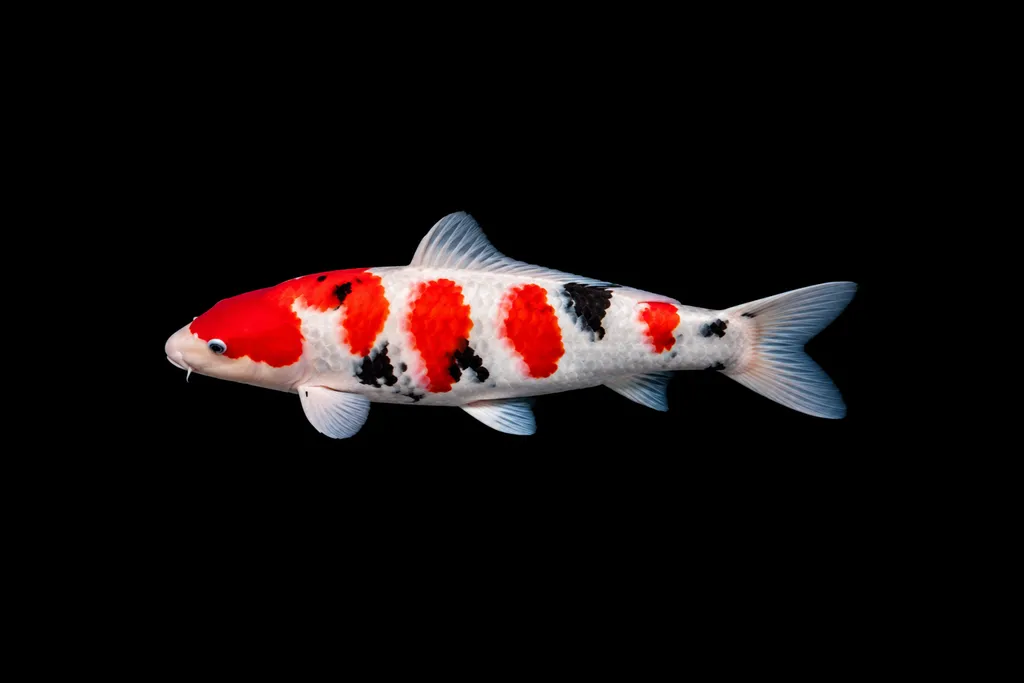
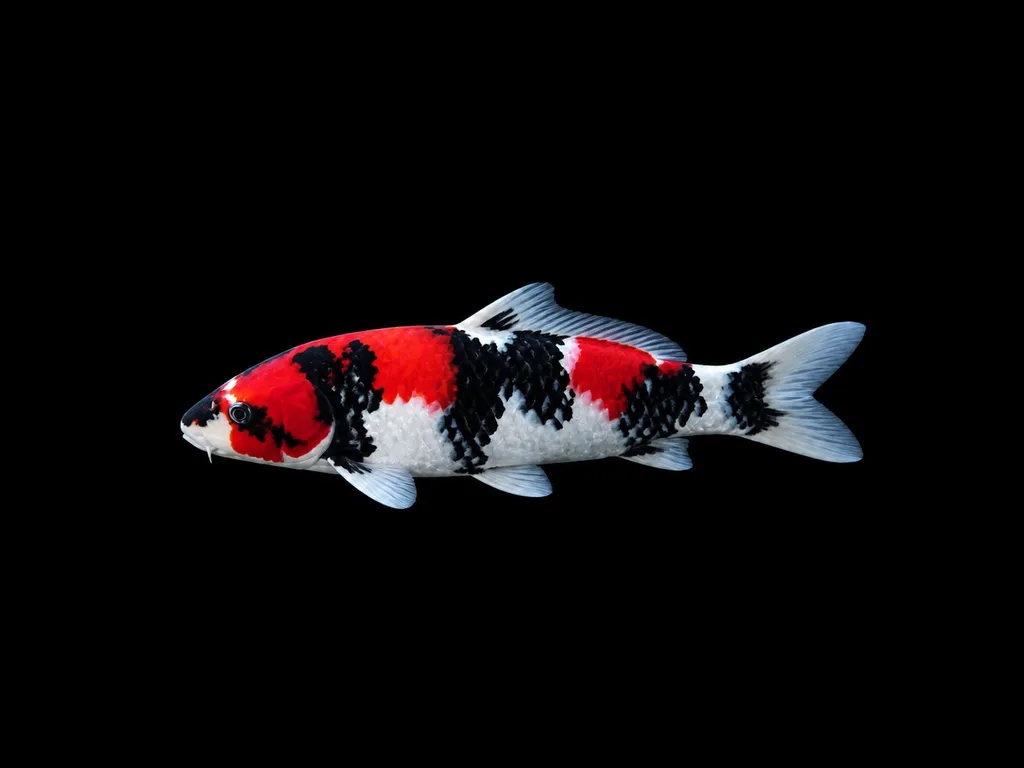
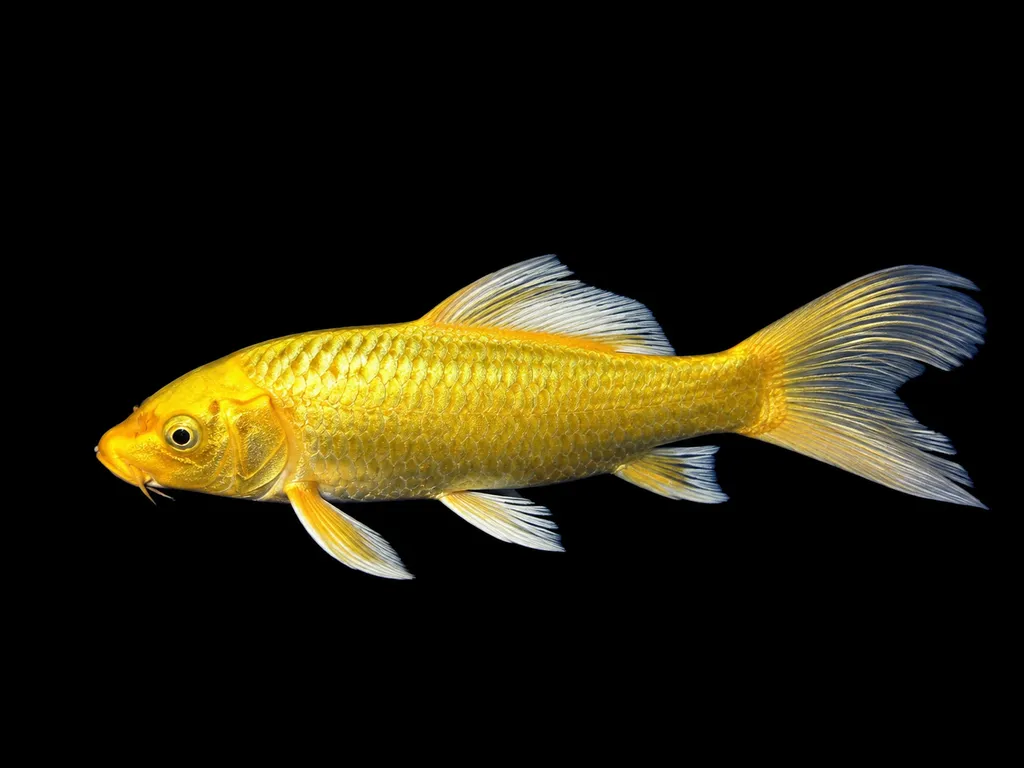
 11.8 in (30 cm)119 gal (450 L)39–75°F (4–24°C)
 23.6 in (60 cm)317 gal (1,200 L)72–82°F (22–28°C)
 6.3 in (16 cm)37 gal (140 L)68–79°F (20–26°C)
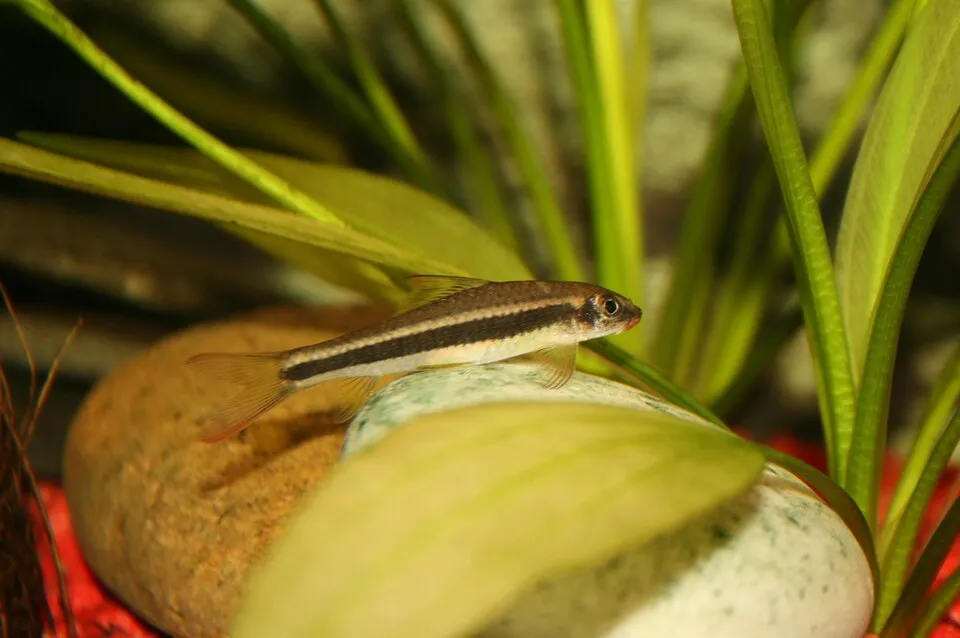 5.9 in (15 cm)63 gal (240 L)68–81°F (20–27°C)
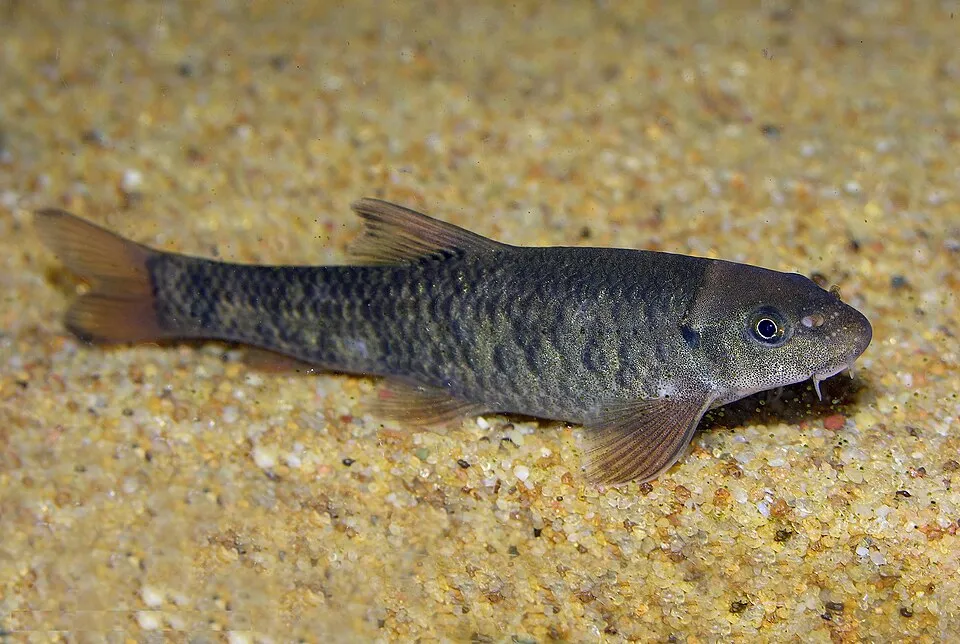 4.7 in (12 cm)63 gal (240 L)57–68°F (14–20°C)
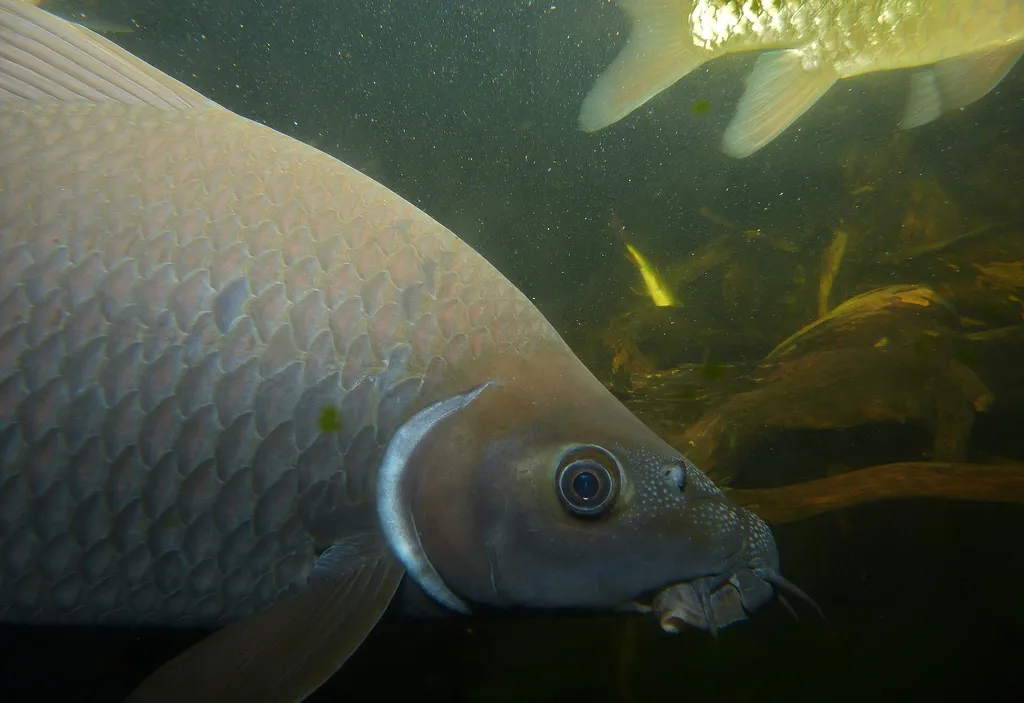 23.6 in (60 cm)660 gal (2,500 L)68–79°F (20–26°C)