Bigeye callochromis
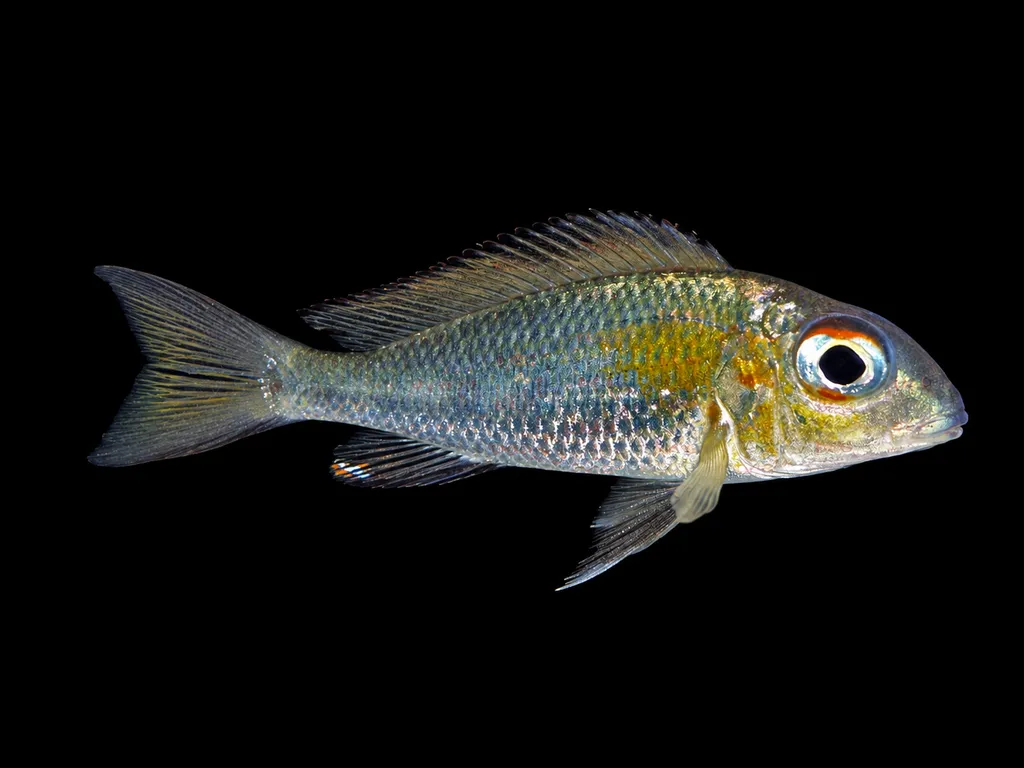
Callochromis macrops
Also known as Red callochromis, Bigeye sand sifter
FreshwaterFish
Care at a glance
- Temperature
- 75–81°F
- 24–27°C
- pH
- 7.8–9.0
- Adult size
- 5.3 in
- 13.5 cm
- Minimum tank
- 79 gal
- 300 L
- Temperament
- Mostly peaceful
- Social behavior
- Social
- Swim level
- Bottom
- Difficulty
- Difficult
- Breeding
- Mouthbrooder · Hard
- Rarity
- Rare
- Family
- Cichlidae
- Origin
- Lake Tanganyika
Overview
The bigeye callochromis is a peaceful, sand-sifting cichlid from Lake Tanganyika. It needs an open sand floor and is a fish for experienced keepers.
Did you know
The bigeye callochromis reads the open sand with its oversized eyes, watching for the smallest movement of a buried invertebrate. Then it takes a mouthful to sift. Those big eyes also help it spot approaching predators.
Caring for the bigeye callochromis
Give a bigeye callochromis at least 79 gal (300 L), with an open bed of deep, soft, fine sand. It sifts sand through its gills, and coarse gravel can injure it. Set any rock at the edges so the open floor stays clear.
It needs clean, stable water that is hard and alkaline, at 75 to 81°F (24 to 27°C) and a pH of 7.8 to 9.0. Feed small foods often, such as fine sinking pellets, frozen cyclops and brine shrimp.
It is peaceful toward other species, but males are very intolerant of rival males. Keep a single male with a group of females as a harem, and give a large footprint if you want more than one male. It will not put up with rough tank mates, so keep it only with other calm, sand-dwelling Tanganyikans.
It is a mouthbrooder, and the male builds a sand crater to court females. Breeding it is hard.
Good to know
The bigeye callochromis is a member of the cichlid family, and its name macrops means large-eyed. Displaying males of the red forms glow with rose and copper tones.
In the wild
The bigeye callochromis lives over shallow sand flats in Lake Tanganyika. It cruises the open floor there in search of buried food.
Weekly picks
Tank mates
The bigeye callochromis is a mostly peaceful, social species that keeps to the bottom. These picks share a community profile with it, are safe together in both directions, and overlap on water type, temperature and pH.
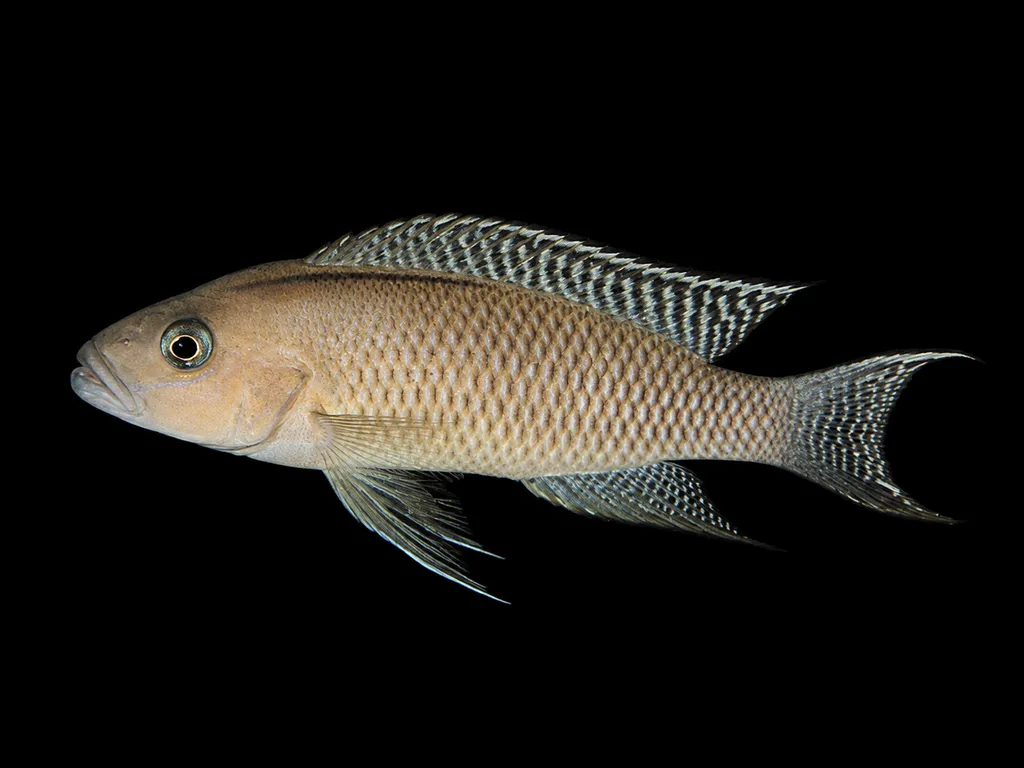
Falcicula cichlid
Neolamprologus falcicula
Freshwater3.1 in (8 cm) · 42 gal (160 L)75–81°F (24–27°C)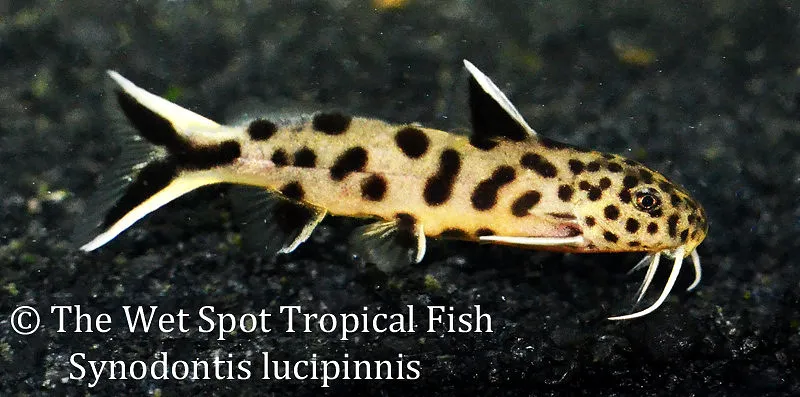
Dwarf petricola
Synodontis lucipinnis
Freshwater3.9 in (10 cm) · 30 gal (114 L)73–81°F (23–27°C)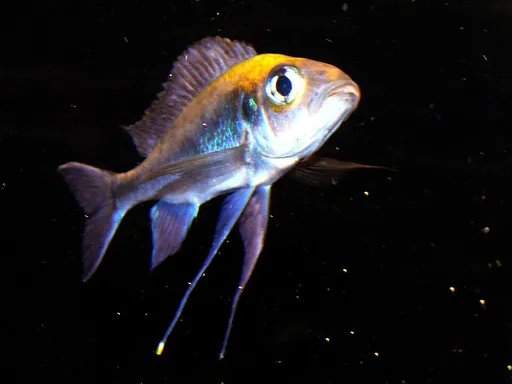
Featherfin cichlid
Cyathopharynx furcifer
Freshwater7.9 in (20 cm) · 119 gal (450 L)75–81°F (24–27°C)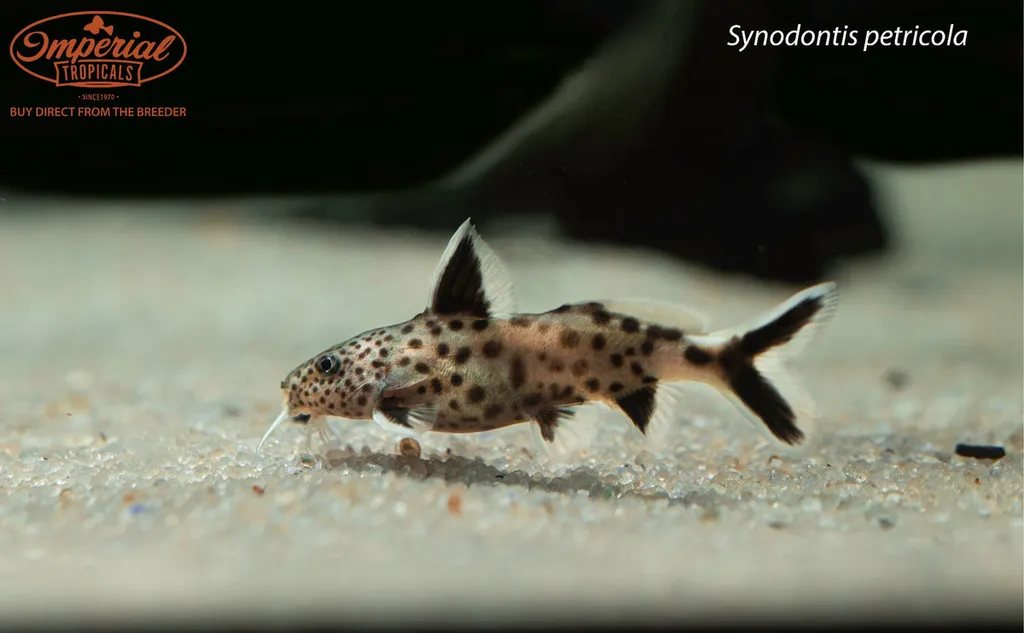
Even-Spotted squeaker
Synodontis petricola
Freshwater4.7 in (12 cm) · 21 gal (80 L)75–82°F (24–28°C)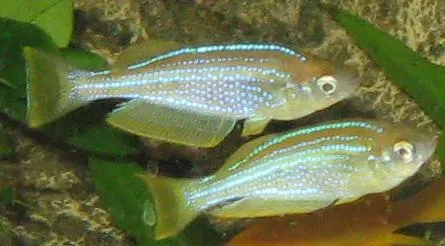
Tanganyika killifish
Lamprichthys tanganicanus
Freshwater5.5 in (14 cm) · 40 gal (150 L)73–77°F (23–25°C)
Common questions
What size tank does a bigeye callochromis need?
A bigeye callochromis needs at least 79 gal (300 L). It spends most of its time in the bottom.
What temperature and pH does a bigeye callochromis need?
A bigeye callochromis is comfortable at 75–81°F (24–27°C) with a pH of 7.8–9.0.
What does a bigeye callochromis eat?
A bigeye callochromis eats frequent small meals of fine sinking pellets, frozen cyclops and brine shrimp.
How big does a bigeye callochromis get?
An adult bigeye callochromis reaches about 5.3 in (13.5 cm).
How does a bigeye callochromis breed?
The bigeye callochromis is a mouthbrooder. The male builds a sand crater to court females, and breeding it is hard.
Related species
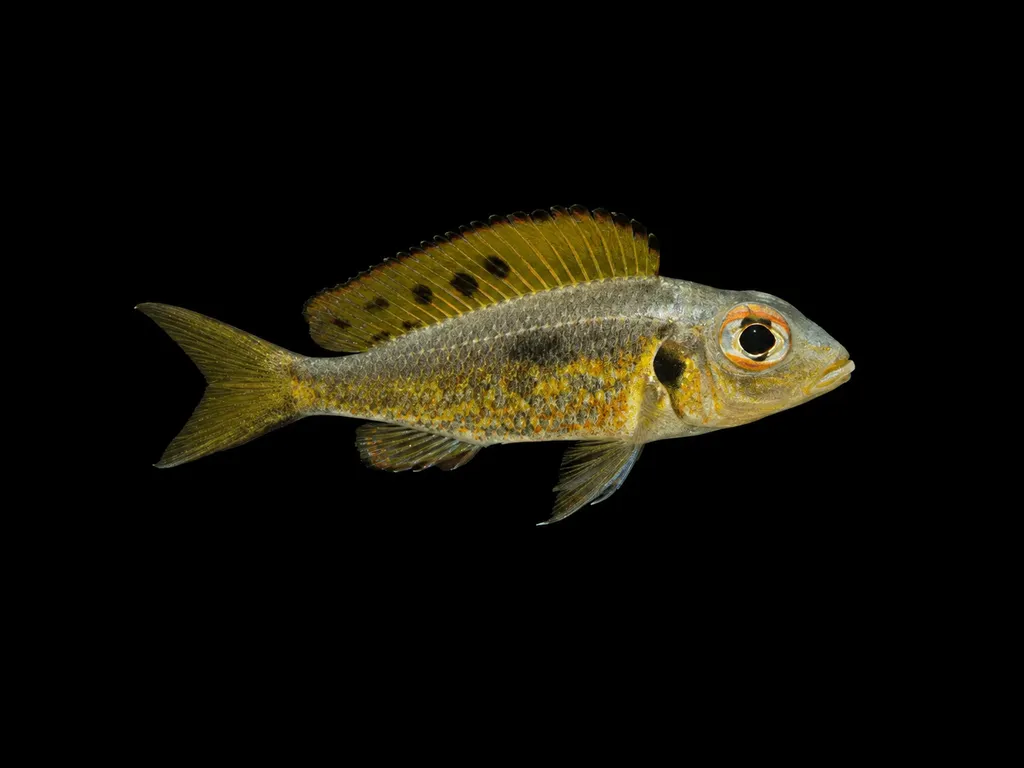 5.9 in (15 cm)79 gal (300 L)75–81°F (24–27°C)
Blackspot callochromis
Callochromis melanostigma
5.9 in (15 cm) · 79 gal (300 L)
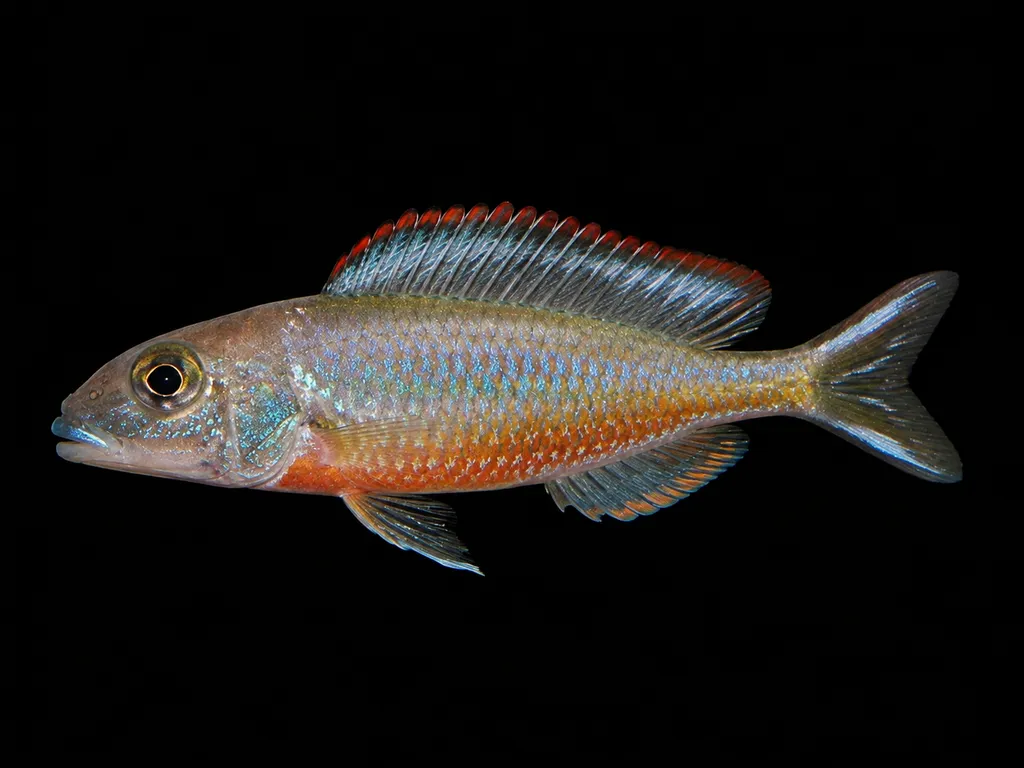 3.9 in (10 cm)66 gal (250 L)75–81°F (24–27°C)
Flame callochromis
Callochromis pleurospilus
3.9 in (10 cm) · 66 gal (250 L)
 5.5 in (14 cm)79 gal (300 L)75–81°F (24–27°C)
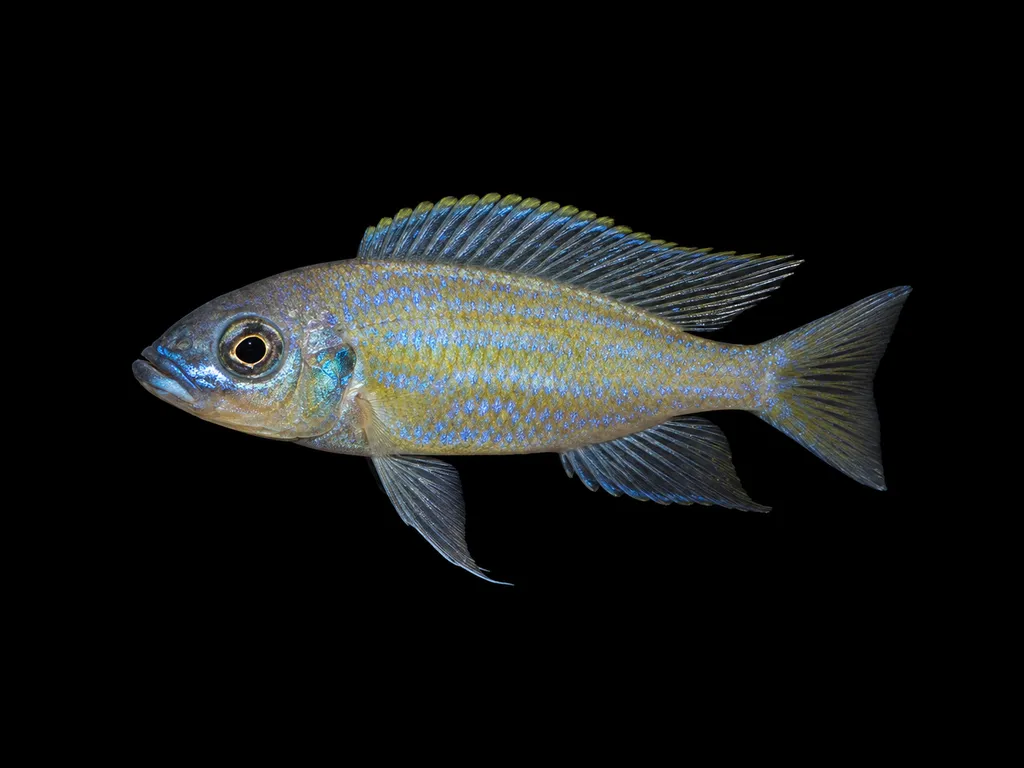
De Windt's cichlid
Aulonocranus dewindti
5.5 in (14 cm) · 79 gal (300 L)
 5.5 in (14 cm)66 gal (250 L)73–81°F (23–27°C)
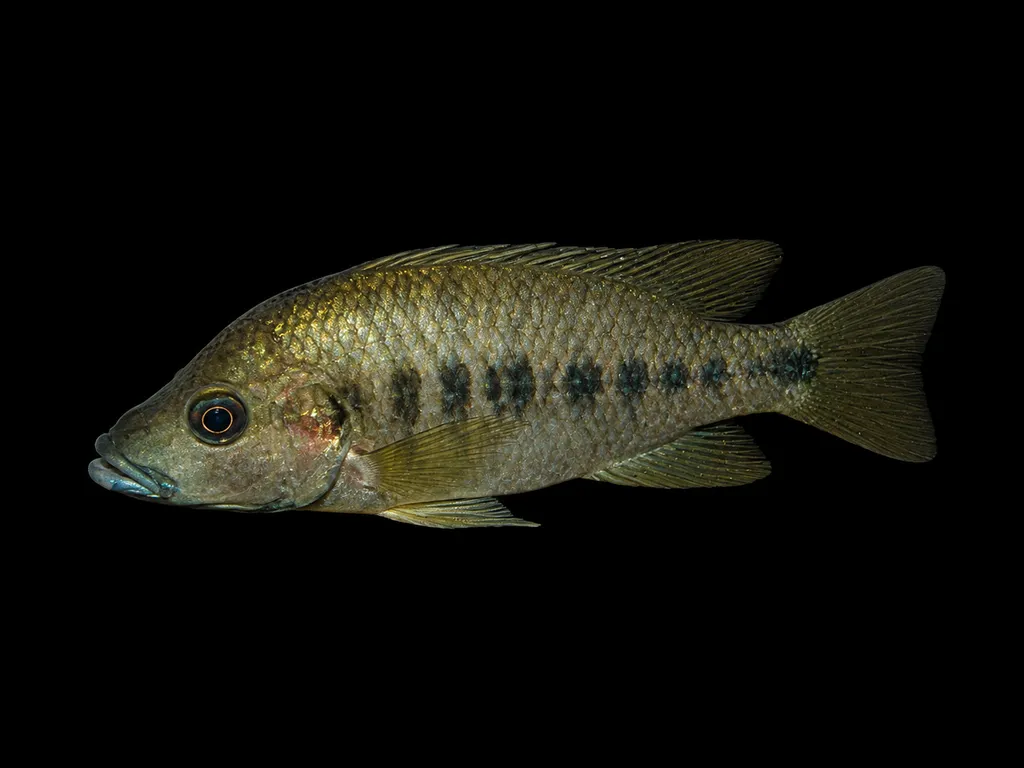
Nsess cichlid
Stomatepia mariae
5.5 in (14 cm) · 66 gal (250 L)
 5.1 in (13 cm)53 gal (200 L)75–81°F (24–27°C)
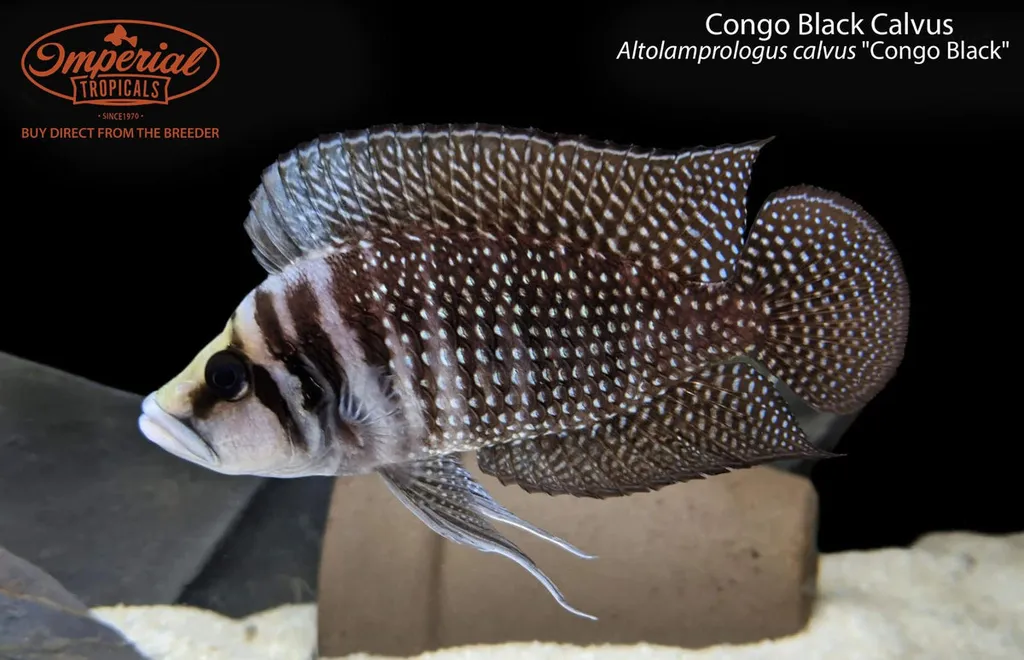
Black calvus
Altolamprologus calvus
5.1 in (13 cm) · 53 gal (200 L)
 5.1 in (13 cm)53 gal (200 L)75–81°F (24–27°C)
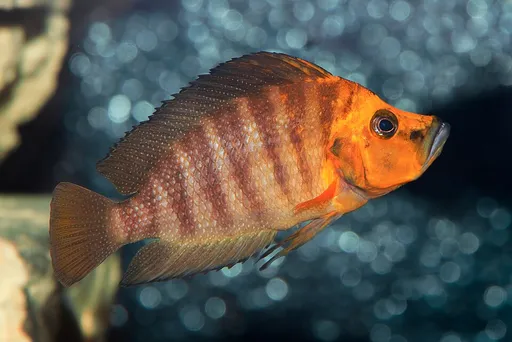
Compressiceps
Altolamprologus compressiceps
5.1 in (13 cm) · 53 gal (200 L)