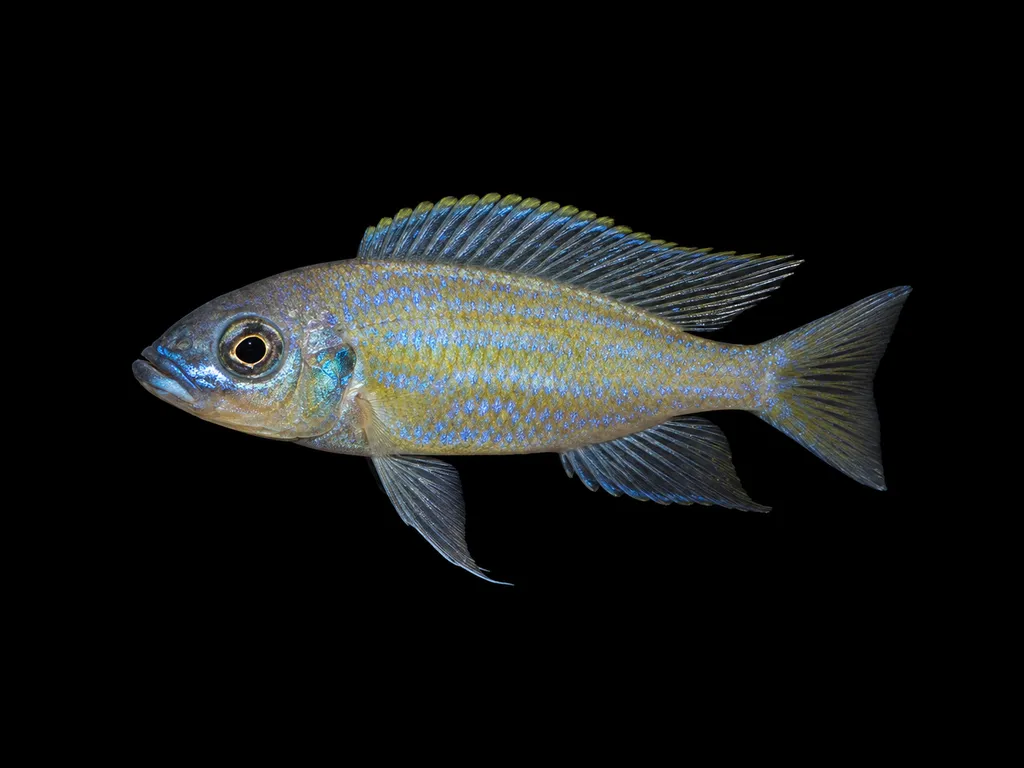
De Windt's cichlid
Aulonocranus dewindti
Also known as De Windt's featherfin
FreshwaterFish
Care at a glance
- Temperature
- 75–81°F
- 24–27°C
- pH
- 7.8–9.0
- Adult size
- 5.5 in
- 14 cm
- Minimum tank
- 79 gal
- 300 L
- Temperament
- Mostly peaceful
- Social behavior
- Social
- Swim level
- Bottom
- Difficulty
- Difficult
- Breeding
- Mouthbrooder · Hard
- Rarity
- Rare
- Family
- Cichlidae
- Origin
- Lake Tanganyika
Overview
De Windt's cichlid is a peaceful featherfin that lives over open sand near the bottom of the tank. It is a fish for experienced keepers.
Did you know
De Windt's cichlid has sensory canals in its lateral-line system so enlarged across the head that they help shape the skull. They give it a built-in detector for the faint movements of prey and rivals.
Caring for the de Windt's cichlid
Keep one male de Windt's cichlid with several females in at least 79 gal (300 L). The key feature is a wide, open expanse of fine sand where a male can build his crater. Keep rockwork to the edges rather than filling the display.
Like its lakemates, it needs very hard, alkaline water, at 75 to 81°F (24 to 27°C) and a pH of 7.8 to 9.0. It is a sensitive fish that wants pristine water, which makes it a challenge to keep well.
Feed small foods it can pick from the water and the sand. It is peaceful and mixes with other calm Tanganyikans, but it needs settled tank mates.
Males carry long, trailing pelvic fins. A male clears and shapes a shallow crater in the sand to spawn over, then displays there and courts each passing female. It is a maternal mouthbrooder, and breeding it in aquariums is difficult.
Good to know
De Windt's cichlid, Aulonocranus dewindti, is a featherfin cichlid in the family Cichlidae. Its genus name comes from Greek words for a channel and a helmet, a reference to the sensory canals running through the head.
In the wild
De Windt's cichlid displays over open sand and pebble flats in the shallows of Lake Tanganyika. It feeds on plankton and small items above the floor.
Weekly picks
Tank mates
The de Windt's cichlid is a mostly peaceful, social species that keeps to the bottom. These picks share a community profile with it, are safe together in both directions, and overlap on water type, temperature and pH.
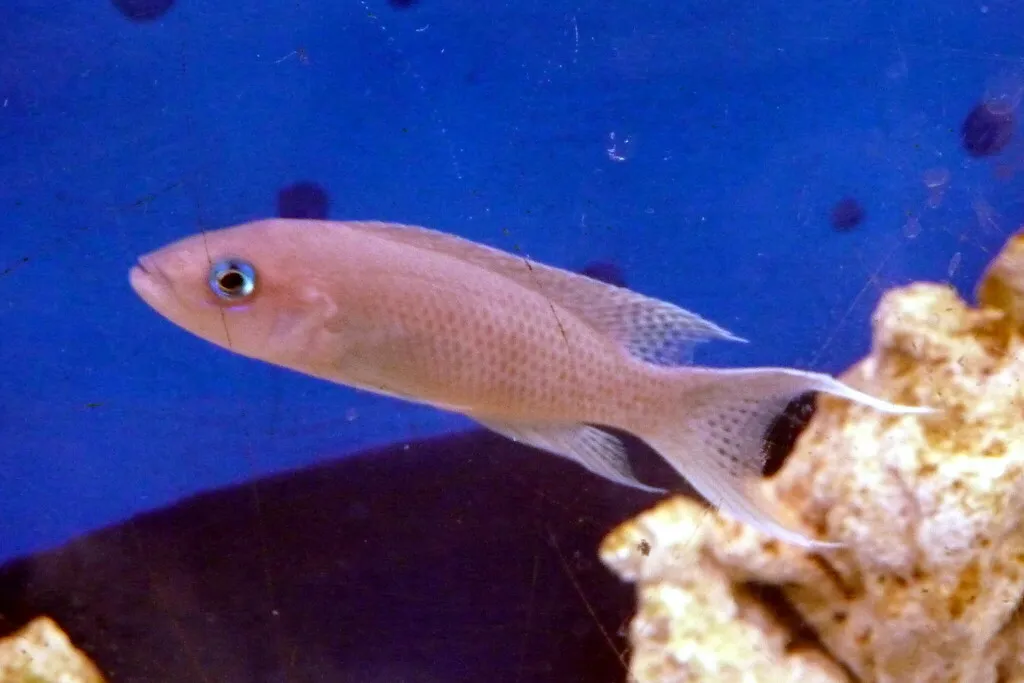
Graceful lamprologus
Neolamprologus gracilis
Freshwater3.5 in (9 cm) · 42 gal (160 L)75–81°F (24–27°C)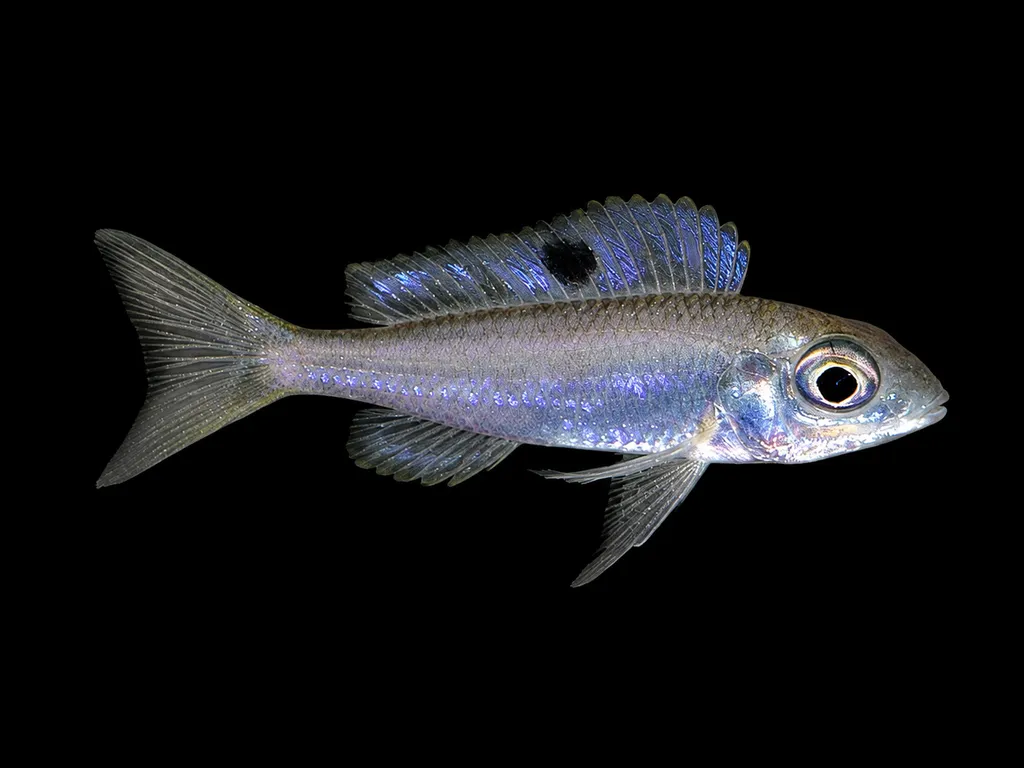
Descamps' sand cichlid
Ectodus descampsii
Freshwater4.1 in (10.5 cm) · 66 gal (250 L)75–81°F (24–27°C)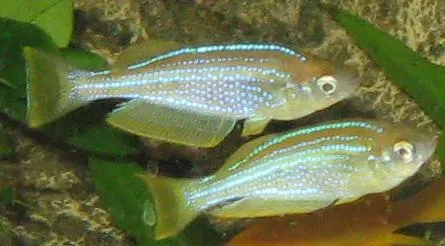
Tanganyika killifish
Lamprichthys tanganicanus
Freshwater5.5 in (14 cm) · 40 gal (150 L)73–77°F (23–25°C)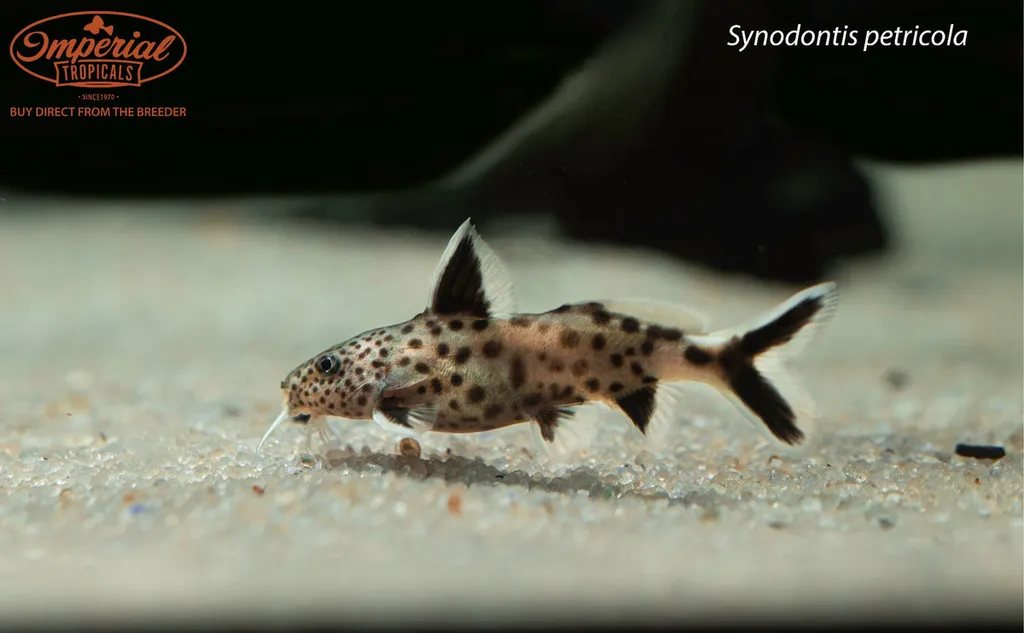
Even-Spotted squeaker
Synodontis petricola
Freshwater4.7 in (12 cm) · 21 gal (80 L)75–82°F (24–28°C)
Common questions
What size tank does a de Windt's cichlid need?
A de Windt's cichlid needs at least 79 gal (300 L). It spends most of its time in the bottom.
What temperature and pH does a de Windt's cichlid need?
A de Windt's cichlid is comfortable at 75–81°F (24–27°C) with a pH of 7.8–9.0.
What does a de Windt's cichlid eat?
De Windt's cichlid eats small foods it can pick from the water and the sand.
How big does a de Windt's cichlid get?
An adult de Windt's cichlid reaches about 5.5 in (14 cm).
How can you tell a male de Windt's cichlid from a female?
Males of de Windt's cichlid carry long, trailing pelvic fins. A male also clears a shallow crater in the sand and displays over it.
How does a de Windt's cichlid breed?
De Windt's cichlid is a maternal mouthbrooder. The male shapes a crater in the sand to spawn over and courts each passing female there, and breeding it in aquariums is difficult.
Related species
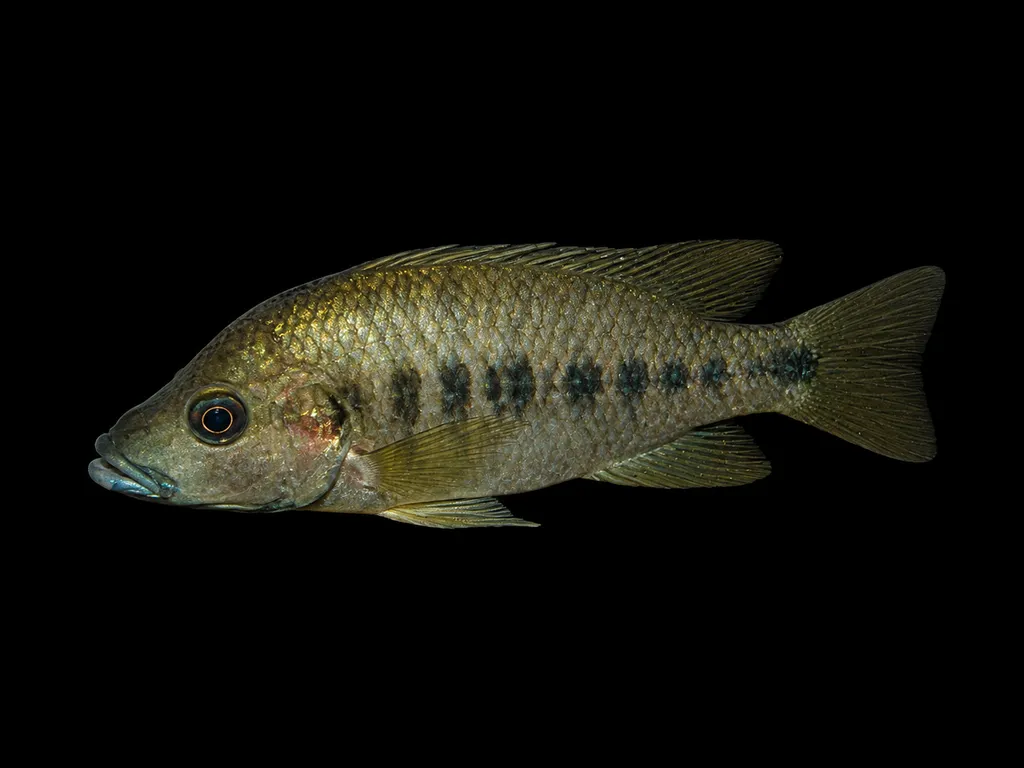 5.5 in (14 cm)66 gal (250 L)73–81°F (23–27°C)
Nsess cichlid
Stomatepia mariae
5.5 in (14 cm) · 66 gal (250 L)
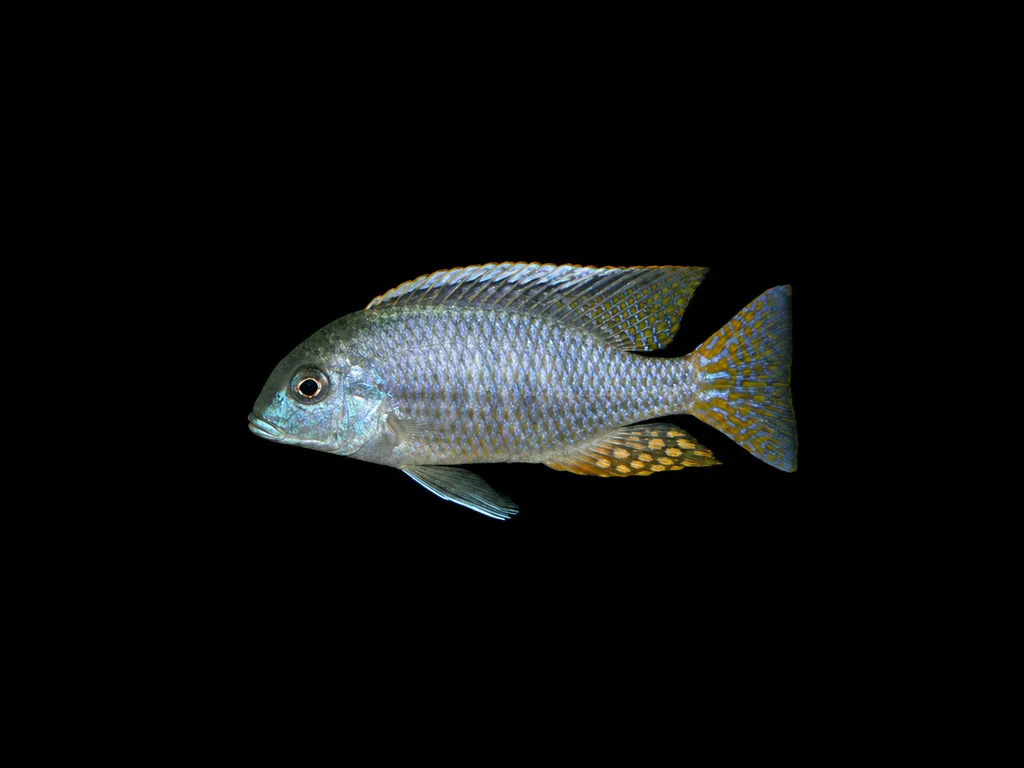 5.7 in (14.5 cm)79 gal (300 L)75–81°F (24–27°C)
Smallmouth lethrinops
Lethrinops microstoma
5.7 in (14.5 cm) · 79 gal (300 L)
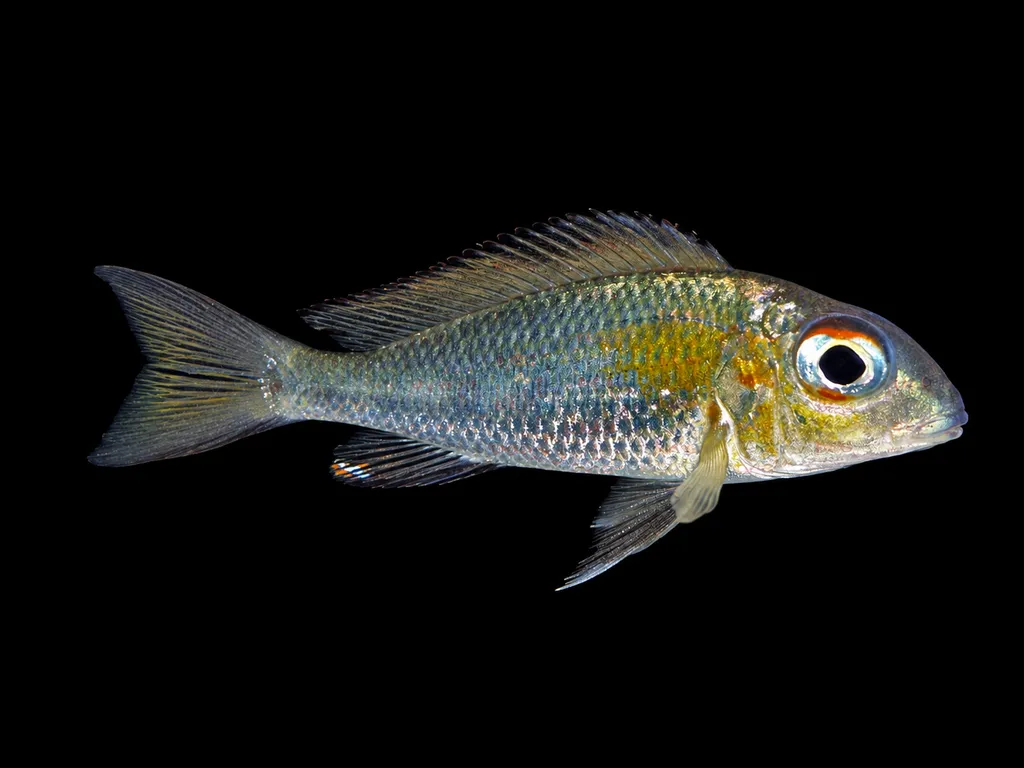 5.3 in (13.5 cm)79 gal (300 L)75–81°F (24–27°C)
Bigeye callochromis
Callochromis macrops
5.3 in (13.5 cm) · 79 gal (300 L)
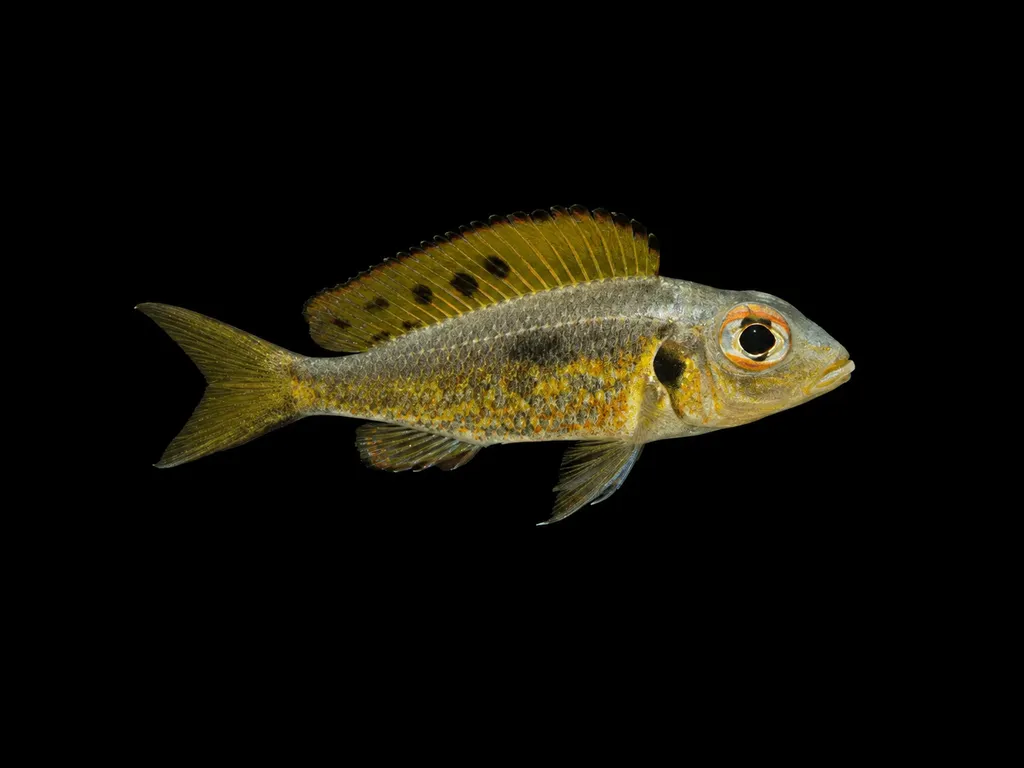 5.9 in (15 cm)79 gal (300 L)75–81°F (24–27°C)
Blackspot callochromis
Callochromis melanostigma
5.9 in (15 cm) · 79 gal (300 L)
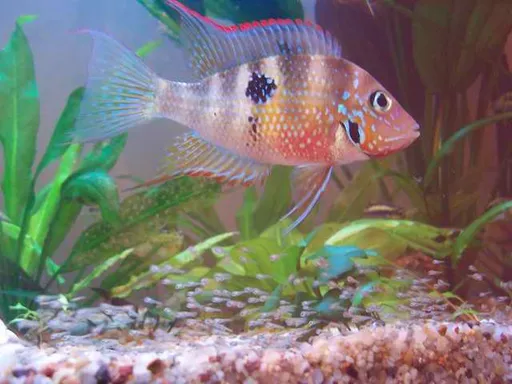 5.9 in (15 cm)53 gal (200 L)75–82°F (24–28°C)
Ellioti cichlid
Thorichthys maculipinnis
5.9 in (15 cm) · 53 gal (200 L)
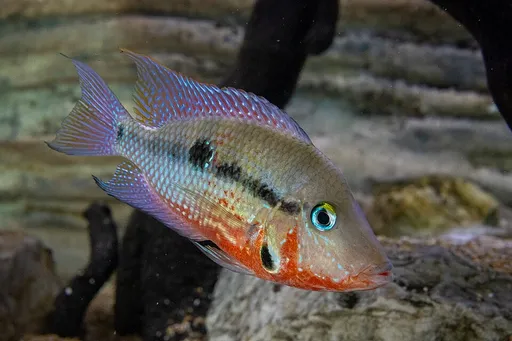 5.9 in (15 cm)30 gal (115 L)73–82°F (23–28°C)
Firemouth cichlid
Thorichthys meeki
5.9 in (15 cm) · 30 gal (115 L)