Descamps' sand cichlid
Ectodus descampsii
Also known as Dorsal-spot ectodus
FreshwaterFish
Care at a glance
- Temperature
- 75–81°F
- 24–27°C
- pH
- 7.8–9.0
- Adult size
- 4.1 in
- 10.5 cm
- Minimum tank
- 66 gal
- 250 L
- Temperament
- Mostly peaceful
- Social behavior
- Social
- Swim level
- Bottom
- Diet
- Omnivore
- Difficulty
- Difficult
- Breeding
- Mouthbrooder · Hard
- Rarity
- Rare
- Family
- Cichlidae
- Origin
- Lake Tanganyika
Overview
The Descamps' sand cichlid is a mild, gregarious cichlid for a sandy Lake Tanganyika tank. It is a fish for experienced keepers.
Did you know
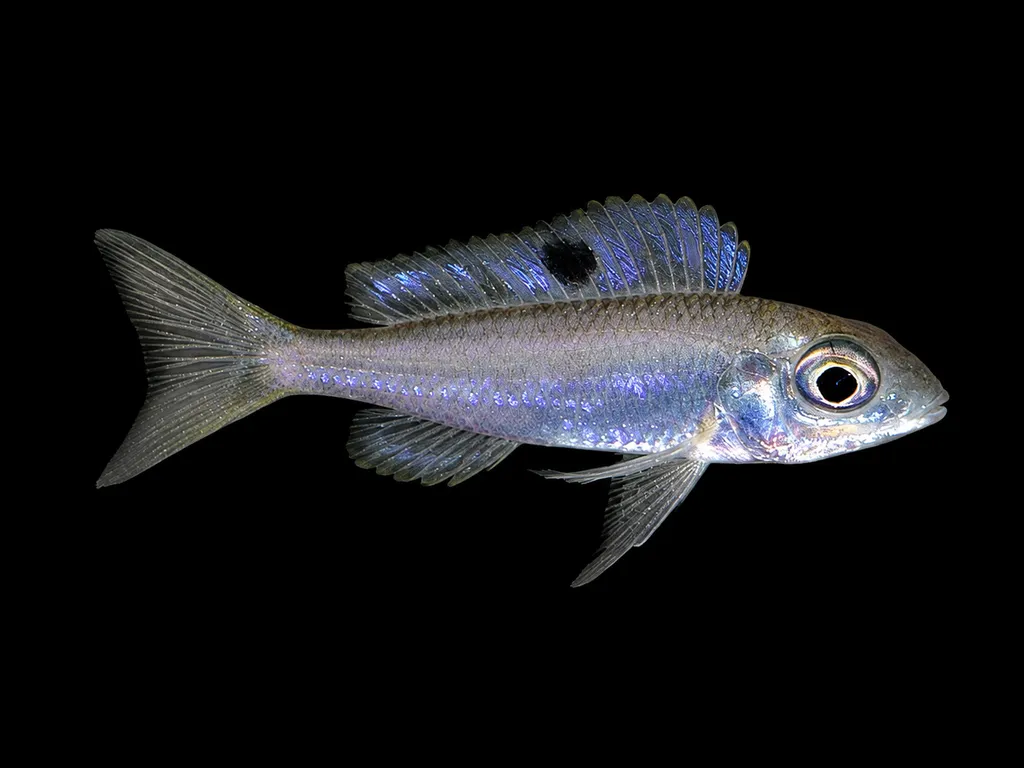
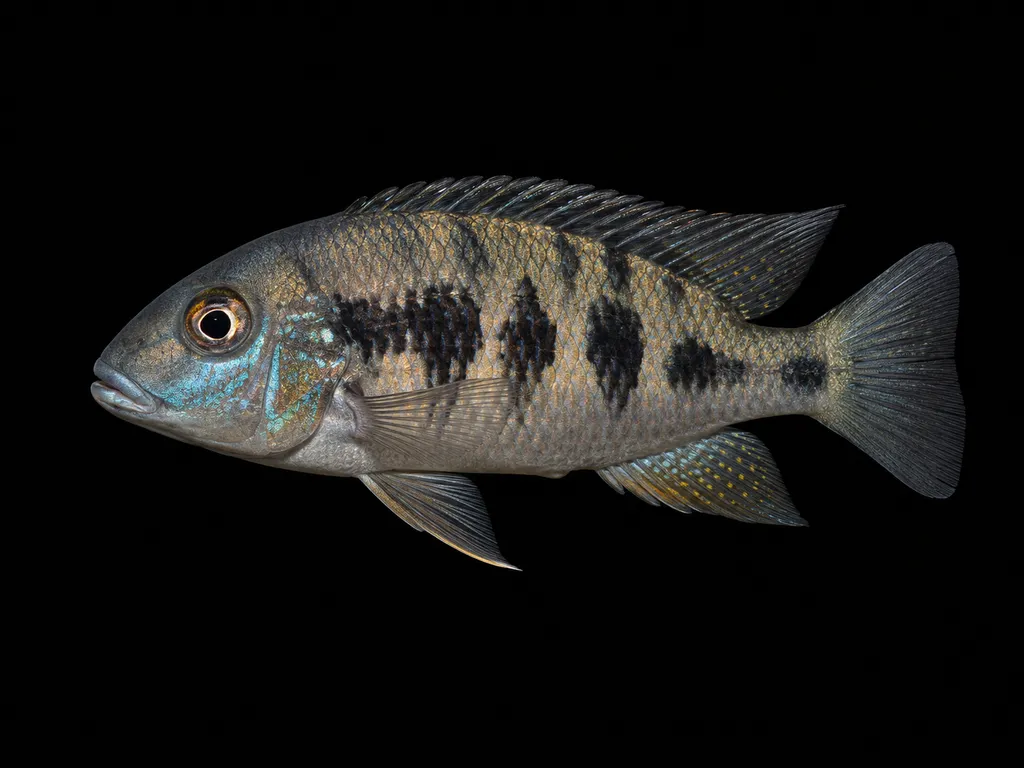
The Descamps' sand cichlid carries a single black-ringed eyespot on its dorsal fin. The rest of the fish is pale and nearly invisible against the sand. That dark false eye is often the first part of it an observer picks out.
Caring for the Descamps' sand cichlid
Give a group of Descamps' sand cichlids at least 66 gal (250 L), with a broad, open floor of fine, soft sand. They hover just over the bottom and sift mouthfuls of sand for tiny invertebrates. Keep the sand unbroken, with a little rockwork at the margins and lots of clear swimming space above.
Use hard, alkaline water at 75 to 81°F (24 to 27°C) and a pH of 7.8 to 9.0. This fish does not tolerate poor conditions well, so keep the water very clean. Feed small sinking foods, frozen brine shrimp and cyclops, plus some spirulina.
A lone fish turns shy and withdrawn, so keep a group of at least six, and eight or more is better. These cichlids are gentle and harmless to tank mates but easily startled. House them only with calm Tanganyikans such as julidochromis, small neolamprologus or a sardine cichlid, and nothing boisterous.
Descamps' sand cichlids are polygamous maternal mouthbrooders. A male digs a shallow spawning pit in the sand, and the female takes the fertilized eggs into her mouth to brood them. Breeding them is hard and needs a secure group, spotless water and patience.
Good to know
The Descamps' sand cichlid, Ectodus descampsii, is a sand-dweller in the family Cichlidae. It belongs to the ectodine group of Tanganyikan cichlids.
In the wild
The Descamps' sand cichlid lives over the open sand flats of Lake Tanganyika, with only scattered rock nearby.
Weekly picks
Tank mates
The Descamps' sand cichlid is a mostly peaceful, social species that keeps to the bottom. These picks share a community profile with it, are safe together in both directions, and overlap on water type, temperature and pH.
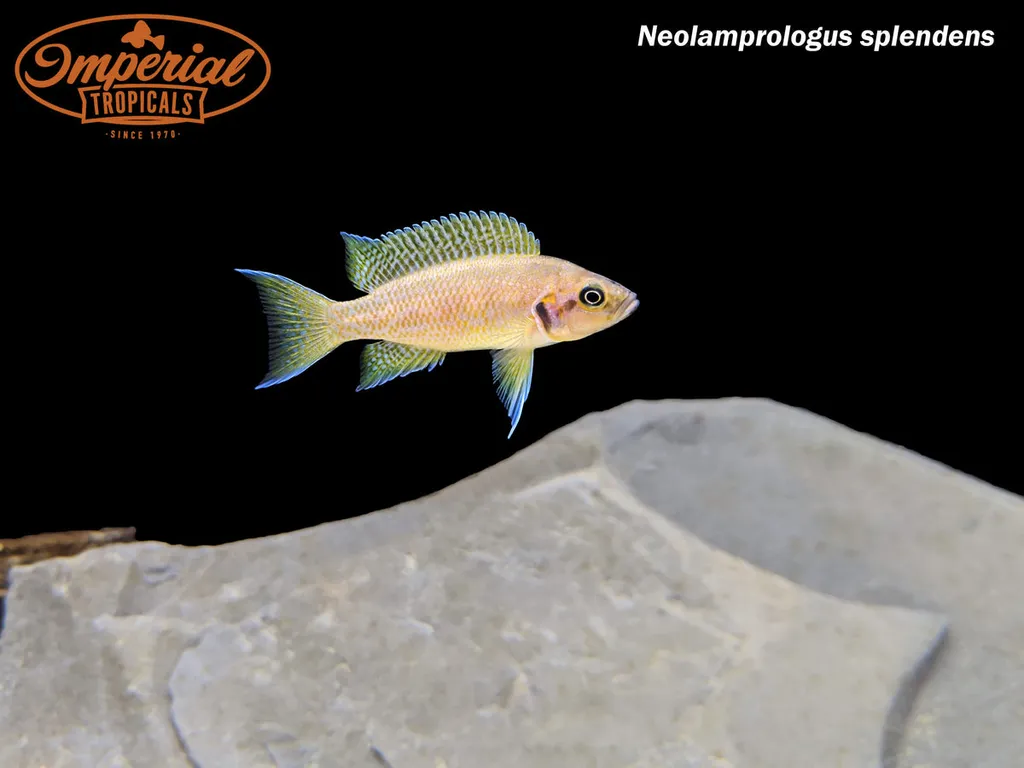
Splendid lamprologus
Neolamprologus splendens
Freshwater3.1 in (8 cm) · 42 gal (160 L)75–81°F (24–27°C)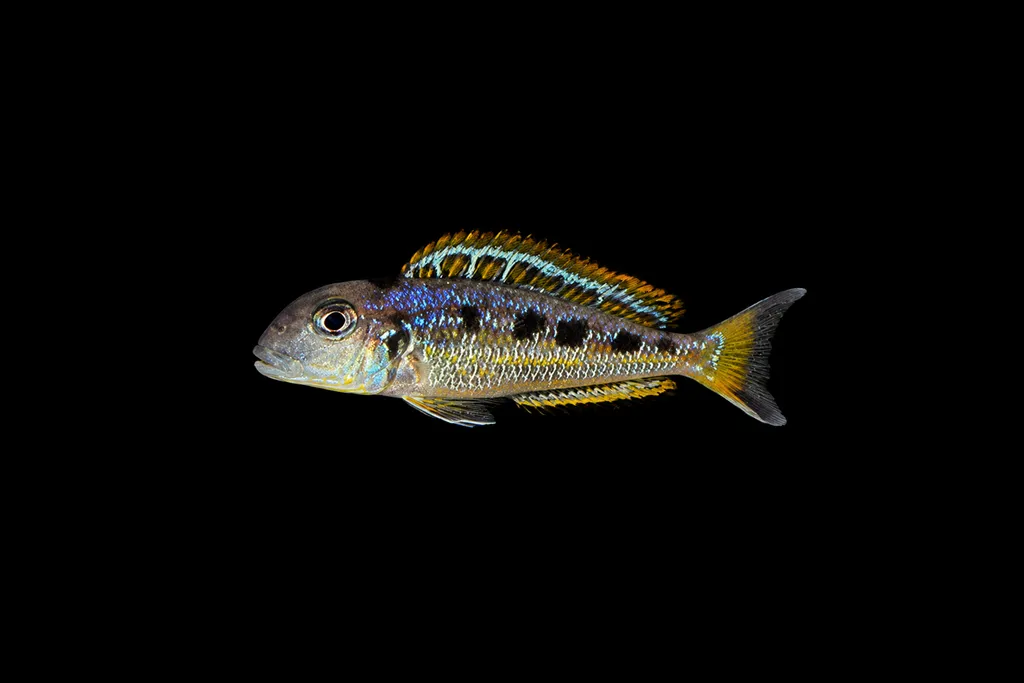
Yellow-cheek xenotilapia
Xenotilapia ochrogenys
Freshwater4.3 in (11 cm) · 79 gal (300 L)75–81°F (24–27°C)
Tanganyika killifish
Lamprichthys tanganicanus
Freshwater5.5 in (14 cm) · 40 gal (150 L)73–77°F (23–25°C)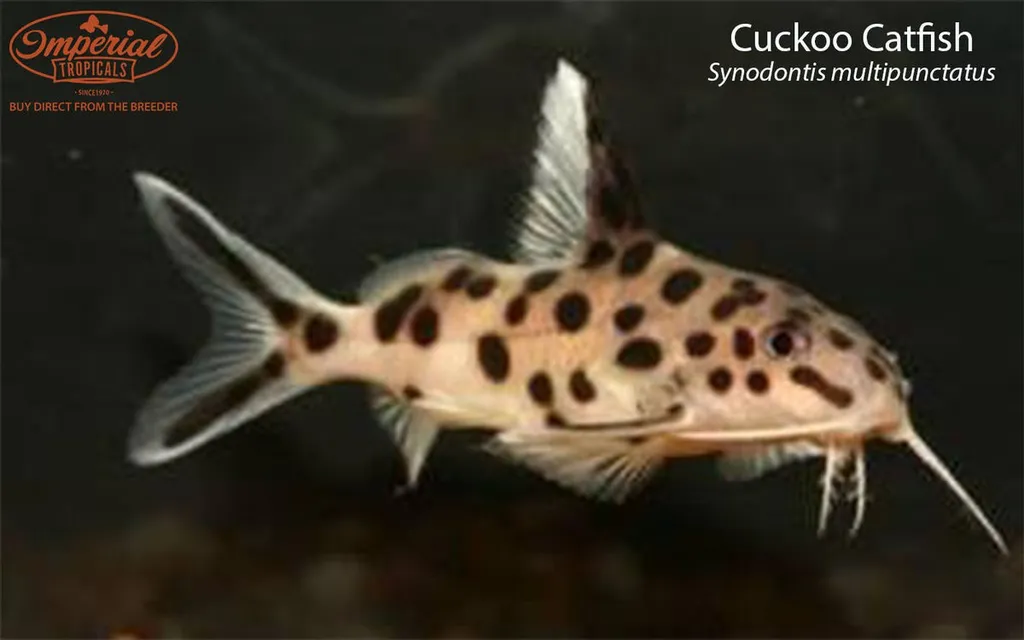
Cuckoo squeaker
Synodontis multipunctatus
Freshwater7.1 in (18 cm) · 29 gal (110 L)75–82°F (24–28°C)
Common questions
What size tank does a Descamps' sand cichlid need?
A Descamps' sand cichlid needs at least 66 gal (250 L). It spends most of its time in the bottom.
What temperature and pH does a Descamps' sand cichlid need?
A Descamps' sand cichlid is comfortable at 75–81°F (24–27°C) with a pH of 7.8–9.0.
What does a Descamps' sand cichlid eat?
A Descamps' sand cichlid eats small sinking foods, frozen brine shrimp and cyclops, plus some spirulina. It also sifts mouthfuls of sand for tiny invertebrates.
How big does a Descamps' sand cichlid get?
An adult Descamps' sand cichlid reaches about 4.1 in (10.5 cm).
How does a Descamps' sand cichlid breed?
A Descamps' sand cichlid is a maternal mouthbrooder. The male digs a shallow pit in the sand, and the female carries the fertilized eggs in her mouth. Breeding it is hard and takes patience.
Related species
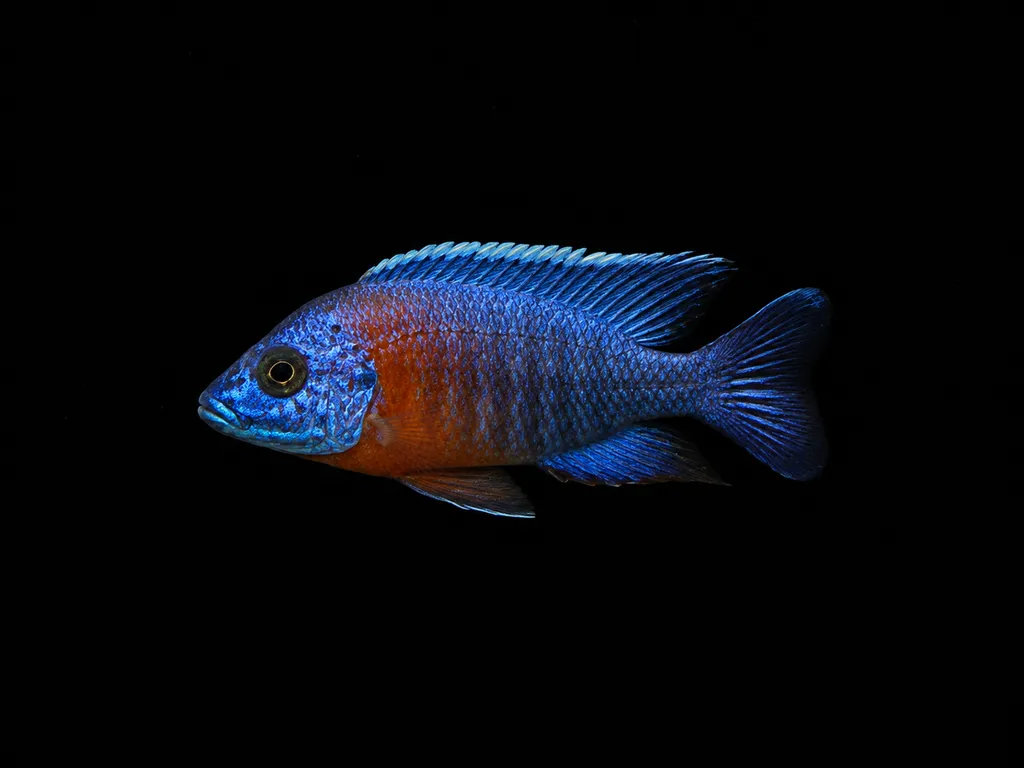 4.1 in (10.5 cm)63 gal (240 L)75–81°F (24–27°C)
Red shoulder peacock
Aulonocara hansbaenschi
4.1 in (10.5 cm) · 63 gal (240 L)
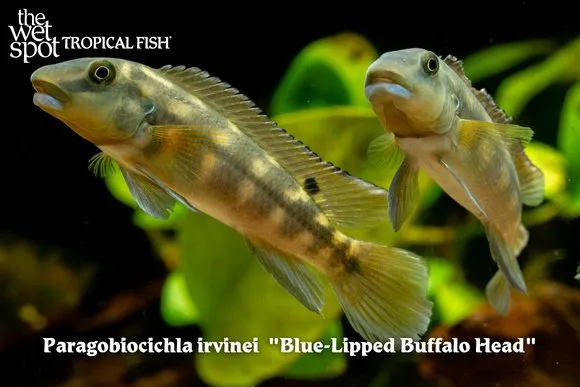 4.3 in (11 cm)40 gal (150 L)75–82°F (24–28°C)
Blue-lipped buffalo head
Paragobiocichla irvinei
4.3 in (11 cm) · 40 gal (150 L)
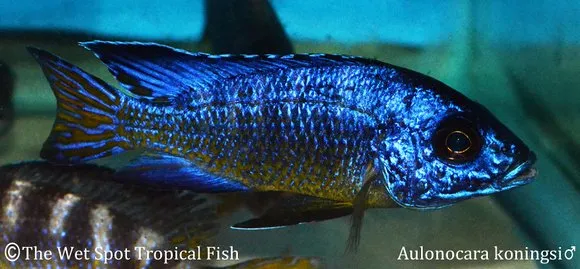 4.3 in (11 cm)63 gal (240 L)75–81°F (24–27°C)
Konings' peacock
Aulonocara koningsi
4.3 in (11 cm) · 63 gal (240 L)
 4.3 in (11 cm)53 gal (200 L)73–81°F (23–27°C)
Konye cichlid
Konia eisentrauti
4.3 in (11 cm) · 53 gal (200 L)
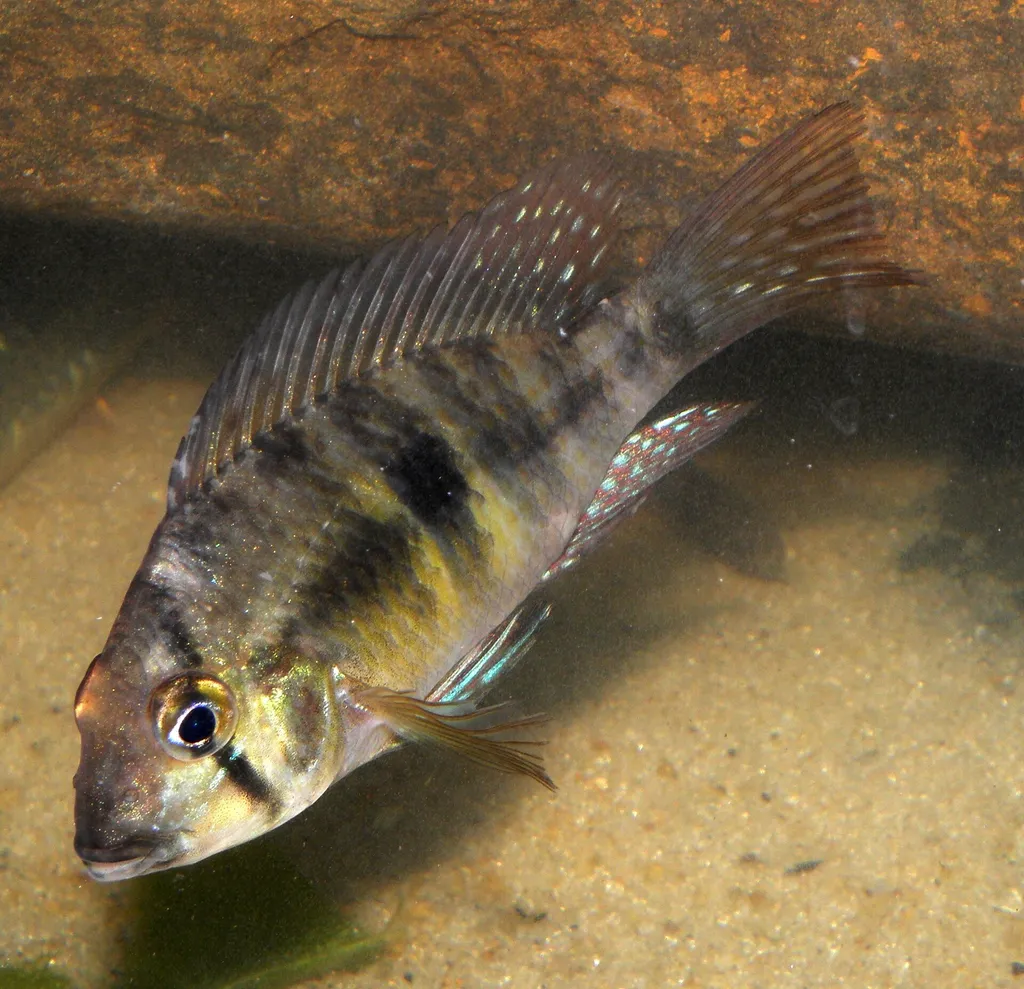 4.3 in (11 cm)53 gal (200 L)61–79°F (16–26°C)
Meridionalis eartheater
Gymnogeophagus meridionalis
4.3 in (11 cm) · 53 gal (200 L)
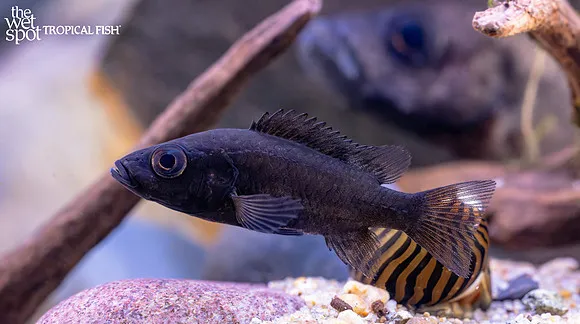 4.3 in (11 cm)53 gal (200 L)73–81°F (23–27°C)
Pindu cichlid
Stomatepia pindu
4.3 in (11 cm) · 53 gal (200 L)