Konye cichlid
Konia eisentrauti
Also known as Eisentraut's konia
FreshwaterFish
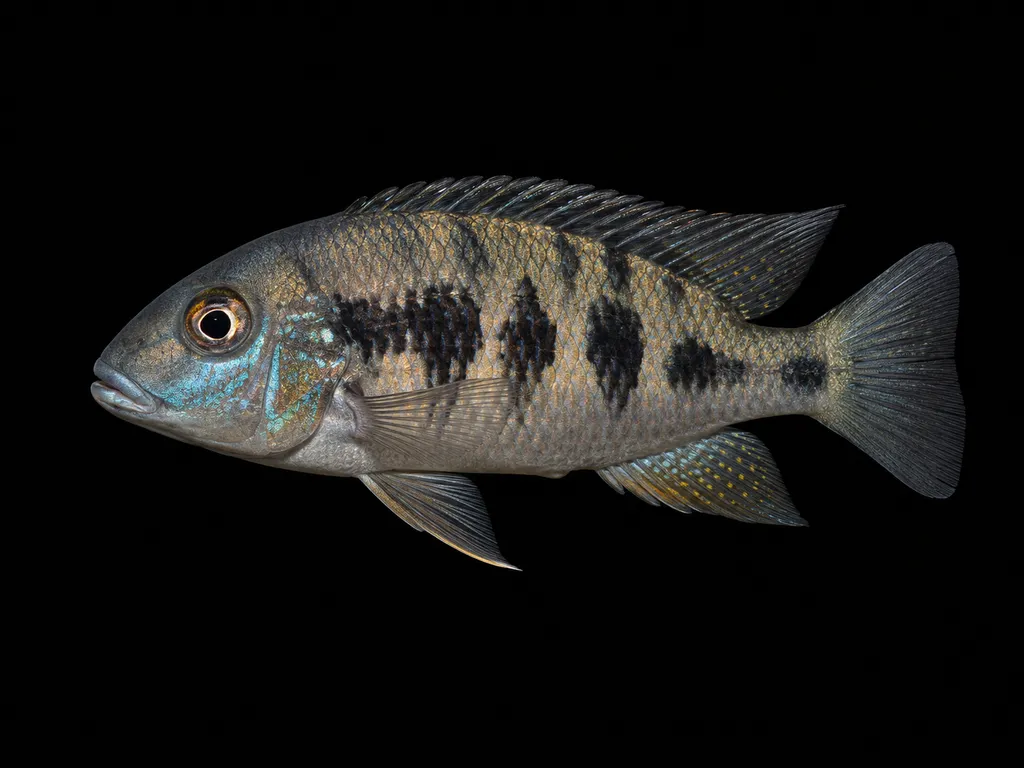
Care at a glance
- Temperature
- 73–81°F
- 23–27°C
- pH
- 7.0–8.0
- Adult size
- 4.3 in
- 11 cm
- Minimum tank
- 53 gal
- 200 L
- Temperament
- Mostly peaceful
- Social behavior
- Social
- Tankmates
- With caution
- Swim level
- Bottom
- Difficulty
- Difficult
- Breeding
- Mouthbrooder · Medium
- Rarity
- Rare
- Family
- Cichlidae
- Origin
- Lake Barombi Mbo, Cameroon
Overview
The Konye cichlid is a crater-lake cichlid with real conservation value. It keeps to the lower half of the tank and is a demanding fish for experienced keepers.
Did you know
The Konye cichlid's home, Lake Barombi Mbo, is barely two kilometers across. The lake produced eleven cichlid species, this one included, that live in that single crater and nowhere else on Earth. They appear to have evolved from a single ancestor, a textbook case of fish evolving side by side in one tiny, isolated basin.
Caring for the Konye cichlid
Give a group of Konye cichlids at least 53 gal (200 L). Furnish the tank with a sand or fine gravel bed, some rounded rock and open water.
Match the lake's moderately hard water, at 73 to 81°F (23 to 27°C) and a near-neutral pH of 7.0 to 8.0. Keep everything calm and very clean, with careful, stable water management. Crater-lake fish are used to steady conditions and react badly to swings in quality. Feed a varied diet of small frozen and prepared foods.
Konye cichlids are social and mostly peaceful, and they do best in a small group rather than alone. They get along with calm companions, but choose tank mates carefully, because they are sensitive and easily out-competed by boisterous fish. They are mouthbrooders, and breeding them in captivity is of medium difficulty.
Good to know
The Konye cichlid, Konia eisentrauti, is a member of the Cichlidae. Its narrow range and mounting habitat pressures leave it listed as threatened. Aquarium lines help preserve it, which is why hobby populations matter.
In the wild
The Konye cichlid is found only in Lake Barombi Mbo, a small, deep volcanic crater lake in southwestern Cameroon. Its water is warm, clear and moderately hard.
Common questions
What size tank does a Konye cichlid need?
A Konye cichlid needs at least 53 gal (200 L). It spends most of its time in the bottom.
What temperature and pH does a Konye cichlid need?
A Konye cichlid is comfortable at 73–81°F (23–27°C) with a pH of 7.0–8.0.
What does a Konye cichlid eat?
A Konye cichlid takes a varied diet of small frozen and prepared foods.
How big does a Konye cichlid get?
An adult Konye cichlid reaches about 4.3 in (11 cm).
How does a Konye cichlid breed?
The Konye cichlid is a mouthbrooder. Breeding it in captivity is of medium difficulty.
Related species
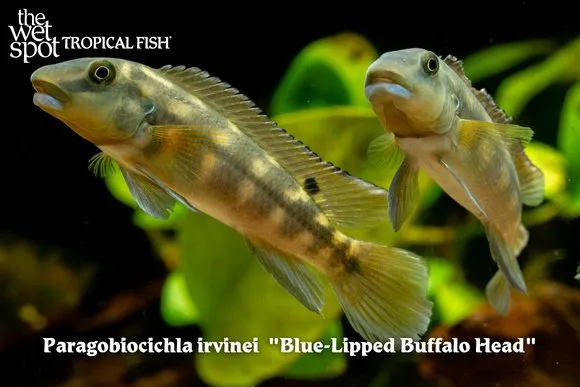 4.3 in (11 cm)40 gal (150 L)75–82°F (24–28°C)
Blue-lipped buffalo head
Paragobiocichla irvinei
4.3 in (11 cm) · 40 gal (150 L)
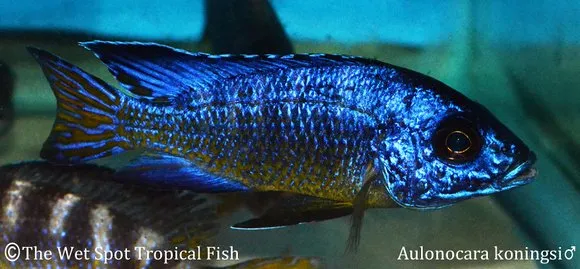 4.3 in (11 cm)63 gal (240 L)75–81°F (24–27°C)
Konings' peacock
Aulonocara koningsi
4.3 in (11 cm) · 63 gal (240 L)
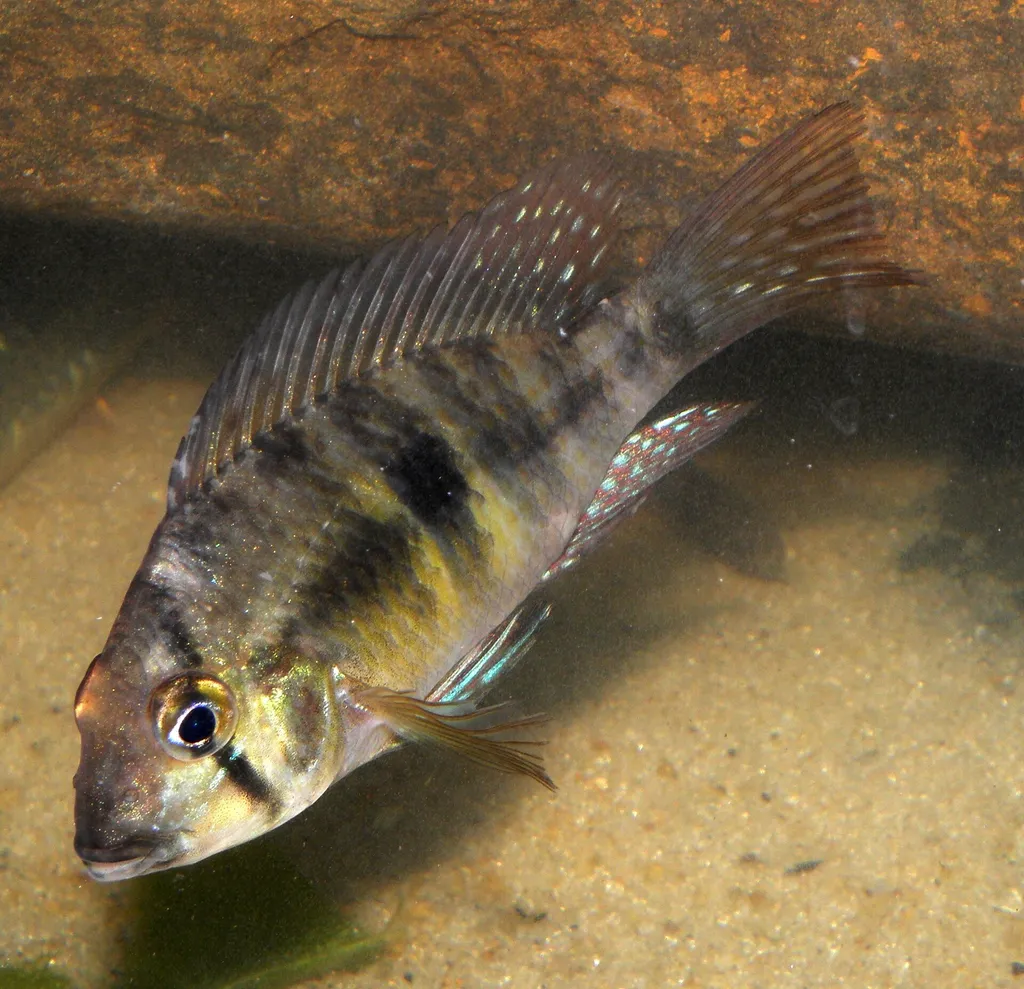 4.3 in (11 cm)53 gal (200 L)61–79°F (16–26°C)
Meridionalis eartheater
Gymnogeophagus meridionalis
4.3 in (11 cm) · 53 gal (200 L)
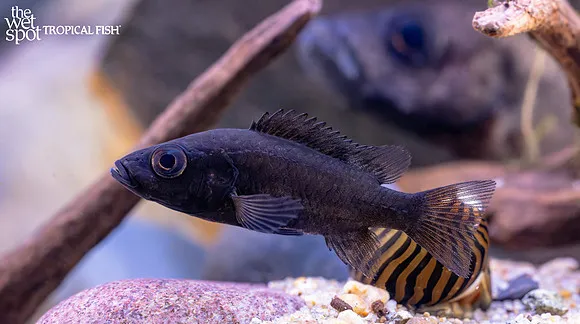 4.3 in (11 cm)53 gal (200 L)73–81°F (23–27°C)
Pindu cichlid
Stomatepia pindu
4.3 in (11 cm) · 53 gal (200 L)
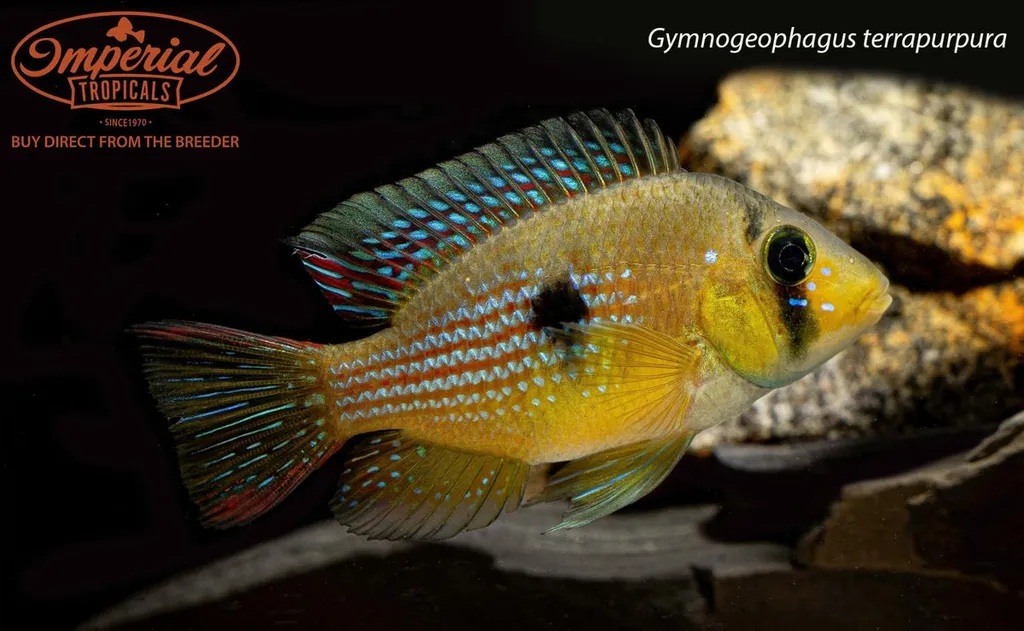 4.3 in (11 cm)53 gal (200 L)61–79°F (16–26°C)
Purple earth eartheater
Gymnogeophagus terrapurpura
4.3 in (11 cm) · 53 gal (200 L)
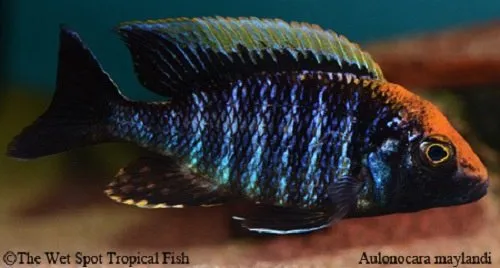 4.3 in (11 cm)66 gal (250 L)77–82°F (25–28°C)
Sulfurhead peacock
Aulonocara maylandi
4.3 in (11 cm) · 66 gal (250 L)