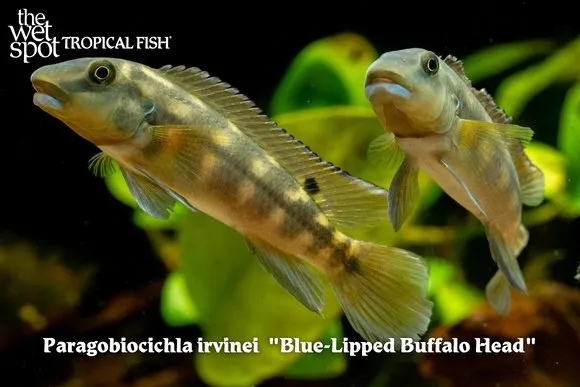
Blue-lipped buffalo head
Paragobiocichla irvinei
Also known as Steatocranus irvinei, Volta buffalo head
FreshwaterFish
Care at a glance
- Temperature
- 75–82°F
- 24–28°C
- pH
- 6.5–7.8
- Adult size
- 4.3 in
- 11 cm
- Minimum tank
- 40 gal
- 150 L
- Temperament
- Mostly peaceful
- Social behavior
- Social
- Tankmates
- With caution
- Swim level
- Bottom
- Difficulty
- Medium
- Breeding
- Cave spawner · Medium
- Rarity
- Rare
- Family
- Cichlidae
- Origin
- Volta River rapids, Ghana
Overview
The blue-lipped buffalo head is a stocky rapids cichlid. It moves in short hops along the bottom, clinging to stone rather than swimming in open water. It is not a beginner fish, but it is not a hard one either.
Did you know
Like the Congo buffalo heads it was once grouped with, the blue-lipped buffalo head has a reduced swim bladder. Its bright blue lips, which give it its name, are used in display between rivals and between pairs.
Caring for the blue-lipped buffalo head
Give the blue-lipped buffalo head at least 40 gal (150 L), in a tank longer than it is tall. Use a floor of rounded stones and cobble stacked into caves. Add strong flow from the filter or a powerhead, with plenty of surface movement.
Aim for 75 to 82°F (24 to 28°C) and a pH of 6.5 to 7.8. Feed sinking foods near the floor, such as pellets, frozen bloodworm, brine shrimp and mysis.
It can live as a compatible group in a long tank, or as a single pair. It is fairly peaceful, but pairs turn territorial around their cave at breeding time, so give each pair its own rockwork. Choose robust, non-timid tank mates that share its hard-water needs.
It is a cave-spawning substrate brooder of medium breeding difficulty. A pair guards the eggs and tends the fry for about their first month.
Good to know
Paragobiocichla irvinei belongs to the cichlid family. It was long placed in Steatocranus, the Congo buffalo heads. Studies showed this West African fish only resembled those Congo cichlids, so it was moved to its own genus.
In the wild
Paragobiocichla irvinei comes from the Volta River system in Ghana. It lives among rock in fast, broken, oxygen-rich water that is warm and neutral to slightly alkaline.
Common questions
What size tank does a blue-lipped buffalo head need?
A blue-lipped buffalo head needs at least 40 gal (150 L). It spends most of its time in the bottom.
What temperature and pH does a blue-lipped buffalo head need?
A blue-lipped buffalo head is comfortable at 75–82°F (24–28°C) with a pH of 6.5–7.8.
What does a blue-lipped buffalo head eat?
A blue-lipped buffalo head eats sinking foods offered near the floor, such as pellets, frozen bloodworm, brine shrimp and mysis.
How big does a blue-lipped buffalo head get?
An adult blue-lipped buffalo head reaches about 4.3 in (11 cm).
How does a blue-lipped buffalo head breed?
The blue-lipped buffalo head is a cave-spawning substrate brooder of medium breeding difficulty. A pair guards the eggs and tends the fry for about their first month.
Related species
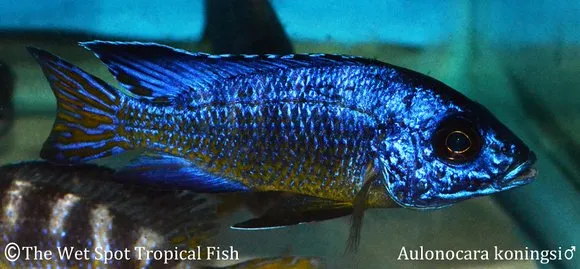 4.3 in (11 cm)63 gal (240 L)75–81°F (24–27°C)
Konings' peacock
Aulonocara koningsi
4.3 in (11 cm) · 63 gal (240 L)
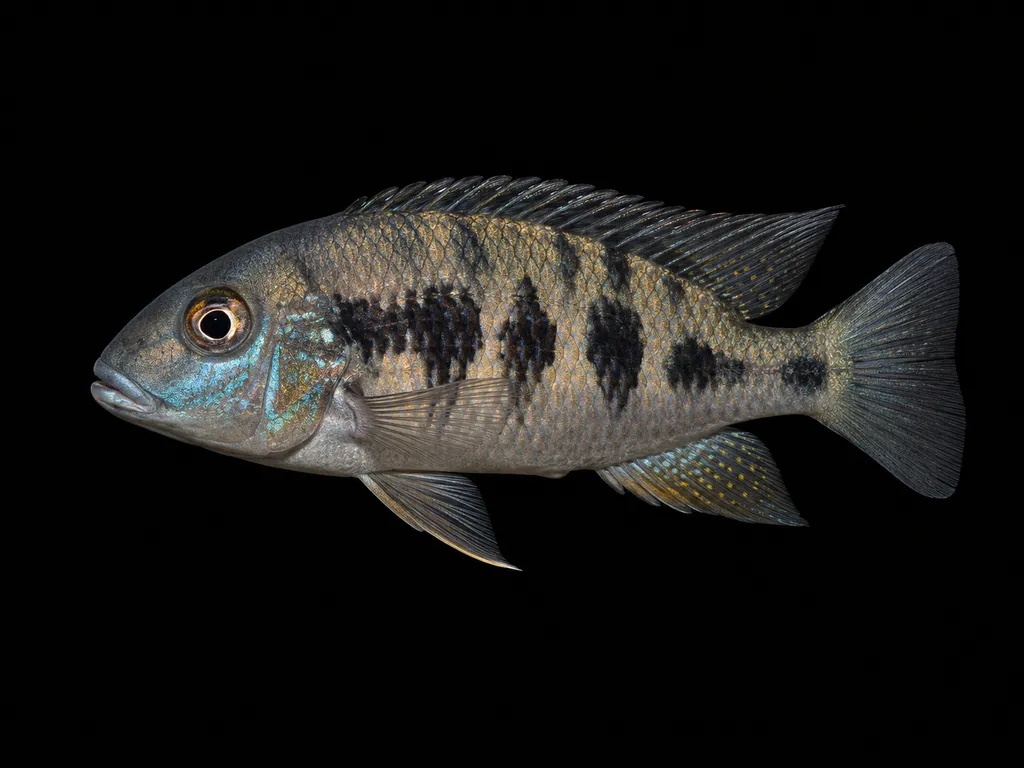 4.3 in (11 cm)53 gal (200 L)73–81°F (23–27°C)
Konye cichlid
Konia eisentrauti
4.3 in (11 cm) · 53 gal (200 L)
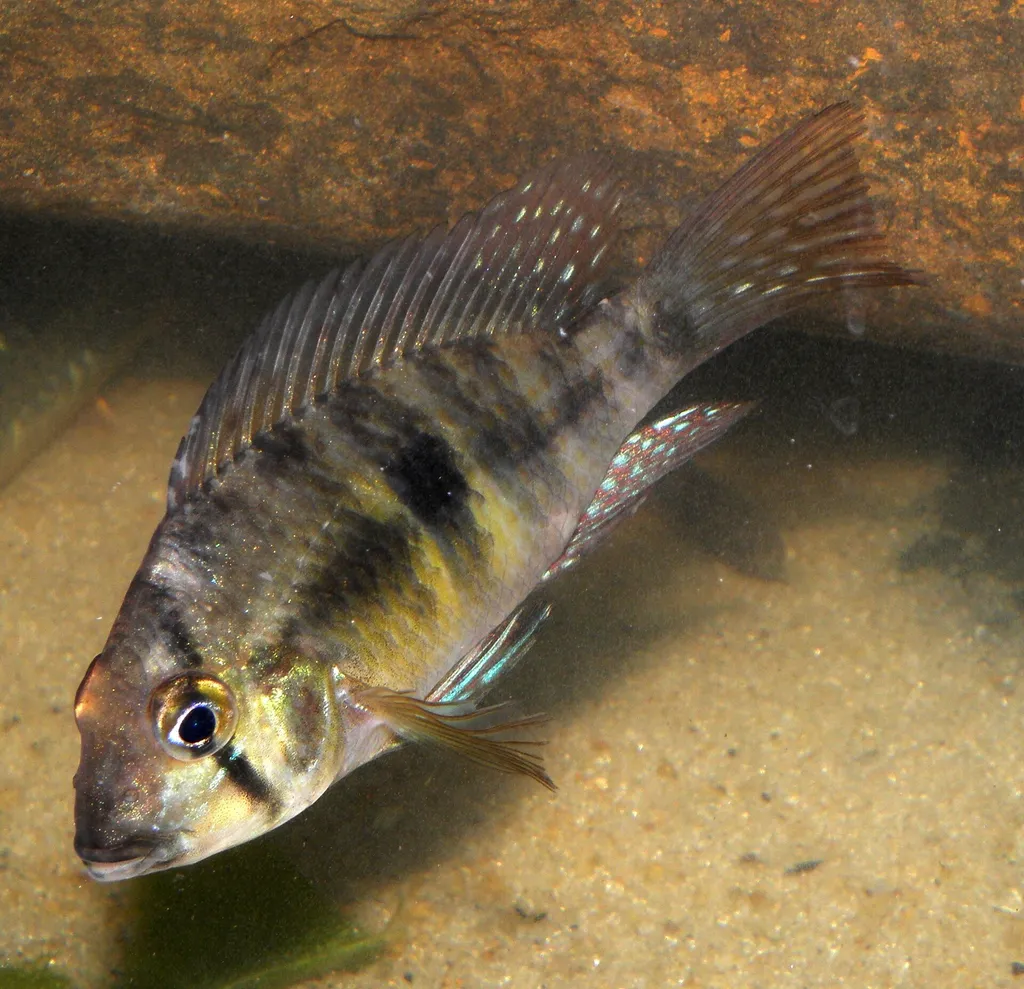 4.3 in (11 cm)53 gal (200 L)61–79°F (16–26°C)
Meridionalis eartheater
Gymnogeophagus meridionalis
4.3 in (11 cm) · 53 gal (200 L)
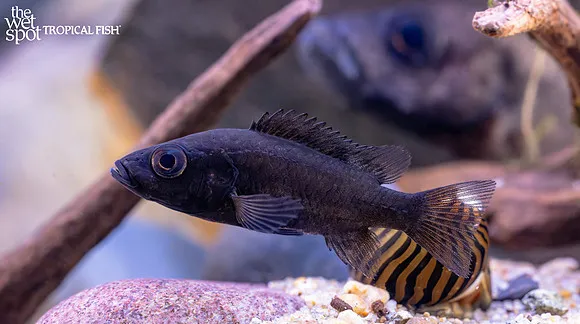 4.3 in (11 cm)53 gal (200 L)73–81°F (23–27°C)
Pindu cichlid
Stomatepia pindu
4.3 in (11 cm) · 53 gal (200 L)
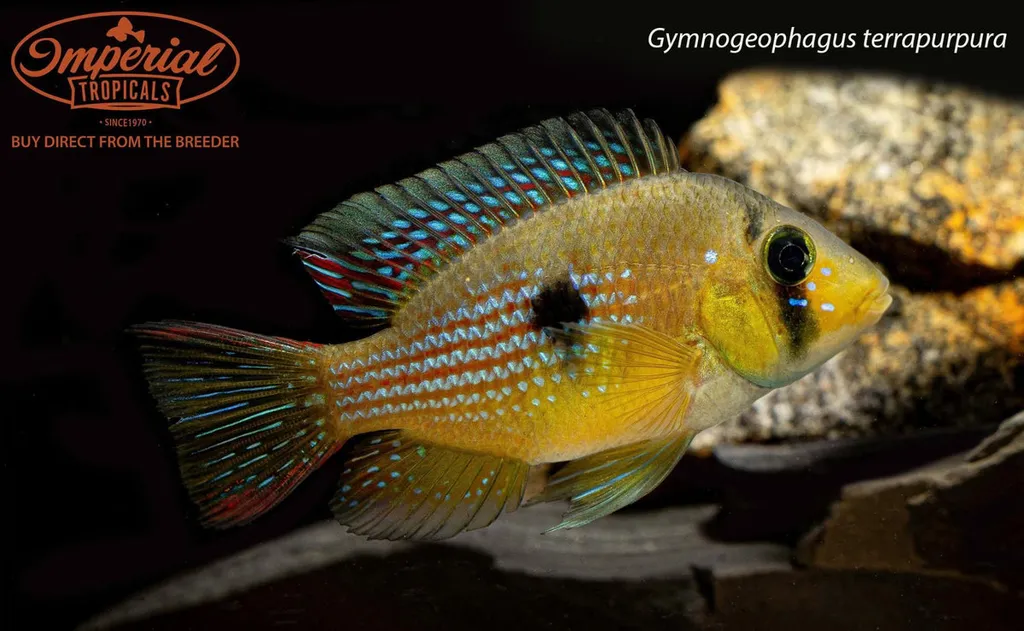 4.3 in (11 cm)53 gal (200 L)61–79°F (16–26°C)
Purple earth eartheater
Gymnogeophagus terrapurpura
4.3 in (11 cm) · 53 gal (200 L)
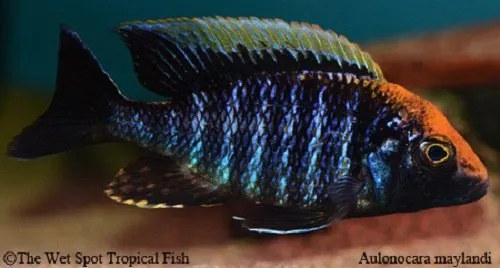 4.3 in (11 cm)66 gal (250 L)77–82°F (25–28°C)
Sulfurhead peacock
Aulonocara maylandi
4.3 in (11 cm) · 66 gal (250 L)