Meridionalis eartheater
Gymnogeophagus meridionalis
Also known as Southern gymnogeophagus
FreshwaterFish
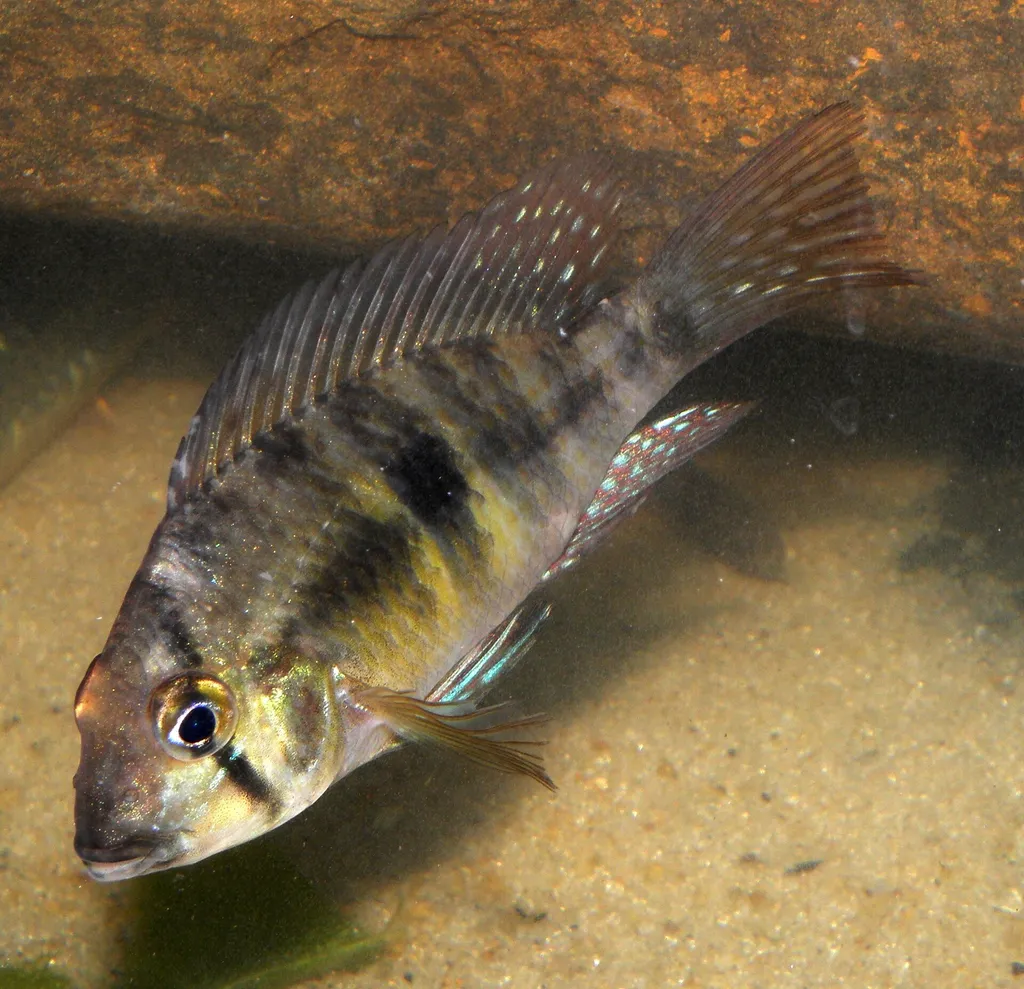
Care at a glance
- Temperature
- 61–79°F
- 16–26°C
- pH
- 6.5–7.8
- Adult size
- 4.3 in
- 11 cm
- Minimum tank
- 53 gal
- 200 L
- Temperament
- Mostly peaceful
- Social behavior
- Social
- Swim level
- Bottom
- Difficulty
- Medium
- Breeding
- Substrate spawner · Medium
- Rarity
- Rare
- Family
- Cichlidae
- Origin
- Uruguay and Paraná drainages
Overview
The Meridionalis eartheater is a peaceful, sand-sifting cichlid for a cool community tank. It is best with a little experience.
Did you know
Gymnogeophagus is one of the southernmost cichlid genera on Earth. Its range reaches into subtropical rivers where the winter water turns genuinely cold.
Caring for the Meridionalis eartheater
Meridionalis eartheaters are social, so keep a group of five or six rather than a single fish. A tank of 53 gal (200 L) gives a group room to dig. Give them a floor of fine sand for sifting, with wood and smooth stones to break up sight lines and mark out loose territories.
They can be kept without a heater in many homes, at 61 to 79°F (16 to 26°C). Aim for a pH of 6.5 to 7.8.
Meridionalis eartheaters work the bottom, sifting fine sand for scraps of food. Feed a mix of sinking pellets, frozen bloodworm, daphnia and brine shrimp, and make sure enough reaches the floor.
They are peaceful and stay calm with their tank mates, apart from a territorial spell when a pair spawns. Give them other gentle, cool-tolerant community fish, since they will not trouble anything too large to swallow.
They are biparental substrate brooders. A pair attaches the eggs to a firm surface such as a stone or a leaf, and both fish guard the eggs and fry. Breeding them is of medium difficulty.
Good to know
Gymnogeophagus meridionalis belongs to the cichlid family and is one of the smaller eartheaters. Substrate brooding is the older habit in its southern genus. This species keeps it, while several cousins evolved mouthbrooding.
In the wild
Gymnogeophagus meridionalis comes from the Uruguay and Paraná drainages of southern South America. It lives over sandy margins in soft to medium-hard water, and it takes a real winter.
Weekly picks
Tank mates
The Meridionalis eartheater is a mostly peaceful, social species that keeps to the bottom. These picks share a community profile with it, are safe together in both directions, and overlap on water type, temperature and pH.
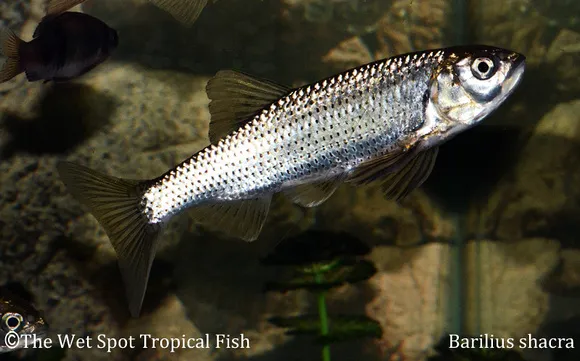
Shacra baril
Opsarius shacra
Freshwater5.5 in (14 cm) · 53 gal (200 L)64–79°F (18–26°C)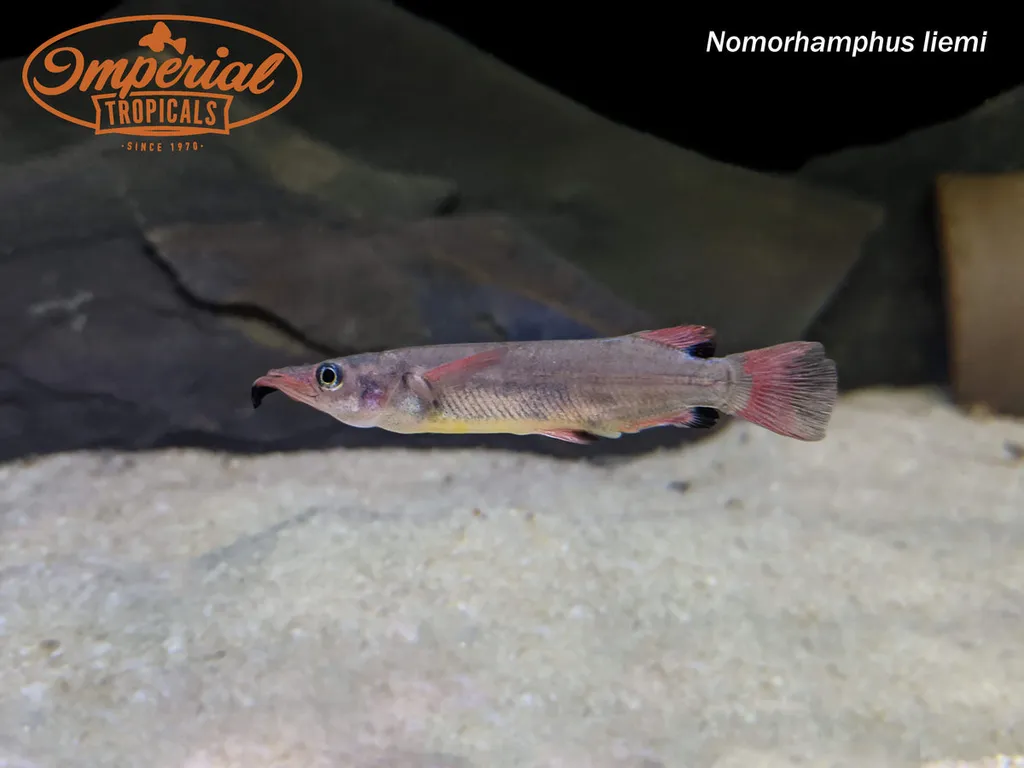
Celebes halfbeak
Nomorhamphus liemi
Freshwater3.5 in (9 cm) · 40 gal (150 L)68–77°F (20–25°C)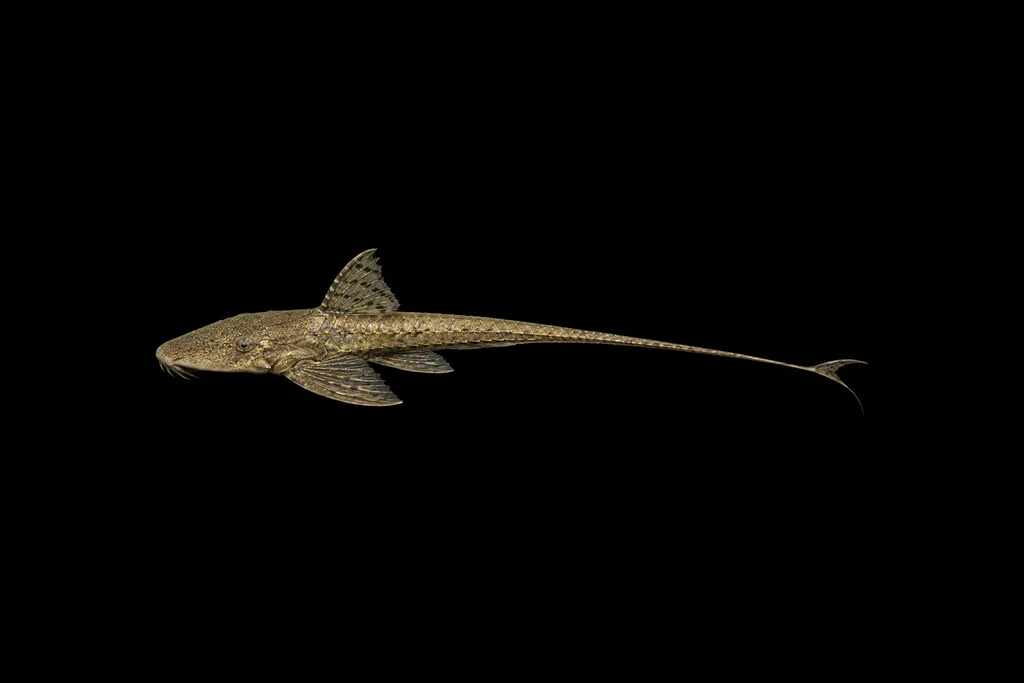
Parnahyba whiptail
Loricaria parnahybae
Freshwater9.8 in (25 cm) · 53 gal (200 L)73–82°F (23–28°C)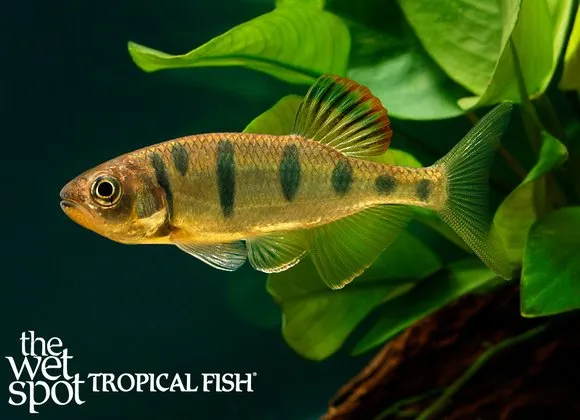
Jeweled baril
Opsarius pulchellus
Freshwater5.1 in (13 cm) · 53 gal (200 L)72–81°F (22–27°C)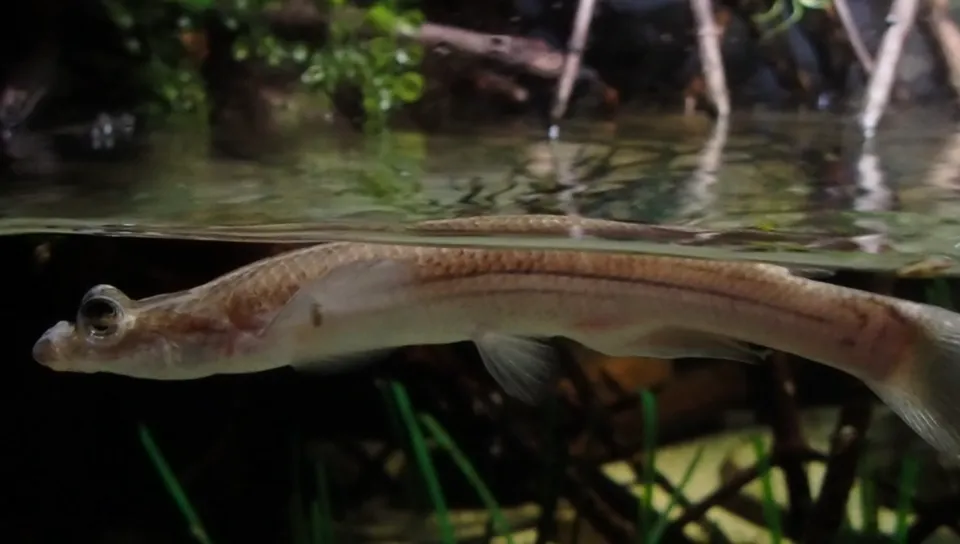
Largescale four-eyed fish
Anableps anableps
FreshwaterBrackish11.8 in (30 cm) · 70 gal (265 L)77–88°F (25–31°C)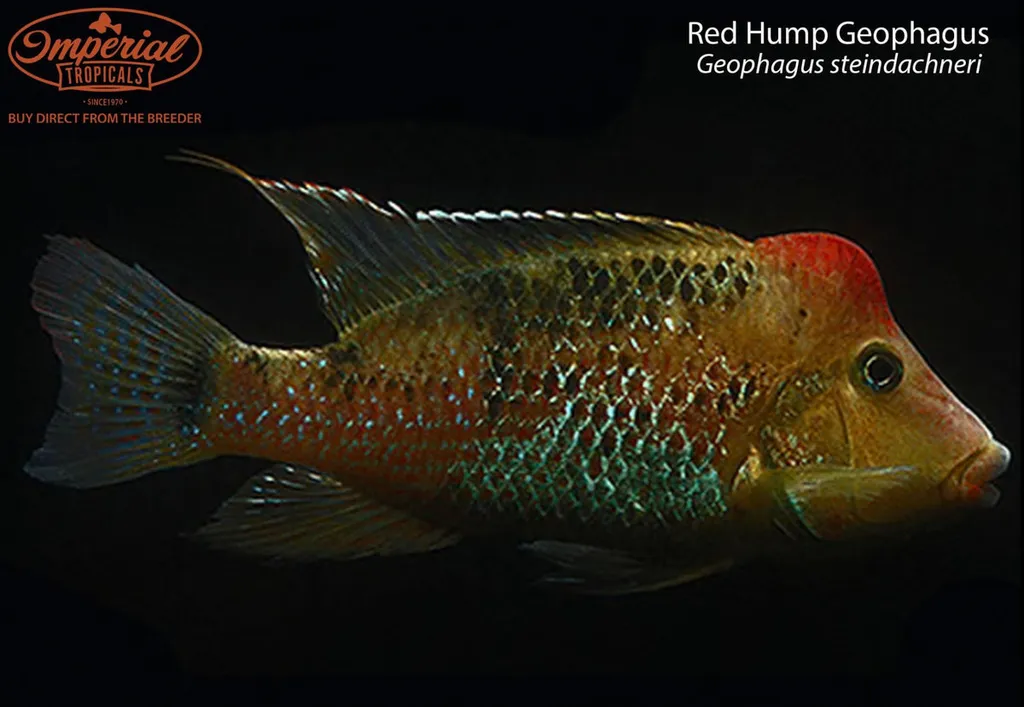
Red hump eartheater
Geophagus steindachneri
Freshwater5.9 in (15 cm) · 53 gal (200 L)72–82°F (22–28°C)
Common questions
What size tank does a Meridionalis eartheater need?
A Meridionalis eartheater needs at least 53 gal (200 L). It spends most of its time in the bottom.
What temperature and pH does a Meridionalis eartheater need?
A Meridionalis eartheater is comfortable at 61–79°F (16–26°C) with a pH of 6.5–7.8.
What does a Meridionalis eartheater eat?
A Meridionalis eartheater sifts fine sand for scraps of food. Feed it a mix of sinking pellets, frozen bloodworm, daphnia and brine shrimp, making sure enough reaches the floor.
How big does a Meridionalis eartheater get?
An adult Meridionalis eartheater reaches about 4.3 in (11 cm).
How does a Meridionalis eartheater breed?
Meridionalis eartheaters are biparental substrate brooders that attach their eggs to a firm surface, such as a stone or a leaf. Both fish guard the eggs and fry, and breeding them is of medium difficulty.
Related species
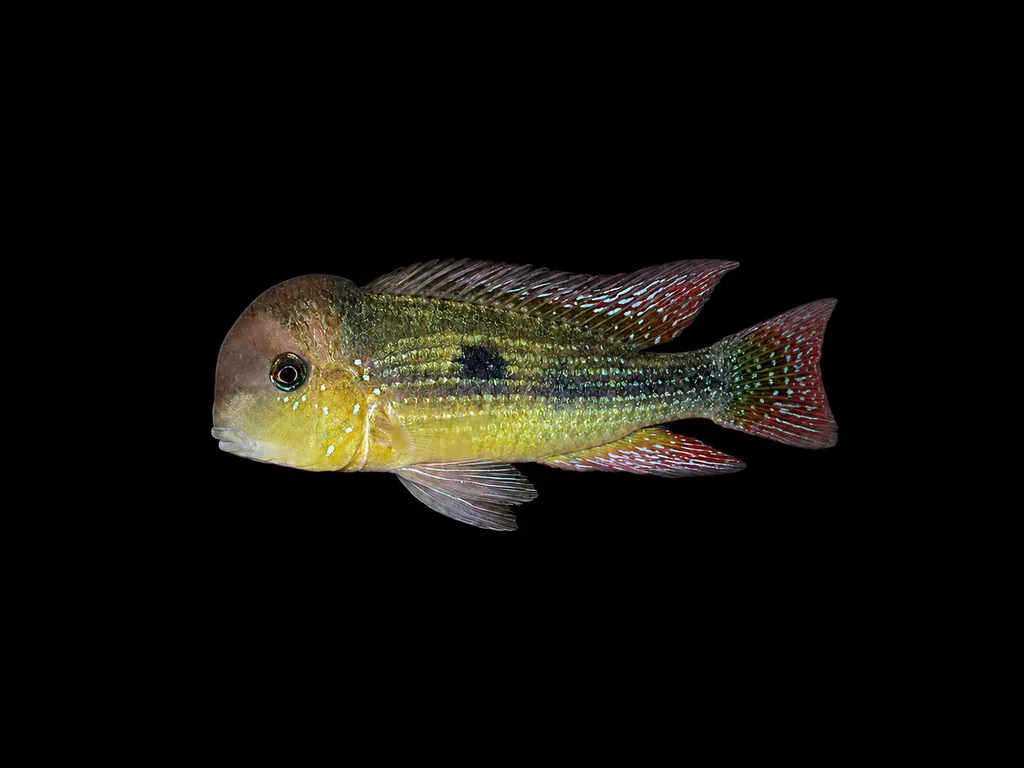
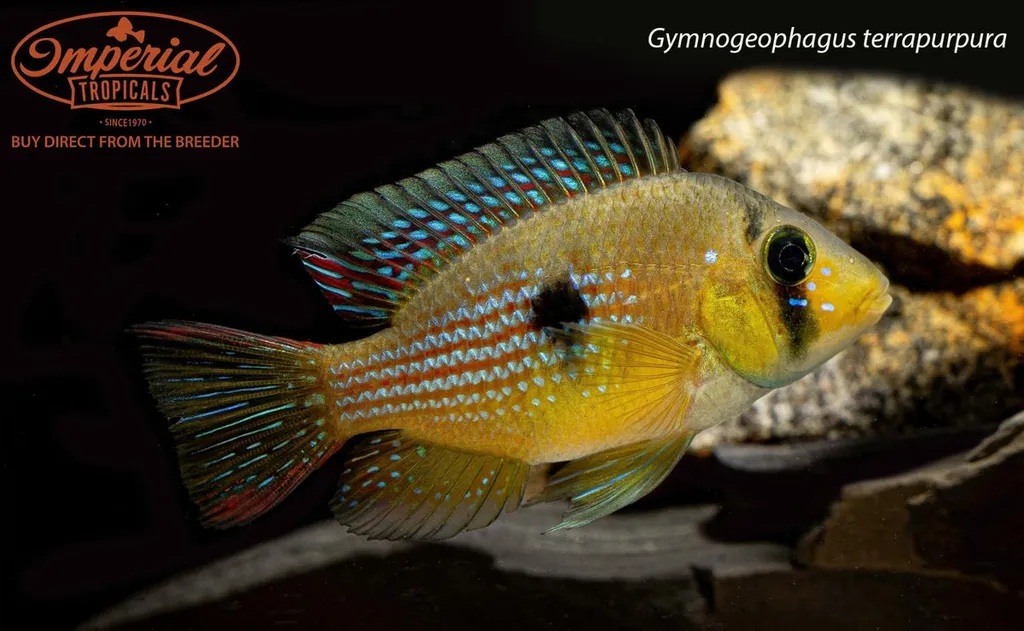 4.3 in (11 cm)53 gal (200 L)61–79°F (16–26°C)
Purple earth eartheater
Gymnogeophagus terrapurpura
4.3 in (11 cm) · 53 gal (200 L)
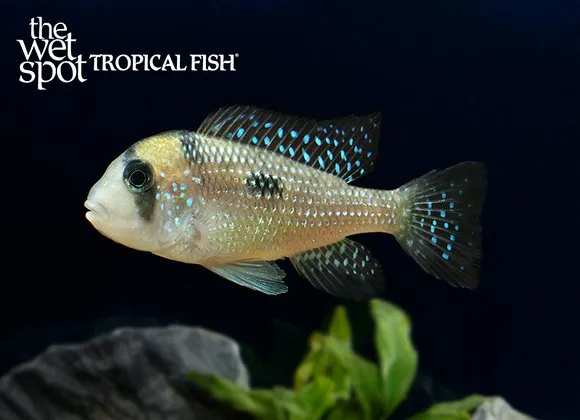
 4.7 in (12 cm)66 gal (250 L)61–79°F (16–26°C)
Tiraparae eartheater
Gymnogeophagus tiraparae
4.7 in (12 cm) · 66 gal (250 L)
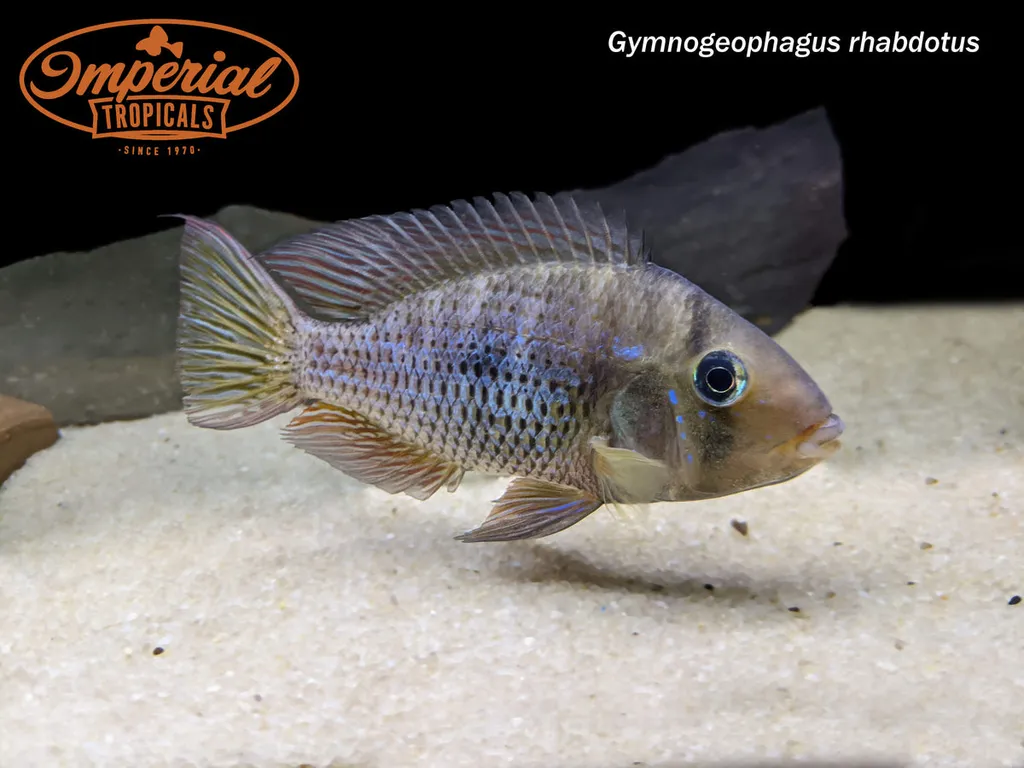
 5.1 in (13 cm)66 gal (250 L)61–79°F (16–26°C)
Longbody eartheater
Gymnogeophagus mekinos
5.1 in (13 cm) · 66 gal (250 L)
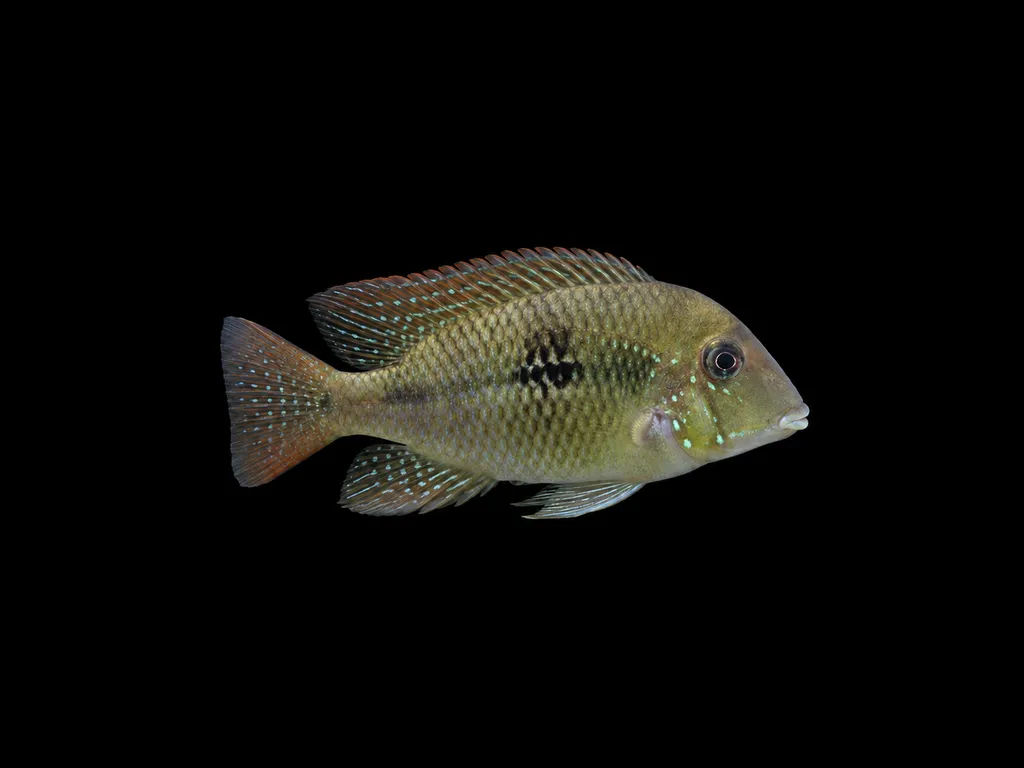
 5.9 in (15 cm)53 gal (200 L)64–79°F (18–26°C)
Stripefin eartheater
Gymnogeophagus rhabdotus
5.9 in (15 cm) · 53 gal (200 L)
- 6.1 in (15.5 cm)66 gal (250 L)61–79°F (16–26°C)
Uruguayan eartheater
Gymnogeophagus australis
6.1 in (15.5 cm) · 66 gal (250 L)
 7.1 in (18 cm)79 gal (300 L)61–79°F (16–26°C)
Smoothcheek eartheater
Gymnogeophagus gymnogenys
7.1 in (18 cm) · 79 gal (300 L)