Blackspot callochromis
Callochromis melanostigma
Also known as Blackspot sand sifter
FreshwaterFish
Care at a glance
- Temperature
- 75–81°F
- 24–27°C
- pH
- 7.8–9.0
- Adult size
- 5.9 in
- 15 cm
- Minimum tank
- 79 gal
- 300 L
- Temperament
- Mostly peaceful
- Social behavior
- Social
- Swim level
- Bottom
- Difficulty
- Difficult
- Breeding
- Mouthbrooder · Hard
- Rarity
- Common
- Family
- Cichlidae
- Origin
- Lake Tanganyika, northern basin
Overview
The blackspot callochromis is a mostly peaceful sand sifter from Lake Tanganyika. It is a fish for experienced keepers.
Did you know
The blackspot callochromis chews each mouthful of sand for food and exhales it through the gills, breathing its dinner table clean.
Caring for the blackspot callochromis
Give a blackspot callochromis at least 79 gal (300 L), with a wide floor of fine sand. Make it soft sand several centimeters deep, which will not scratch its gill rakers.
Keep the water at 75 to 81°F (24 to 27°C) and a pH of 7.8 to 9.0, and hold it steady. Feed small frozen foods and a quality granule, most of which it takes off the bottom.
House them as a harem, one male to three or more females. Males clear shallow crater nests and spar in bluff displays rather than real fights. They need floor space to keep those displays from turning into damage. Pair them with quiet open-water fish such as Cyprichromis, and avoid other sand sifters that compete for the same ground.
It is a maternal mouthbrooder, but spawning in captivity is demanding. The male needs an undisturbed crater, and the female needs somewhere to retreat afterward.
Good to know
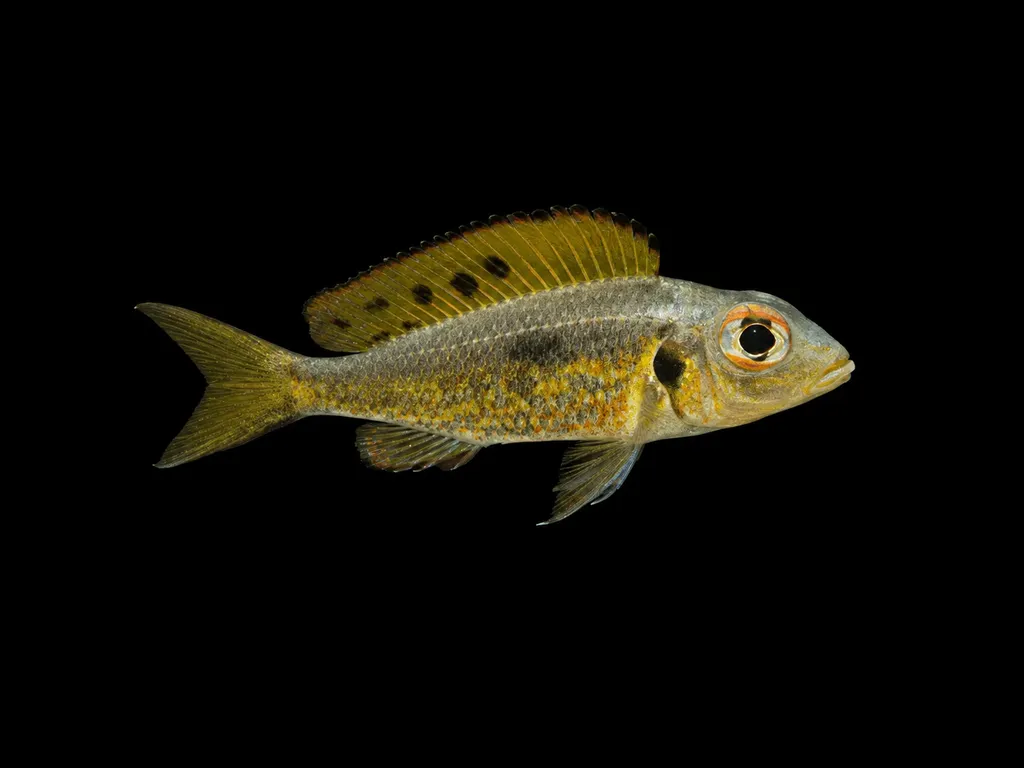
Callochromis melanostigma is named for the dark blotch on its anal fin. Males color up in metallic blue and red across the head and flanks when displaying. They fade to plain silver within minutes of stopping.
In the wild
The blackspot callochromis works the shallow sand shelves of northern Lake Tanganyika, where it strains invertebrates from the substrate. The lake there is hard, alkaline and thermally stable.
Weekly picks
Tank mates
The blackspot callochromis is a mostly peaceful, social species that keeps to the bottom. These picks share a community profile with it, are safe together in both directions, and overlap on water type, temperature and pH.
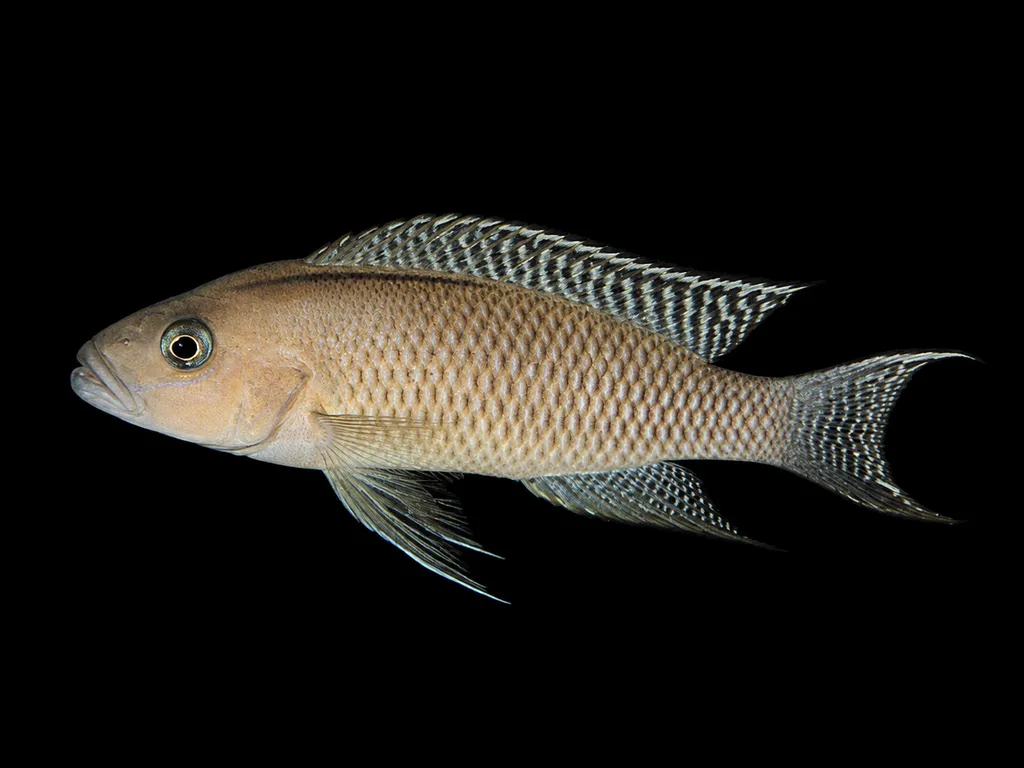
Falcicula cichlid
Neolamprologus falcicula
Freshwater3.1 in (8 cm) · 42 gal (160 L)75–81°F (24–27°C)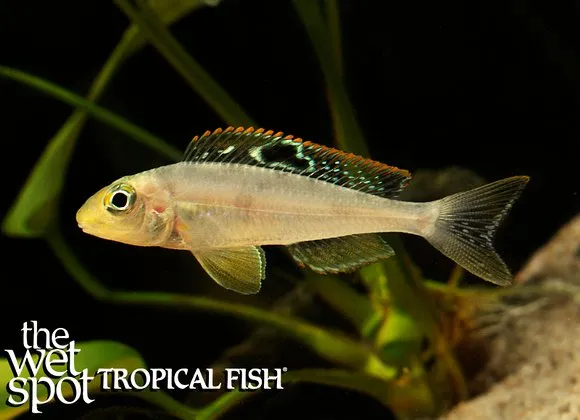
Butterfly xenotilapia
Xenotilapia papilio
Freshwater3.1 in (8 cm) · 53 gal (200 L)75–81°F (24–27°C)
Tanganyika killifish
Lamprichthys tanganicanus
Freshwater5.5 in (14 cm) · 40 gal (150 L)73–77°F (23–25°C)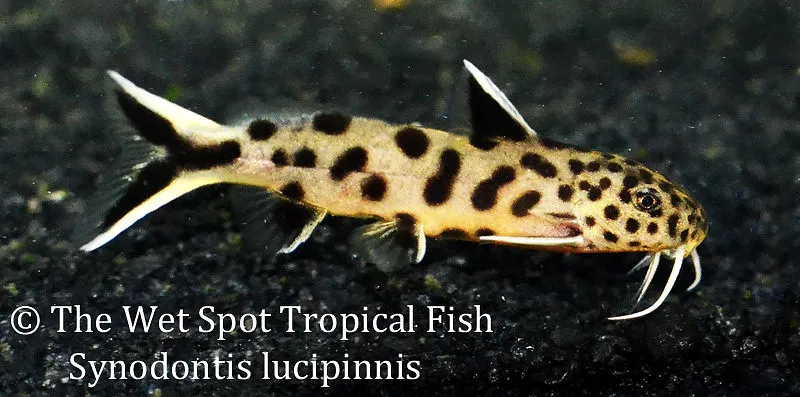
Dwarf petricola
Synodontis lucipinnis
Freshwater3.9 in (10 cm) · 30 gal (114 L)73–81°F (23–27°C)
Common questions
What size tank does a blackspot callochromis need?
A blackspot callochromis needs at least 79 gal (300 L). It spends most of its time in the bottom.
What temperature and pH does a blackspot callochromis need?
A blackspot callochromis is comfortable at 75–81°F (24–27°C) with a pH of 7.8–9.0.
What does a blackspot callochromis eat?
A blackspot callochromis eats small frozen foods and a quality granule. It takes most of its food off the bottom.
How big does a blackspot callochromis get?
An adult blackspot callochromis reaches about 5.9 in (15 cm).
How does a blackspot callochromis breed?
The blackspot callochromis is a maternal mouthbrooder, and spawning it in captivity is demanding. The male needs an undisturbed crater, and the female needs a place to retreat afterward.
Related species
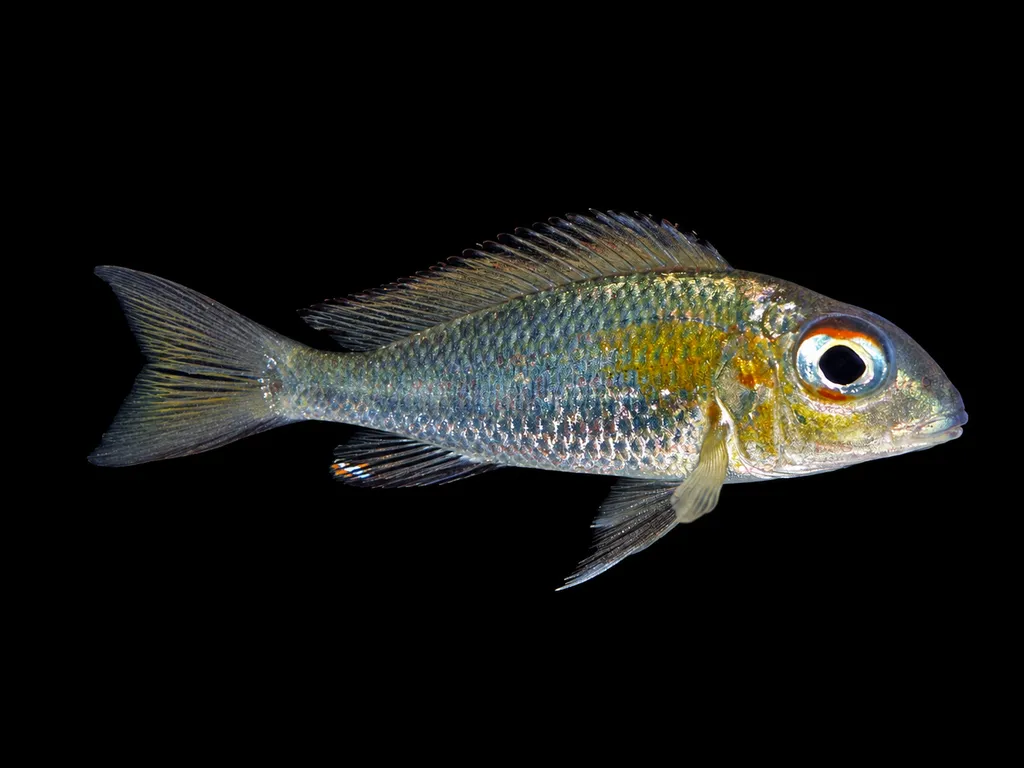 5.3 in (13.5 cm)79 gal (300 L)75–81°F (24–27°C)
Bigeye callochromis
Callochromis macrops
5.3 in (13.5 cm) · 79 gal (300 L)
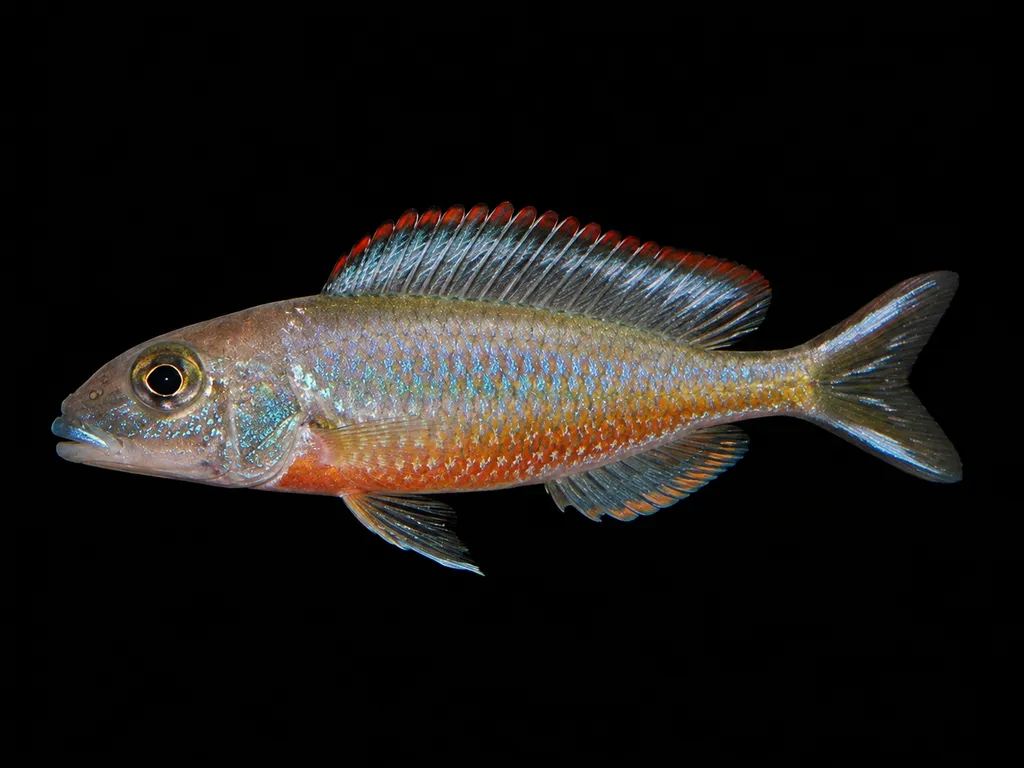 3.9 in (10 cm)66 gal (250 L)75–81°F (24–27°C)
Flame callochromis
Callochromis pleurospilus
3.9 in (10 cm) · 66 gal (250 L)
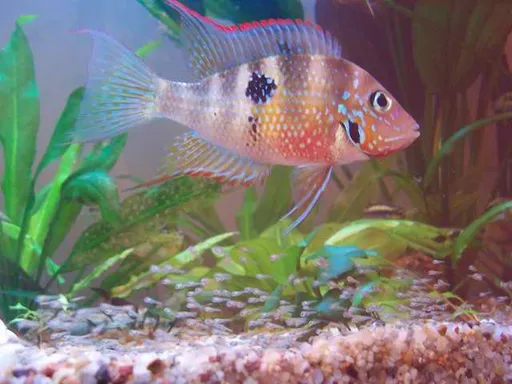 5.9 in (15 cm)53 gal (200 L)75–82°F (24–28°C)
Ellioti cichlid
Thorichthys maculipinnis
5.9 in (15 cm) · 53 gal (200 L)
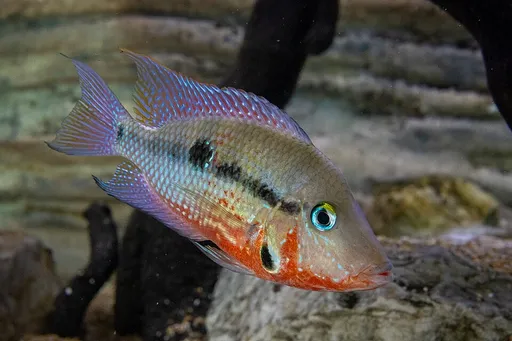 5.9 in (15 cm)30 gal (115 L)73–82°F (23–28°C)
Firemouth cichlid
Thorichthys meeki
5.9 in (15 cm) · 30 gal (115 L)
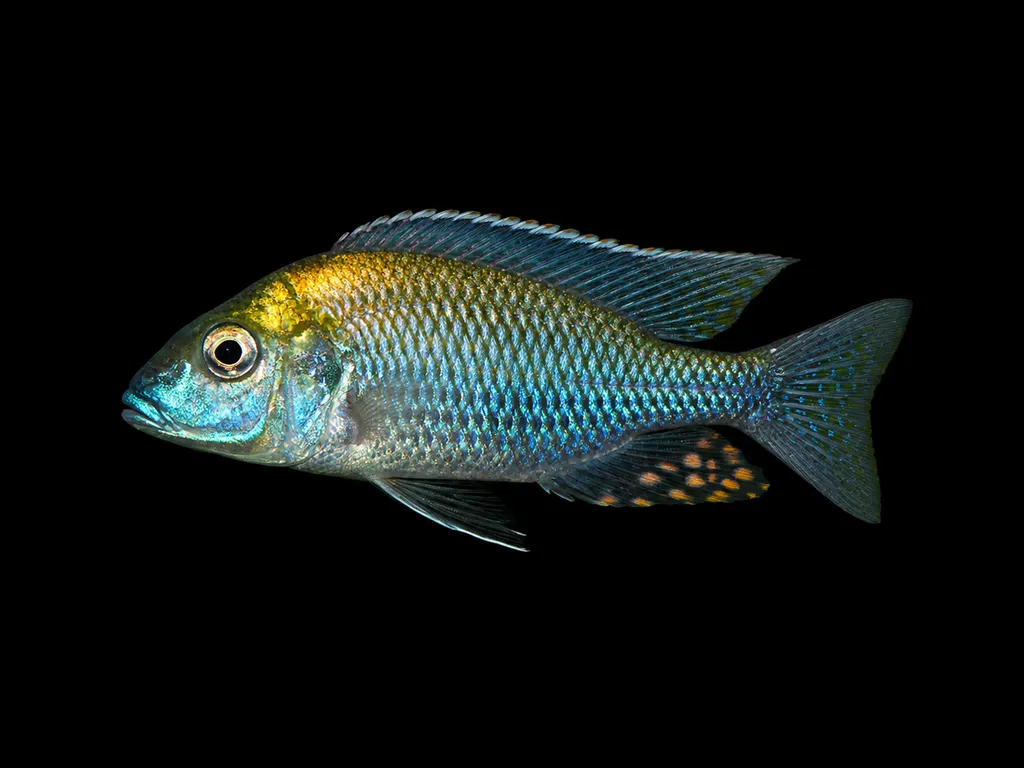 5.9 in (15 cm)74 gal (280 L)75–81°F (24–27°C)
Günther's peacock
Aulonocara guentheri
5.9 in (15 cm) · 74 gal (280 L)
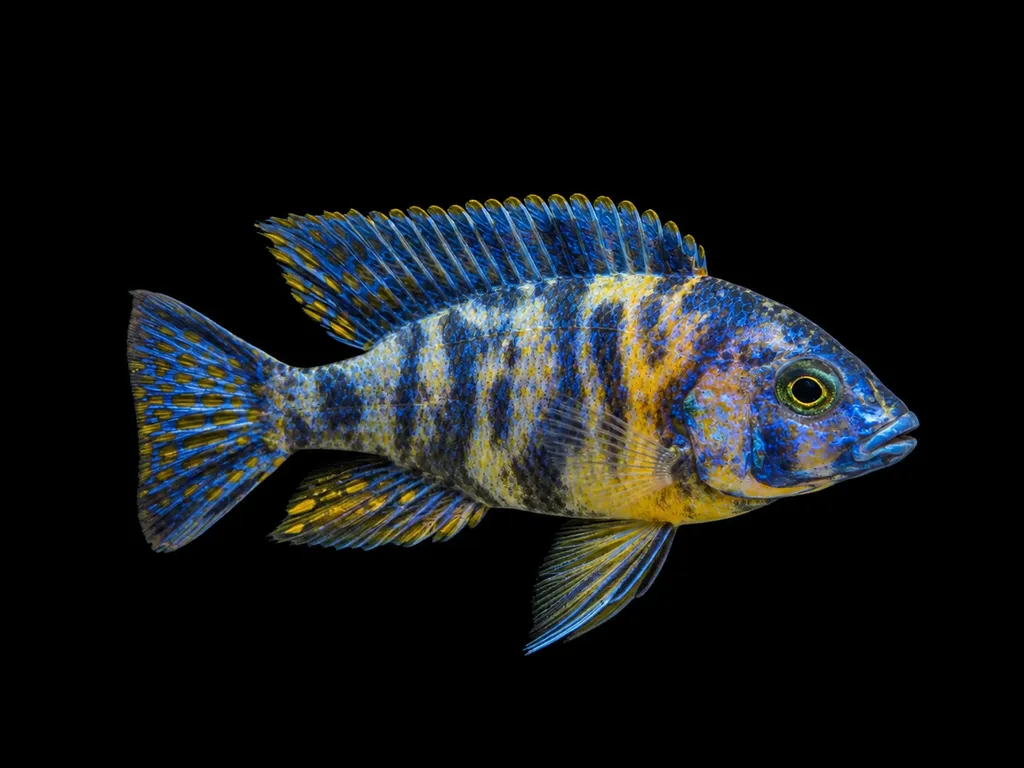 5.9 in (15 cm)63 gal (240 L)75–82°F (24–28°C)
OB peacock cichlid
Aulonocara hybrid
5.9 in (15 cm) · 63 gal (240 L)