Talbot's damsel
Chrysiptera talboti
Also known as Talbot's Demoiselle
SaltwaterFish
Care at a glance
- Temperature
- 75–81°F
- 24–27°C
- pH
- 8.1–8.4
- Adult size
- 2.4 in
- 6 cm
- Minimum tank
- 29 gal
- 110 L
- Temperament
- Mostly peaceful
- Social behavior
- Social
- Swim level
- Middle
- Diet
- Omnivore
- Difficulty
- Easy
- Breeding
- Substrate spawner · Medium
- Rarity
- Common
- Reef safe
- Reef safe
- Family
- Pomacentridae
- Origin
- Western Pacific reefs
Overview
Talbot's damsel is an easy reef damselfish for the middle of the tank. It is a good pick for reef keepers who want damsel color without constant squabbling.
Did you know
Talbot's damsel belongs to a genus with some notoriously hot-tempered species. Reef keepers still single it out as one of the few damsels calm enough for a peaceful community tank.
Caring for the Talbot's damsel
Give Talbot's damsel a reef tank of at least 29 gal (110 L), which comfortably suits a pair or a small group. Build plenty of caves and overhangs into the live rock. It spends more time tucked near the rockwork than patrolling open water or squaring off with tank mates.
Keep the water at 75 to 81°F (24 to 27°C) with a pH of 8.1 to 8.4. Feed a varied diet of small frozen meaty foods and marine pellets, with some algae-based food.
Talbot's damsel can still defend a favorite hiding spot from other damsels or similarly sized fish. It rarely bothers peaceful reef tank mates the way its Dascyllus relatives do. It is completely safe with coral and invertebrates.
Like other damsels, it lays demersal eggs, and the male guards them. Breeding is moderately difficult, though commercial marine fish farms have managed small-scale captive breeding.
Good to know
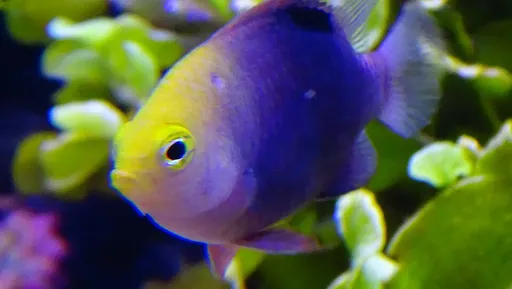
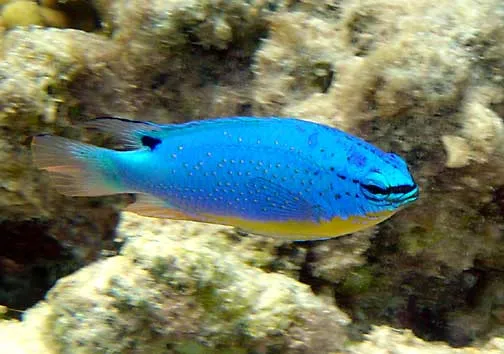
Talbot's damsel, Chrysiptera talboti, is also called Talbot's demoiselle, and it belongs to the family Pomacentridae. It is named for Frank Talbot, the fisheries scientist and former director of the Australian Museum who collected the original specimen. It has a pale blue-white body, a yellow face and a dark spot at the back of the dorsal fin. That two-tone pattern separates it from other Chrysiptera species.
In the wild
Talbot's damsel lives on Western Pacific reefs from the Andaman Sea to Fiji, and south to the Great Barrier Reef. It is usually found on rubble slopes and reef flats with scattered coral outcrops, and it relies heavily on that structure for cover.
Weekly picks
Tank mates
The Talbot's damsel is a mostly peaceful, social species that keeps to the middle. These picks share a community profile with it, are safe together in both directions, and overlap on water type, temperature and pH.
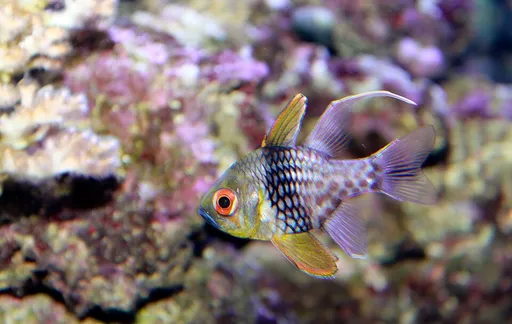
Pajama cardinalfish
Sphaeramia nematoptera
Saltwater3.1 in (8 cm) · 29 gal (110 L)72–81°F (22–27°C)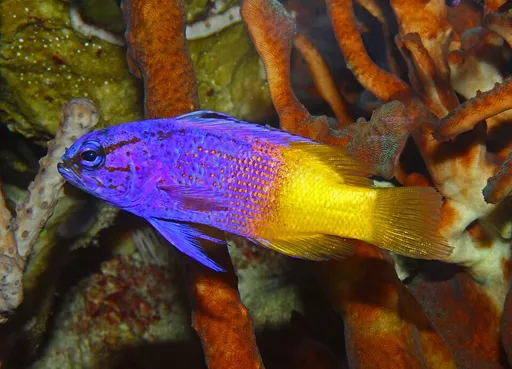
Royal gramma
Gramma loreto
Saltwater3.1 in (8 cm) · 29 gal (110 L)72–81°F (22–27°C)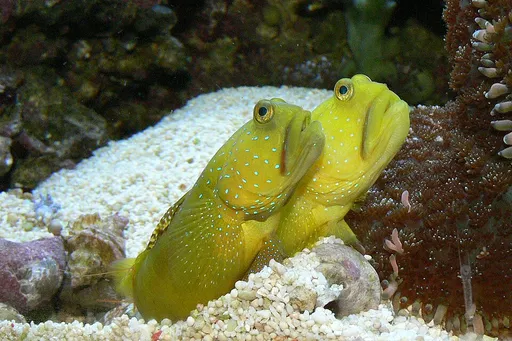
Yellow watchman goby
Cryptocentrus cinctus
Saltwater3.5 in (9 cm) · 20 gal (75 L)72–81°F (22–27°C)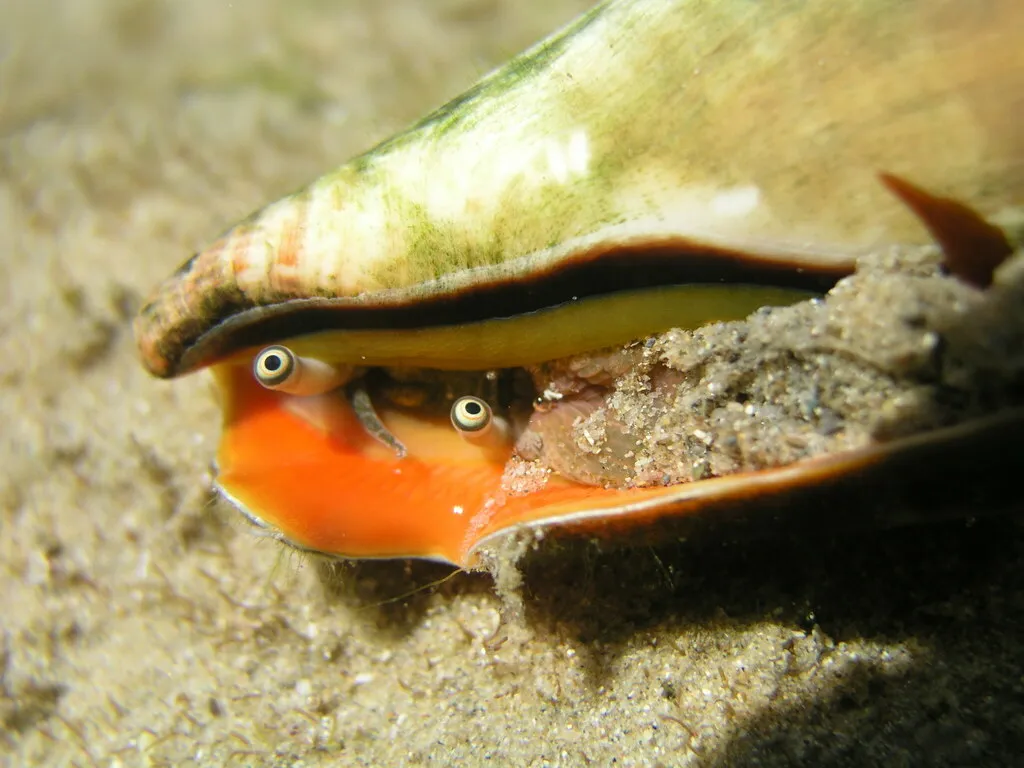
Tiger / strawberry conch
Conomurex luhuanus
Saltwater2.8 in (7 cm) · 20 gal (75 L)75–81°F (24–27°C)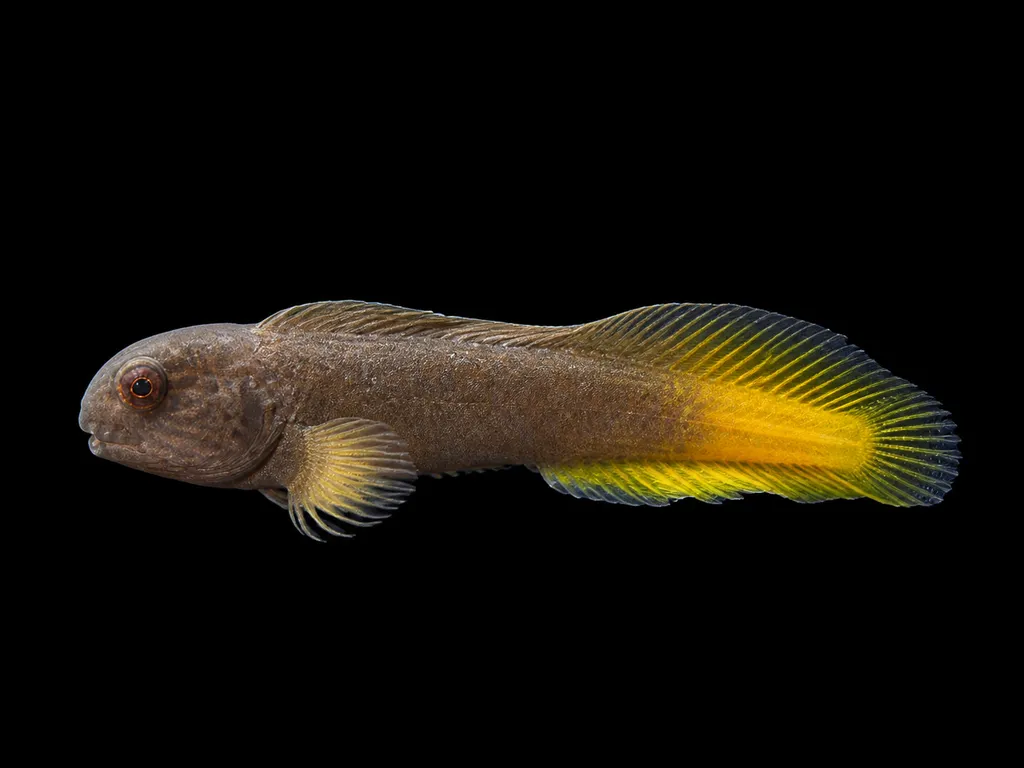
Flametail blenny
Enchelyurus flavipes
Saltwater3 in (7.5 cm) · 29 gal (110 L)72–79°F (22–26°C)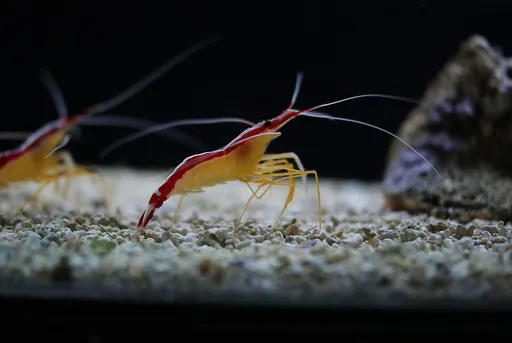
Skunk cleaner shrimp
Lysmata amboinensis
Saltwater2.4 in (6 cm) · 20 gal (75 L)73–81°F (23–27°C)
Common questions
What size tank does a Talbot's damsel need?
A Talbot's damsel needs at least 29 gal (110 L). It spends most of its time in the middle.
What temperature and pH does a Talbot's damsel need?
A Talbot's damsel is comfortable at 75–81°F (24–27°C) with a pH of 8.1–8.4.
What does a Talbot's damsel eat?
A Talbot's damsel eats a varied diet of small frozen meaty foods and marine pellets, along with some algae-based food.
How big does a Talbot's damsel get?
An adult Talbot's damsel reaches about 2.4 in (6 cm).
How does a Talbot's damsel breed?
A Talbot's damsel lays demersal eggs, and the male guards them. Commercial marine fish farms have bred it on a small scale, but breeding is moderately difficult.
Related species
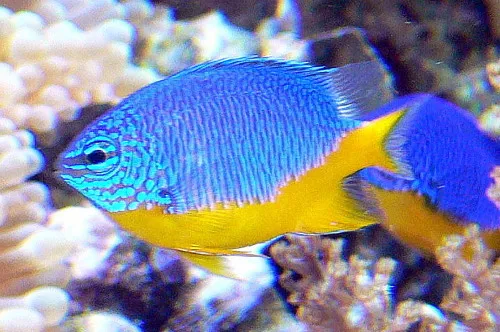 2.8 in (7 cm)29 gal (110 L)75–81°F (24–27°C)
Azure damsel
Chrysiptera hemicyanea
2.8 in (7 cm) · 29 gal (110 L)
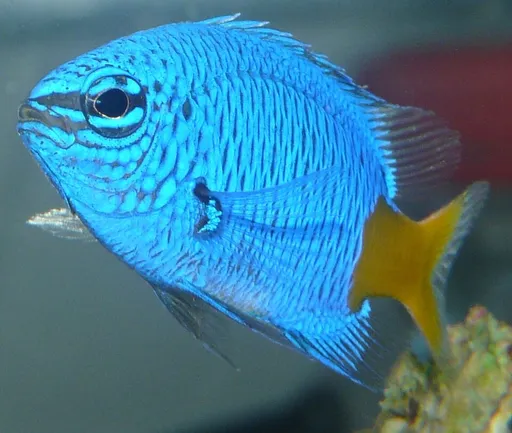
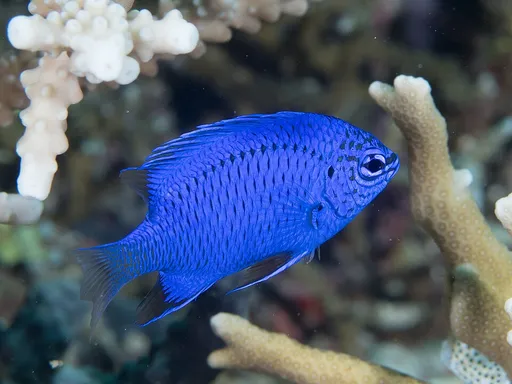 2.8 in (7 cm)25 gal (95 L)75–81°F (24–27°C)
Springer's damsel
Chrysiptera springeri
2.8 in (7 cm) · 25 gal (95 L)
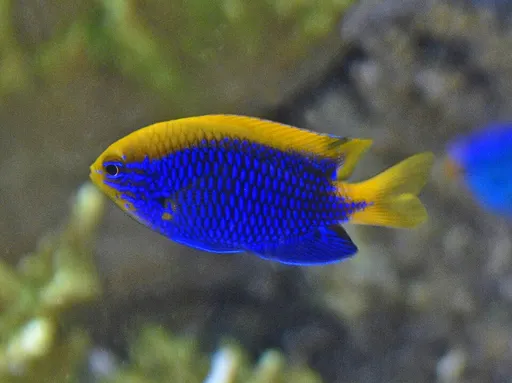
 2.8 in (7 cm)29 gal (110 L)75–81°F (24–27°C)
Yellowtail damsel
Chrysiptera parasema
2.8 in (7 cm) · 29 gal (110 L)
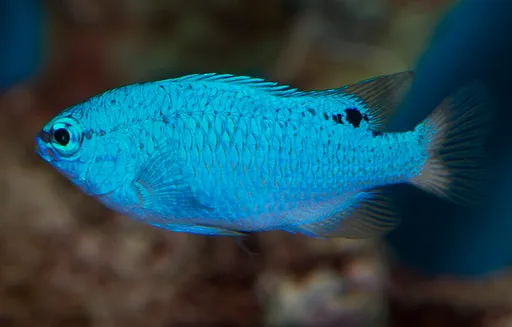
 3.5 in (9 cm)29 gal (110 L)73–81°F (23–27°C)
Starck's damsel
Chrysiptera starcki
3.5 in (9 cm) · 29 gal (110 L)
 3.1 in (8 cm)29 gal (110 L)75–81°F (24–27°C)
Blue damsel
Chrysiptera cyanea
3.1 in (8 cm) · 29 gal (110 L)
 3.1 in (8 cm)29 gal (110 L)75–81°F (24–27°C)
Fiji blue devil damsel
Chrysiptera taupou
3.1 in (8 cm) · 29 gal (110 L)