Fiji blue devil damsel
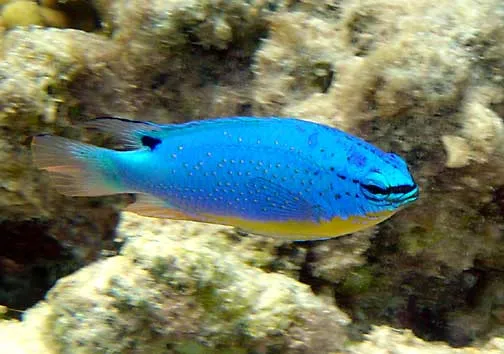
Chrysiptera taupou
Also known as South Seas Devil, Fiji Blue Devil Damselfish, South Seas Damsel, Village Belle
SaltwaterFish
Care at a glance
- Temperature
- 75–81°F
- 24–27°C
- pH
- 8.1–8.4
- Adult size
- 3.1 in
- 8 cm
- Minimum tank
- 29 gal
- 110 L
- Temperament
- Aggressive
- Social behavior
- Solitary
- Own kind
- One per tank
- Tankmates
- With caution
- Swim level
- Middle
- Diet
- Omnivore
- Difficulty
- Easy
- Breeding
- Substrate spawner · Medium
- Rarity
- Common
- Reef safe
- Reef safe
- Family
- Pomacentridae
- Origin
- Western Pacific around Fiji, Samoa and Tonga, on shallow reef flats and lagoons.
Overview
The Fiji blue devil damsel is an electric blue damsel with a yellow belly, and it is reef safe. It is hardy and easy to keep, though famously feisty with other fish.
Did you know
A single Fiji blue devil damsel can dominate a whole tank of larger fish. It patrols its patch of rock as though it owns the place.
Caring for the Fiji blue devil damsel
Keep one Fiji blue devil damsel in a tank of at least 29 gal (110 L) with rock territories. It is reef safe and never bothers corals or invertebrates.
Hold the water at 75 to 81°F (24 to 27°C) with a pH of 8.1 to 8.4. Feed a varied diet of meaty foods, herbivore preparations and flake.
The Fiji blue devil is very aggressive toward other fish, so pair it only with equally bold tank mates. Add it to the tank last. Keep just one per tank, because more than one usually ends in fighting unless the tank is large.
Like other damsels, it lays its eggs on rock it has cleaned, and the male guards them. Dominant males show the most intense blue and yellow, and males brighten and display during breeding. Breeding it takes some experience.
Good to know
The Fiji blue devil damsel, Chrysiptera taupou, belongs to the damselfish family Pomacentridae. Shops also sell it as the South Seas devil or the South Seas damsel, and it is sometimes called the village belle.
In the wild
The Fiji blue devil damsel is native to the southwestern Pacific islands, around Fiji, Samoa and Tonga. It is common on shallow reef flats and in lagoons. There it holds a small territory in the rock and defends it hard against other fish.
Common questions
What size tank does a Fiji blue devil damsel need?
A Fiji blue devil damsel needs at least 29 gal (110 L). It spends most of its time in the middle.
What temperature and pH does a Fiji blue devil damsel need?
A Fiji blue devil damsel is comfortable at 75–81°F (24–27°C) with a pH of 8.1–8.4.
What does a Fiji blue devil damsel eat?
A Fiji blue devil damsel eats a varied diet of meaty foods, herbivore preparations and flake.
How big does a Fiji blue devil damsel get?
An adult Fiji blue devil damsel reaches about 3.1 in (8 cm).
How can you tell a male Fiji blue devil damsel from a female?
Males show the most intense blue and yellow, above all a dominant male. They also brighten and display during breeding.
How does a Fiji blue devil damsel breed?
A Fiji blue devil damsel lays its eggs on cleaned rock, as other damsels do, and the male guards them. Breeding it takes some experience.
Related species
 3.1 in (8 cm)29 gal (110 L)75–81°F (24–27°C)
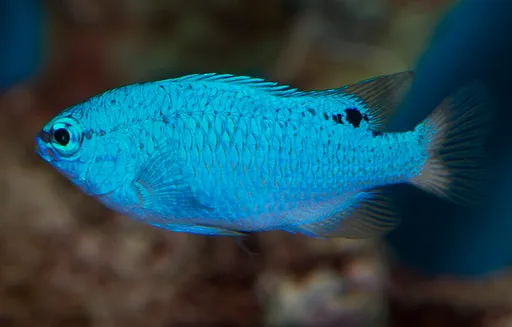
Blue damsel
Chrysiptera cyanea
3.1 in (8 cm) · 29 gal (110 L)
 3.5 in (9 cm)29 gal (110 L)73–81°F (23–27°C)
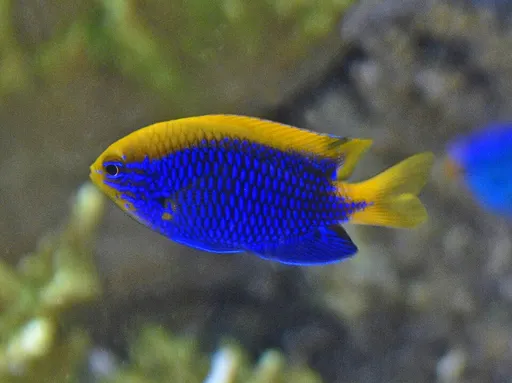
Starck's damsel
Chrysiptera starcki
3.5 in (9 cm) · 29 gal (110 L)
 2.8 in (7 cm)29 gal (110 L)75–81°F (24–27°C)
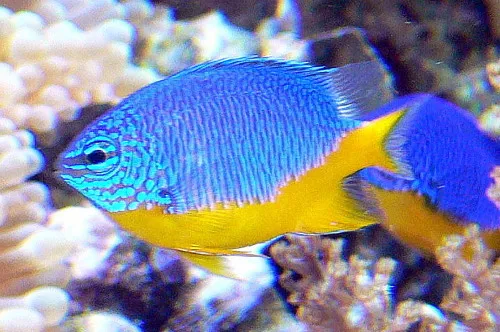
Azure damsel
Chrysiptera hemicyanea
2.8 in (7 cm) · 29 gal (110 L)
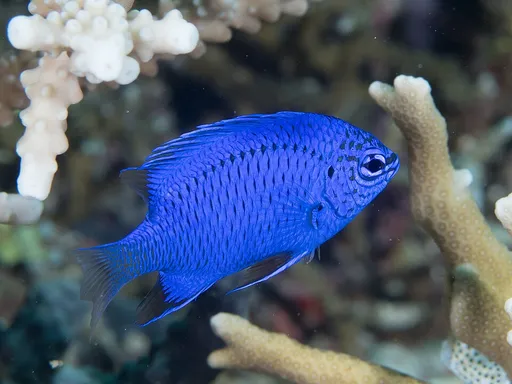 2.8 in (7 cm)25 gal (95 L)75–81°F (24–27°C)
Springer's damsel
Chrysiptera springeri
2.8 in (7 cm) · 25 gal (95 L)
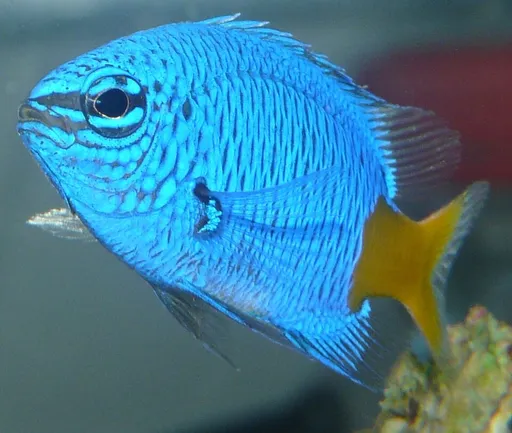 2.8 in (7 cm)29 gal (110 L)75–81°F (24–27°C)
Yellowtail damsel
Chrysiptera parasema
2.8 in (7 cm) · 29 gal (110 L)
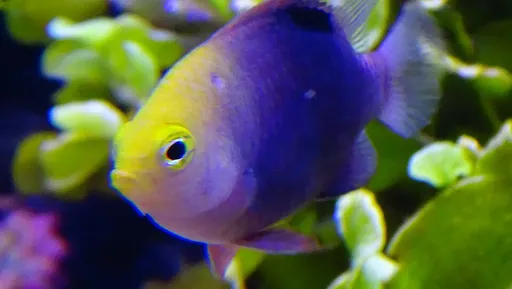 2.4 in (6 cm)29 gal (110 L)75–81°F (24–27°C)
Talbot's damsel
Chrysiptera talboti
2.4 in (6 cm) · 29 gal (110 L)