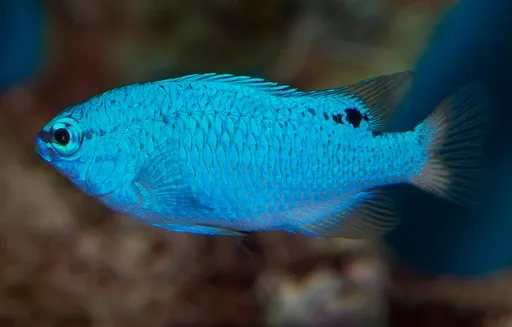
Blue damsel
Chrysiptera cyanea
Also known as Blue Devil Damselfish, Blue Devil Damsel, Sapphire Devil
SaltwaterFish
Care at a glance
- Temperature
- 75–81°F
- 24–27°C
- pH
- 8.1–8.4
- Adult size
- 3.1 in
- 8 cm
- Minimum tank
- 29 gal
- 110 L
- Temperament
- Aggressive
- Social behavior
- Social
- Own kind
- One male per tank
- Tankmates
- With caution
- Swim level
- Middle
- Difficulty
- Beginner
- Breeding
- Medium
- Rarity
- Very common
- Reef safe
- Reef safe
- Family
- Pomacentridae
- Origin
- Indo-Pacific
Overview
Extremely hardy and cheap, which is why it is everywhere in the hobby, but its temperament is a real problem. A lone male will bully a peaceful community, so it is best added last or kept in a group of five to seven in a 55-gallon-plus tank to spread out the aggression. Technically reef safe because it ignores corals and inverts. Accepts almost any prepared or frozen food.
In the wild
Found across the tropical Indo-Pacific over shallow lagoon and reef-flat habitats with plenty of rubble and coral. It sticks close to the bottom third of the reef, using cracks and coral heads as cover. In captivity it needs a lot of rockwork and defined territories, otherwise its aggression has nowhere to diffuse.
Good to know
A Pomacentridae damsel. Males and females differ in color, and males in many populations develop an orange tail and face. It is a demersal spawner where the male guards eggs laid on a cleaned rock surface. Famous as one of the most aggressive small marine fish, males set up rigid territories and chase intruders relentlessly.
Did you know
It is one of the hardiest saltwater fish sold, which historically made it the go-to fish for cycling tanks, a practice now discouraged because the fish that survives the cycle is nearly impossible to catch out of the rockwork afterward.
Common questions
What size tank does a Blue damsel need?
A Blue damsel needs at least 29 gal (110 L). It spends most of its time in the middle.
What temperature and pH does a Blue damsel need?
A Blue damsel is comfortable at 75–81°F (24–27°C) with a pH of 8.1–8.4.
How big does a Blue damsel get?
An adult Blue damsel reaches about 3.1 in (8 cm).
Related species
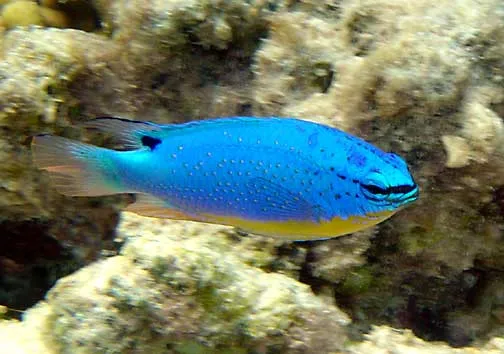 3.1 in (8 cm)29 gal (110 L)75–81°F (24–27°C)
Fiji blue devil damsel
Chrysiptera taupou
3.1 in (8 cm) · 29 gal (110 L)
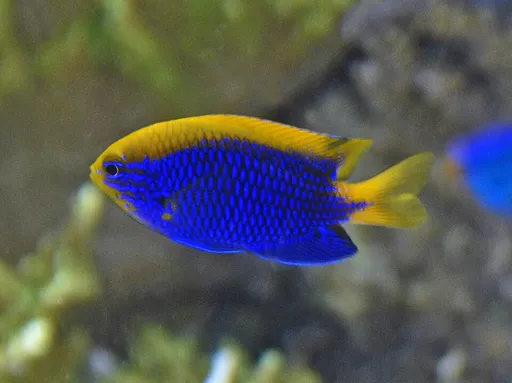 3.5 in (9 cm)29 gal (110 L)73–81°F (23–27°C)
Starck's damsel
Chrysiptera starcki
3.5 in (9 cm) · 29 gal (110 L)
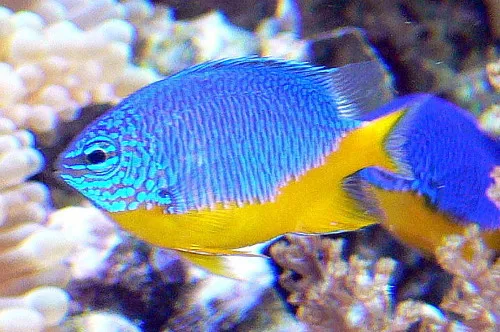 2.8 in (7 cm)29 gal (110 L)75–81°F (24–27°C)
Azure damsel
Chrysiptera hemicyanea
2.8 in (7 cm) · 29 gal (110 L)
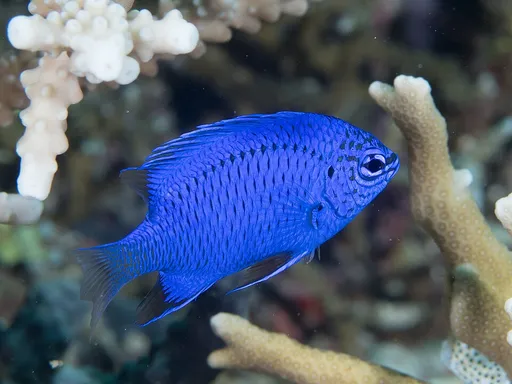 2.8 in (7 cm)25 gal (95 L)75–81°F (24–27°C)
Springer's damsel
Chrysiptera springeri
2.8 in (7 cm) · 25 gal (95 L)
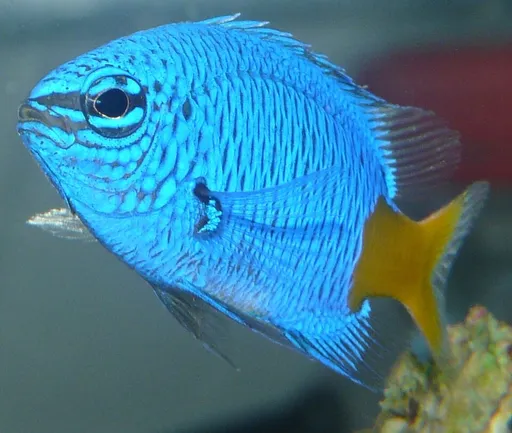 2.8 in (7 cm)29 gal (110 L)75–81°F (24–27°C)
Yellowtail damsel
Chrysiptera parasema
2.8 in (7 cm) · 29 gal (110 L)
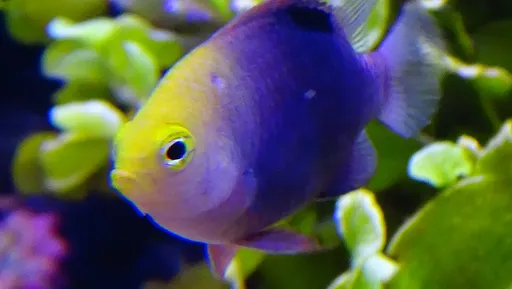 2.4 in (6 cm)29 gal (110 L)75–81°F (24–27°C)
Talbot's damsel
Chrysiptera talboti
2.4 in (6 cm) · 29 gal (110 L)