Yellowtail damsel
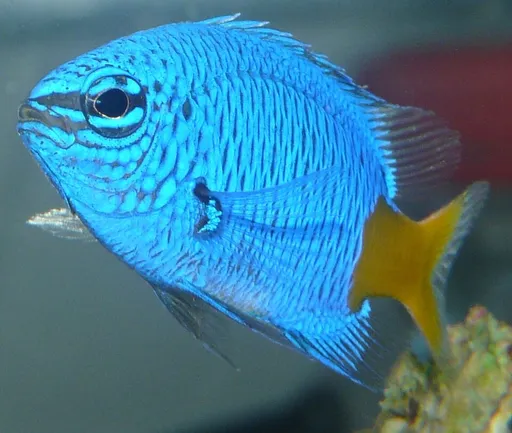
Chrysiptera parasema
Also known as Yellowtail Blue Damsel, Yellowtail Blue Damselfish, Goldtail Demoiselle
SaltwaterFish
Care at a glance
- Temperature
- 75–81°F
- 24–27°C
- pH
- 8.1–8.4
- Adult size
- 2.8 in
- 7 cm
- Minimum tank
- 29 gal
- 110 L
- Temperament
- Mostly peaceful
- Social behavior
- Social
- Tankmates
- With caution
- Swim level
- Middle
- Difficulty
- Beginner
- Breeding
- Substrate spawner · Medium
- Rarity
- Very common
- Reef safe
- Reef safe
- Family
- Pomacentridae
- Origin
- Western Pacific
Overview
The yellowtail damsel is a hardy, active reef fish that patrols the middle of the tank near its chosen rock. It is a common beginner marine fish.
Did you know
Unlike its blue devil cousin, the yellowtail damsel is one of the few damsels calm enough to trust in a peaceful community reef.
Caring for the yellowtail damsel
Give the yellowtail damsel at least 29 gal (110 L), with plenty of live rock full of caves and crevices. It claims a small home base there and retreats into it when it feels threatened.
Keep the water at 75 to 81°F (24 to 27°C) with a pH of 8.1 to 8.4. Feed meaty frozen foods such as mysis and brine shrimp, along with prepared marine flakes and pellets.
The yellowtail damsel is mostly peaceful and reef safe, but it can be territorial toward fish of a similar size. Add it after more peaceful tank mates are established. It also defends a territory against its own kind. A group of three or more, in odd numbers and in a tank 4 feet or longer, helps spread out any nipping.
Like other Chrysiptera, it is a substrate-spawning demersal egg layer. The male guards and fans the nest, and breeding is moderately difficult.
Good to know
The yellowtail damsel, Chrysiptera parasema, is a member of the family Pomacentridae. It is also called the yellowtail blue damsel or goldtail demoiselle. Its electric blue body and lemon-yellow tail make one of the most recognizable damsel color patterns in the hobby.
In the wild
The yellowtail damsel is native to the western Pacific, around the Philippines, Indonesia and the surrounding reefs. It lives over shallow coral and rubble slopes, staying close to branching coral and rockwork it can dart into.
Common questions
What size tank does a yellowtail damsel need?
A yellowtail damsel needs at least 29 gal (110 L). It spends most of its time in the middle.
What temperature and pH does a yellowtail damsel need?
A yellowtail damsel is comfortable at 75–81°F (24–27°C) with a pH of 8.1–8.4.
What does a yellowtail damsel eat?
A yellowtail damsel eats meaty frozen foods such as mysis and brine shrimp. It also takes prepared marine flakes and pellets.
How big does a yellowtail damsel get?
An adult yellowtail damsel reaches about 2.8 in (7 cm).
How does a yellowtail damsel breed?
Yellowtail damsels are substrate-spawning demersal egg layers. The male guards and fans the nest, and breeding them is moderately difficult.
Related species
 2.8 in (7 cm)29 gal (110 L)75–81°F (24–27°C)
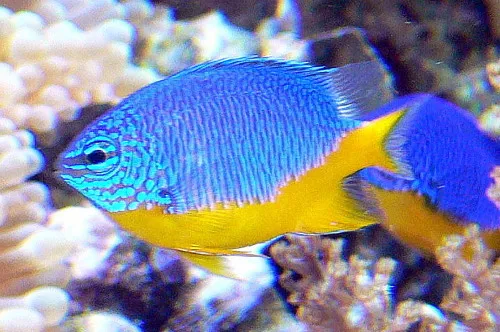
Azure damsel
Chrysiptera hemicyanea
2.8 in (7 cm) · 29 gal (110 L)
 2.8 in (7 cm)25 gal (95 L)75–81°F (24–27°C)
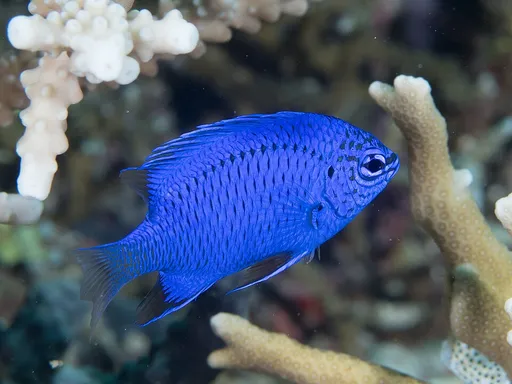
Springer's damsel
Chrysiptera springeri
2.8 in (7 cm) · 25 gal (95 L)
 2.4 in (6 cm)29 gal (110 L)75–81°F (24–27°C)
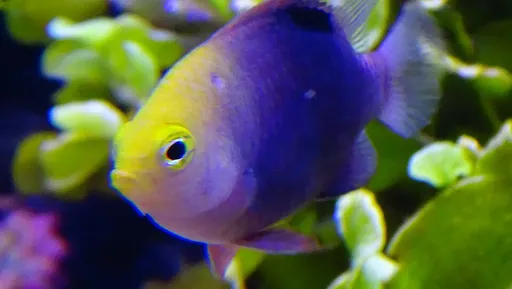
Talbot's damsel
Chrysiptera talboti
2.4 in (6 cm) · 29 gal (110 L)
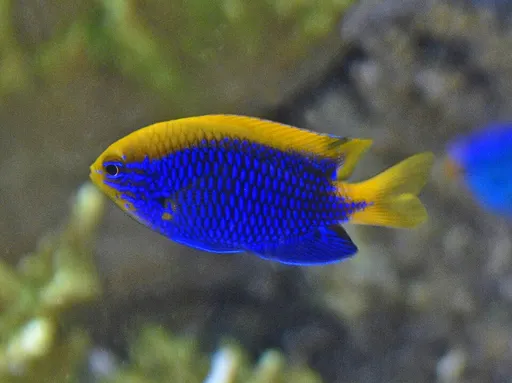 3.5 in (9 cm)29 gal (110 L)73–81°F (23–27°C)
Starck's damsel
Chrysiptera starcki
3.5 in (9 cm) · 29 gal (110 L)
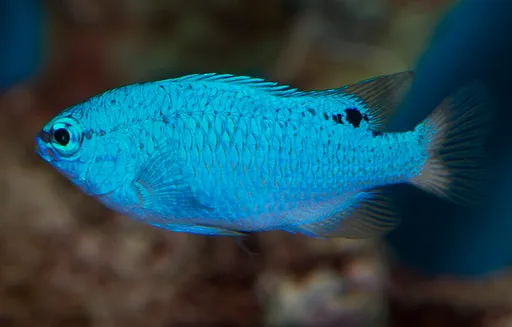 3.1 in (8 cm)29 gal (110 L)75–81°F (24–27°C)
Blue damsel
Chrysiptera cyanea
3.1 in (8 cm) · 29 gal (110 L)
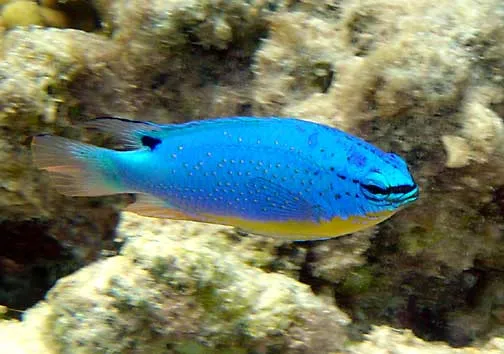 3.1 in (8 cm)29 gal (110 L)75–81°F (24–27°C)
Fiji blue devil damsel
Chrysiptera taupou
3.1 in (8 cm) · 29 gal (110 L)