Shadow catfish
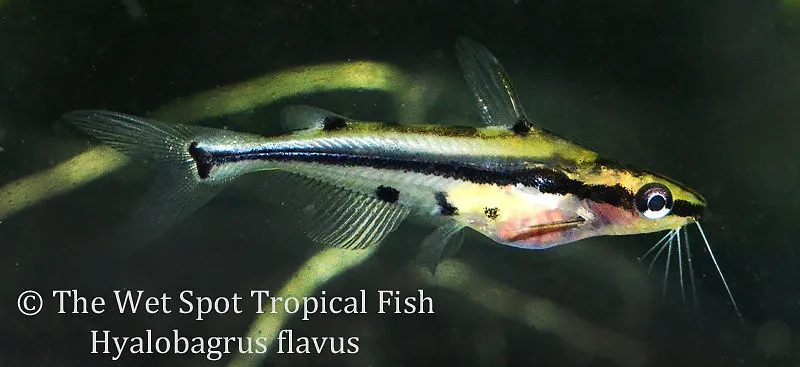
Hyalobagrus flavus
Also known as Malayan Yellow Pygmy Cat
FreshwaterFish
Care at a glance
- Temperature
- 70–79°F
- 21–26°C
- pH
- 5.5–7.5
- Adult size
- 1.8 in
- 4.5 cm
- Minimum tank
- 13 gal
- 50 L
- Temperament
- Peaceful
- Social behavior
- Schooling
- Swim level
- Middle
- Difficulty
- Medium
- Breeding
- No record
- Rarity
- Rare
- Family
- Bagridae
- Origin
- Sumatra
Overview
The shadow catfish is a tiny, peaceful bagrid for the middle of a planted, soft-water tank. It is best with a little experience.
Did you know
Most catfishes are nocturnal loners, but the shadow catfish is active by day and lives in shoals. It hovers in open midwater beneath floating plants rather than skulking along the bottom.
Caring for the shadow catfish
Keep shadow catfish in a group of at least six, and more if you can, in a tank of 13 gal (50 L) or larger. Plant it densely, add driftwood and dried leaves, and use floating cover to shade the surface and diffuse the light. That cover lets them feel secure enough to stay out in open water.
Give them soft, acidic water at 70 to 79°F (21 to 26°C), a pH of 5.5 to 7.5 and gentle flow. A tannin tint from botanicals suits them and brings out their pale golden shimmer. Offer small foods that stay in the water column, such as micro pellets, crushed flake, frozen cyclops and baby brine shrimp.
Shadow catfish are peaceful toward everything and suit a calm community of small, gentle fish and soft-water shrimp. They are delicate and uncommon, and there are no established records of them breeding in home aquariums.
Good to know
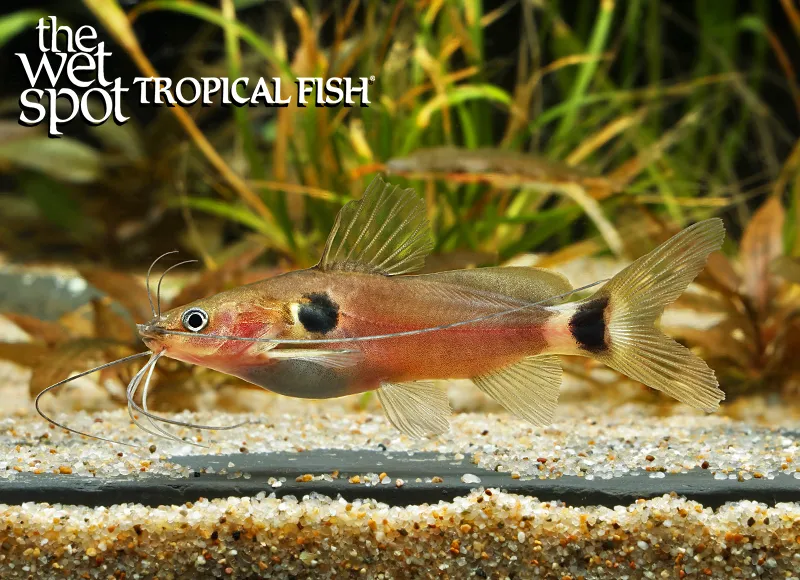
The shadow catfish is one of the smallest members of the family Bagridae. It has a slim, semi-transparent, faintly golden body. The trade also calls it the Malayan yellow pygmy cat.
In the wild
The shadow catfish comes from soft, acidic blackwater rivers in Sumatra and Borneo. Large shoals gather there under floating vegetation and among submerged grasses, picking off tiny invertebrates.
Weekly picks
Tank mates
The shadow catfish is a peaceful, schooling species that keeps to the middle. These picks share a community profile with it, are safe together in both directions, and overlap on water type, temperature and pH.
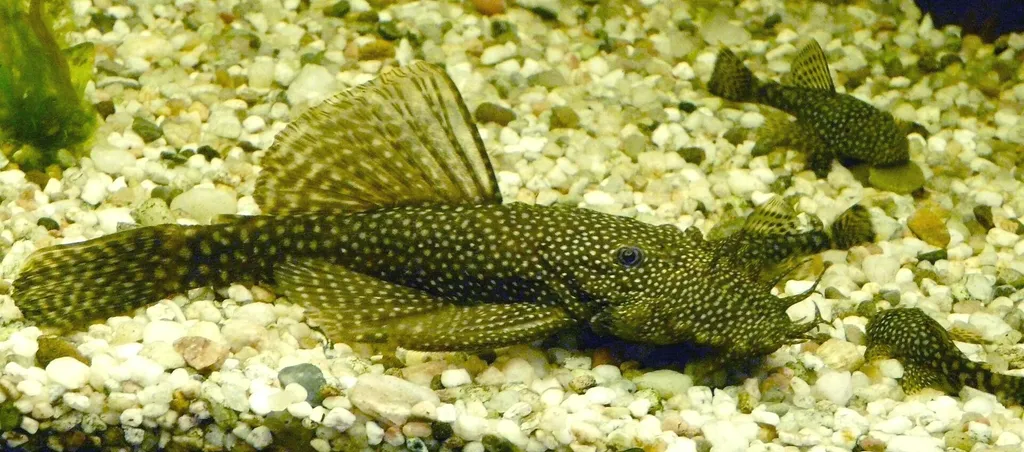
Bristlenose pleco
Ancistrus sp.
Freshwater4.9 in (12.5 cm) · 20 gal (75 L)70–79°F (21–26°C)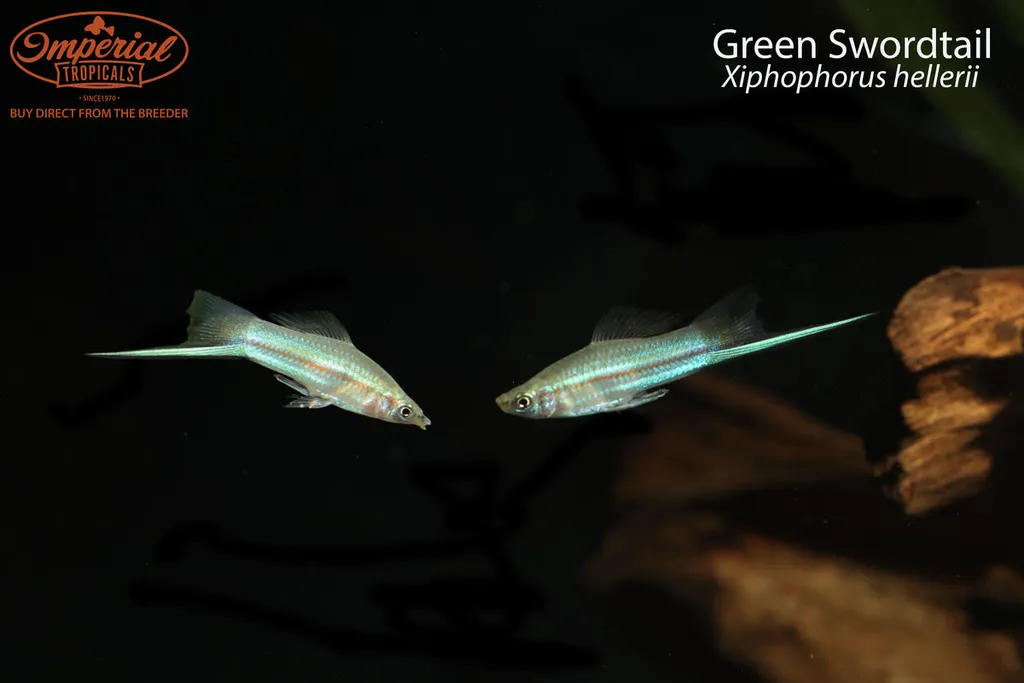
Green swordtail
Xiphophorus hellerii
Freshwater5.9 in (15 cm) · 20 gal (76 L)68–82°F (20–28°C)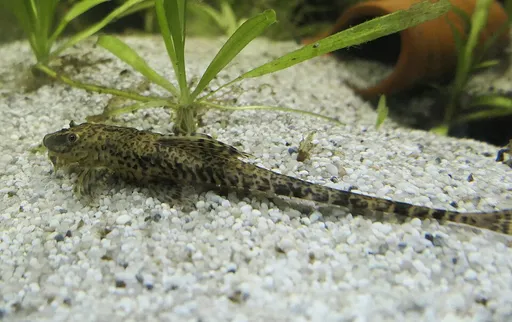
Red lizard whiptail
Rineloricaria lanceolata
Freshwater3.9 in (10 cm) · 24 gal (90 L)77–82°F (25–28°C)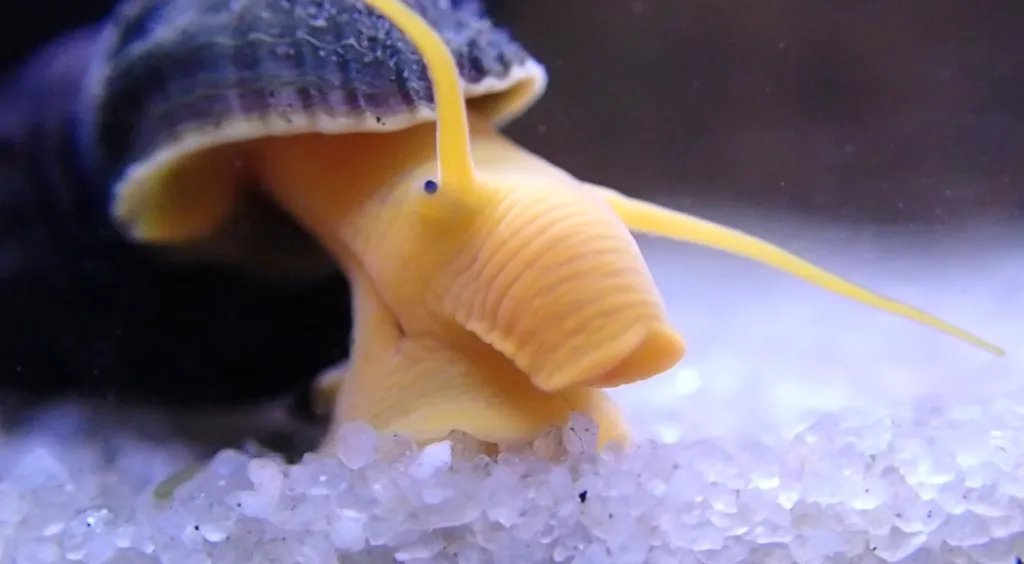
Gold rabbit snail
Tylomelania gemmifera
Freshwater2.8 in (7 cm) · 16 gal (60 L)75–82°F (24–28°C)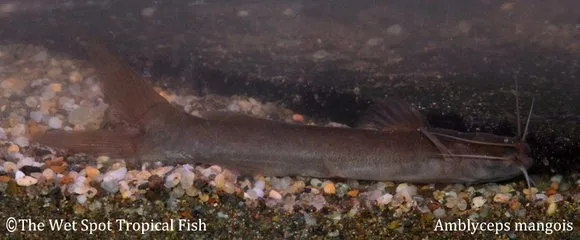
Crevice catfish
Amblyceps mangois
Freshwater5.1 in (13 cm) · 20 gal (75 L)68–79°F (20–26°C)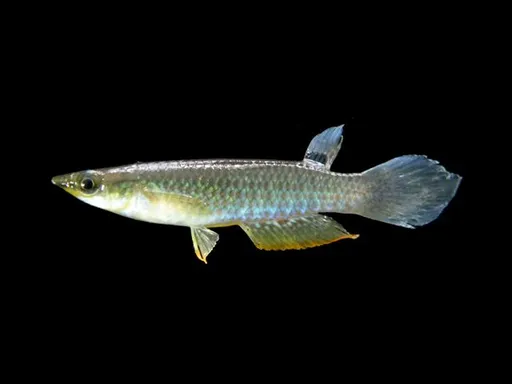
Blue panchax
Aplocheilus panchax
Freshwater3.5 in (9 cm) · 20 gal (75 L)72–82°F (22–28°C)
Common questions
What size tank does a shadow catfish need?
A shadow catfish needs at least 13 gal (50 L). It spends most of its time in the middle.
What temperature and pH does a shadow catfish need?
A shadow catfish is comfortable at 70–79°F (21–26°C) with a pH of 5.5–7.5.
What does a shadow catfish eat?
A shadow catfish eats small foods that stay in the water column. Micro pellets, crushed flake, frozen cyclops and baby brine shrimp all suit it.
How big does a shadow catfish get?
An adult shadow catfish reaches about 1.8 in (4.5 cm).
Does a shadow catfish need a group?
Yes. A shadow catfish is a schooling species and should be kept in a group, not singly.
Related species
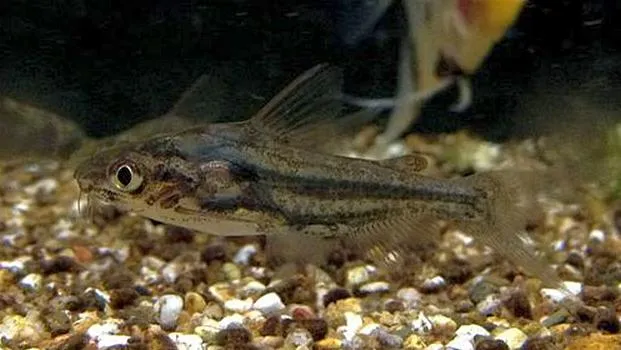 2 in (5 cm)21 gal (80 L)68–79°F (20–26°C)
Gold hovering catfish
Chandramara chandramara
2 in (5 cm) · 21 gal (80 L)
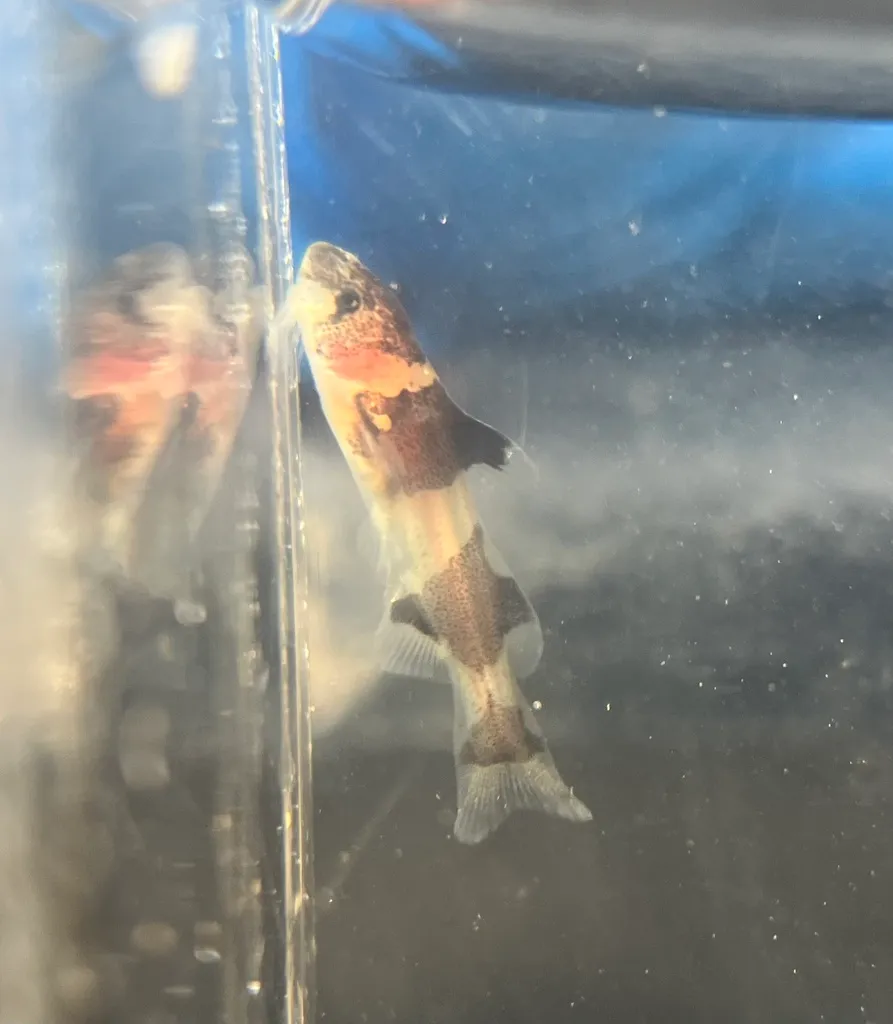 2.4 in (6 cm)20 gal (75 L)70–77°F (21–25°C)
Dwarf bumblebee catfish
Pseudomystus leiacanthus
2.4 in (6 cm) · 20 gal (75 L)
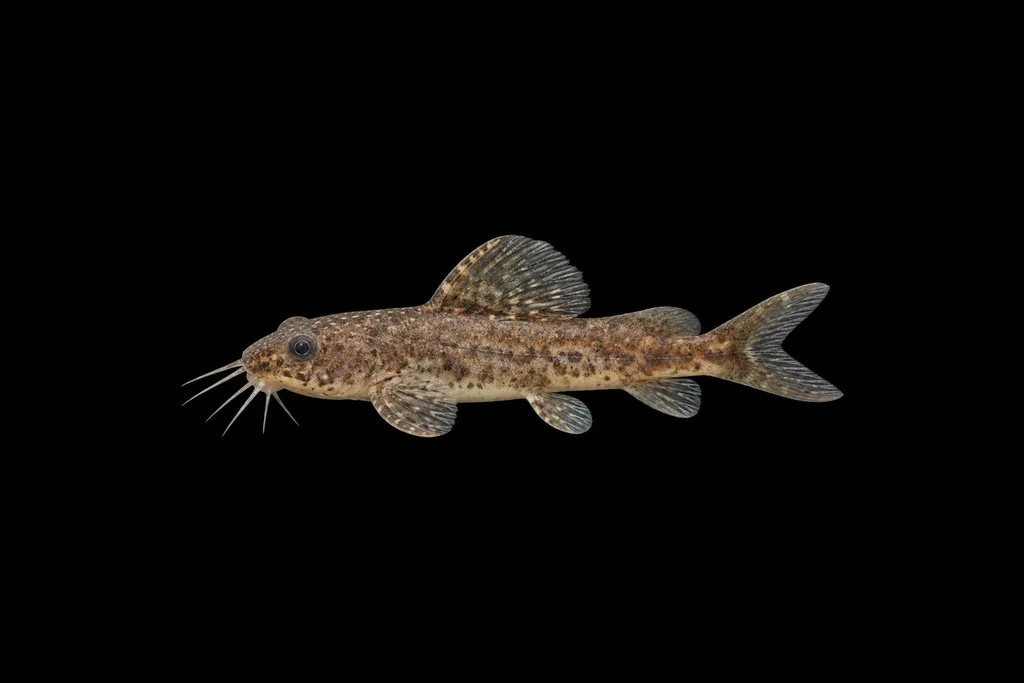 1.2 in (3 cm)11 gal (40 L)73–82°F (23–28°C)
Dwarf broadfin catfish
Nanobagrus immaculatus
1.2 in (3 cm) · 11 gal (40 L)
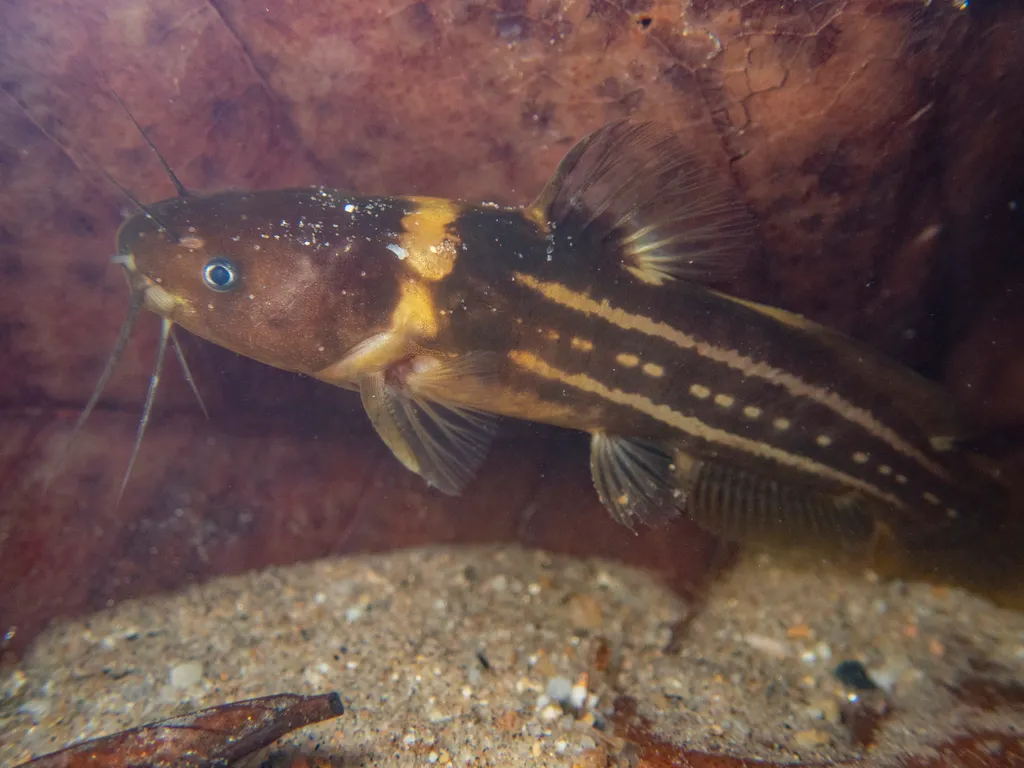 3.1 in (8 cm)30 gal (112 L)64–77°F (18–25°C)
Three-lined bagrid
Tachysurus trilineatus
3.1 in (8 cm) · 30 gal (112 L)
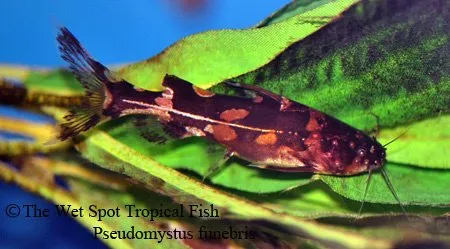 2.4 in (6 cm)29 gal (110 L)73–81°F (23–27°C)
Borneo hornet catfish
Pseudomystus funebris
2.4 in (6 cm) · 29 gal (110 L)
 4.7 in (12 cm)30 gal (114 L)72–81°F (22–27°C)
Two-spot catfish
Mystus bimaculatus
4.7 in (12 cm) · 30 gal (114 L)