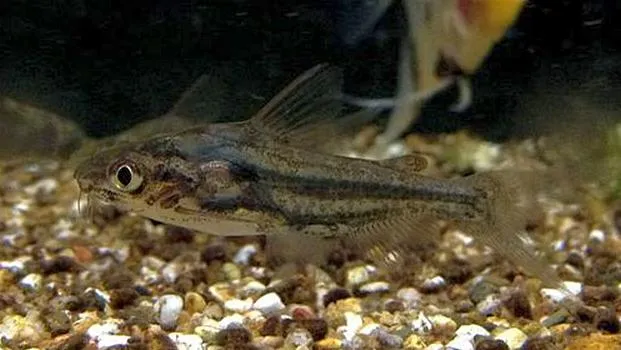
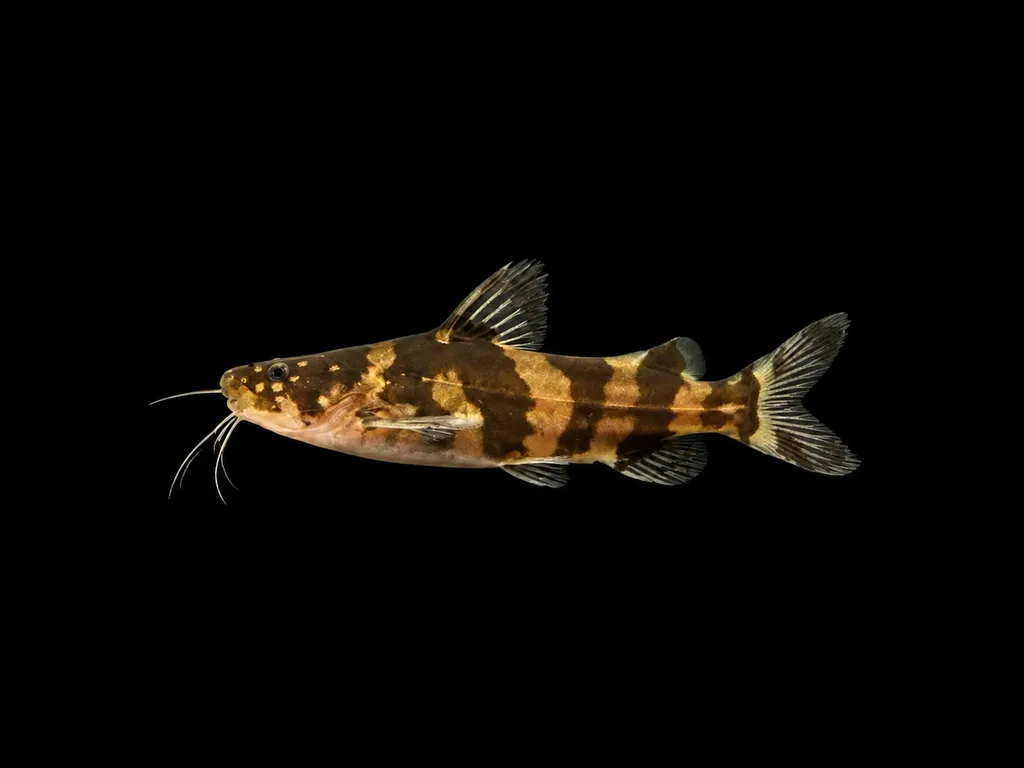
Gold hovering catfish
Chandramara chandramara
Also known as Hovering catfish, Asian dwarf bumblebee cat
FreshwaterFish
Care at a glance
- Temperature
- 68–79°F
- 20–26°C
- pH
- 6.0–7.5
- Adult size
- 2 in
- 5 cm
- Minimum tank
- 21 gal
- 80 L
- Temperament
- Peaceful
- Social behavior
- Schooling
- Swim level
- Middle
- Difficulty
- Medium
- Breeding
- No record
- Rarity
- Rare
- Family
- Bagridae
- Origin
- Ganges and Brahmaputra lowlands, India and Bangladesh
Overview
The gold hovering catfish is a small, very peaceful shoaling catfish for a planted community tank. It is best kept by someone with a little experience.
Did you know
Most catfish stay glued to the bottom, but the gold hovering catfish lives in open midwater. It holds its position there on outstretched pectoral fins, like a tiny helicopter.
Caring for the gold hovering catfish
Give a group of gold hovering catfish a planted tank of around 21 gal (80 L), with driftwood and some open midwater to hover in. Use gentle filtration rather than strong current. Plenty of plants and shade help them feel secure enough to stay out in the open.
Keep the temperature a little cool, at 68 to 79°F (20 to 26°C). The water should be soft to neutral, at a pH of 6.0 to 7.5. They can be fussy eaters. Tempt them with small frozen and live foods such as bloodworm, daphnia and cyclops, along with fine sinking foods.
Keep them in a group of at least six, and more if you can, or single fish grow shy and hide away. They are very peaceful and mix well with other calm, small community fish such as rasboras and small danios. Aquarium breeding is not recorded.
Good to know
The gold hovering catfish, also known as Rama chandramara, is a small bagrid in the family Bagridae. It is the only species in its genus. Its name is a tautonym, with identical genus and species names, drawn from a local Bengali name that Francis Hamilton recorded in 1822. Where most bagrids are heavy-bodied bottom fish, this one is built light.
In the wild
The gold hovering catfish comes from slow, lowland stretches of the Ganges and Brahmaputra systems in India and Bangladesh. It lives in quiet, well-vegetated rivers and channels.
Weekly picks
Tank mates
The gold hovering catfish is a peaceful, schooling species that keeps to the middle. These picks share a community profile with it, are safe together in both directions, and overlap on water type, temperature and pH.
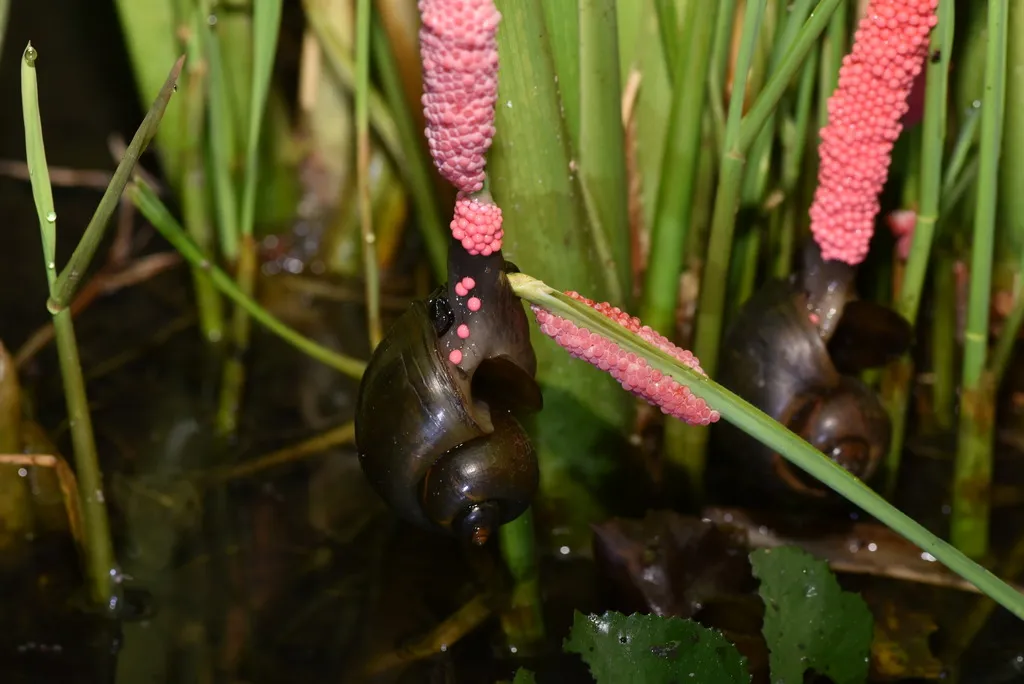
Apple snail
Pomacea canaliculata
Freshwater5.9 in (15 cm) · 21 gal (80 L)64–81°F (18–27°C)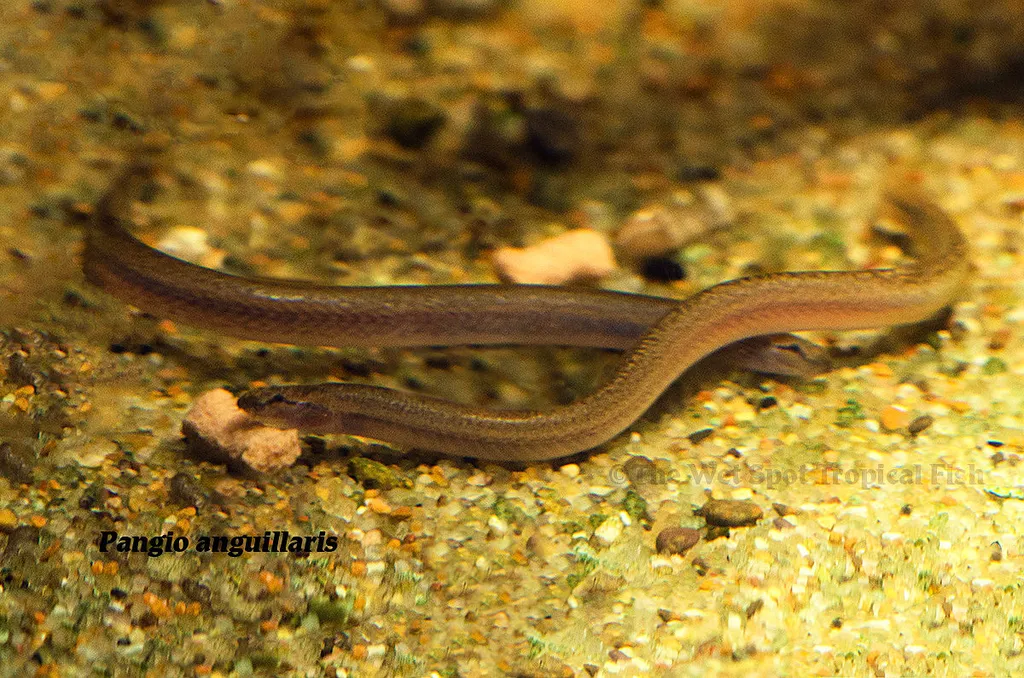
Eel kuhli loach
Pangio anguillaris
Freshwater4.7 in (12 cm) · 20 gal (75 L)72–82°F (22–28°C)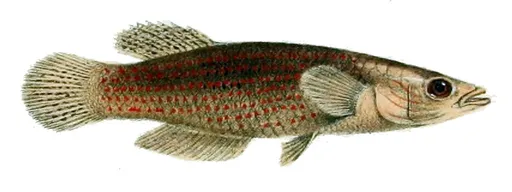
Playfair's panchax
Pachypanchax playfairii
Freshwater3.9 in (10 cm) · 20 gal (75 L)72–77°F (22–25°C)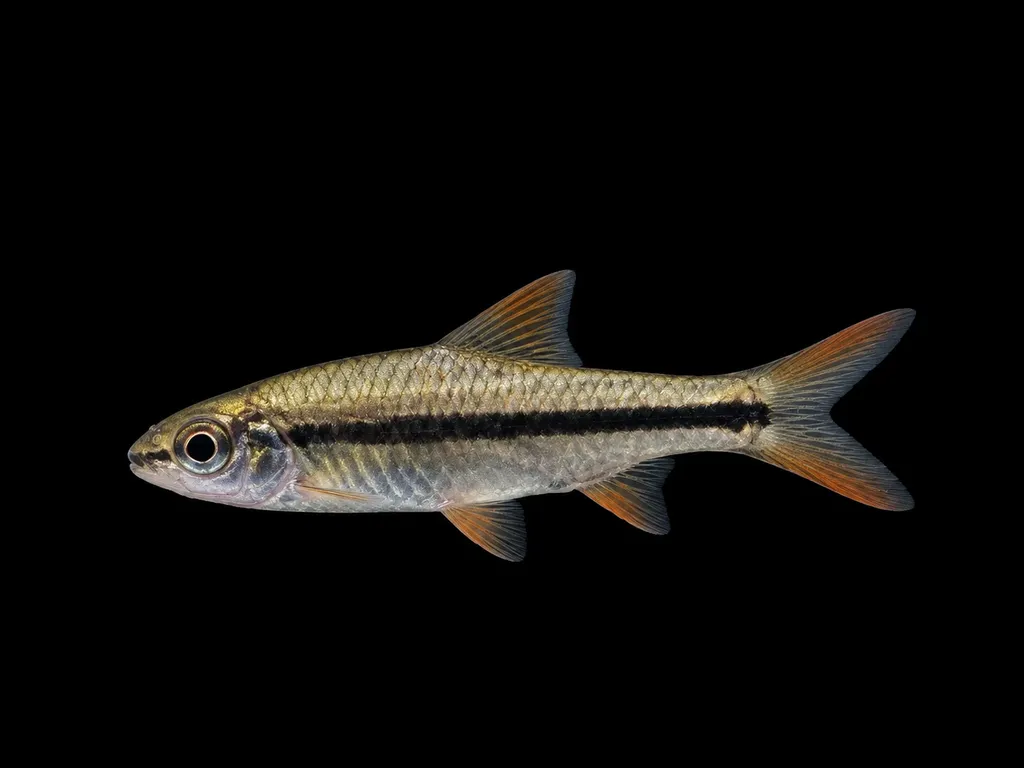
Martorell's barb
Enteromius martorelli
Freshwater3.5 in (9 cm) · 24 gal (90 L)72–81°F (22–27°C)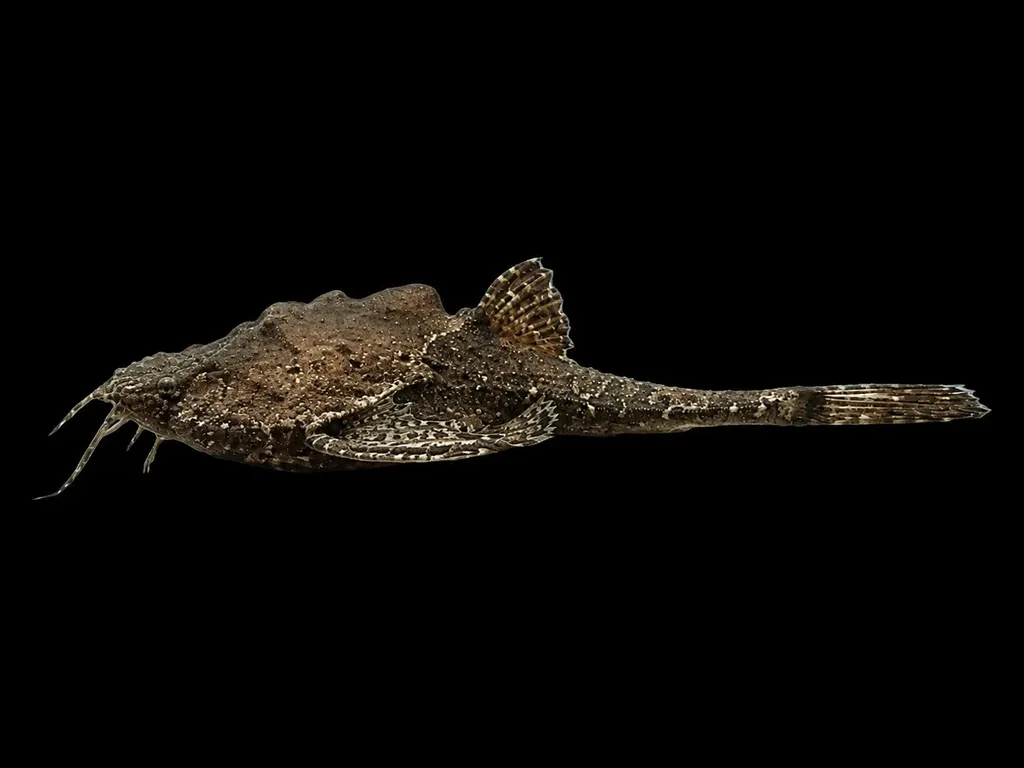
Craggy-head banjo catfish
Bunocephalus verrucosus
Freshwater3.9 in (10 cm) · 21 gal (80 L)73–82°F (23–28°C)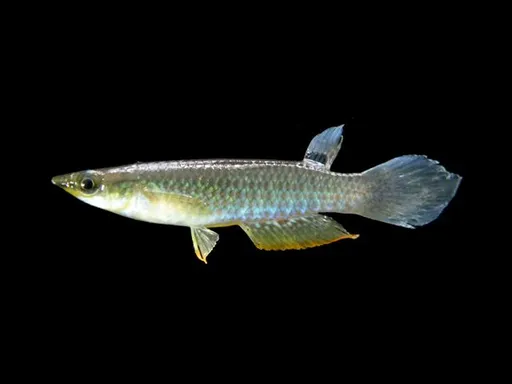
Blue panchax
Aplocheilus panchax
Freshwater3.5 in (9 cm) · 20 gal (75 L)72–82°F (22–28°C)
Common questions
What size tank does a gold hovering catfish need?
A gold hovering catfish needs at least 21 gal (80 L). It spends most of its time in the middle.
What temperature and pH does a gold hovering catfish need?
A gold hovering catfish is comfortable at 68–79°F (20–26°C) with a pH of 6.0–7.5.
What does a gold hovering catfish eat?
A gold hovering catfish eats small frozen and live foods such as bloodworm, daphnia and cyclops, plus fine sinking foods. It can be a fussy eater, so these small foods help tempt it.
How big does a gold hovering catfish get?
An adult gold hovering catfish reaches about 2 in (5 cm).
Does a gold hovering catfish need a group?
Yes. A gold hovering catfish is a schooling species and should be kept in a group, not singly.
Related species
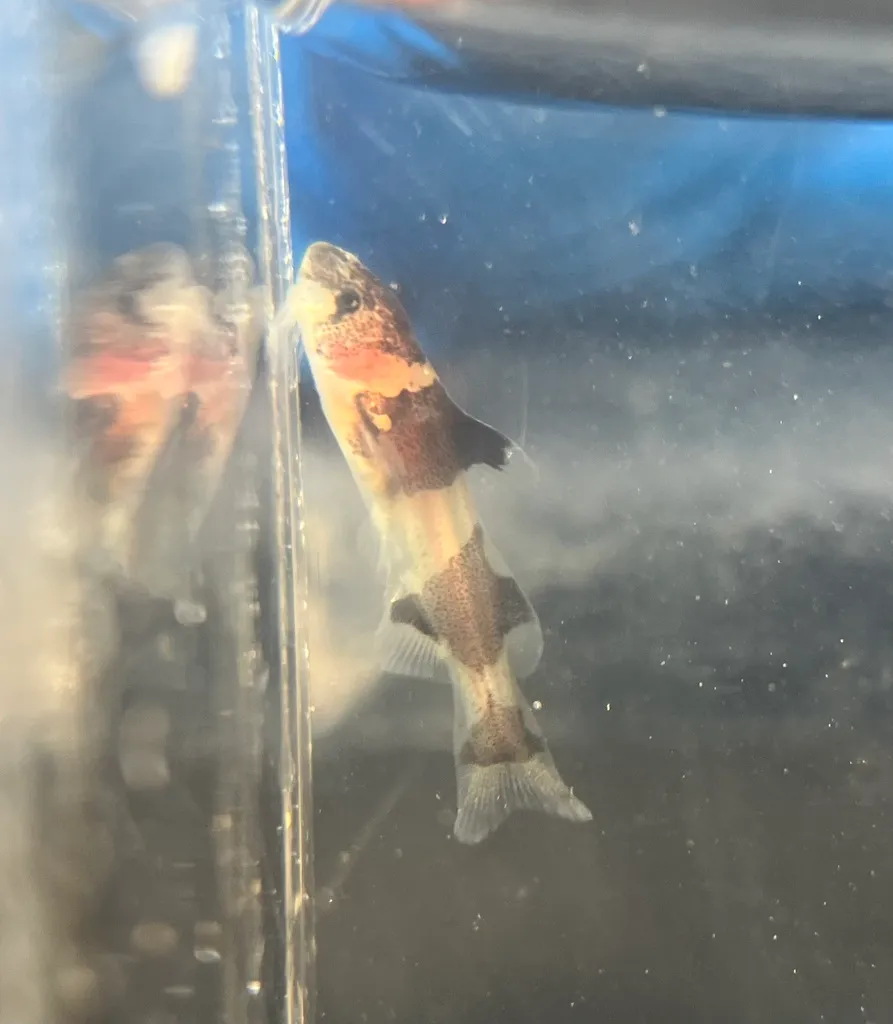
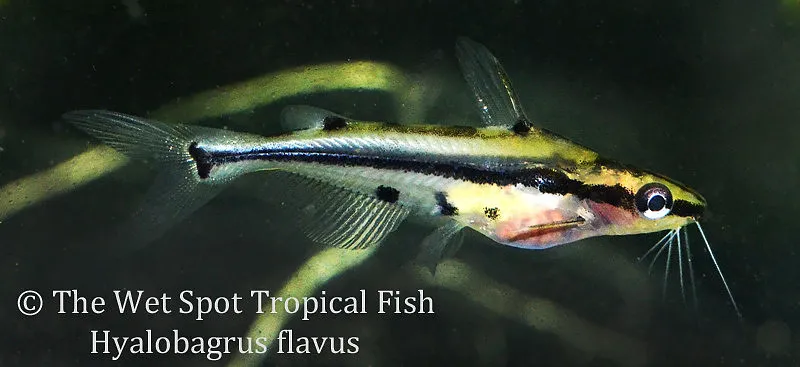 1.8 in (4.5 cm)13 gal (50 L)70–79°F (21–26°C)
Shadow catfish
Hyalobagrus flavus
1.8 in (4.5 cm) · 13 gal (50 L)
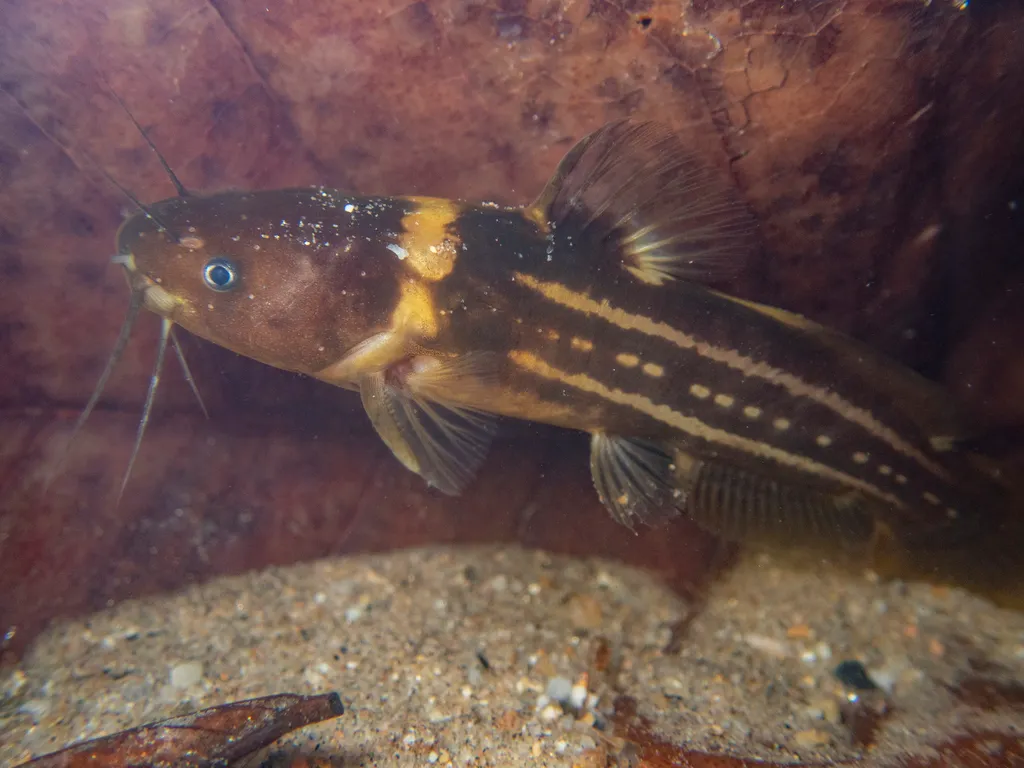
 2.4 in (6 cm)20 gal (75 L)70–77°F (21–25°C)
Dwarf bumblebee catfish
Pseudomystus leiacanthus
2.4 in (6 cm) · 20 gal (75 L)
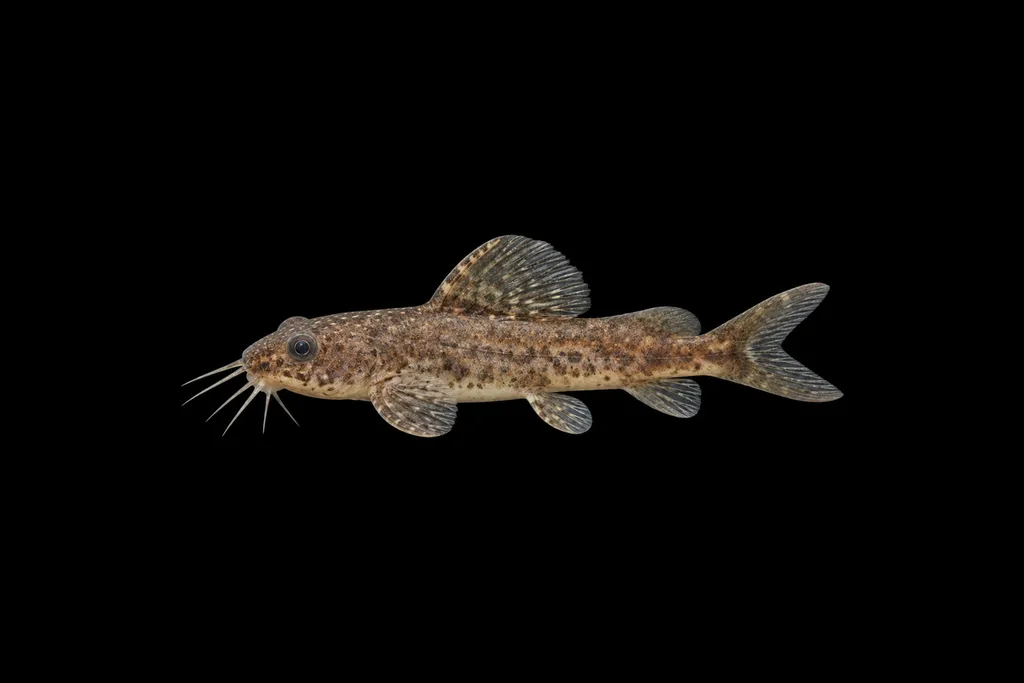
 3.1 in (8 cm)30 gal (112 L)64–77°F (18–25°C)
Three-lined bagrid
Tachysurus trilineatus
3.1 in (8 cm) · 30 gal (112 L)
 1.2 in (3 cm)11 gal (40 L)73–82°F (23–28°C)
Dwarf broadfin catfish
Nanobagrus immaculatus
1.2 in (3 cm) · 11 gal (40 L)
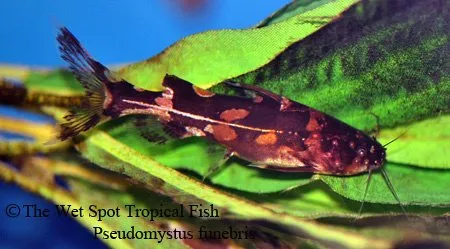 2.4 in (6 cm)29 gal (110 L)73–81°F (23–27°C)
Borneo hornet catfish
Pseudomystus funebris
2.4 in (6 cm) · 29 gal (110 L)
 2.6 in (6.5 cm)29 gal (110 L)73–81°F (23–27°C)
Tiger stripe bee catfish
Pseudomystus heokhuii
2.6 in (6.5 cm) · 29 gal (110 L)