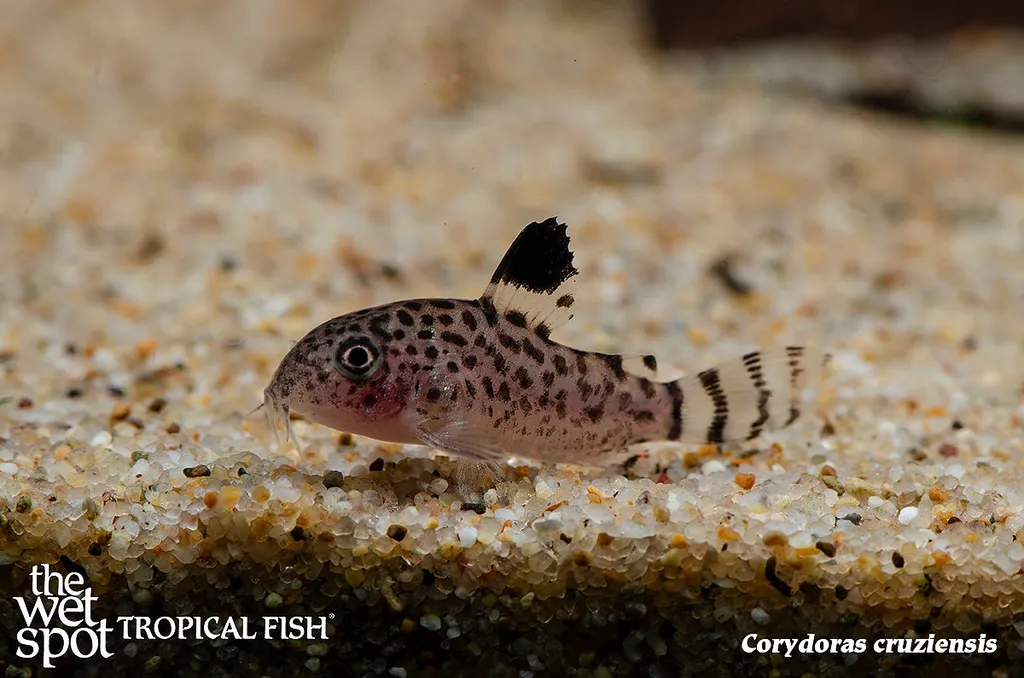
Santa Cruz cory
Hoplisoma cruziense
Also known as Corydoras cruziensis, Bolivian mosaic cory
FreshwaterFish
Care at a glance
- Temperature
- 73–81°F
- 23–27°C
- pH
- 6.0–7.5
- Adult size
- 2 in
- 5 cm
- Minimum tank
- 16 gal
- 60 L
- Temperament
- Peaceful
- Social behavior
- Shoaling
- Swim level
- Bottom
- Difficulty
- Medium
- Breeding
- Egg depositor · Medium
- Rarity
- Rare
- Family
- Callichthyidae
- Origin
- Rio Madeira drainage lowlands, Santa Cruz, Bolivia
Overview
The Santa Cruz cory is a rare, agreeable cory for the bottom of a community tank. It is a step up from the easiest fish.
Did you know
The Santa Cruz cory's describer, Joachim Knaack, was a physician who spent his retirement describing Bolivian corys. This one carries the name of his adopted home region.
Caring for the Santa Cruz cory
Keep a shoal of six Santa Cruz corys in a tank of 16 gal (60 L) or larger. Give them sand with plant cover.
Hold the water at 73 to 81°F (23 to 27°C), with a pH of 6.0 to 7.5. They cope well with moderate water chemistry, and they take prepared sinking foods right away.
Santa Cruz corys are peaceful and safe with other community fish. They have been bred in captivity along standard cory lines, with cool water changes prompting eggs on glass and broad leaves. Breeding them is moderately difficult. Bolivian imports are sporadic, so captive-bred groups are the sustainable route.
Good to know
The Santa Cruz cory was described in 2002 from Bolivia's Santa Cruz department. The 2024 revision lists it as Hoplisoma cruziense. It wears a broken-line mosaic over the flanks, and Bolivian populations show subtle pattern differences between drainages.
In the wild
The Santa Cruz cory comes from Bolivian lowland streams in the upper Madeira drainage, where sandy creeks wind through forest and savanna. It handles the region's milder temperatures well.
Weekly picks
Tank mates
The Santa Cruz cory is a peaceful, shoaling species that keeps to the bottom. These picks share a community profile with it, are safe together in both directions, and overlap on water type, temperature and pH.
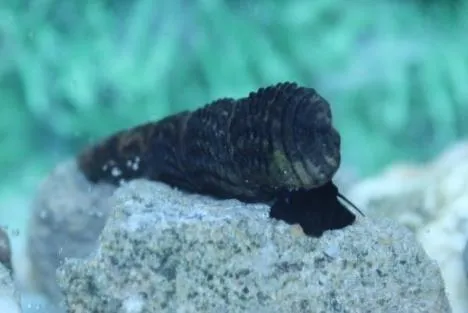
White spotted rabbit snail
Tylomelania towutica
Freshwater4.3 in (11 cm) · 16 gal (60 L)75–84°F (24–29°C)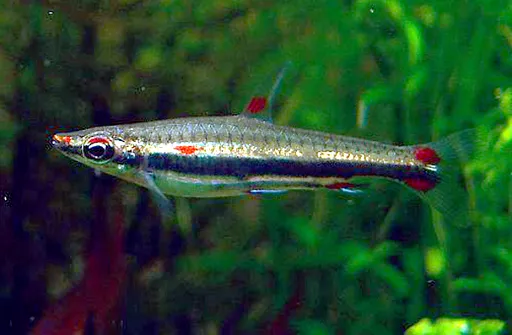
Harrison's pencilfish
Nannostomus harrisoni
Freshwater2.2 in (5.5 cm) · 16 gal (60 L)73–82°F (23–28°C)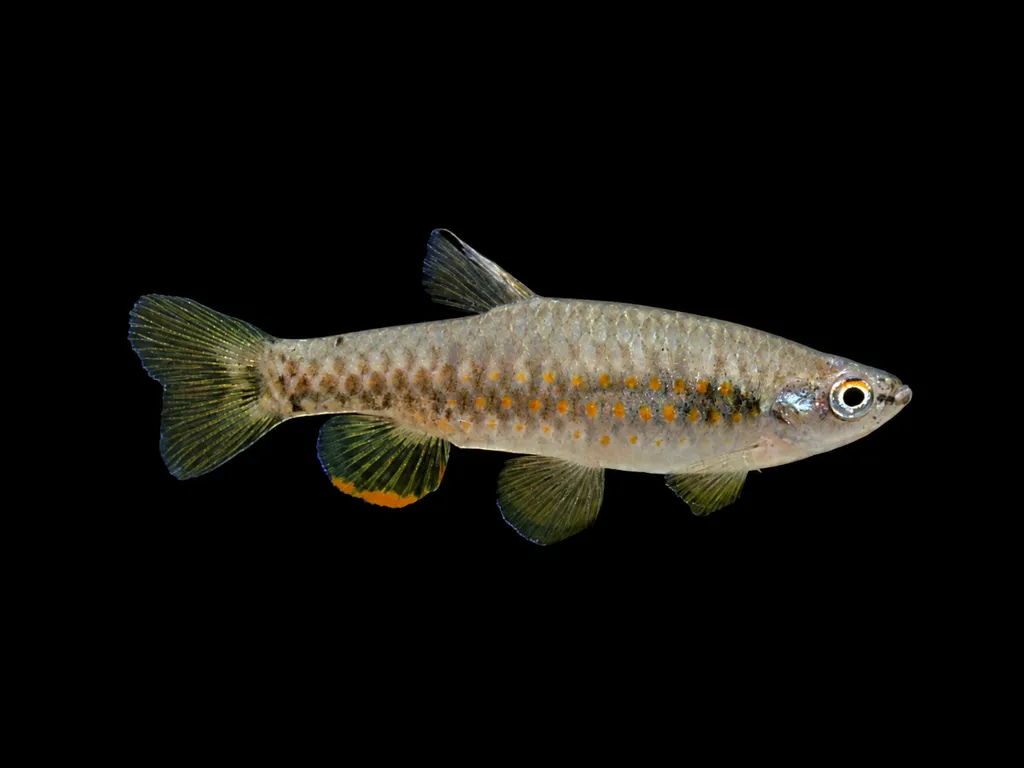
Fanning characin
Pyrrhulina rachoviana
Freshwater2 in (5 cm) · 16 gal (60 L)68–79°F (20–26°C)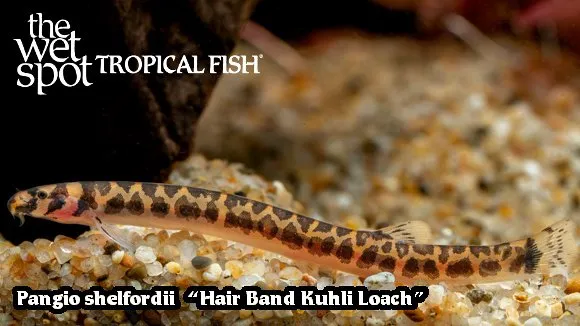
Shelford's kuhli loach
Pangio shelfordii
Freshwater3.1 in (8 cm) · 15 gal (55 L)72–81°F (22–27°C)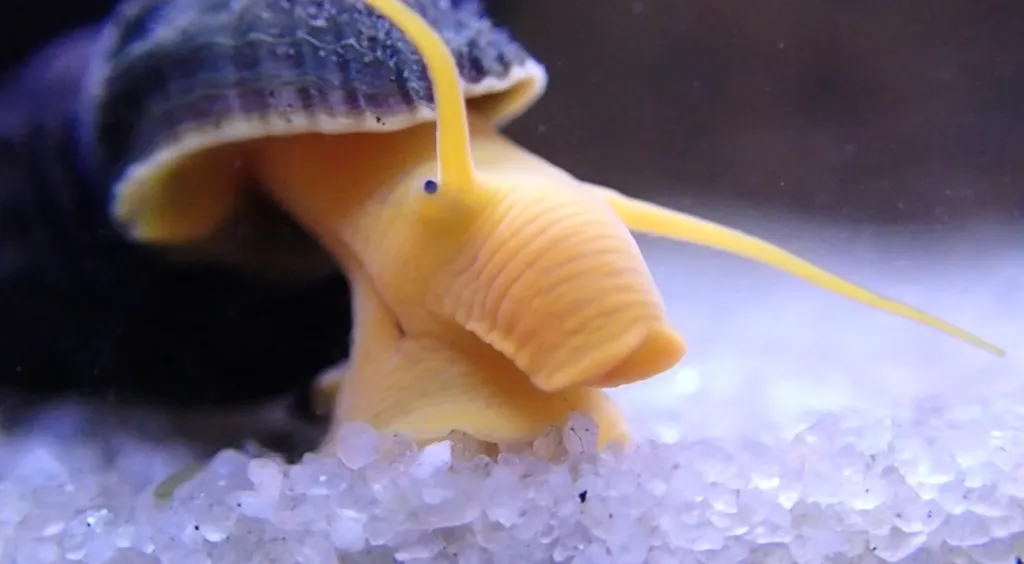
Gold rabbit snail
Tylomelania gemmifera
Freshwater2.8 in (7 cm) · 16 gal (60 L)75–82°F (24–28°C)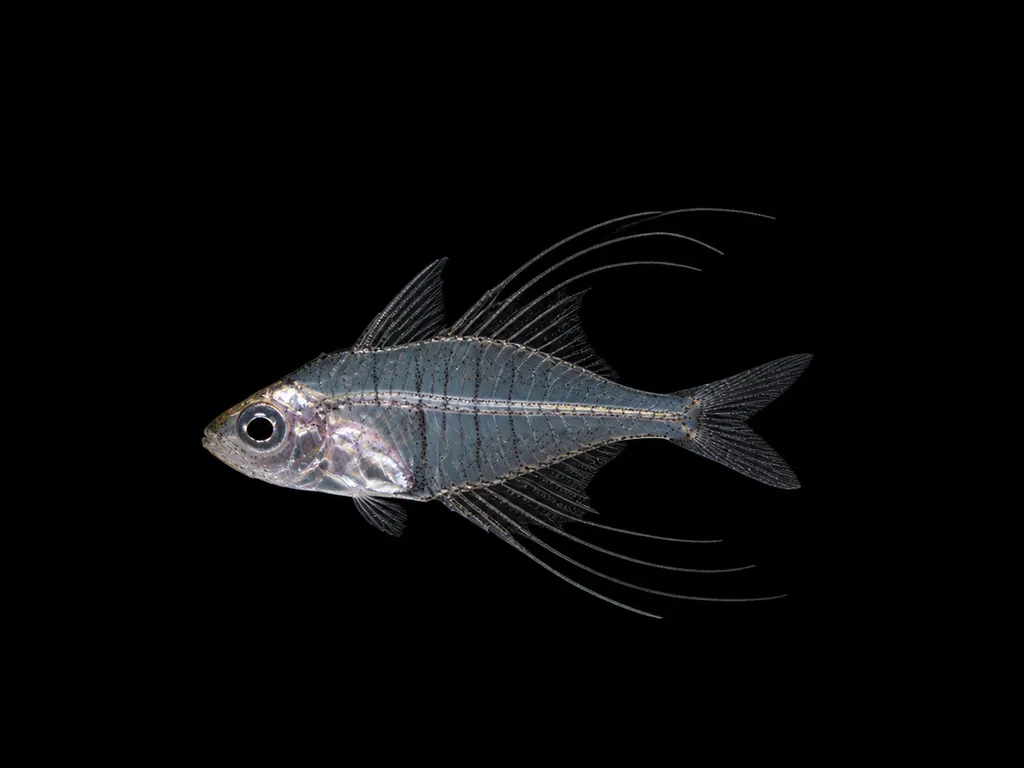
Threadfin glassfish
Gymnochanda filamentosa
Freshwater1.6 in (4 cm) · 16 gal (60 L)73–81°F (23–27°C)
Common questions
What size tank does a Santa Cruz cory need?
A Santa Cruz cory needs at least 16 gal (60 L). It spends most of its time in the bottom.
What temperature and pH does a Santa Cruz cory need?
A Santa Cruz cory is comfortable at 73–81°F (23–27°C) with a pH of 6.0–7.5.
What does a Santa Cruz cory eat?
A Santa Cruz cory eats prepared sinking foods and takes them right away.
How big does a Santa Cruz cory get?
An adult Santa Cruz cory reaches about 2 in (5 cm).
Does a Santa Cruz cory need a group?
Yes. A Santa Cruz cory is a shoaling species and should be kept in a group, not singly.
How does a Santa Cruz cory breed?
Santa Cruz corys breed along standard cory lines. Cool water changes prompt them to lay eggs on glass and broad leaves, and breeding them is moderately difficult.
Related species
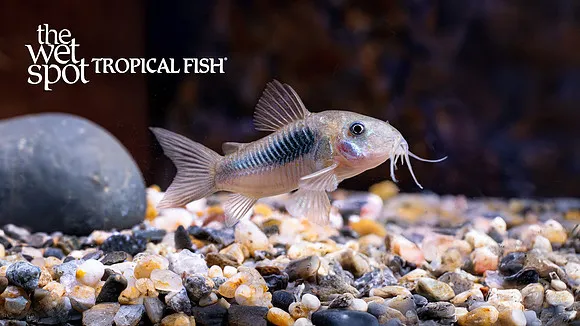 2 in (5 cm)15 gal (55 L)70–79°F (21–26°C)
Blackstripe cory
Hoplisoma bondi
2 in (5 cm) · 15 gal (55 L)
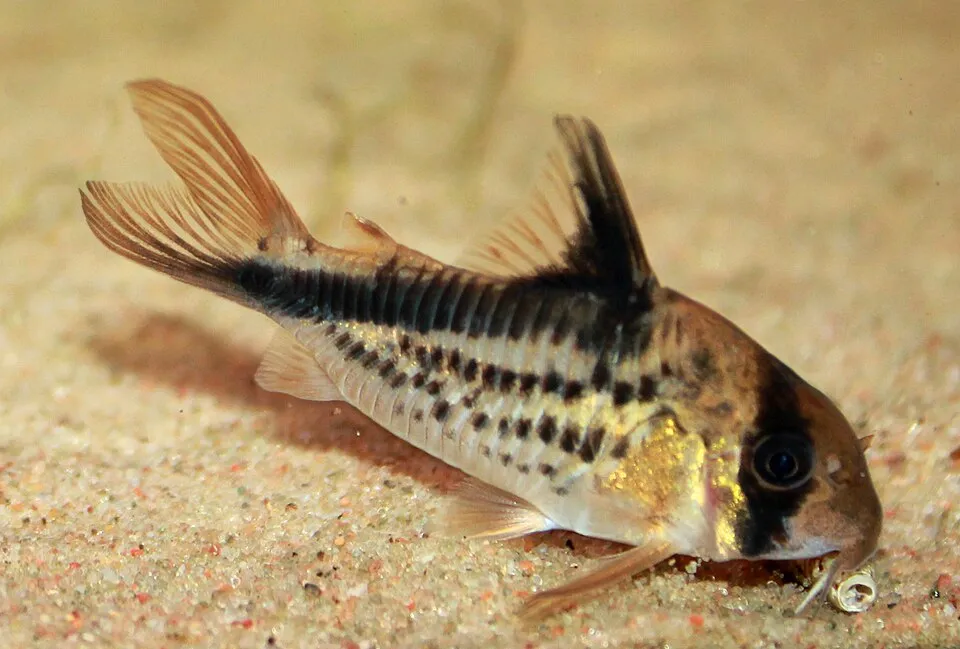 2 in (5 cm)16 gal (60 L)70–75°F (21–24°C)
Dirty bandit cory
Hoplisoma loxozonum
2 in (5 cm) · 16 gal (60 L)
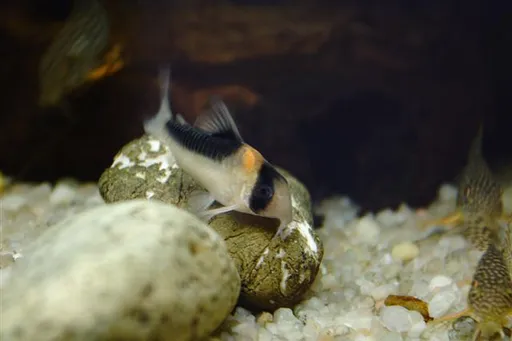 2 in (5 cm)20 gal (75 L)72–79°F (22–26°C)
Duplicate cory
Hoplisoma duplicareum
2 in (5 cm) · 20 gal (75 L)
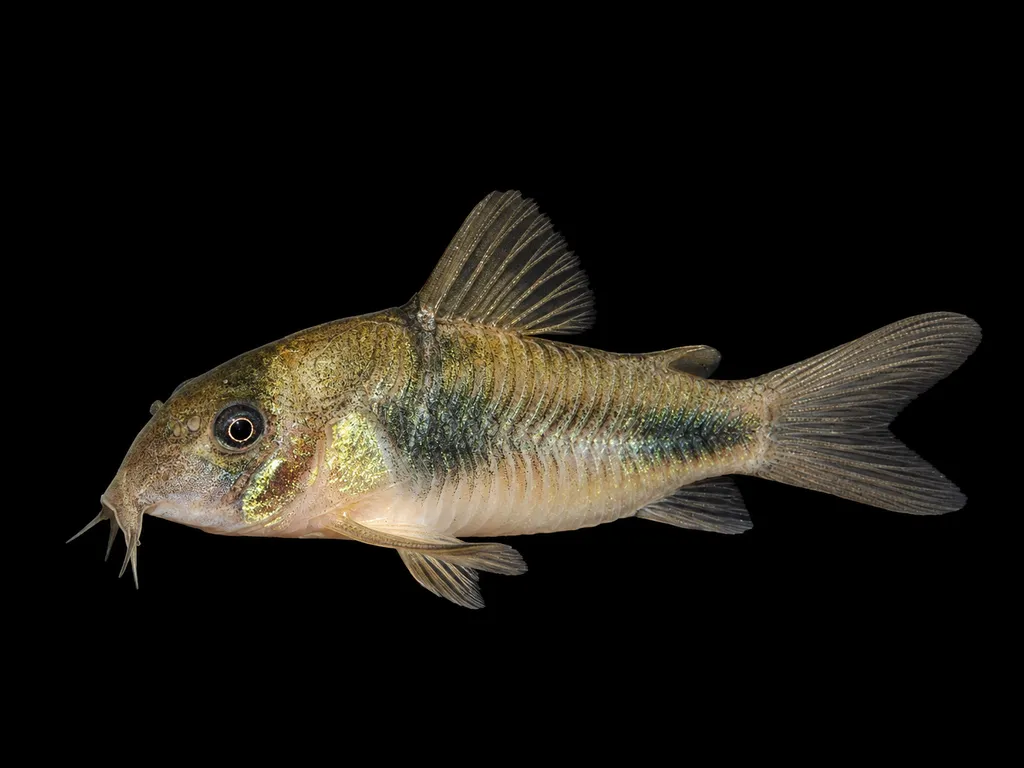 2 in (5 cm)16 gal (60 L)66–77°F (19–25°C)
Ehrhardt's cory
Hoplisoma ehrhardti
2 in (5 cm) · 16 gal (60 L)
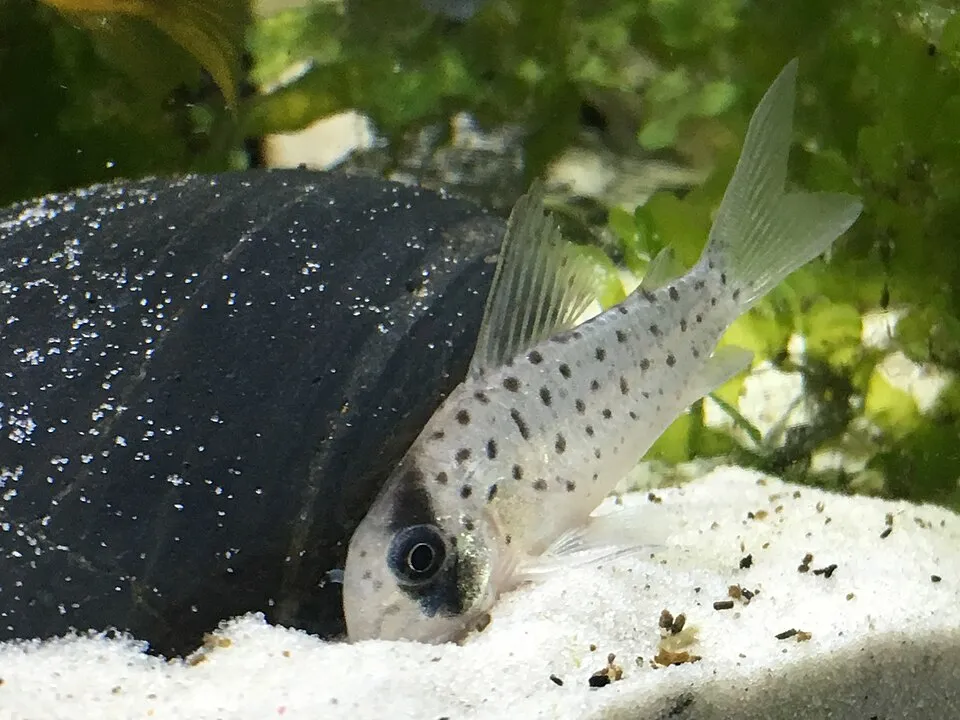 2 in (5 cm)16 gal (60 L)70–81°F (21–27°C)
Fairy cory
Hoplisoma atropersonatum
2 in (5 cm) · 16 gal (60 L)
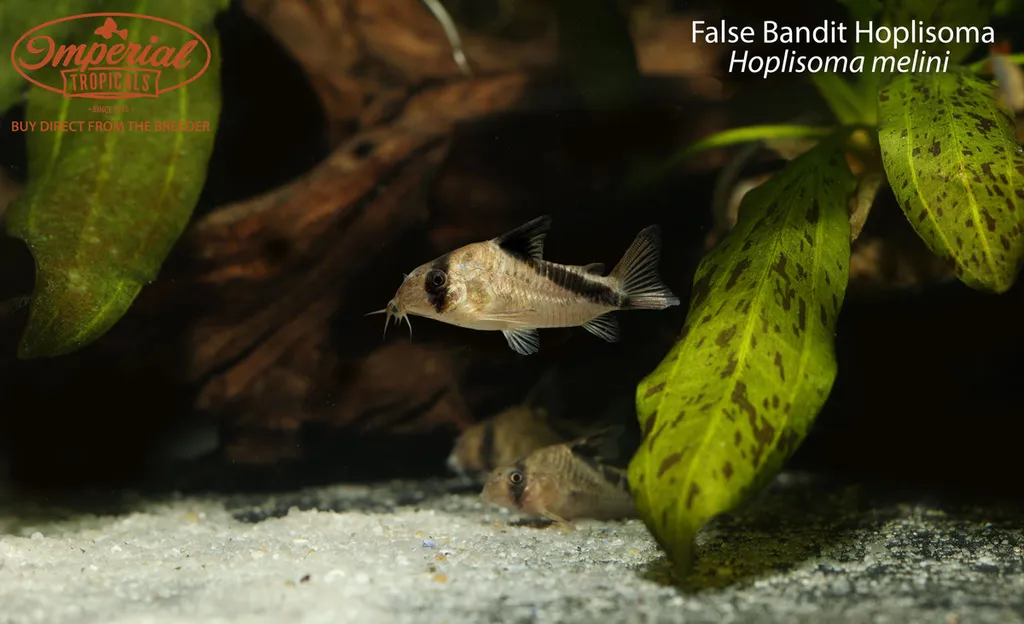 2 in (5 cm)16 gal (60 L)72–79°F (22–26°C)
False bandit cory
Hoplisoma melini
2 in (5 cm) · 16 gal (60 L)