Ruby sundadanio
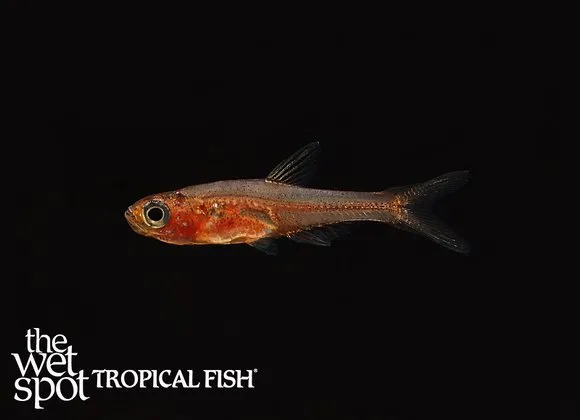
Sundadanio rubellus
Also known as Red sundadanio, Neon red rasbora
FreshwaterFish
Care at a glance
- Temperature
- 73–81°F
- 23–27°C
- pH
- 4.5–6.5
- Adult size
- 0.9 in
- 2.3 cm
- Minimum tank
- 11 gal
- 40 L
- Temperament
- Peaceful
- Social behavior
- Schooling
- Swim level
- Middle
- Diet
- Carnivore
- Difficulty
- Difficult
- Breeding
- Egg scatterer · Hard
- Rarity
- Rare
- Family
- Danionidae
- Origin
- Peat swamps of southern Kalimantan, Indonesia
Overview
The ruby sundadanio is a minute, peaceful blackwater fish that swims in the middle of a quiet, shaded tank. It is a fish for experienced keepers.
Did you know
For years, the red form of the ruby sundadanio was sold simply as Sundadanio axelrodi red. The 2011 revision of the genus finally gave that ruby-colored population a name of its own.
Caring for the ruby sundadanio
Keep ruby sundadanios in a shoal of at least ten, since they need company to feel secure. A quiet, mature tank of 11 gal (40 L) or more holds a shoal. Shade and plant it, with dim light, a dark substrate, leaf litter and botanicals, and filter gently through peat.
The water must stay soft, warm and very clean, at 73 to 81°F (23 to 27°C) and a pH of 4.5 to 6.5. Avoid any sudden change. Feed the smallest foods, such as microworm, baby brine shrimp and cyclops, and offer them often.
Ruby sundadanios are completely peaceful and far too small to house with anything pushy. Other micro species that share their soft, acidic water make the only sensible tank mates, and a species tank is safest.
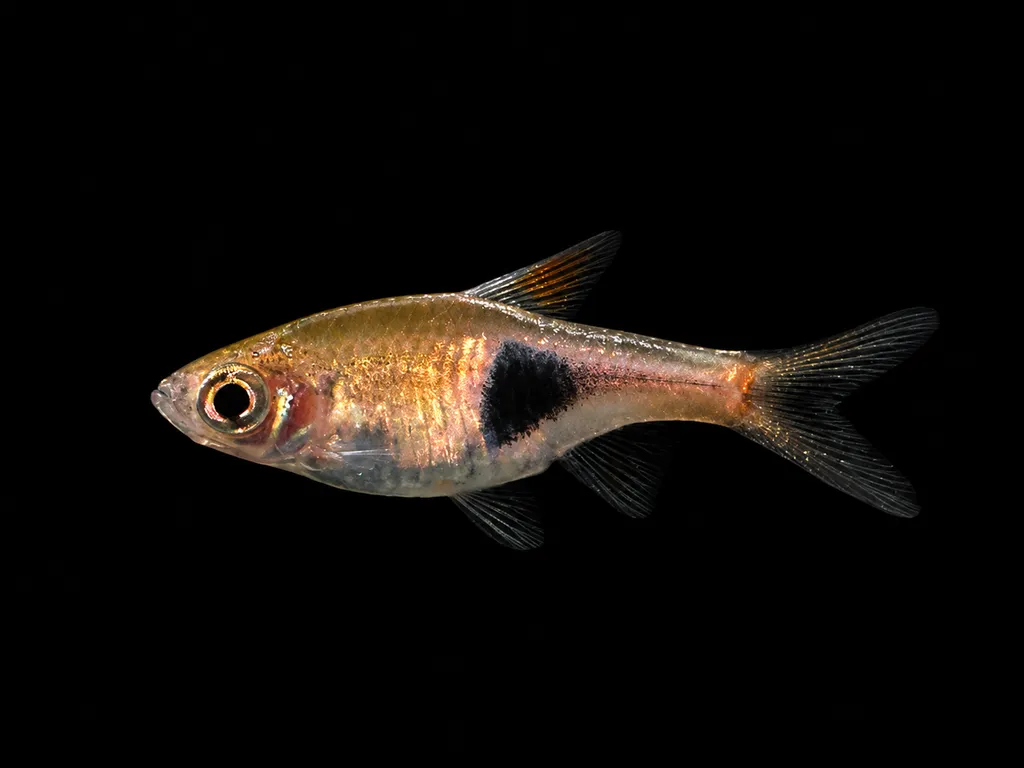
Males glow ember-red when they display. Breeding is hard. They scatter a few eggs at a time in soft, acidic water, and the tiny fry need the smallest live foods to survive.
Good to know
The ruby sundadanio, Sundadanio rubellus, is a member of the family Danionidae. Its species name means reddish, and its body is semi-transparent and blue-green.
In the wild
The ruby sundadanio comes from peat-swamp forest in southern Kalimantan, Indonesian Borneo. It lives in shallow blackwater channels and pools under deep shade, where the water is darkly stained, very soft and highly acidic.
Weekly picks
Tank mates
The ruby sundadanio is a peaceful, schooling species that keeps to the middle. These picks share a community profile with it, are safe together in both directions, and overlap on water type, temperature and pH.
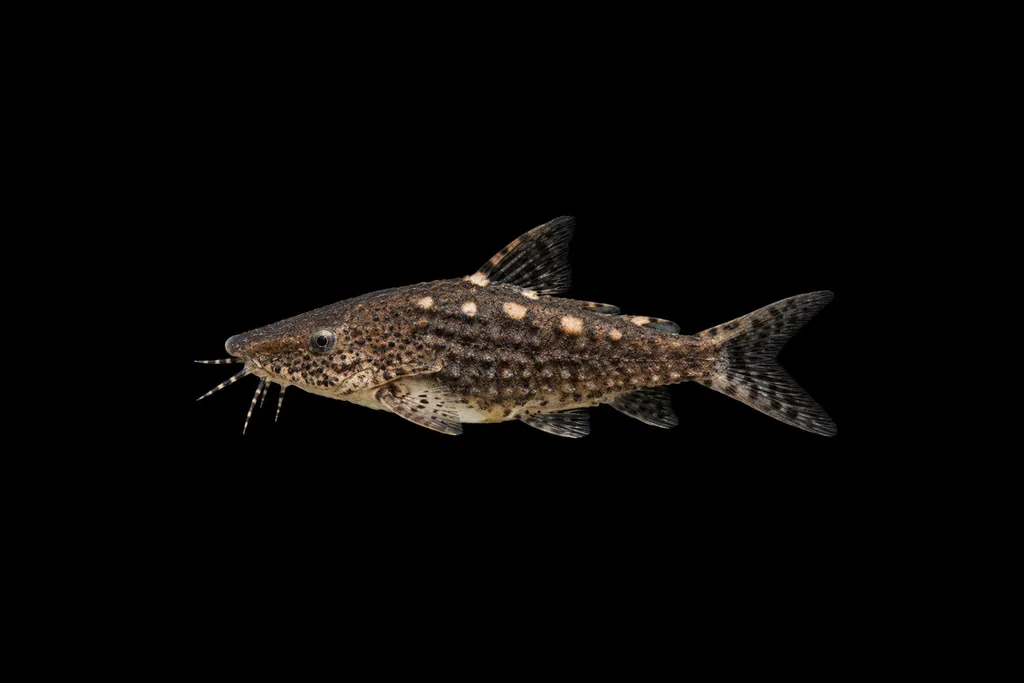
Dwarf warty catfish
Parakysis notialis
Freshwater1 in (2.5 cm) · 11 gal (40 L)73–82°F (23–28°C)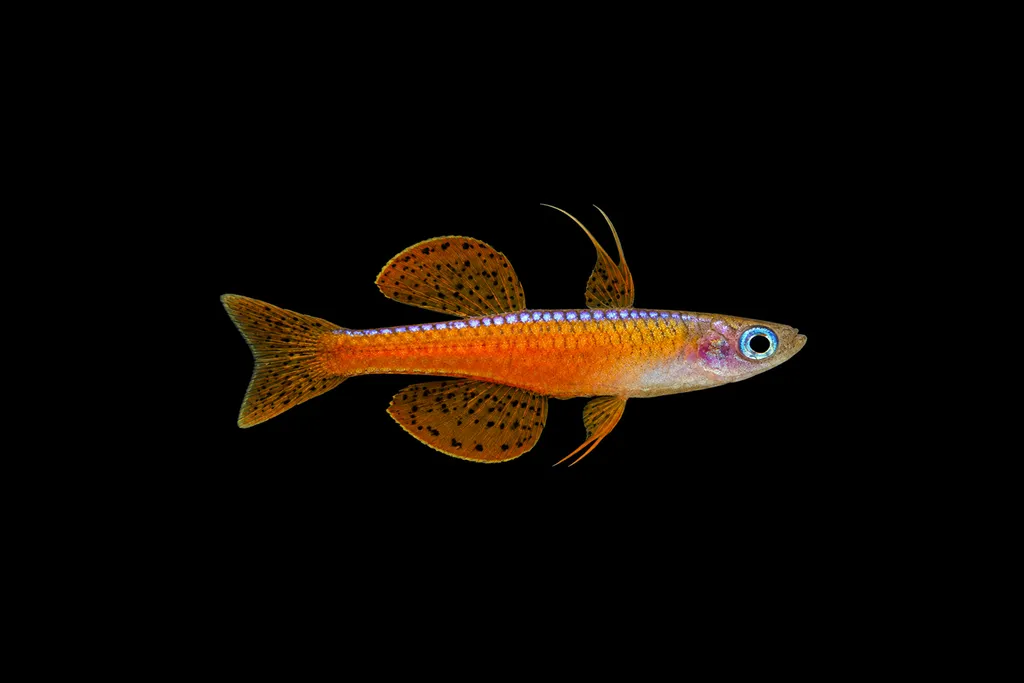
Paska's blue-eye
Pseudomugil paskai
Freshwater1.4 in (3.5 cm) · 11 gal (40 L)72–79°F (22–26°C)
Dwarf rasbora
Boraras maculatus
Freshwater1 in (2.5 cm) · 11 gal (40 L)72–82°F (22–28°C)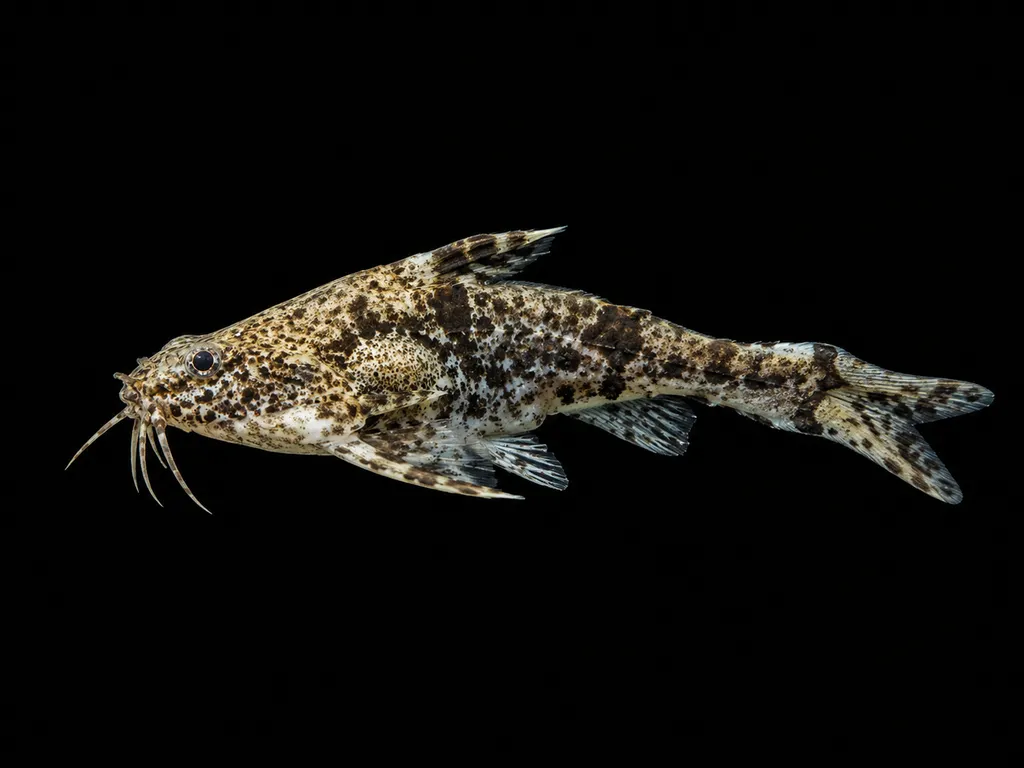
Dwarf thorny catfish
Physopyxis lyra
Freshwater1.4 in (3.5 cm) · 11 gal (40 L)73–82°F (23–28°C)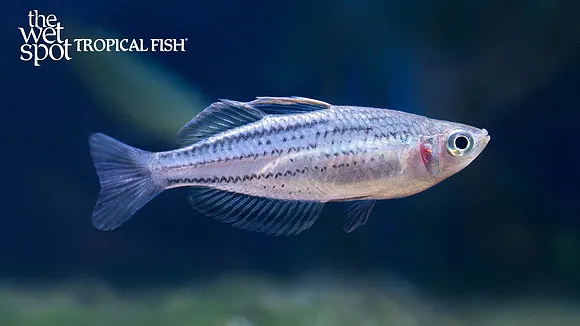
Green panchax
Aplocheilus blockii
Freshwater2 in (5 cm) · 11 gal (40 L)72–82°F (22–28°C)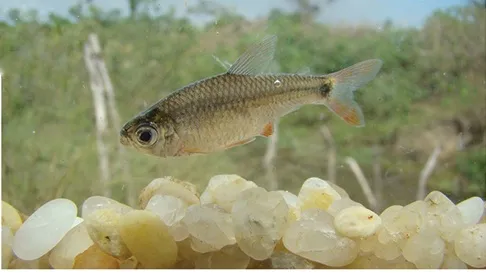
Piaba tetra
Serrapinnus piaba
Freshwater1.6 in (4 cm) · 11 gal (40 L)72–82°F (22–28°C)
Common questions
What size tank does a ruby sundadanio need?
A ruby sundadanio needs at least 11 gal (40 L). It spends most of its time in the middle.
What temperature and pH does a ruby sundadanio need?
A ruby sundadanio is comfortable at 73–81°F (23–27°C) with a pH of 4.5–6.5.
What does a ruby sundadanio eat?
A ruby sundadanio eats the smallest foods, such as microworm, baby brine shrimp and cyclops. Offer them often.
How big does a ruby sundadanio get?
An adult ruby sundadanio reaches about 0.9 in (2.3 cm).
Does a ruby sundadanio need a group?
Yes. A ruby sundadanio is a schooling species and should be kept in a group, not singly.
How can you tell a male ruby sundadanio from a female?
Males glow ember-red when they display.
How does a ruby sundadanio breed?
A ruby sundadanio scatters a few eggs at a time in soft, acidic water. Breeding it is hard, and the tiny fry need the smallest live foods to survive.
Related species
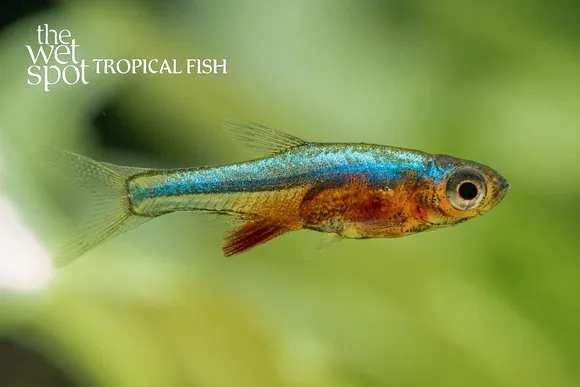 0.9 in (2.3 cm)11 gal (40 L)73–81°F (23–27°C)
Goblin sundadanio
Sundadanio goblinus
0.9 in (2.3 cm) · 11 gal (40 L)
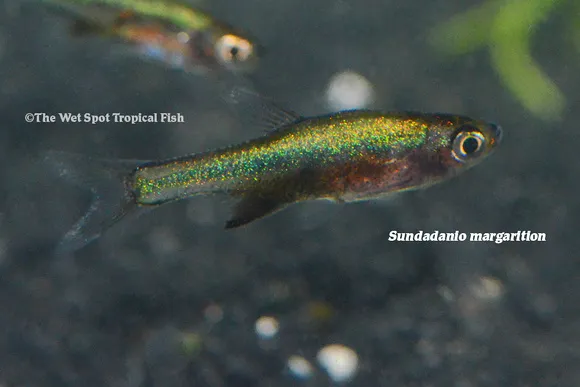 0.9 in (2.4 cm)11 gal (40 L)73–81°F (23–27°C)
Pearl sundadanio
Sundadanio margarition
0.9 in (2.4 cm) · 11 gal (40 L)
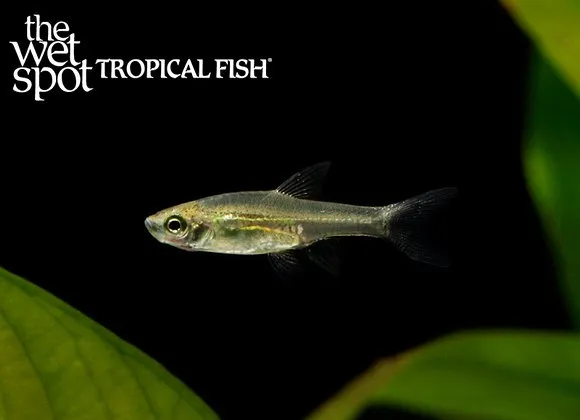 1 in (2.5 cm)11 gal (40 L)75–82°F (24–28°C)
Indian glowlight carplet
Horadandia brittani
1 in (2.5 cm) · 11 gal (40 L)
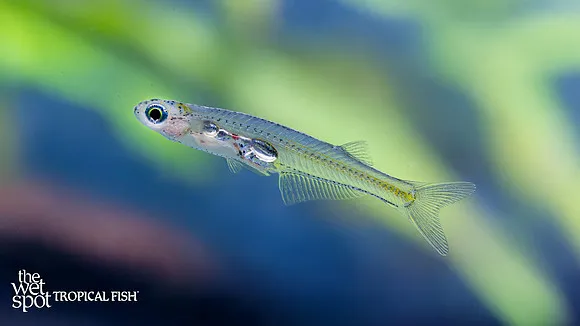 0.7 in (1.9 cm)11 gal (40 L)72–79°F (22–26°C)
Bengal glass danio
Danionella priapus
0.7 in (1.9 cm) · 11 gal (40 L)
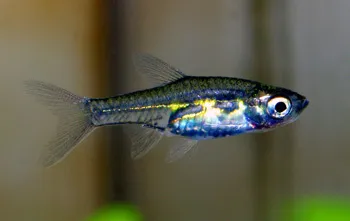 1.2 in (3 cm)11 gal (40 L)75–82°F (24–28°C)
Glowlight carplet
Horadandia atukorali
1.2 in (3 cm) · 11 gal (40 L)
 1.2 in (3 cm)14 gal (54 L)72–81°F (22–27°C)
Malayan harlequin rasbora
Trigonostigma truncata
1.2 in (3 cm) · 14 gal (54 L)