Ropefish
Erpetoichthys calabaricus
Also known as Reedfish, Rope fish
FreshwaterFish
Care at a glance
- Temperature
- 73–86°F
- 23–30°C
- pH
- 6.0–8.0
- Adult size
- 14.6 in
- 37 cm
- Minimum tank
- 143 gal
- 540 L
- Temperament
- Mostly peaceful
- Social behavior
- Solitary
- Tankmates
- With caution
- Swim level
- Bottom
- Difficulty
- Easy
- Breeding
- No record
- Rarity
- Very rare
- Family
- Polypteridae
- Origin
- Congo Basin, Angola, Nigeria
Overview
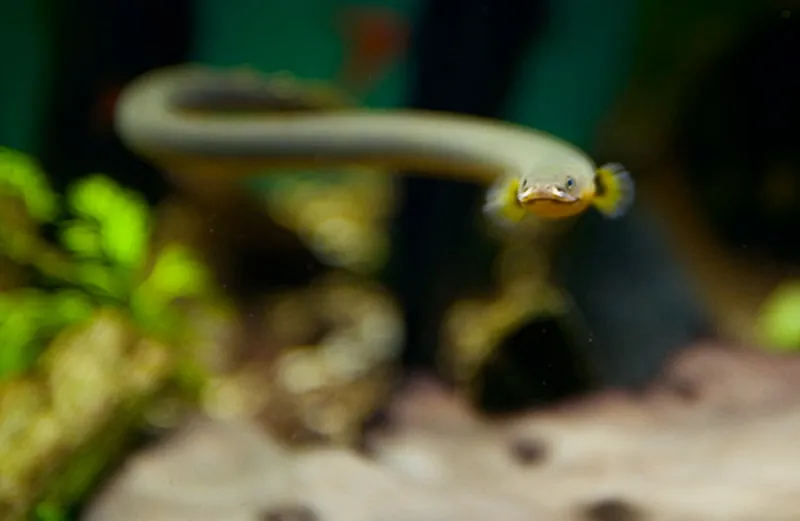
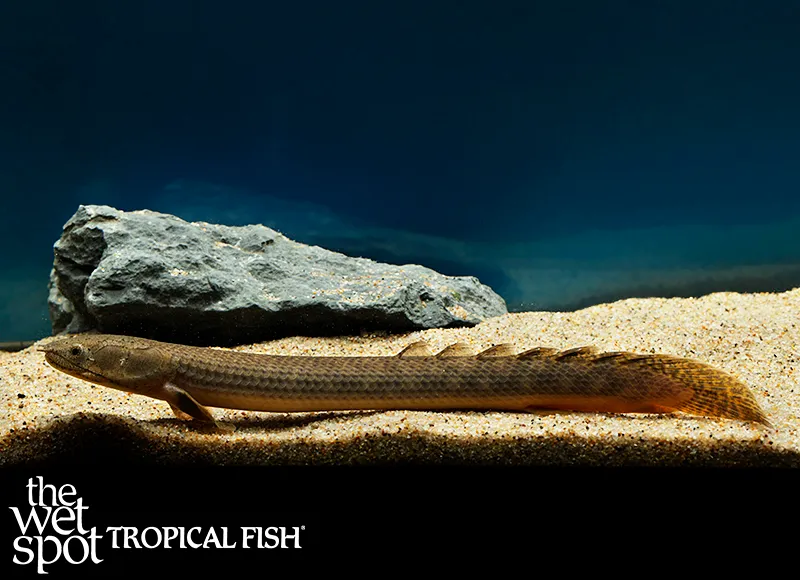
The ropefish is a peaceful, eel-shaped, night-active fish that spends the day tucked under wood and rockwork and glides out to forage after dark. It is gentle toward tankmates its own size but will eat very small fish and shrimp, so choose companions it cannot swallow. It is an accomplished escape artist, so the tank needs a tight lid with every gap sealed, including around filters and cords. Provide soft sand it can nose through and plenty of cover. Feed meaty foods such as earthworms, prawns, and mussel in the evening. This long fish needs a tank of at least 540 liters.
In the wild
Erpetoichthys calabaricus lives in slow, warm freshwaters of West and Central Africa, from Nigeria through the Congo basin to Angola, in vegetated rivers, swamps, and estuaries that are often low in oxygen. Its ability to breathe air lets it thrive there. Recreate this with soft substrate, dense cover from wood and plants, and gentle flow. Keep the temperature between 23 and 30 degrees Celsius and the pH from about 6 to 8. Leave open air above the water so it can surface to breathe.
Good to know
The ropefish, also called the reedfish, belongs to Polypteridae, an ancient lineage of ray-finned fish, and commonly reaches about 37 centimeters, sometimes longer. It has a slender, snake-like body covered in hard, glossy ganoid scales and lacks the pelvic fins its bichir relatives keep. Like all polypterids it has paired, lung-like swim bladders and breathes atmospheric air. Aquarium spawning is rarely recorded.
Did you know
The ropefish is a determined escape artist. It can breathe air and survive out of water for hours as long as it stays damp, so it will slip through any small gap in the lid and travel a surprising distance across the floor.
Common questions
What size tank does a Ropefish need?
A Ropefish needs at least 143 gal (540 L). It spends most of its time in the bottom.
What temperature and pH does a Ropefish need?
A Ropefish is comfortable at 73–86°F (23–30°C) with a pH of 6.0–8.0.
How big does a Ropefish get?
An adult Ropefish reaches about 14.6 in (37 cm).
Related species
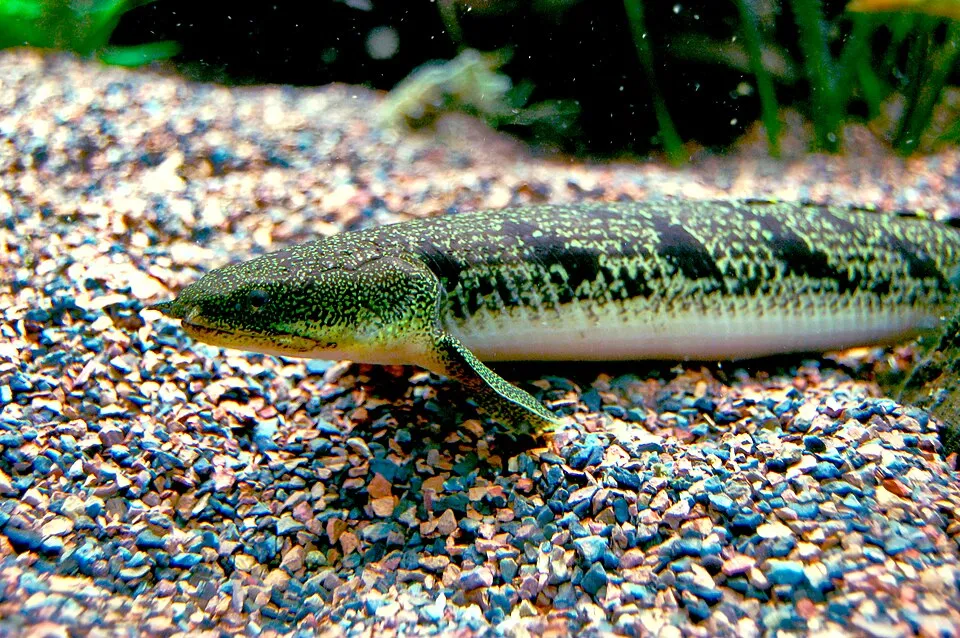 13.8 in (35 cm)53 gal (200 L)75–86°F (24–30°C)
Barred bichir
Polypterus delhezi
13.8 in (35 cm) · 53 gal (200 L)
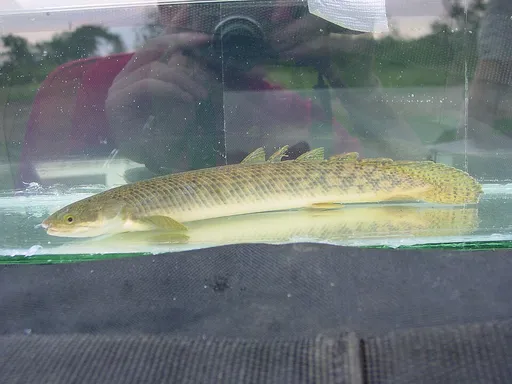 13.8 in (35 cm)53 gal (200 L)75–82°F (24–28°C)
Marbled bichir
Polypterus palmas
13.8 in (35 cm) · 53 gal (200 L)
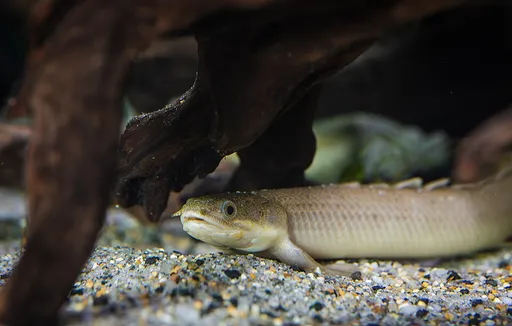 13.8 in (35 cm)143 gal (540 L)75–82°F (24–28°C)
Senegal bichir
Polypterus senegalus
13.8 in (35 cm) · 143 gal (540 L)
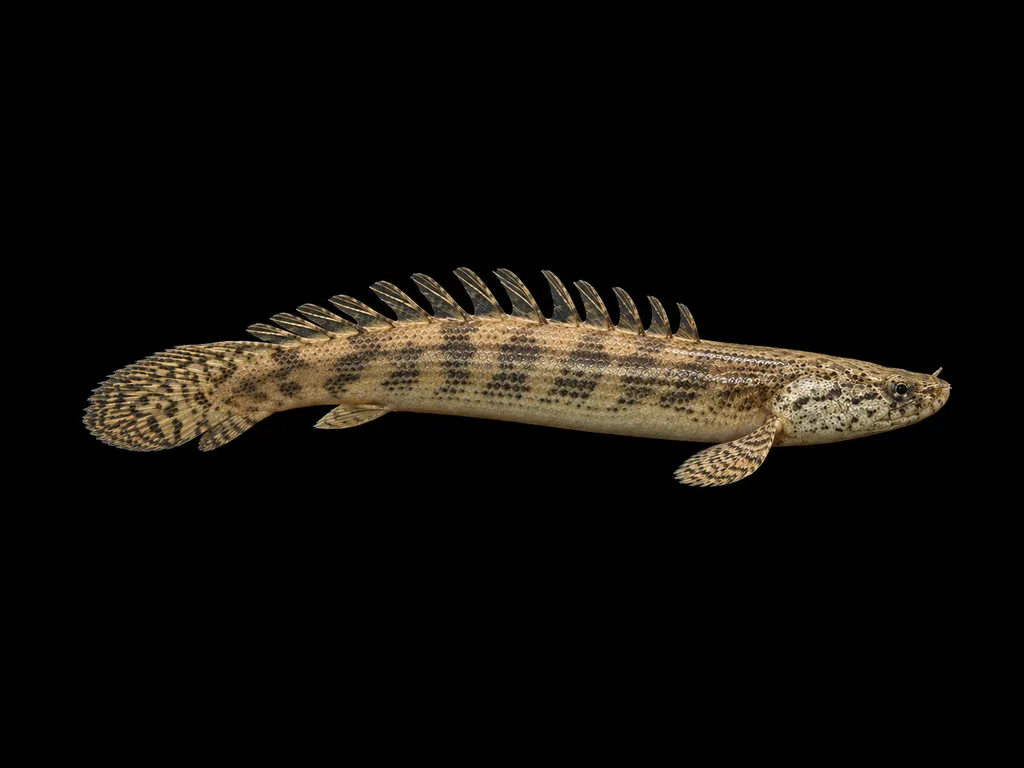
 13.8 in (35 cm)53 gal (200 L)77–82°F (25–28°C)
West African bichir
Polypterus retropinnis
13.8 in (35 cm) · 53 gal (200 L)
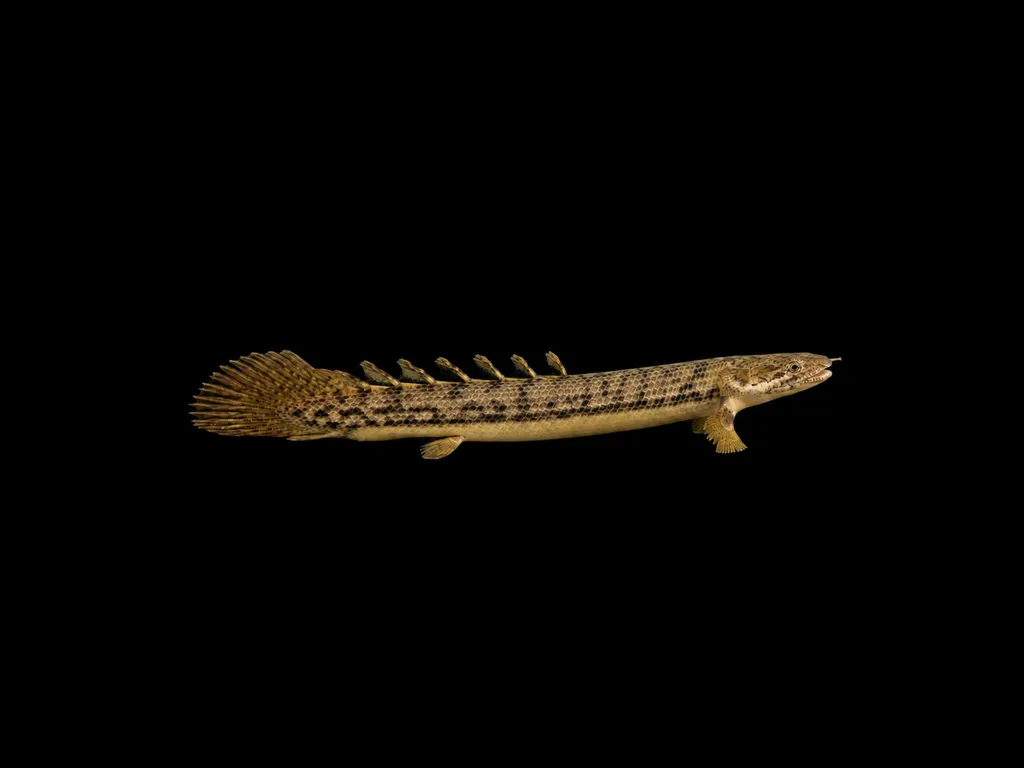
 15.7 in (40 cm)119 gal (450 L)75–82°F (24–28°C)
Ansorge's bichir
Polypterus ansorgii
15.7 in (40 cm) · 119 gal (450 L)
 16.5 in (42 cm)119 gal (450 L)75–82°F (24–28°C)
Teugels' bichir
Polypterus teugelsi
16.5 in (42 cm) · 119 gal (450 L)