Senegal bichir
Polypterus senegalus
Also known as Dinosaur bichir
FreshwaterFish
Care at a glance
- Temperature
- 75–82°F
- 24–28°C
- pH
- 6.2–7.8
- Adult size
- 13.8 in
- 35 cm
- Minimum tank
- 143 gal
- 540 L
- Temperament
- Mostly peaceful
- Social behavior
- Solitary
- Tankmates
- With caution
- Swim level
- Bottom
- Difficulty
- Medium
- Breeding
- Hard
- Rarity
- Very common
- Family
- Polypteridae
- Origin
- West and Central Africa
Overview
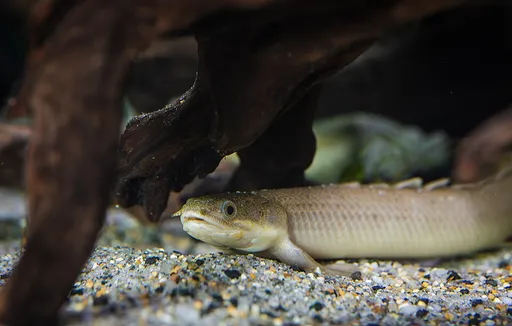
Keep one on its own along the bottom of a tank of at least 540 liters, since they are solitary and spend their time cruising the substrate by smell. They are mostly peaceful toward fish too large to eat, but they are predators that will swallow any tankmate that fits in the mouth, so pick robust companions of similar or larger size. Hold the water at 24 to 28 C with a pH between 6.2 and 7.8. They are nocturnal with poor eyesight, so feed after lights out with meaty foods like worms, prawns, mussel, and sinking carnivore pellets, and drop food close to them so faster tankmates do not steal it all.
In the wild
Senegal bichirs come from slow rivers, floodplains, and swamps across West and Central Africa, often in warm, oxygen-poor water where they gulp air at the surface. Give them a long tank of at least 540 liters with soft sand substrate they can root through and several caves or pieces of driftwood to hide under during the day. Because they breathe air through a primitive lung, leave open space at the top so they can reach the surface without obstruction, since blocking that access can drown them. Keep the water warm, between 24 and 28 C, with a pH from 6.2 to 7.8.
Good to know
This is a member of the family Polypteridae, an ancient lineage of ray-finned fish, reaching around 35 cm as an adult. Breeding in the home aquarium is hard, with eggs scattered among plants and no parental care, so almost all fish in the trade are either wild caught or commercially raised. They are very hardy and long-lived, often reaching 10 to 20 years in good conditions.
Did you know
Bichirs are escape artists and will push through any gap, so the tank needs a very tight, fully weighted lid. They are strong enough to leave the water for a while, using that lung to breathe air, and a determined fish can travel across damp surfaces, which is exactly how they end up on the floor overnight.
Common questions
What size tank does a Senegal bichir need?
A Senegal bichir needs at least 143 gal (540 L). It spends most of its time in the bottom.
What temperature and pH does a Senegal bichir need?
A Senegal bichir is comfortable at 75–82°F (24–28°C) with a pH of 6.2–7.8.
How big does a Senegal bichir get?
An adult Senegal bichir reaches about 13.8 in (35 cm).
Related species
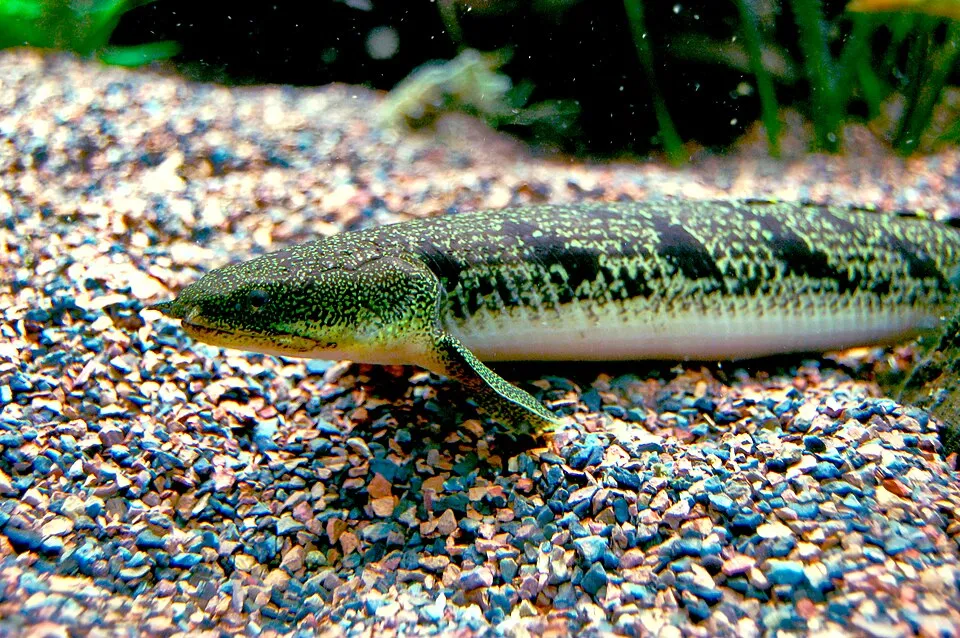 13.8 in (35 cm)53 gal (200 L)75–86°F (24–30°C)
Barred bichir
Polypterus delhezi
13.8 in (35 cm) · 53 gal (200 L)
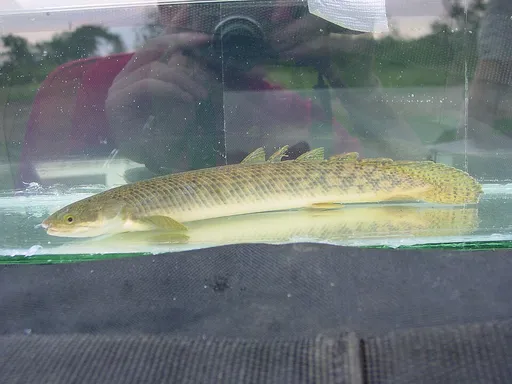 13.8 in (35 cm)53 gal (200 L)75–82°F (24–28°C)
Marbled bichir
Polypterus palmas
13.8 in (35 cm) · 53 gal (200 L)
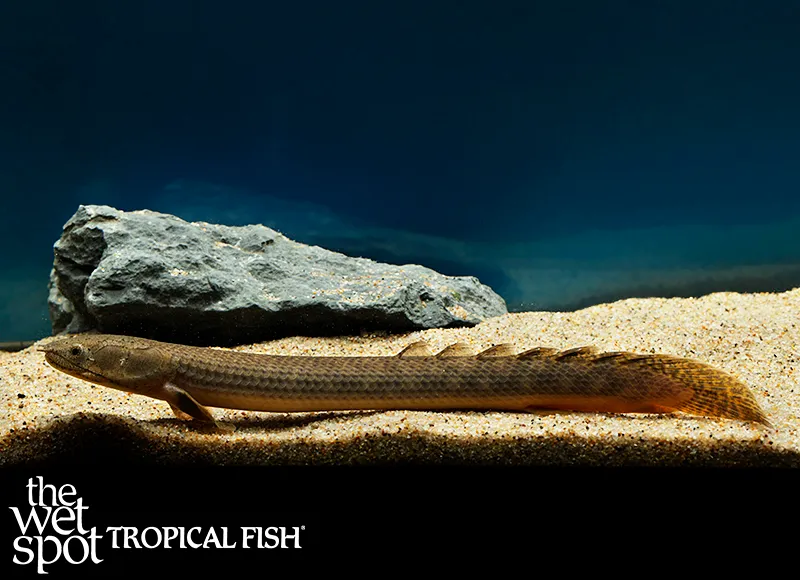 13.8 in (35 cm)53 gal (200 L)77–82°F (25–28°C)
West African bichir
Polypterus retropinnis
13.8 in (35 cm) · 53 gal (200 L)
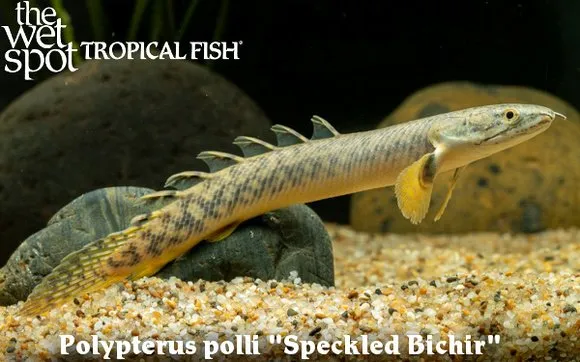 12.6 in (32 cm)79 gal (300 L)75–82°F (24–28°C)
Poll's bichir
Polypterus polli
12.6 in (32 cm) · 79 gal (300 L)
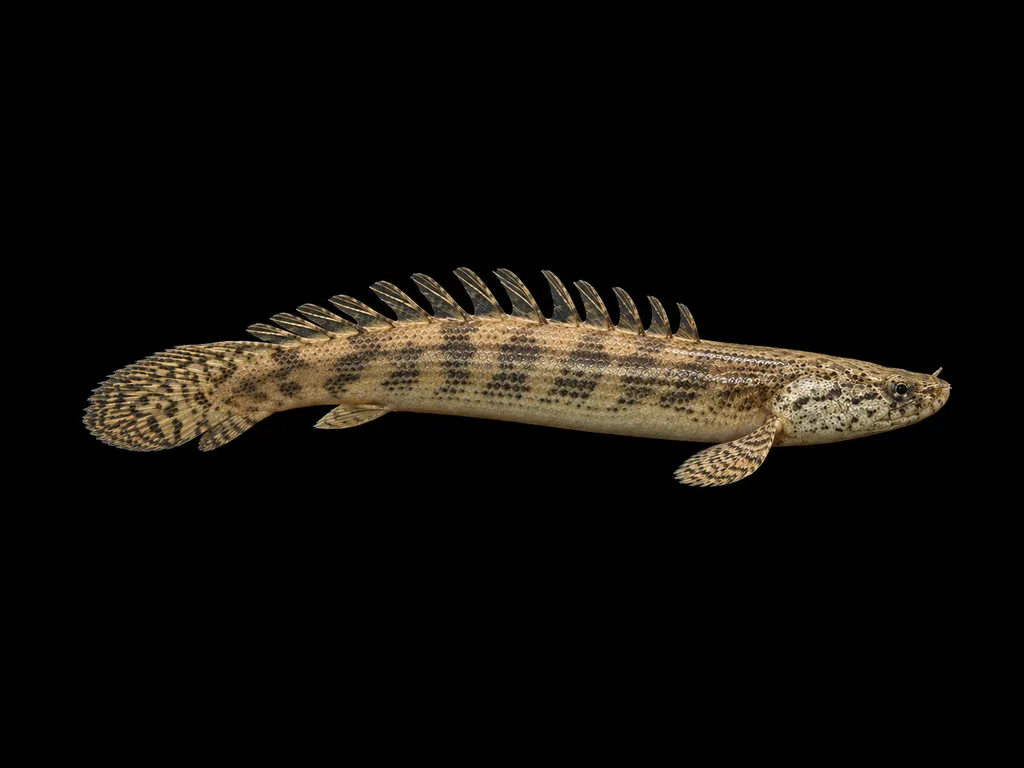 15.7 in (40 cm)119 gal (450 L)75–82°F (24–28°C)
Ansorge's bichir
Polypterus ansorgii
15.7 in (40 cm) · 119 gal (450 L)
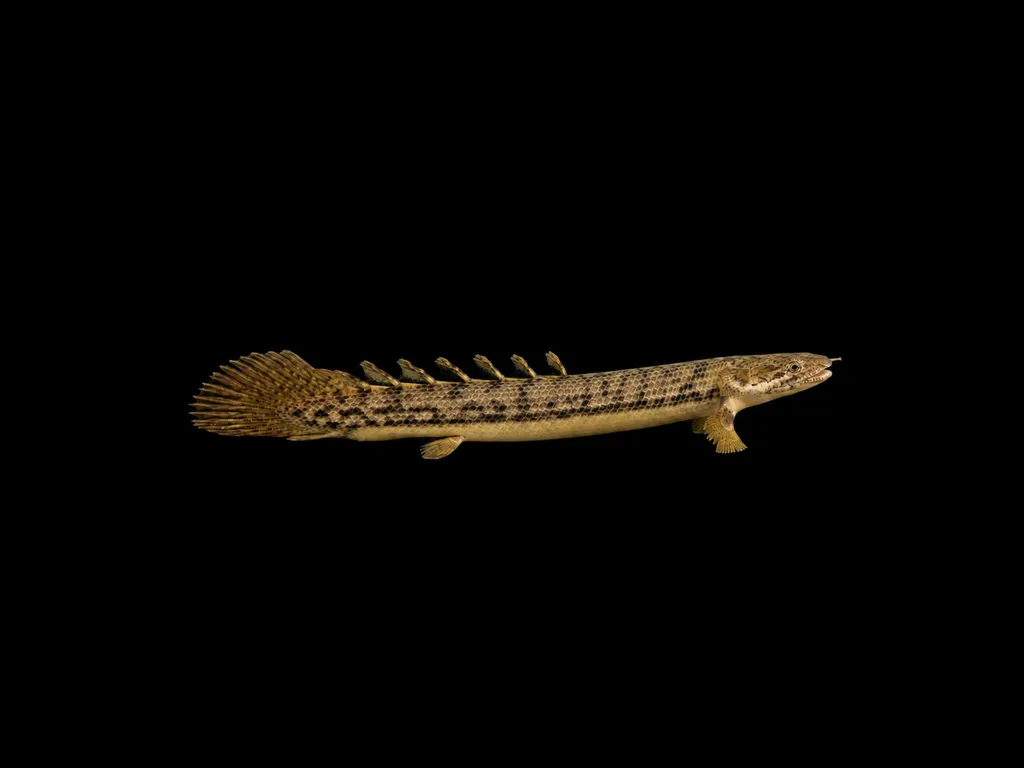 16.5 in (42 cm)119 gal (450 L)75–82°F (24–28°C)
Teugels' bichir
Polypterus teugelsi
16.5 in (42 cm) · 119 gal (450 L)