Ansorge's bichir
Polypterus ansorgii
Also known as Guinean bichir
FreshwaterFish
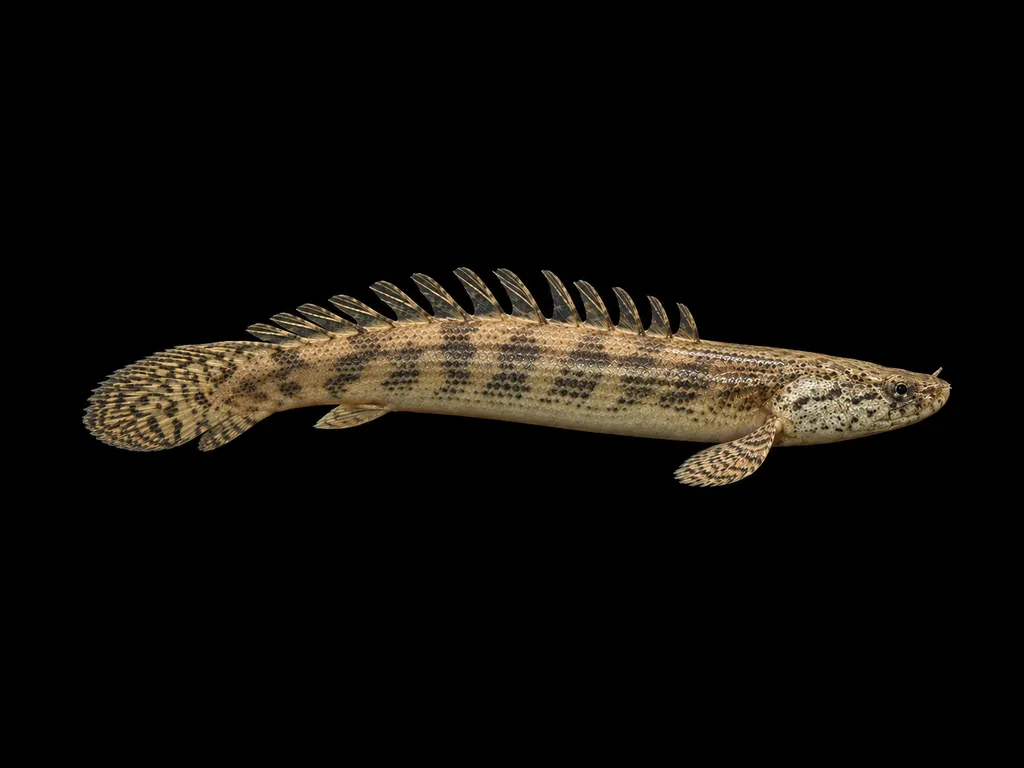
Care at a glance
- Temperature
- 75–82°F
- 24–28°C
- pH
- 6.2–7.8
- Adult size
- 15.7 in
- 40 cm
- Minimum tank
- 119 gal
- 450 L
- Temperament
- Mostly peaceful
- Social behavior
- Solitary
- Tankmates
- With caution
- Swim level
- Bottom
- Diet
- Carnivore
- Difficulty
- Medium
- Breeding
- Egg scatterer
- Rarity
- Rare
- Family
- Polypteridae
- Origin
- Upper Guinea rivers, West Africa
Overview
Ansorge's bichir is a rare West African oddball, a nocturnal predator for the bottom of a big tank. It suits a keeper with some experience.
Did you know
Ansorge's bichir is a fish keepers argued over sight unseen. It is one of the rarest bichirs in the trade. It has been exported so seldom that for years it was known mostly from museum specimens rather than living examples.
Caring for the Ansorge's bichir
Ansorge's bichir needs a big footprint of at least 119 gal (450 L), and ideally more. Give it a sand or fine-gravel floor, driftwood, rockwork and shade from tall or floating plants. Fit a tight, weighted lid, because bichirs climb out.
Keep the water soft to medium, slightly acidic to slightly alkaline, at a pH of 6.2 to 7.8. Hold it warm at 75 to 82°F (24 to 28°C) with gentle flow, and use subdued lighting to bring this nocturnal fish out. Feed meaty foods such as earthworms, prawn, mussel and sinking carnivore pellets in the evening.
Ansorge's bichir is a lurk-and-lunge predator that patrols the bottom and will eat any tank mate small enough to swallow. Keep it on its own or only with robust fish too large to become a meal, never with small community fish.
Its breeding is not recorded in home aquariums. Like its kin, it would scatter eggs among plants rather than guard a nest.
Good to know
Polypterus ansorgii is a bichir in the family Polypteridae, an ancient line of ray-finned fishes sheathed in hard, glossy scales. A 2019 revision of the family measured preserved specimens to 24.6 cm and recorded one aquarium fish at 37.1 cm. That is why a planning size of about 15.7 in (40 cm) is safer than the lower figures often quoted.
In the wild
Ansorge's bichir comes from forest rivers of Guinea and Guinea-Bissau in Upper Guinea, West Africa. These are slow, shaded, tannin-stained waters over soft bottoms.
Common questions
What size tank does an Ansorge's bichir need?
An Ansorge's bichir needs at least 119 gal (450 L). It spends most of its time in the bottom.
What temperature and pH does an Ansorge's bichir need?
An Ansorge's bichir is comfortable at 75–82°F (24–28°C) with a pH of 6.2–7.8.
What does an Ansorge's bichir eat?
An Ansorge's bichir eats meaty foods such as earthworms, prawn, mussel and sinking carnivore pellets, fed in the evening. It will also eat any tank mate small enough to swallow.
How big does an Ansorge's bichir get?
An adult Ansorge's bichir reaches about 15.7 in (40 cm).
How does an Ansorge's bichir breed?
Ansorge's bichir would scatter its eggs among plants, like its kin, rather than guard a nest. Its breeding has not been recorded in home aquariums.
Related species
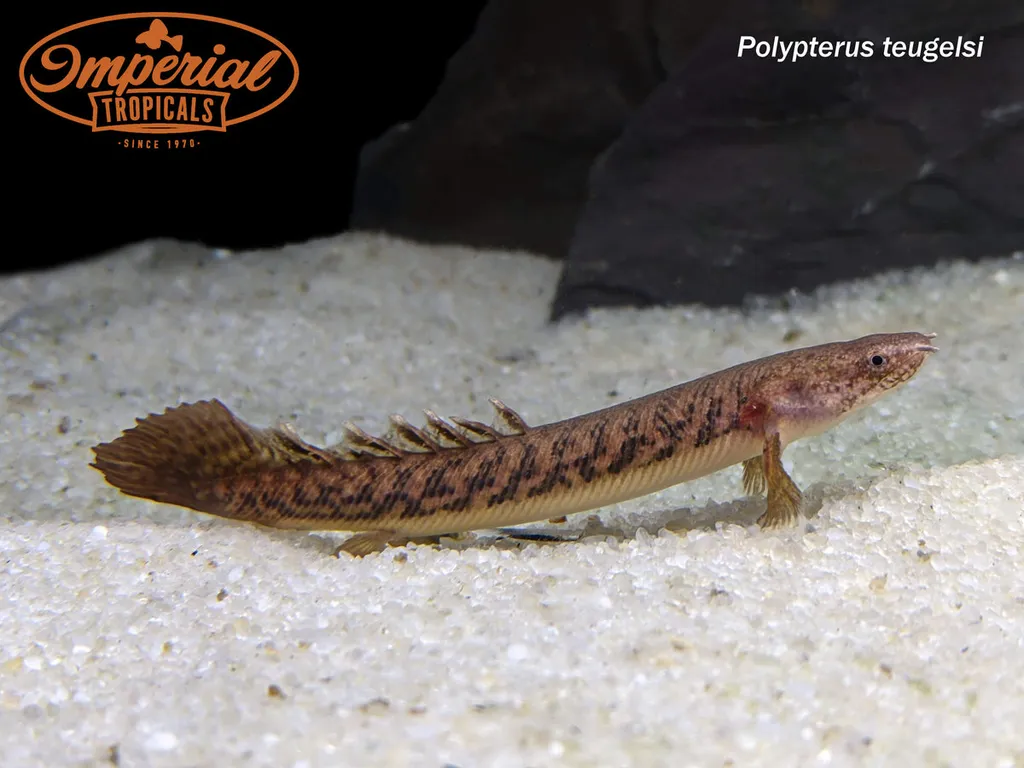 16.5 in (42 cm)119 gal (450 L)75–82°F (24–28°C)
Teugels' bichir
Polypterus teugelsi
16.5 in (42 cm) · 119 gal (450 L)
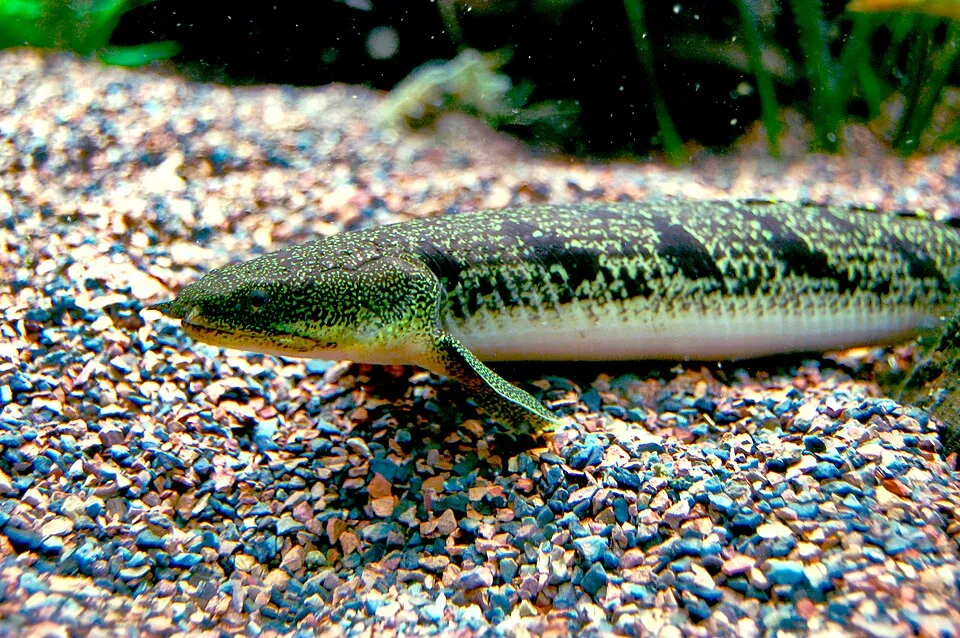 13.8 in (35 cm)53 gal (200 L)75–86°F (24–30°C)
Barred bichir
Polypterus delhezi
13.8 in (35 cm) · 53 gal (200 L)
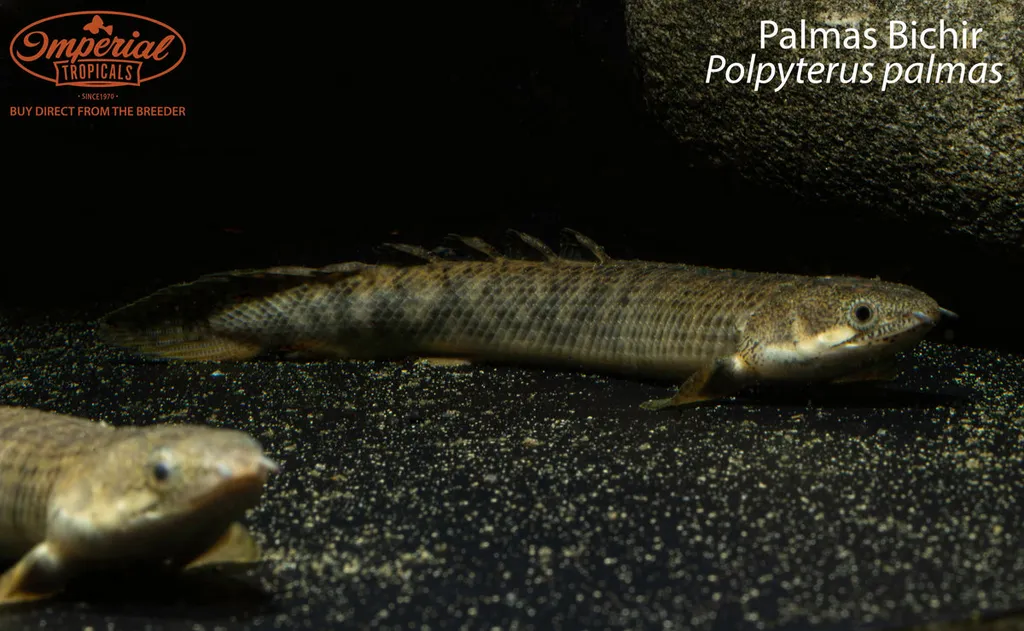 13.8 in (35 cm)53 gal (200 L)75–82°F (24–28°C)
Marbled bichir
Polypterus palmas
13.8 in (35 cm) · 53 gal (200 L)
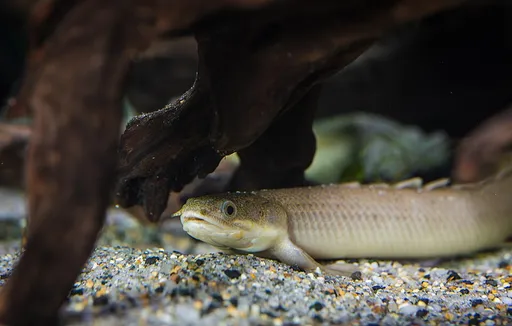 13.8 in (35 cm)143 gal (540 L)75–82°F (24–28°C)
Senegal bichir
Polypterus senegalus
13.8 in (35 cm) · 143 gal (540 L)
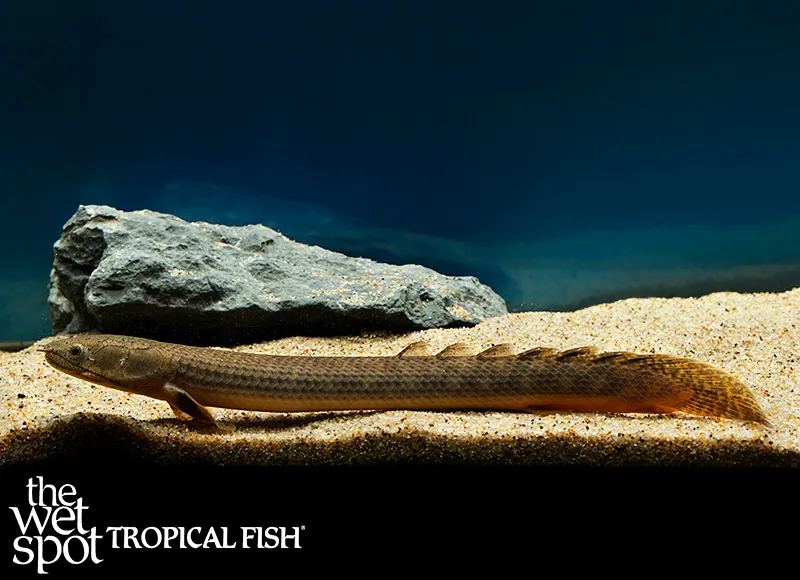 13.8 in (35 cm)53 gal (200 L)77–82°F (25–28°C)
West African bichir
Polypterus retropinnis
13.8 in (35 cm) · 53 gal (200 L)
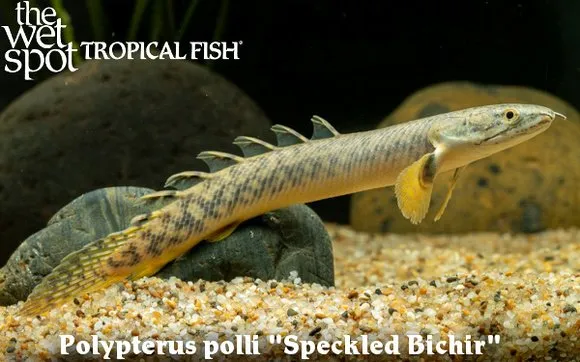 12.6 in (32 cm)79 gal (300 L)75–82°F (24–28°C)
Poll's bichir
Polypterus polli
12.6 in (32 cm) · 79 gal (300 L)