West African bichir
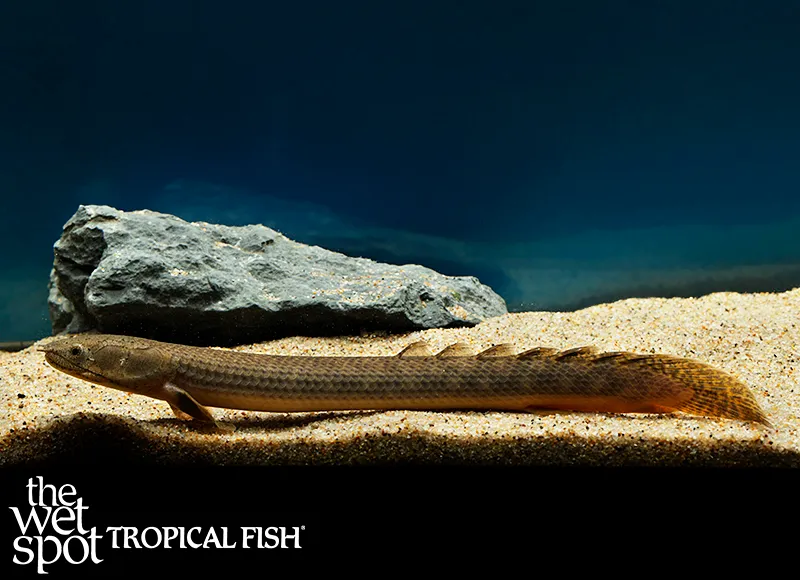
Polypterus retropinnis
Also known as Retropinnis bichir, Congo Green Bichir
FreshwaterFish
Care at a glance
- Temperature
- 77–82°F
- 25–28°C
- pH
- 6.0–8.0
- Adult size
- 13.8 in
- 35 cm
- Minimum tank
- 53 gal
- 200 L
- Temperament
- Mostly peaceful
- Social behavior
- Solitary
- Tankmates
- With caution
- Swim level
- Bottom
- Difficulty
- Easy
- Breeding
- No record
- Rarity
- Very rare
- Family
- Polypteridae
- Origin
- West Africa, Congo Basin
Overview
The West African bichir is a hardy, slow-moving, night-active predator that patrols the bottom and shelters under wood and caves during the day. It is generally peaceful but will eat any fish or shrimp small enough to swallow, so keep it with calm tankmates of similar size. Feed meaty foods such as earthworms, prawns, mussel, and sinking pellets in the evening. Give it a soft substrate it will not scrape against, plenty of cover, and a tight lid, since bichirs climb and jump. This fish needs a tank of at least 200 liters.
In the wild
Polypterus retropinnis comes from West and Central Africa, including the Congo basin, where it lives over soft bottoms in slow rivers, backwaters, and swampy margins that are often warm and low in oxygen. Recreate this with fine sand, driftwood and rock for shelter, and gentle flow, leaving air above the surface for it to breathe. Keep the temperature between 25 and 28 degrees Celsius and the pH anywhere from about 6 to 8.
Good to know
The West African bichir belongs to Polypteridae, one of the oldest surviving families of ray-finned fish, and reaches around 35 centimeters, making it one of the smaller bichirs. It has thick, armored ganoid scales, lobe-like pectoral fins, and a row of finlets along the back instead of a single dorsal fin. Its swim bladder works as a pair of lungs, so it breathes air and can endure oxygen-poor water. Breeding in aquariums is rarely documented.
Did you know
Bichirs are sometimes called living fossils, with a body plan little changed since the age of the dinosaurs. Their fleshy, lobed pectoral fins and paired, lung-like swim bladders recall the ancient fish that first began to venture onto land.
Common questions
What size tank does a West African bichir need?
A West African bichir needs at least 53 gal (200 L). It spends most of its time in the bottom.
What temperature and pH does a West African bichir need?
A West African bichir is comfortable at 77–82°F (25–28°C) with a pH of 6.0–8.0.
How big does a West African bichir get?
An adult West African bichir reaches about 13.8 in (35 cm).
Related species
 13.8 in (35 cm)53 gal (200 L)75–86°F (24–30°C)
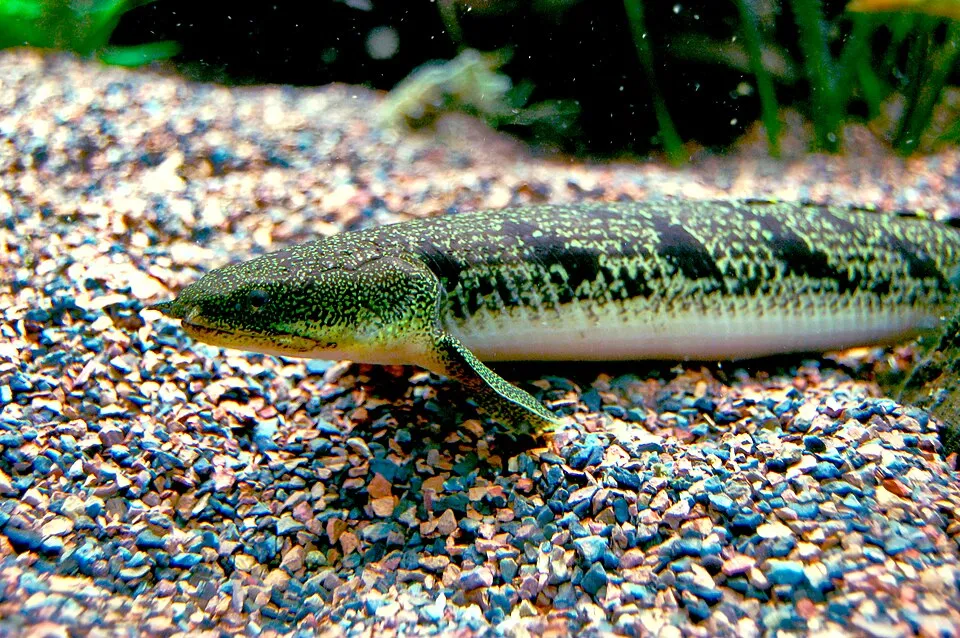
Barred bichir
Polypterus delhezi
13.8 in (35 cm) · 53 gal (200 L)
 13.8 in (35 cm)53 gal (200 L)75–82°F (24–28°C)
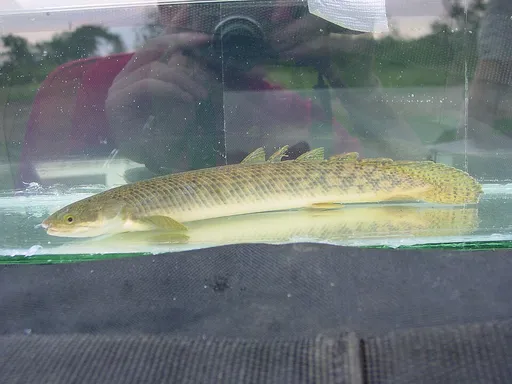
Marbled bichir
Polypterus palmas
13.8 in (35 cm) · 53 gal (200 L)
 13.8 in (35 cm)143 gal (540 L)75–82°F (24–28°C)
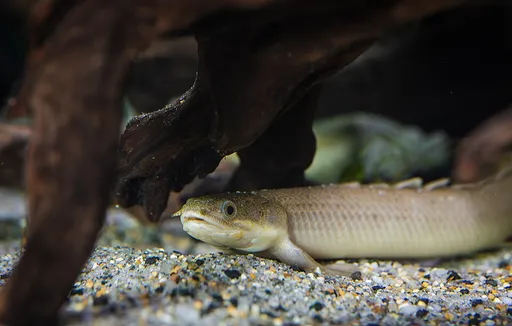
Senegal bichir
Polypterus senegalus
13.8 in (35 cm) · 143 gal (540 L)
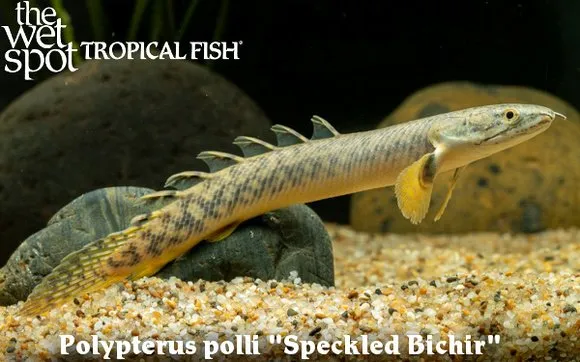 12.6 in (32 cm)79 gal (300 L)75–82°F (24–28°C)
Poll's bichir
Polypterus polli
12.6 in (32 cm) · 79 gal (300 L)
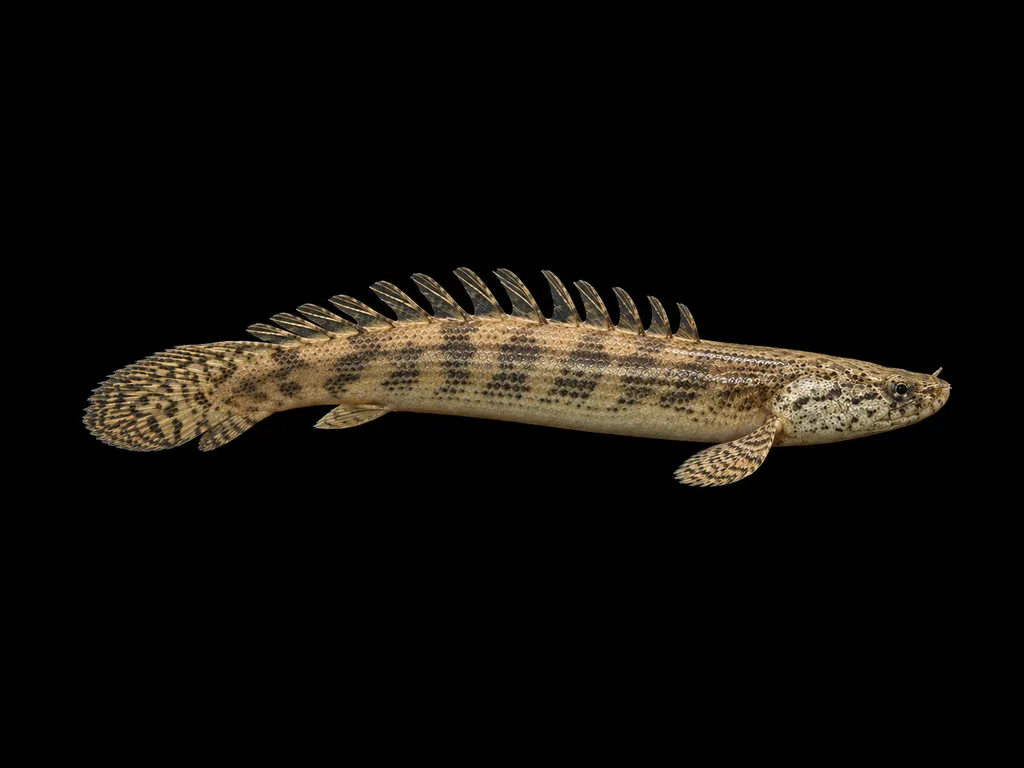 15.7 in (40 cm)119 gal (450 L)75–82°F (24–28°C)
Ansorge's bichir
Polypterus ansorgii
15.7 in (40 cm) · 119 gal (450 L)
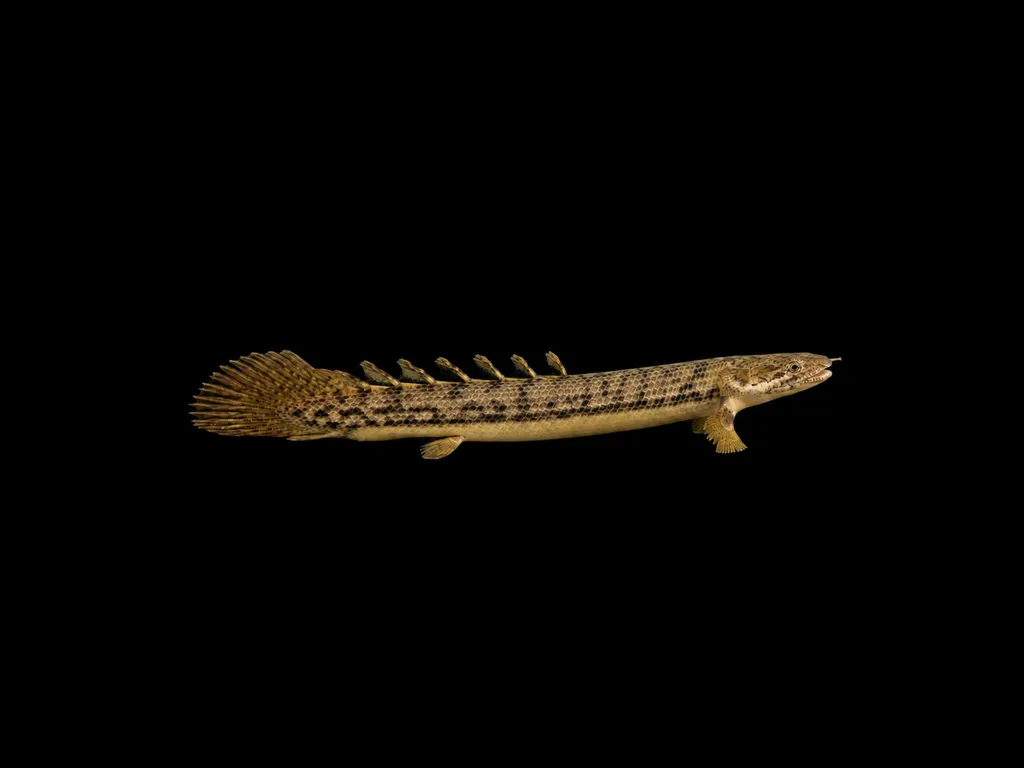 16.5 in (42 cm)119 gal (450 L)75–82°F (24–28°C)
Teugels' bichir
Polypterus teugelsi
16.5 in (42 cm) · 119 gal (450 L)