Featherfin squeaker
Synodontis eupterus
Also known as Featherfin Synodontis
FreshwaterFish
Care at a glance
- Temperature
- 72–81°F
- 22–27°C
- pH
- 6.5–7.5
- Adult size
- 7.9 in
- 20 cm
- Minimum tank
- 45 gal
- 170 L
- Temperament
- Mostly peaceful
- Social behavior
- Solitary
- Tankmates
- With caution
- Swim level
- Bottom
- Difficulty
- Medium
- Breeding
- No record
- Rarity
- Rare
- Family
- Mochokidae
- Origin
- Nigeria, Mali, Chad, Niger
Overview
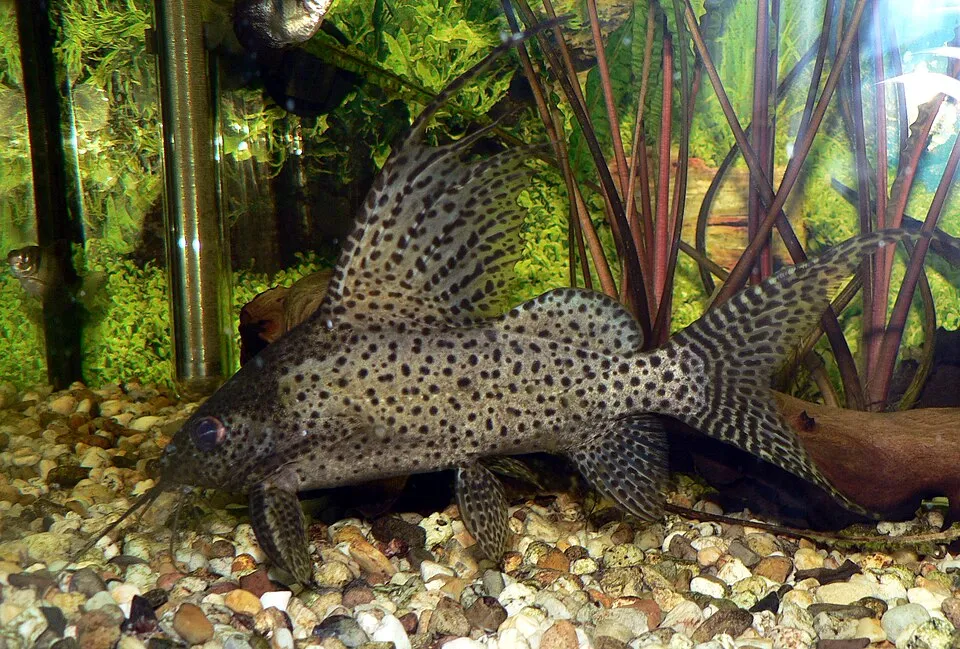
The featherfin squeaker is a striking, mostly peaceful catfish usually kept on its own, since it does not require company of its kind and can be territorial with other bottom catfish as it grows. It mixes well with medium to large, robust tankmates such as bigger tetras, barbs, West African cichlids, and gouramis, but is too large for a nano community. It forages over the bottom at night, sometimes turning belly-up to feed. Offer sinking pellets, frozen foods, and vegetable matter. Give it sand, driftwood, and shaded caves, and a tank around 170 liters or larger.
In the wild
Synodontis eupterus lives in the rivers and floodplains of the Sahel and White Nile region, recorded from Nigeria, Mali, Chad, and Niger, where it shelters among wood and roots in warm, gently flowing water. Keep it at 22 to 27 degrees C with a pH of 6.5 to 7.5. Furnish a soft sandy bed to protect its long barbels, with bogwood, rock, and PVC caves for daytime cover and open space to swim. Good filtration, a moderate current, and steady oxygen keep it in condition.
Good to know
This squeaker in the family Mochokidae commonly reaches about 20 centimeters in aquaria, with wild fish recorded larger. Adults develop a tall, feathered dorsal fin of branched rays that gives the fish its name, while juveniles are more plainly finned. It carries the family's bony head plates and locking spines and can right itself to swim upside down. Breeding is not documented in home aquariums.
Did you know
Young featherfins look plain, but as they mature the first dorsal fin grows into a tall, lacy plume of branched rays. Like several African squeakers, this fish will sometimes swim and feed upside down beneath wood and the water surface.
Common questions
What size tank does a Featherfin squeaker need?
A Featherfin squeaker needs at least 45 gal (170 L). It spends most of its time in the bottom.
What temperature and pH does a Featherfin squeaker need?
A Featherfin squeaker is comfortable at 72–81°F (22–27°C) with a pH of 6.5–7.5.
How big does a Featherfin squeaker get?
An adult Featherfin squeaker reaches about 7.9 in (20 cm).
Related species
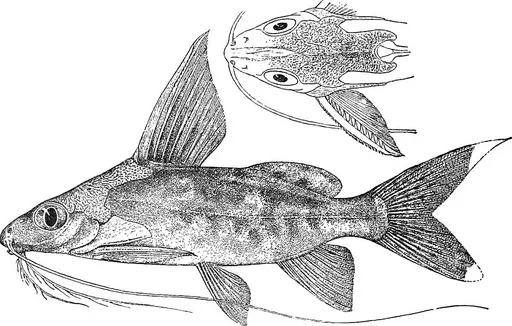 7.9 in (20 cm)40 gal (150 L)72–79°F (22–26°C)
Bigeye squeaker
Synodontis alberti
7.9 in (20 cm) · 40 gal (150 L)
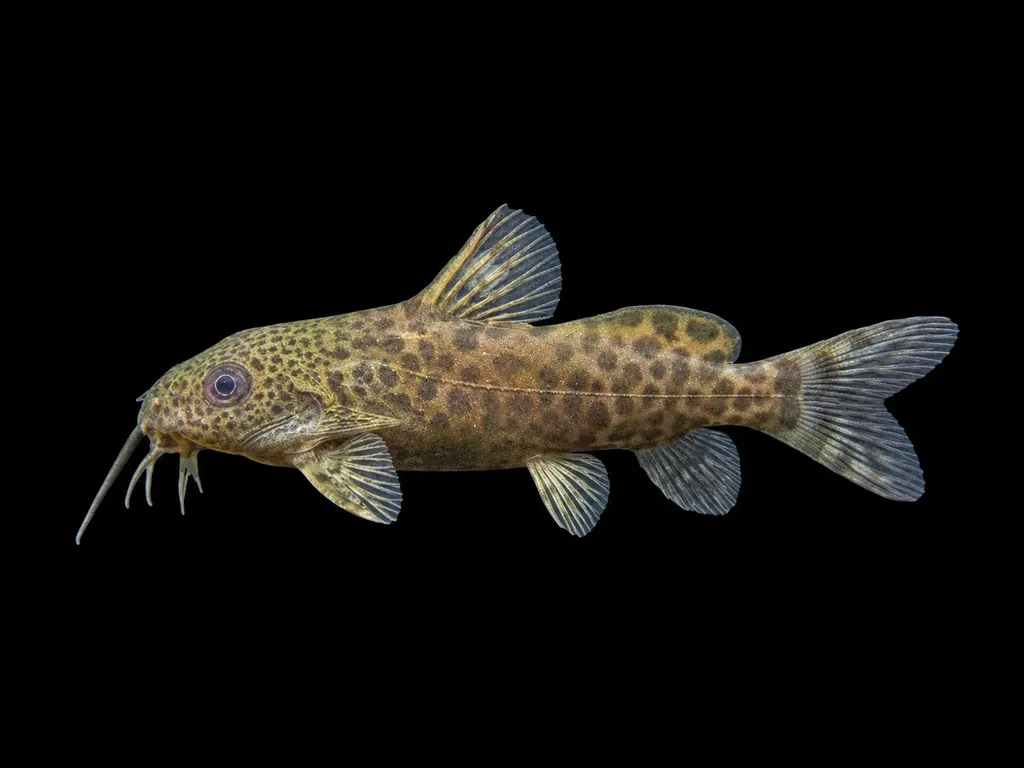 7.9 in (20 cm)55 gal (210 L)70–82°F (21–28°C)
Common syno
Synodontis nigrita
7.9 in (20 cm) · 55 gal (210 L)
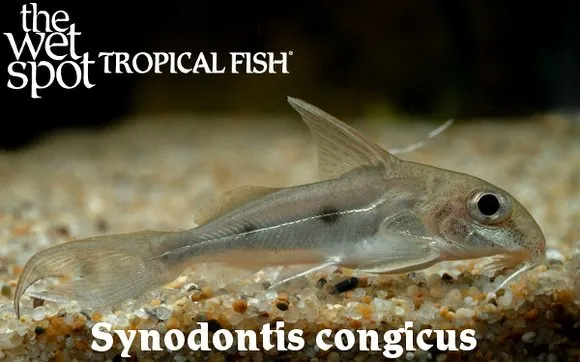 7.9 in (20 cm)79 gal (300 L)73–81°F (23–27°C)
Congicus squeaker
Synodontis congicus
7.9 in (20 cm) · 79 gal (300 L)
 7.9 in (20 cm)53 gal (200 L)73–81°F (23–27°C)
Ocellated squeaker
Synodontis ocellifer
7.9 in (20 cm) · 53 gal (200 L)
 7.5 in (19 cm)40 gal (150 L)73–82°F (23–28°C)
Lake Malawi syno
Synodontis njassae
7.5 in (19 cm) · 40 gal (150 L)
 8.7 in (22 cm)79 gal (300 L)73–81°F (23–27°C)
Velifer squeaker
Synodontis velifer
8.7 in (22 cm) · 79 gal (300 L)