Common syno
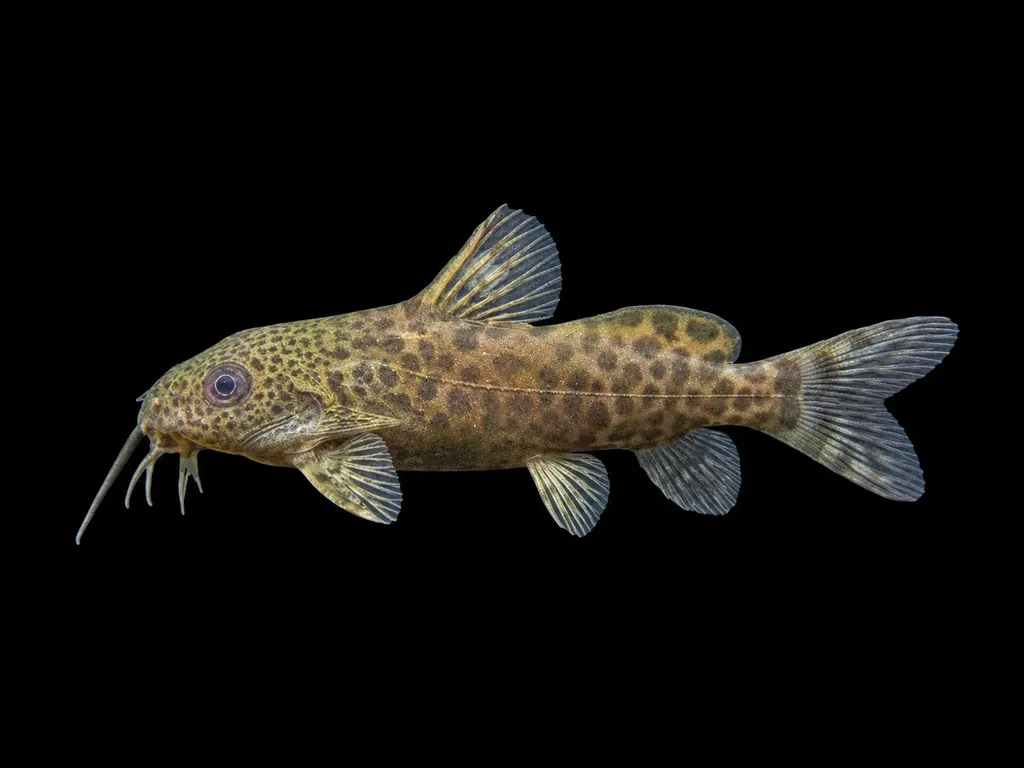
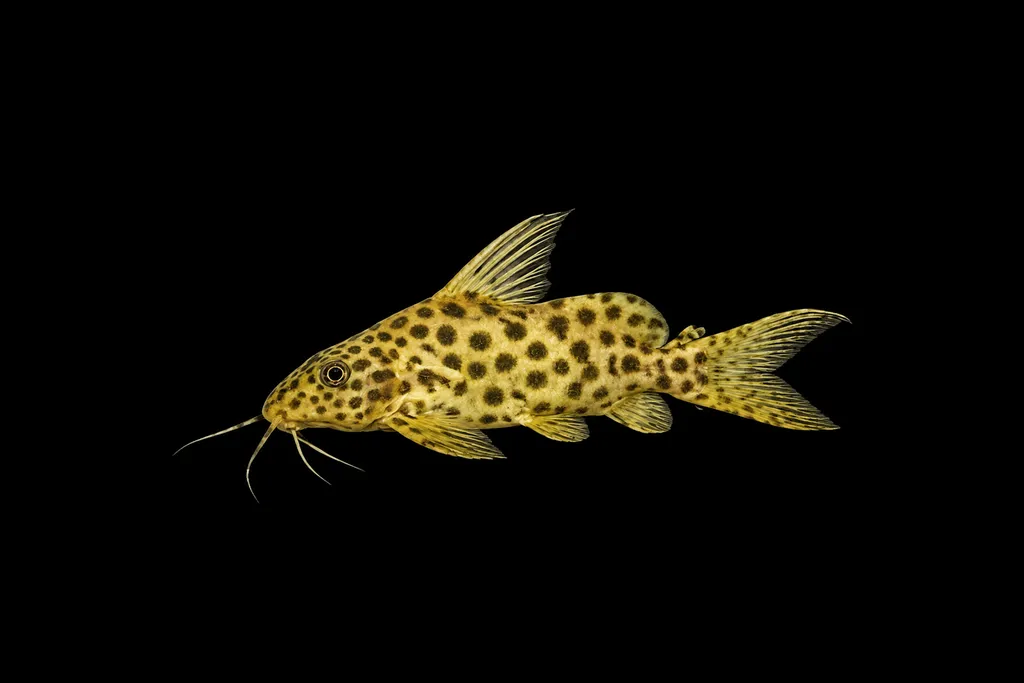
Synodontis nigrita
Also known as false upside-down catfish, Lace Cat
FreshwaterFish
Care at a glance
- Temperature
- 70–82°F
- 21–28°C
- pH
- 6.0–7.5
- Adult size
- 7.9 in
- 20 cm
- Minimum tank
- 55 gal
- 210 L
- Temperament
- Mostly peaceful
- Social behavior
- Social
- Swim level
- Bottom
- Difficulty
- Easy
- Breeding
- No record
- Rarity
- Rare
- Family
- Mochokidae
- Origin
- Africa
Overview
The common syno is a hardy, active catfish that works the bottom and lower water at night, rasping at food and browsing surfaces. It is mostly peaceful and does best with robust tankmates such as larger tetras, barbs, West African cichlids, or gouramis rather than tiny fish it could bully or startle. It is a sociable species that can be kept singly or in a small group given space. Feed it well and vary the diet with sinking pellets, frozen foods, and vegetable matter like shelled peas. Provide a soft sand bed and plenty of caves, and aim for a tank around 210 liters or larger.
In the wild
Synodontis nigrita is widely distributed across Africa, living in quiet backwaters, pools, and slow stretches of rivers in the Nile, Niger, and Volta systems and beyond. It tolerates a wide temperature band, so anywhere from 21 to 28 degrees C works, with a pH of 6.0 to 7.5. Furnish the tank with a soft sandy floor to protect its long barbels, bogwood, and rocky caves for daytime shade, and keep the water well-oxygenated with a moderate current and regular water changes to control waste.
Good to know
A member of Mochokidae, the African squeaker catfishes, Synodontis nigrita reaches around 20 centimeters, roughly twice the size of the true upside-down catfish it is often confused with. Squeakers get their name from the creaking sound they make by locking and grinding the pectoral spines. Its body carries bony head plates and strong dorsal and pectoral spines, and it browses with teeth set in the lower jaw. Breeding in aquaria is not documented.
Did you know
This is the fish most often sold as an upside-down catfish, though the real one is Synodontis nigriventris. The common syno rests belly-up far less often and grows about twice as large, which usually gives the mislabeling away once it matures.
Weekly picks
Tank mates
Common syno is a mostly peaceful, social species that keeps to the bottom. These picks share a community profile with it, are safe together in both directions, and overlap on water type, temperature and pH.
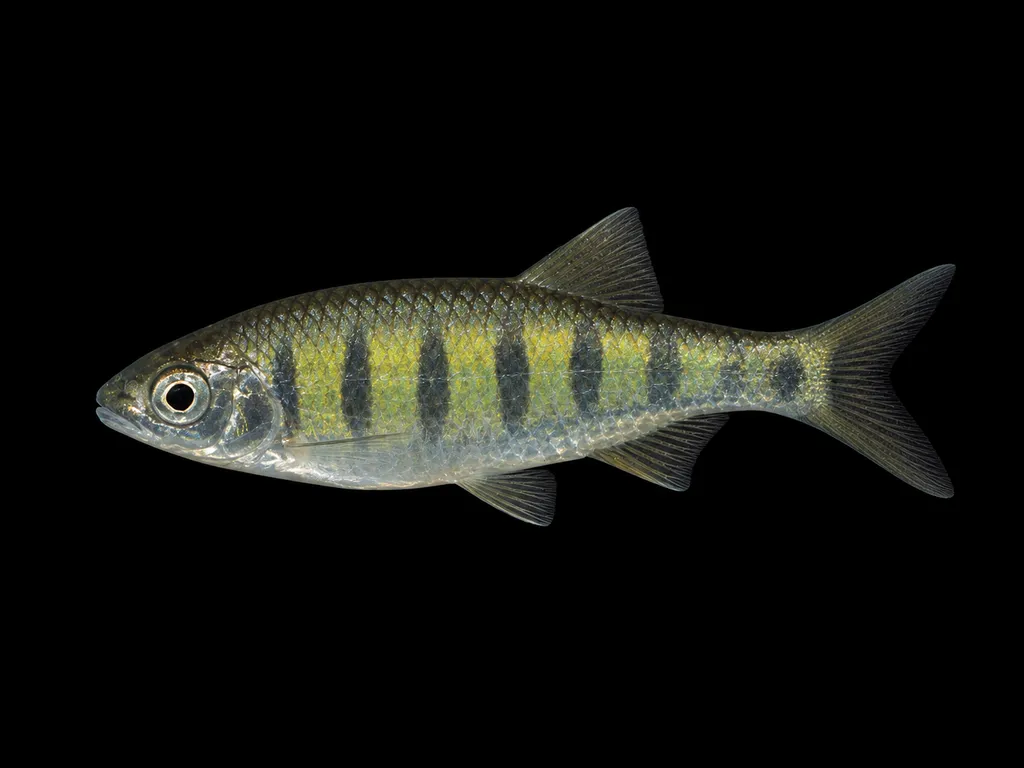
Barna baril
Opsarius barna
Freshwater5.9 in (15 cm) · 53 gal (200 L)64–79°F (18–26°C)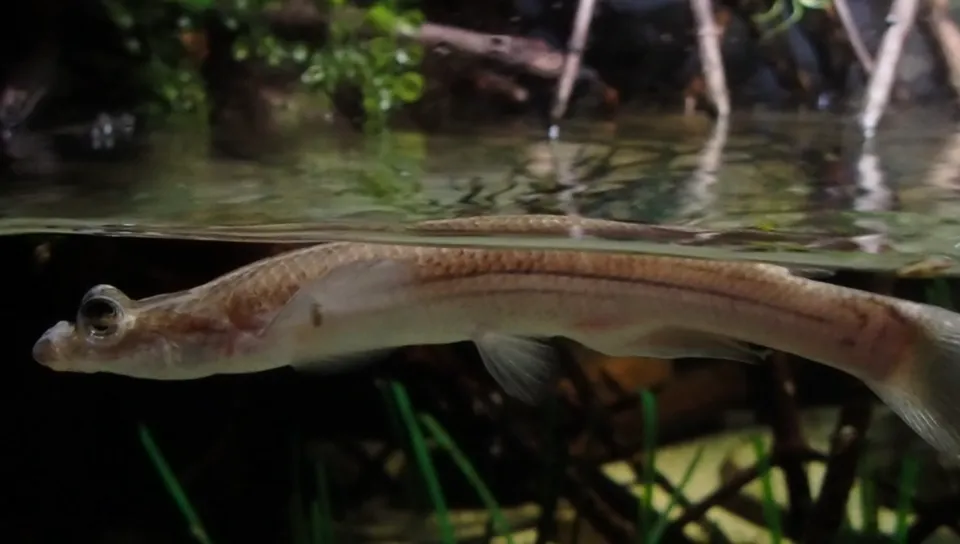
Largescale four-eyed fish
Anableps anableps
FreshwaterBrackish11.8 in (30 cm) · 70 gal (265 L)77–88°F (25–31°C)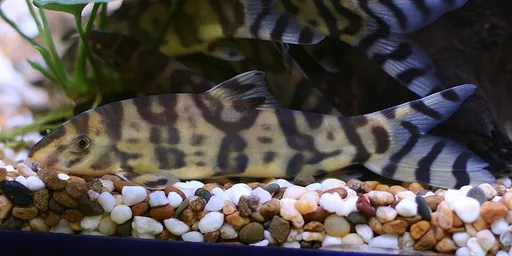
Burmese border loach
Botia histrionica
Freshwater5.1 in (13 cm) · 53 gal (200 L)72–82°F (22–28°C)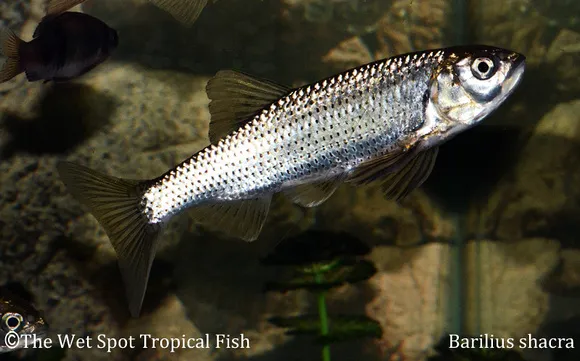
Shacra baril
Opsarius shacra
Freshwater5.5 in (14 cm) · 53 gal (200 L)64–79°F (18–26°C)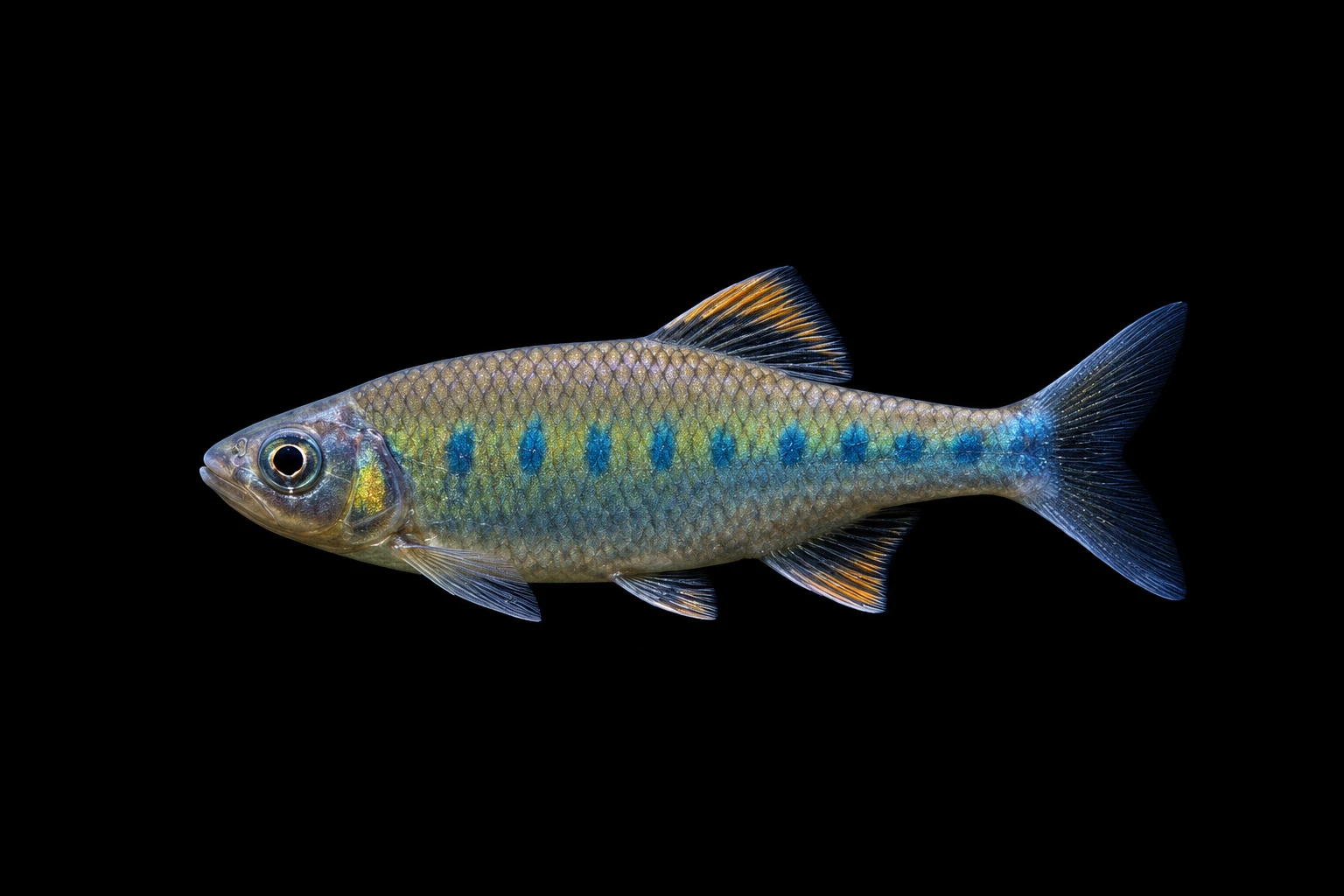
Blue spotted hill trout
Barilius bakeri
Freshwater5.1 in (13 cm) · 53 gal (200 L)64–79°F (18–26°C)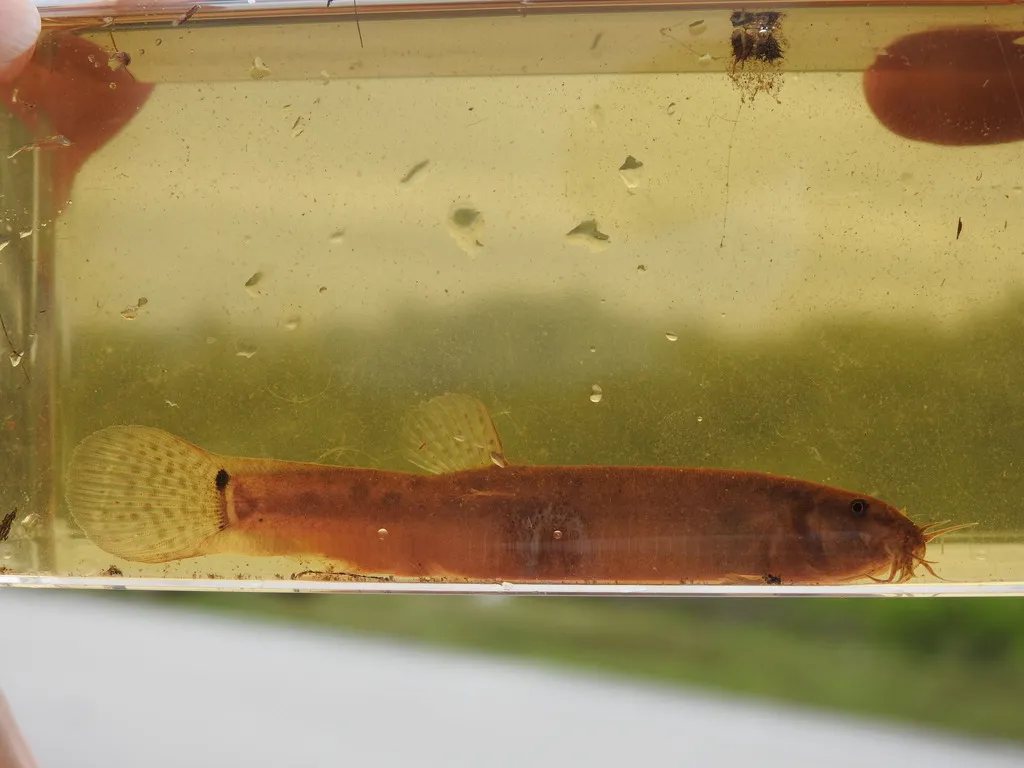
Weather loach
Misgurnus anguillicaudatus
Freshwater11 in (28 cm) · 55 gal (210 L)50–73°F (10–23°C)
Common questions
What size tank does a Common syno need?
A Common syno needs at least 55 gal (210 L). It spends most of its time in the bottom.
What temperature and pH does a Common syno need?
A Common syno is comfortable at 70–82°F (21–28°C) with a pH of 6.0–7.5.
How big does a Common syno get?
An adult Common syno reaches about 7.9 in (20 cm).
Related species
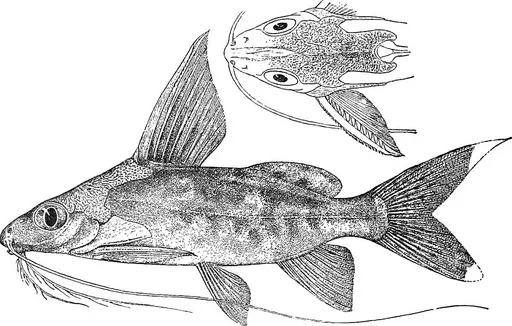 7.9 in (20 cm)40 gal (150 L)72–79°F (22–26°C)
Bigeye squeaker
Synodontis alberti
7.9 in (20 cm) · 40 gal (150 L)
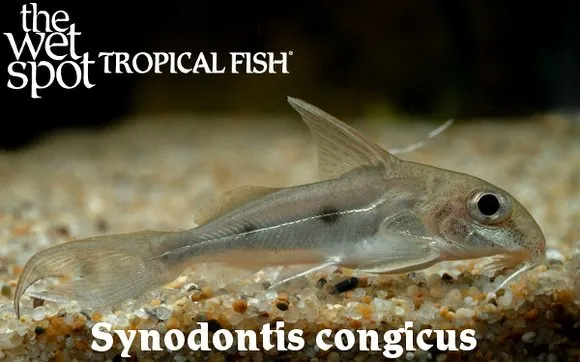 7.9 in (20 cm)79 gal (300 L)73–81°F (23–27°C)
Congicus squeaker
Synodontis congicus
7.9 in (20 cm) · 79 gal (300 L)
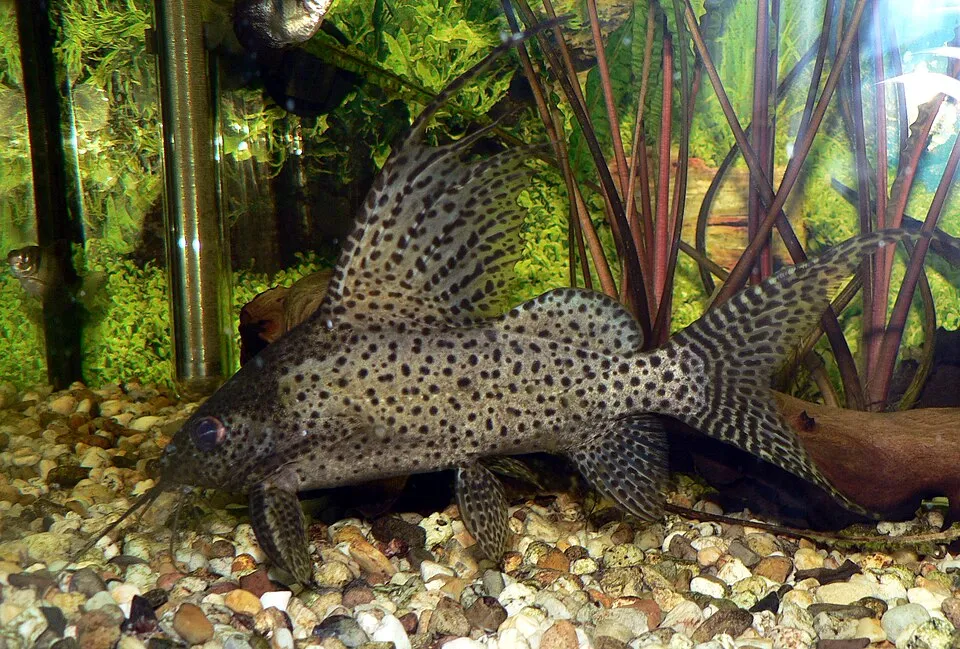 7.9 in (20 cm)45 gal (170 L)72–81°F (22–27°C)
Featherfin squeaker
Synodontis eupterus
7.9 in (20 cm) · 45 gal (170 L)
 7.9 in (20 cm)53 gal (200 L)73–81°F (23–27°C)
Ocellated squeaker
Synodontis ocellifer
7.9 in (20 cm) · 53 gal (200 L)
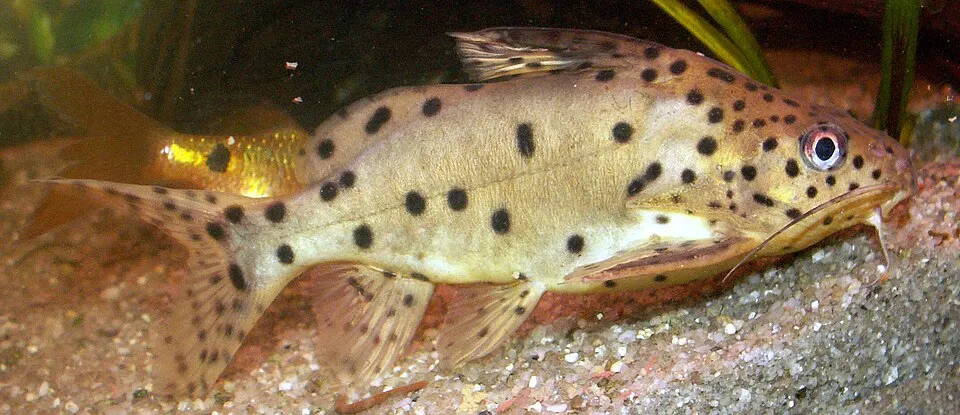 7.5 in (19 cm)40 gal (150 L)73–82°F (23–28°C)
Lake Malawi syno
Synodontis njassae
7.5 in (19 cm) · 40 gal (150 L)
 8.7 in (22 cm)79 gal (300 L)73–81°F (23–27°C)
Velifer squeaker
Synodontis velifer
8.7 in (22 cm) · 79 gal (300 L)