Spotted pimelodus
Pimelodus pictus
Also known as pictus catfish
FreshwaterFish
Care at a glance
- Temperature
- 72–77°F
- 22–25°C
- pH
- 6.0–7.5
- Adult size
- 5.5 in
- 14 cm
- Minimum tank
- 55 gal
- 210 L
- Temperament
- Mostly peaceful
- Social behavior
- Schooling
- Tankmates
- With caution
- Swim level
- Bottom
- Difficulty
- Difficult
- Breeding
- No record
- Rarity
- Rare
- Family
- Pimelodidae
- Origin
- Colombia, Venezuela, Peru
Overview
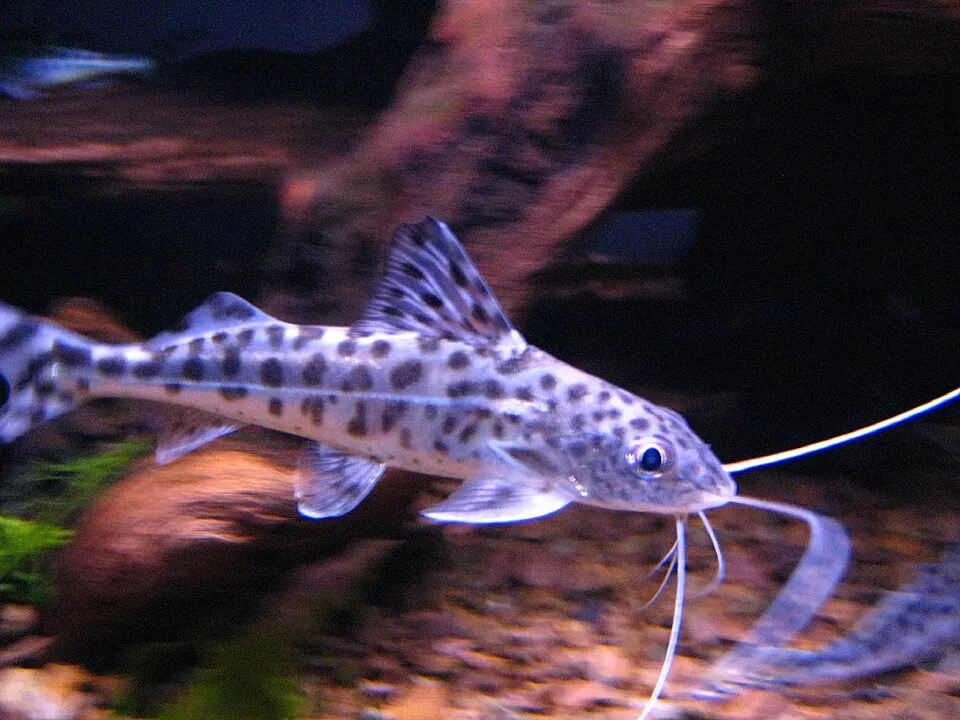
The spotted pimelodus, better known as the pictus catfish, is a restless, fast swimmer that patrols the lower and middle levels in a group, so keep at least five together for calmer, more natural behaviour. Despite its peaceful reputation it will eat any fish small enough to fit in its mouth, so avoid neons, guppies, fry, and shrimp, and instead pair it with active, similarly sized fish. Feed sinking pellets, frozen bloodworms, and chopped meaty foods, and use a soft sand bed so it does not wear down its very long, sensitive barbels. Its stiff spines snag easily in a net, so move it in a container. Aim for a tank of around 210 liters or larger with open swimming space.
In the wild
The pictus catfish comes from the Amazon and Orinoco drainages of Colombia, Venezuela, and Peru, living in open stretches of warm, flowing rivers and streams over sand and fine gravel. Keep it from around 22 to 25 C with a pH between 6 and 7.5, brisk flow, and clean, well-oxygenated water. A spacious tank with a soft sand bed, smooth driftwood, and long open lanes for swimming suits its active habits, while a few shaded spots give it somewhere to rest by day.
Good to know
The pictus catfish is a long-whiskered catfish of the family Pimelodidae and reaches about 14 cm. It is easily known by its silver body scattered with black spots and its extraordinarily long barbels, which can trail back past the tail. Like other pims it has sharp, mildly venomous fin spines that catch in nets and can prick a careless hand. It is a shoaling, active fish that is not known to breed in home aquariums.
Did you know
The pictus catfish carries barbels longer than its own body, sweeping them ahead and to the sides as it swims to taste and feel its way through the water in search of food, even in complete darkness.
Common questions
What size tank does a Spotted pimelodus need?
A Spotted pimelodus needs at least 55 gal (210 L). It spends most of its time in the bottom.
What temperature and pH does a Spotted pimelodus need?
A Spotted pimelodus is comfortable at 72–77°F (22–25°C) with a pH of 6.0–7.5.
How big does a Spotted pimelodus get?
An adult Spotted pimelodus reaches about 5.5 in (14 cm).
Does a Spotted pimelodus need a group?
Yes. A Spotted pimelodus is a schooling species and should be kept in a group, not singly.
Related species
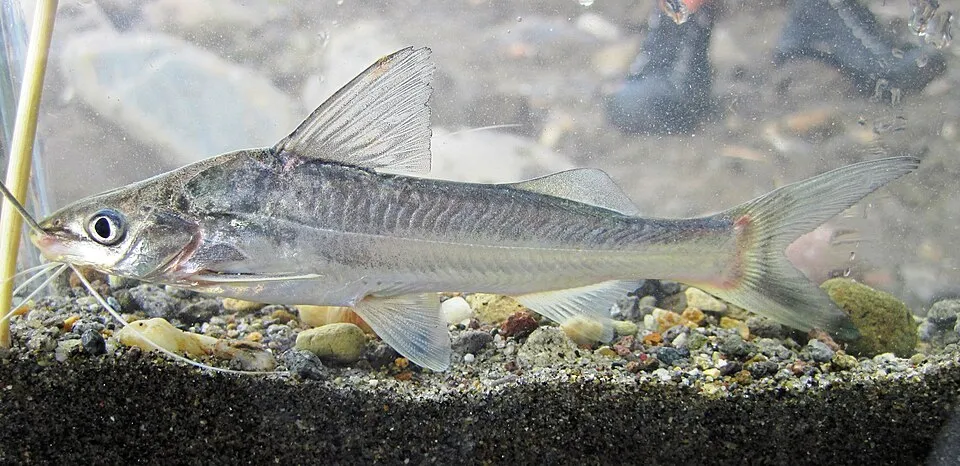 9.8 in (25 cm)53 gal (200 L)68–79°F (20–26°C)
Bloch's catfish
Pimelodus blochii
9.8 in (25 cm) · 53 gal (200 L)
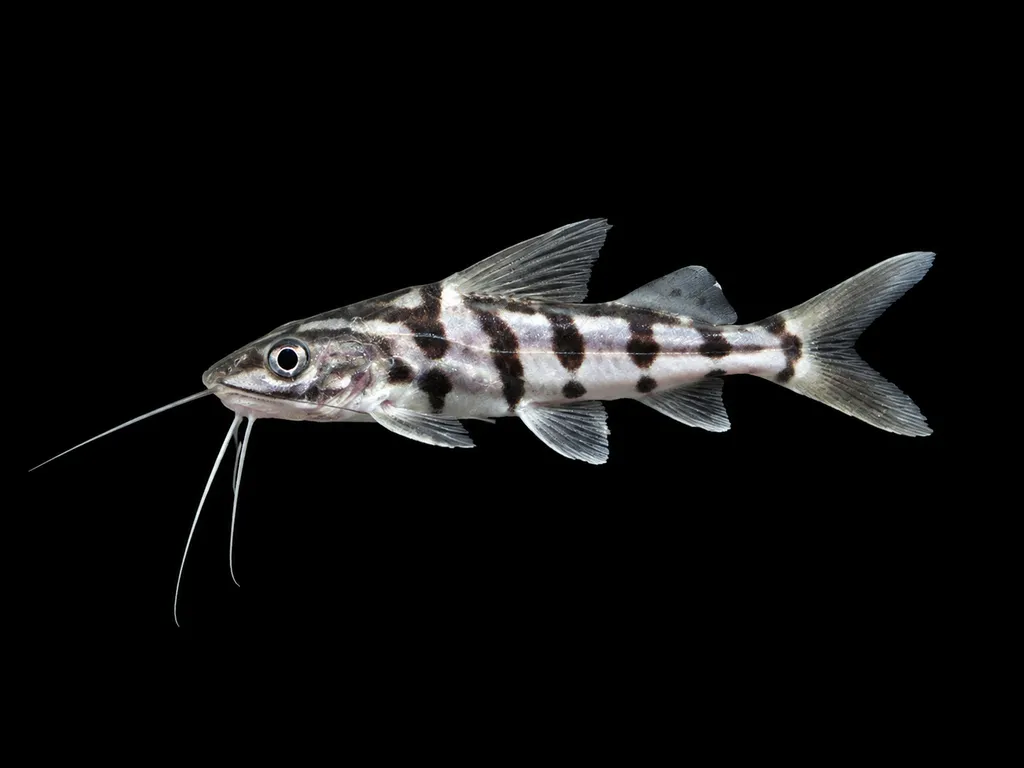 11.8 in (30 cm)106 gal (400 L)73–82°F (23–28°C)
Four-line pimelodus
Pimelodus albofasciatus
11.8 in (30 cm) · 106 gal (400 L)
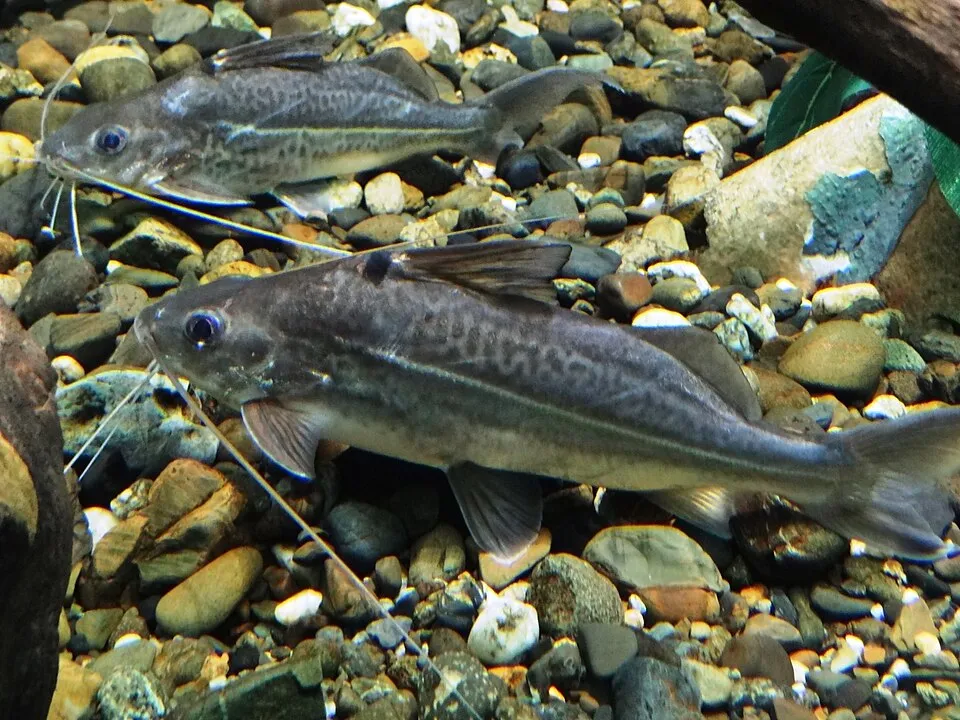 12.2 in (31 cm)65 gal (245 L)75–82°F (24–28°C)
Ornate pimelodus
Pimelodus ornatus
12.2 in (31 cm) · 65 gal (245 L)
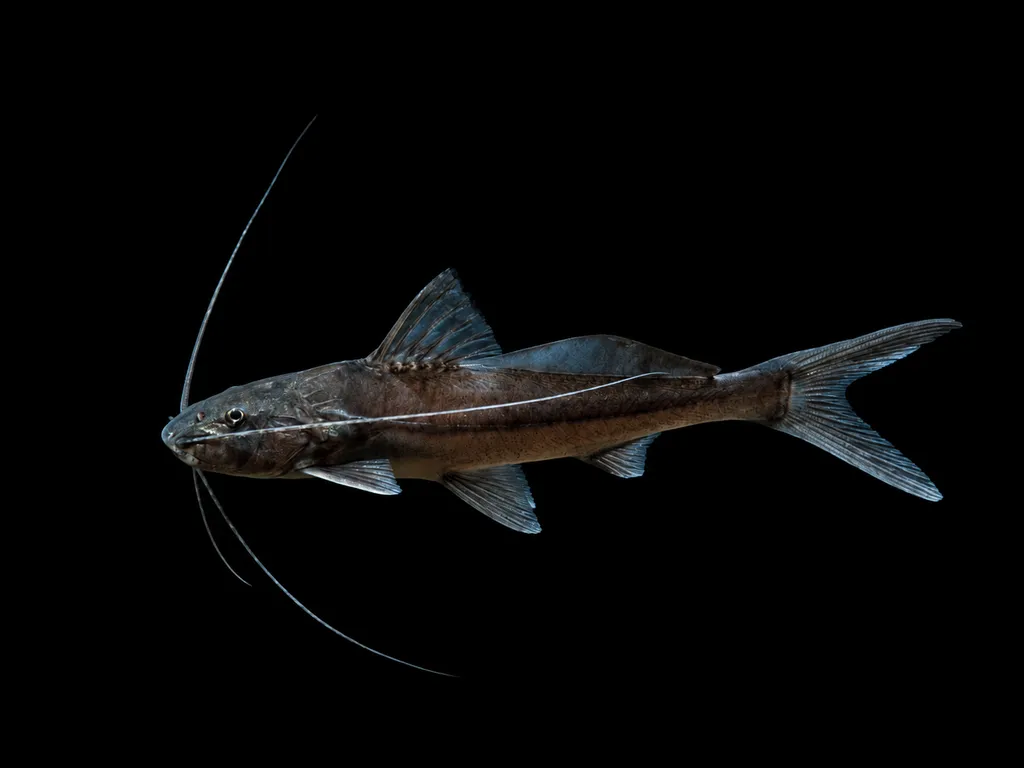 7.9 in (20 cm)106 gal (400 L)73–82°F (23–28°C)
Blue jumper catfish
Exallodontus aguanai
7.9 in (20 cm) · 106 gal (400 L)
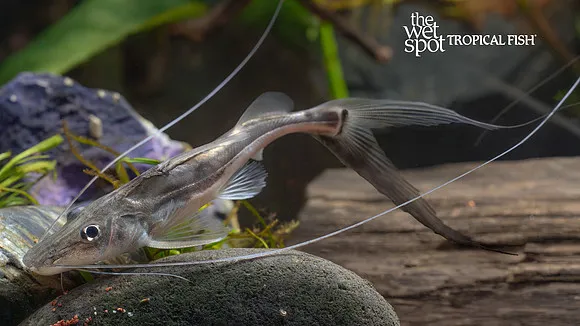 9.8 in (25 cm)106 gal (400 L)73–82°F (23–28°C)
Bullwhip pimelodus
Platysilurus mucosus
9.8 in (25 cm) · 106 gal (400 L)
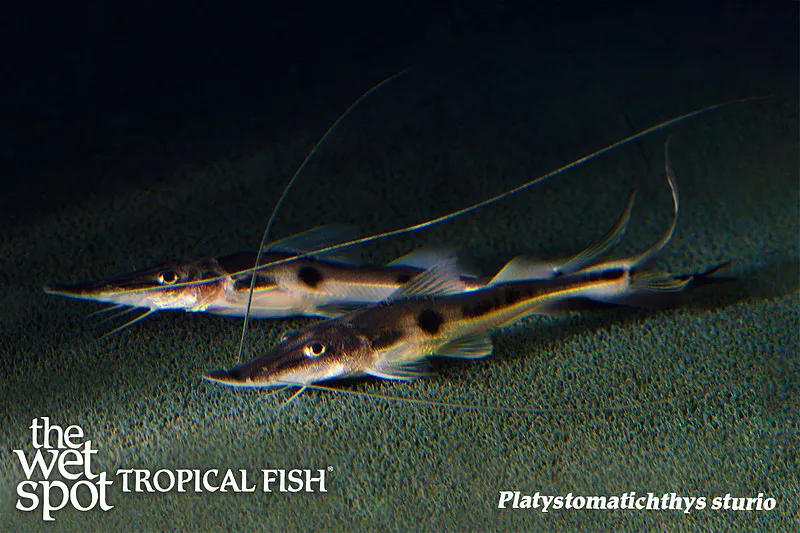 15.7 in (40 cm)120 gal (455 L)75–82°F (24–28°C)
Zorro catfish
Platystomatichthys sturio
15.7 in (40 cm) · 120 gal (455 L)