Blue jumper catfish
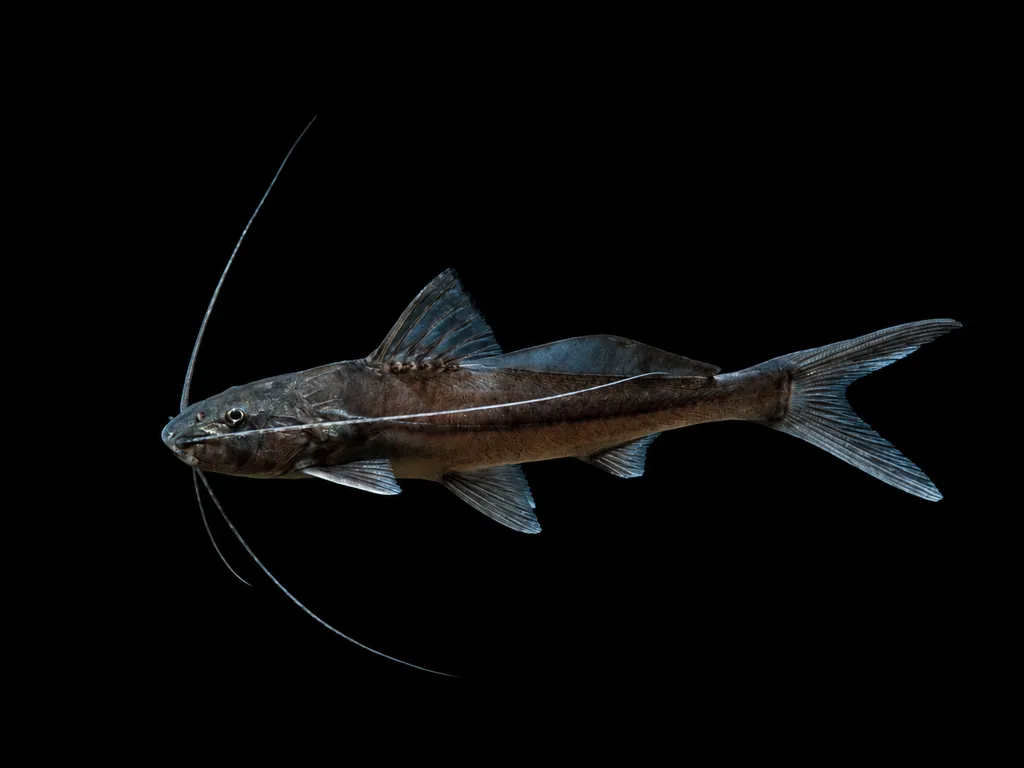
Exallodontus aguanai
Also known as Deepwater pim
FreshwaterFish
Care at a glance
- Temperature
- 73–82°F
- 23–28°C
- pH
- 6.0–7.5
- Adult size
- 7.9 in
- 20 cm
- Minimum tank
- 106 gal
- 400 L
- Temperament
- Mostly peaceful
- Social behavior
- Social
- Tankmates
- With caution
- Swim level
- Bottom
- Diet
- Carnivore
- Difficulty
- Medium
- Breeding
- No record
- Rarity
- Rare
- Family
- Pimelodidae
- Origin
- Deep channels of the Orinoco and Amazon
Overview
The blue jumper catfish is a night-active pimelodid from deep river channels that is almost never kept. It is moderately hard to keep and needs a very large tank.
Did you know
The blue jumper catfish belongs to a small set of catfishes that live in the deepest river channels. That habitat lies so far down that these fish were first sampled by dragging trawls along the riverbed, not with ordinary nets.
Caring for the blue jumper catfish
Base the blue jumper catfish's care on its life on the river floor, since its husbandry is thinly documented. Give it a securely covered tank of at least 106 gal (400 L). Recreate the calm, dark bottom of the river rather than its surface, with subdued lighting or none and plenty of shade.
Lay a smooth sand floor with no sharp decor, and keep the flow gentle to moderate. The water should be warm and soft to neutral, at 73 to 82°F (23 to 28°C) and a pH of 6.0 to 7.5. Keep it clean and well filtered.
It is night-active, so feed meaty sinking foods after dark, such as earthworm, prawn, mussel and sinking pellets. It is mostly peaceful and appears to live in loose aggregations. A small group in a large tank likely suits it better than a single specimen.
It will take any tank mate small enough to swallow, so choose calm, similarly sized companions and nothing bite-sized. Nothing is known of its breeding in captivity.
Good to know
Exallodontus aguanai is the only species in its genus, and it was described in 1991. It sits in the Pimelodidae, the long-whiskered antenna catfishes. Its large eyes and pale, blue-sheened body are typical of fishes from permanently dark river depths. Specimens reach the trade only as occasional bycatch.
In the wild
Exallodontus aguanai comes from the deep channels of the Amazon and Orinoco basins, across Brazil, Colombia, Peru and Venezuela. It lives in a lightless world tens of meters down.
Common questions
What size tank does a blue jumper catfish need?
A blue jumper catfish needs at least 106 gal (400 L). It spends most of its time in the bottom.
What temperature and pH does a blue jumper catfish need?
A blue jumper catfish is comfortable at 73–82°F (23–28°C) with a pH of 6.0–7.5.
What does a blue jumper catfish eat?
A blue jumper catfish eats meaty sinking foods such as earthworm, prawn, mussel and sinking pellets, fed after dark. It will also take any tank mate small enough to swallow.
How big does a blue jumper catfish get?
An adult blue jumper catfish reaches about 7.9 in (20 cm).
Related species
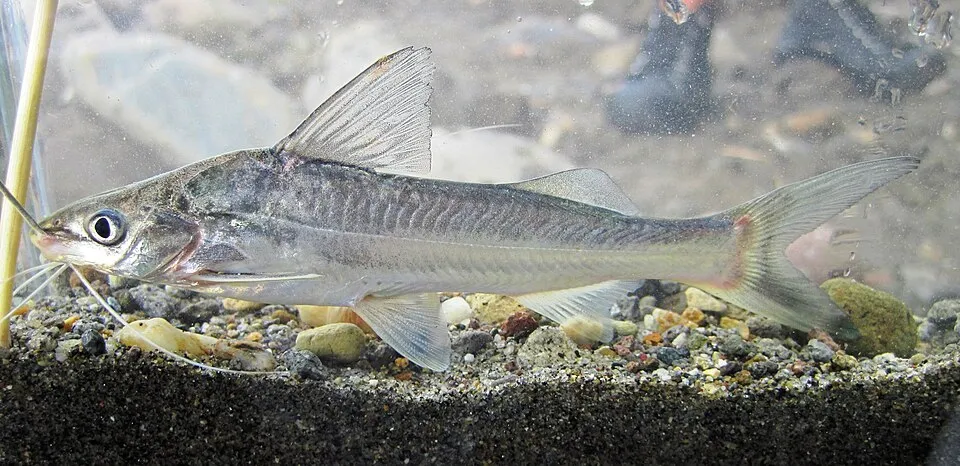 9.8 in (25 cm)53 gal (200 L)68–79°F (20–26°C)
Bloch's catfish
Pimelodus blochii
9.8 in (25 cm) · 53 gal (200 L)
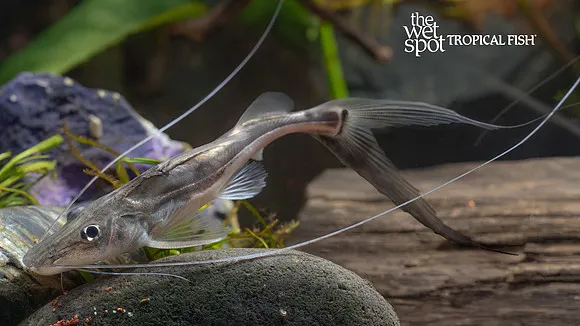 9.8 in (25 cm)106 gal (400 L)73–82°F (23–28°C)
Bullwhip pimelodus
Platysilurus mucosus
9.8 in (25 cm) · 106 gal (400 L)
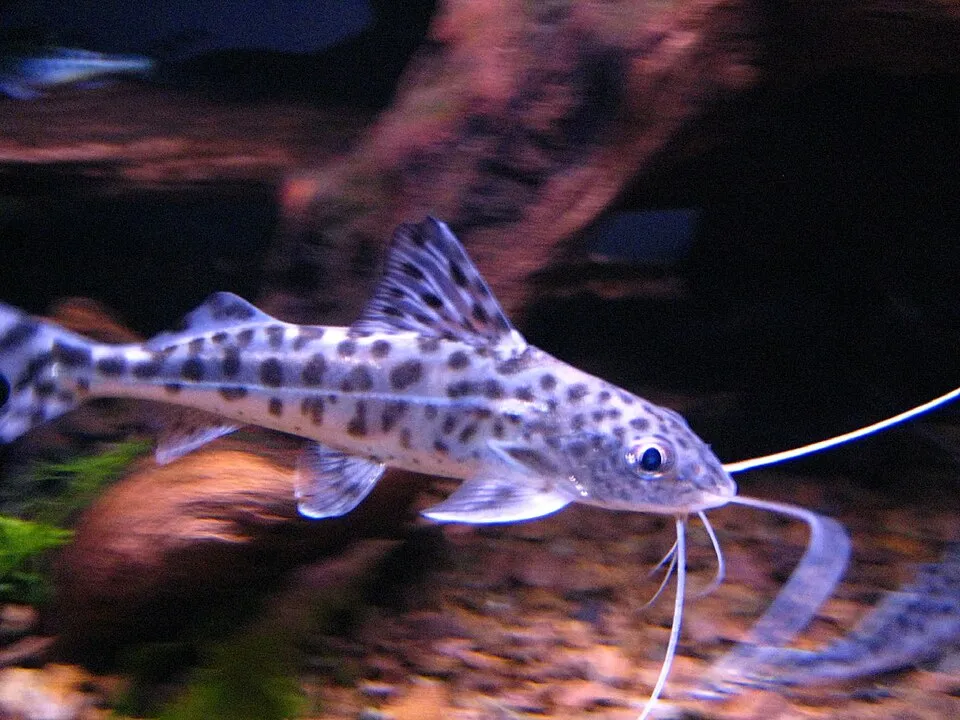 5.5 in (14 cm)55 gal (210 L)72–77°F (22–25°C)
Spotted pimelodus
Pimelodus pictus
5.5 in (14 cm) · 55 gal (210 L)
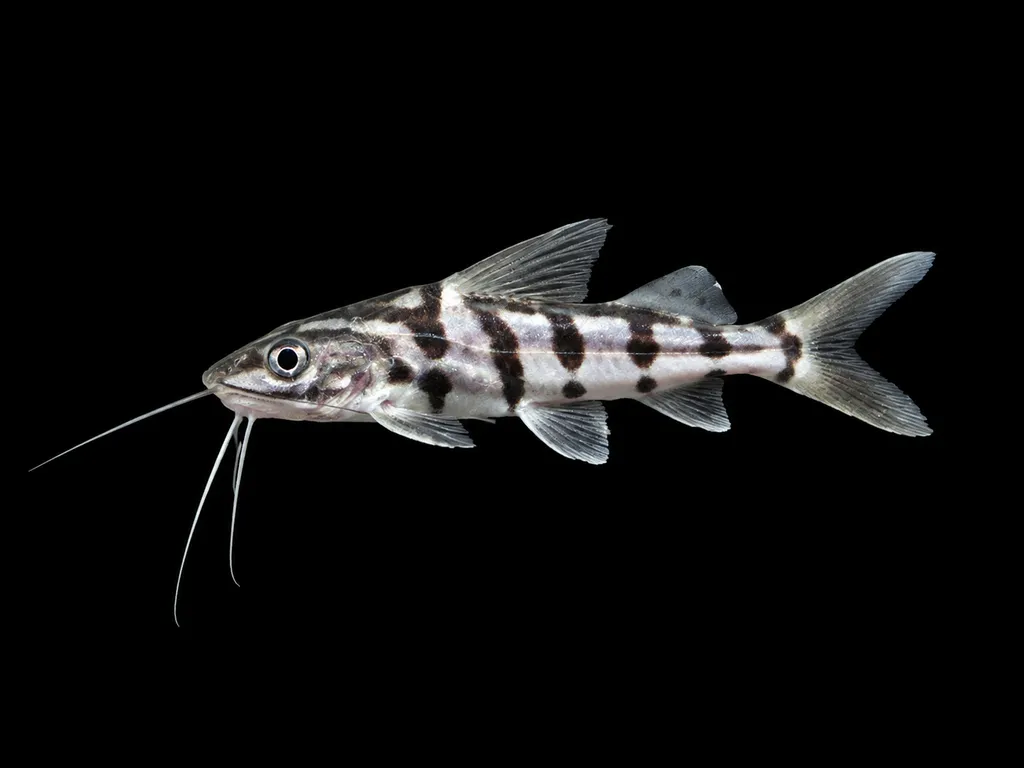 11.8 in (30 cm)106 gal (400 L)73–82°F (23–28°C)
Four-line pimelodus
Pimelodus albofasciatus
11.8 in (30 cm) · 106 gal (400 L)
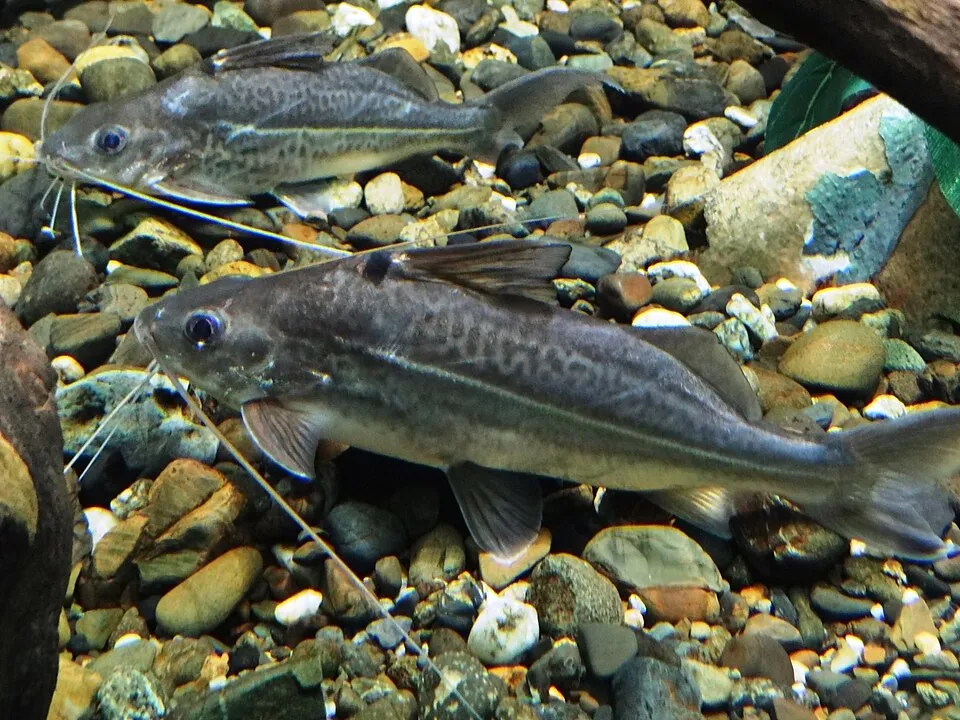 12.2 in (31 cm)143 gal (540 L)75–82°F (24–28°C)
Ornate pimelodus
Pimelodus ornatus
12.2 in (31 cm) · 143 gal (540 L)
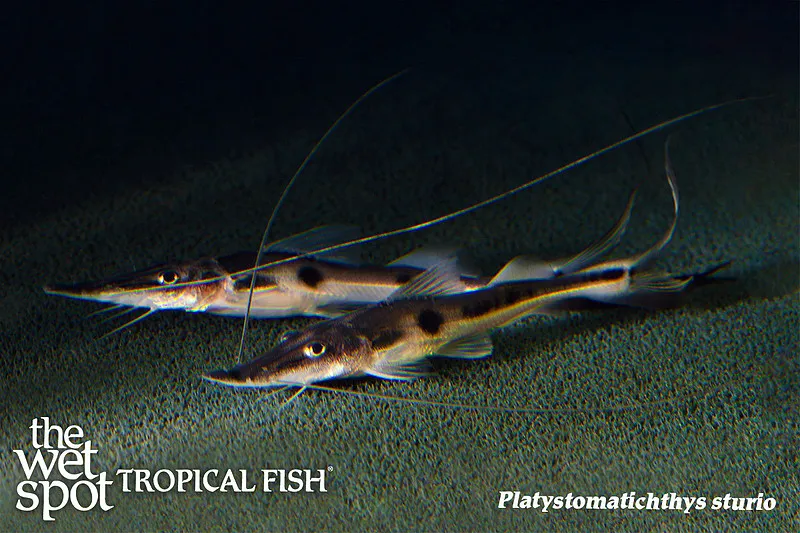 15.7 in (40 cm)120 gal (455 L)75–82°F (24–28°C)
Zorro catfish
Platystomatichthys sturio
15.7 in (40 cm) · 120 gal (455 L)