Bullwhip pimelodus
Platysilurus mucosus
Also known as Bullwhip catfish
FreshwaterFish
Care at a glance
- Temperature
- 73–82°F
- 23–28°C
- pH
- 6.0–7.5
- Adult size
- 9.8 in
- 25 cm
- Minimum tank
- 106 gal
- 400 L
- Temperament
- Mostly peaceful
- Social behavior
- Solitary
- Tankmates
- With caution
- Swim level
- Bottom
- Diet
- Carnivore
- Difficulty
- Medium
- Breeding
- No record
- Rarity
- Rare
- Family
- Pimelodidae
- Origin
- Orinoco and Amazon lowlands
Overview
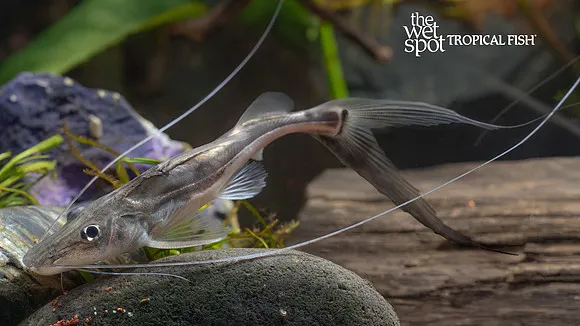
The bullwhip pimelodus is a nocturnal, predatory catfish with very long, trailing whiskers. It needs a keeper with some experience and a large, dim tank.
Did you know
The bullwhip pimelodus senses mostly through its whiskers. Streaming well behind the body in the current, they find food in the dark before the mouth ever reaches it.
Caring for the bullwhip pimelodus
Give the bullwhip pimelodus a dim tank of at least 106 gal (400 L) with a soft floor and open swimming lanes. A smooth sand bed will not scratch its skin or barbels. Add driftwood and shaded retreats, and keep the current gentle to moderate.
Keep the water warm and soft to neutral, at 73 to 82°F (23 to 28°C) and a pH of 6.0 to 7.5. Subdued lighting brings it out and suits its night-hunting habits. By day it hides, then comes out after dark to cruise the bottom. Feed meaty sinking foods in the evening, such as earthworm, prawn, mussel and sinking pellets.
It lives alone and is not a group fish, so keep just one. It is peaceful toward fish it cannot eat but will swallow anything small. Choose robust, medium to large community fish as tank mates, never small tetras or shrimp.
Handle it gently, since its pectoral spines are needle-sharp. There is no captive breeding record for the species.
Good to know
Platysilurus mucosus is a pimelodid catfish, built long and flattened. Its very long maxillary barbels trail back past the base of the tail. Juveniles also carry an oversized caudal fin that becomes more modest with age. The pectoral spines may be mildly venomous.
In the wild
The bullwhip pimelodus works sandy river floors across the Orinoco and Amazon lowlands. It hunts by touch and smell in dim, moving water.
Common questions
What size tank does a bullwhip pimelodus need?
A bullwhip pimelodus needs at least 106 gal (400 L). It spends most of its time in the bottom.
What temperature and pH does a bullwhip pimelodus need?
A bullwhip pimelodus is comfortable at 73–82°F (23–28°C) with a pH of 6.0–7.5.
What does a bullwhip pimelodus eat?
A bullwhip pimelodus eats meaty sinking foods such as earthworm, prawn, mussel and sinking pellets, offered in the evening. It will also swallow anything small, such as small tetras or shrimp.
How big does a bullwhip pimelodus get?
An adult bullwhip pimelodus reaches about 9.8 in (25 cm).
Related species
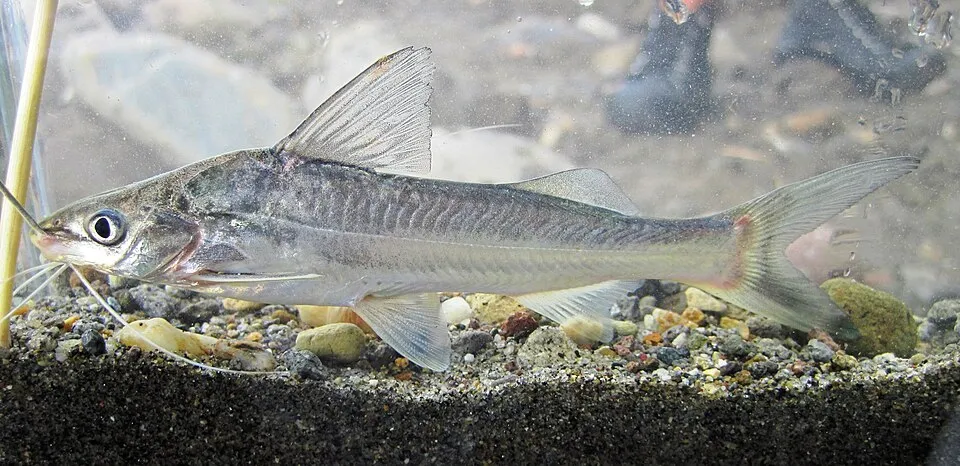 9.8 in (25 cm)53 gal (200 L)68–79°F (20–26°C)
Bloch's catfish
Pimelodus blochii
9.8 in (25 cm) · 53 gal (200 L)
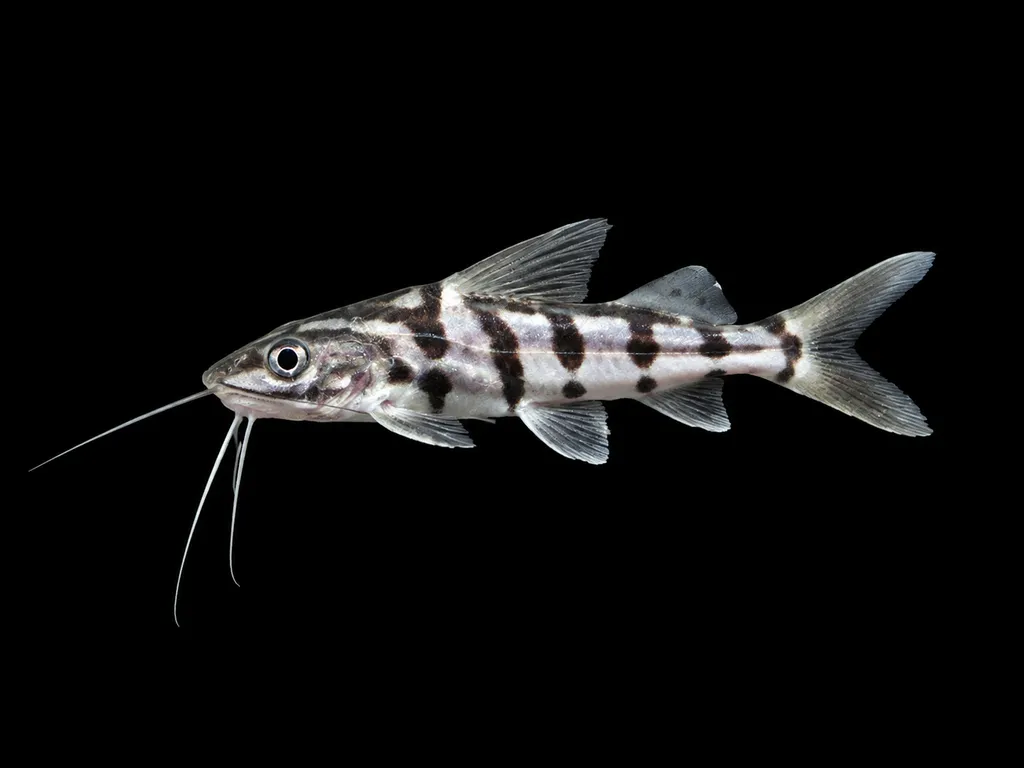 11.8 in (30 cm)106 gal (400 L)73–82°F (23–28°C)
Four-line pimelodus
Pimelodus albofasciatus
11.8 in (30 cm) · 106 gal (400 L)
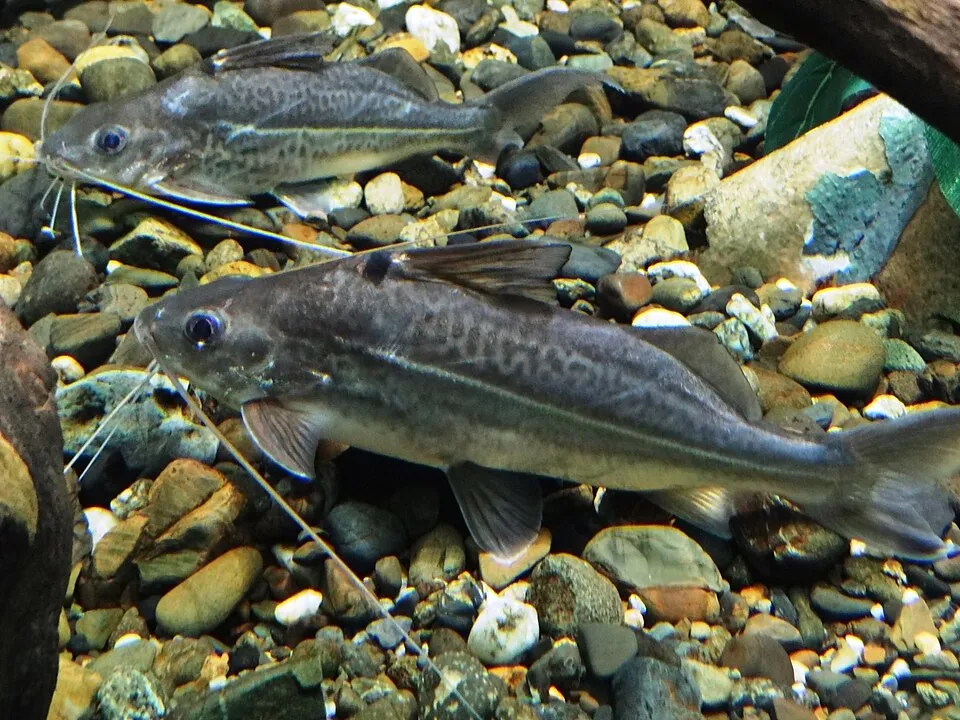 12.2 in (31 cm)143 gal (540 L)75–82°F (24–28°C)
Ornate pimelodus
Pimelodus ornatus
12.2 in (31 cm) · 143 gal (540 L)
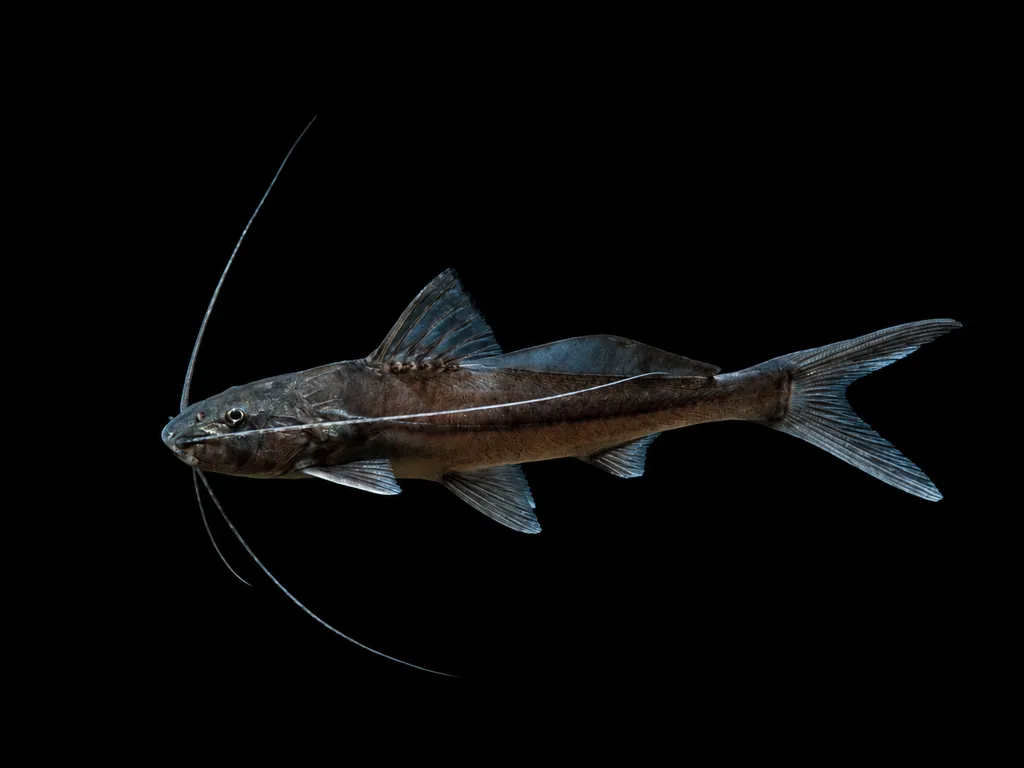 7.9 in (20 cm)106 gal (400 L)73–82°F (23–28°C)
Blue jumper catfish
Exallodontus aguanai
7.9 in (20 cm) · 106 gal (400 L)
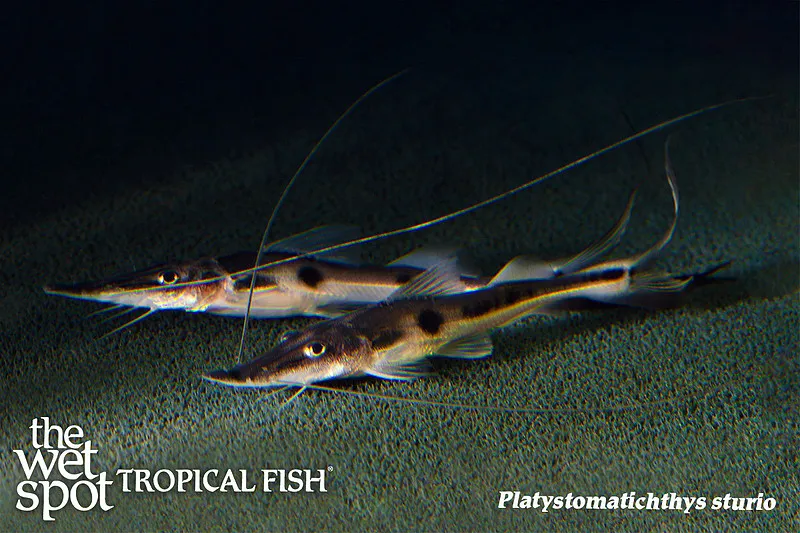 15.7 in (40 cm)120 gal (455 L)75–82°F (24–28°C)
Zorro catfish
Platystomatichthys sturio
15.7 in (40 cm) · 120 gal (455 L)
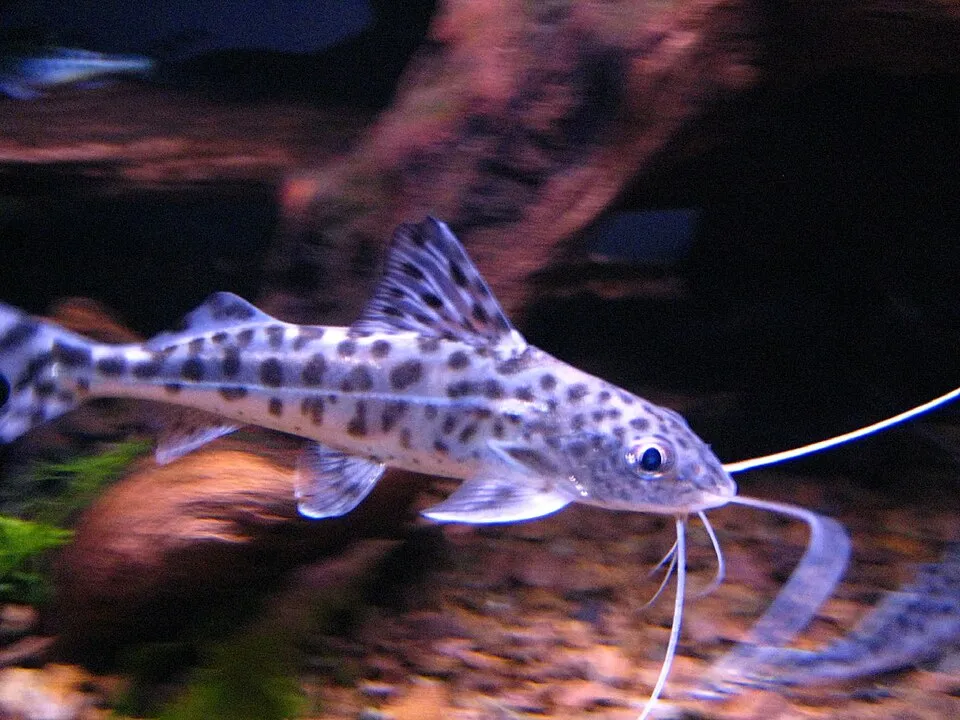 5.5 in (14 cm)55 gal (210 L)72–77°F (22–25°C)
Spotted pimelodus
Pimelodus pictus
5.5 in (14 cm) · 55 gal (210 L)