Porthole rasbora
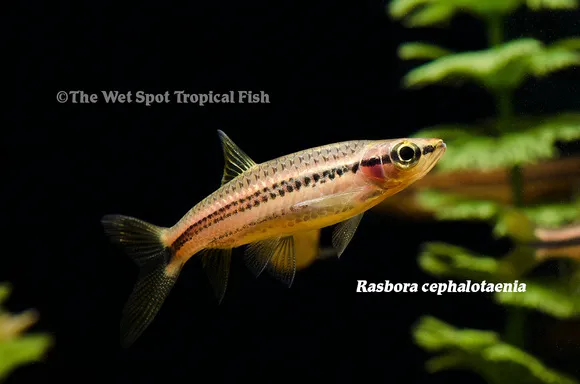
Rasbora cephalotaenia
Also known as Cephalotaenia rasbora
FreshwaterFish
Care at a glance
- Temperature
- 72–81°F
- 22–27°C
- pH
- 5.0–7.0
- Adult size
- 5.1 in
- 13 cm
- Minimum tank
- 42 gal
- 160 L
- Temperament
- Peaceful
- Social behavior
- Schooling
- Swim level
- Middle
- Difficulty
- Medium
- Breeding
- No record
- Rarity
- Rare
- Family
- Danionidae
- Origin
- Malay Peninsula, Singapore, Borneo and Sumatra
Overview
The porthole rasbora is a large, streamlined and peaceful rasbora for a long blackwater tank. It suits a keeper with some experience.
Did you know
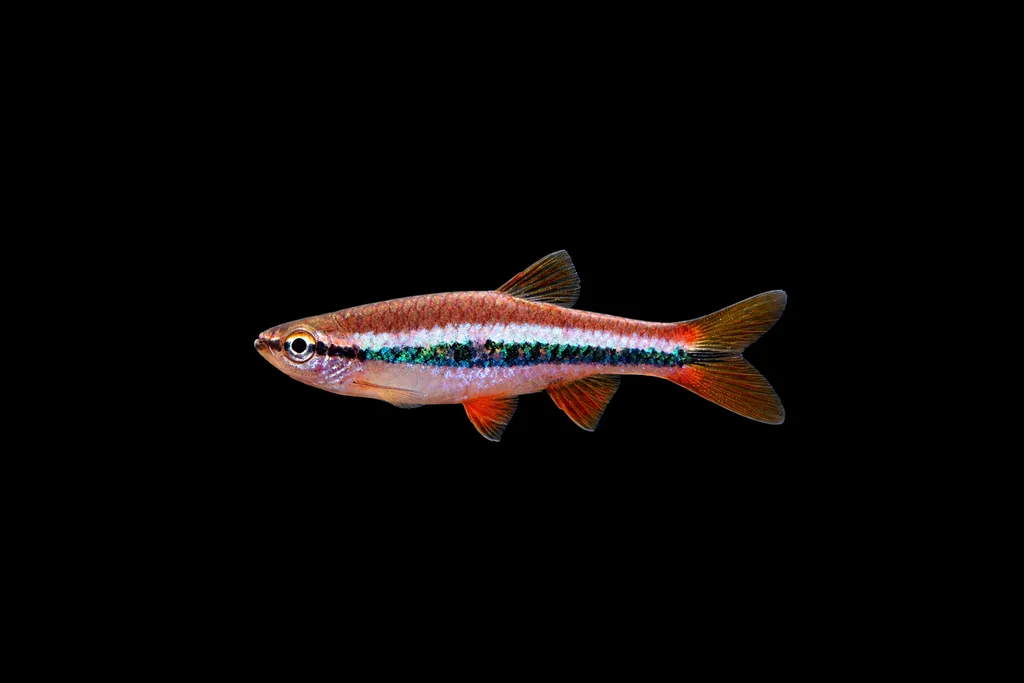
The row of dark blotches along the porthole rasbora's side is spaced like the portholes on a ship's hull. That spacing gave the fish its common name.
Caring for the porthole rasbora
Porthole rasboras need a long, shaded tank of 42 gal (160 L) or larger, given their adult length and active habits. Leave plenty of open swimming room, and add a sandy substrate and tangles of wood.
Keep the water soft and tannin-stained, at 72 to 81°F (22 to 27°C) and a pH of 5.0 to 7.0. They take all the usual foods, such as quality flake and pellets plus frozen and live items.
Keep a group of at least six for a settled, confident shoal. They glide steadily through the middle of the tank rather than darting, and they are peaceful despite their size.
Good companions are other calm blackwater fish, such as similar rasboras, gentle barbs, loaches and small gouramis. Their breeding is not documented in aquaria, but like their relatives they are presumed to be egg-scattering spawners.
Good to know
Rasbora cephalotaenia belongs to the family Danionidae. Wild fish can reach roughly twice the length of the small rasboras most keepers picture, though aquarium fish usually stay smaller. A dark lateral line runs the length of its body and breaks into a row of separated marks.
In the wild
The porthole rasbora ranges widely across Sundaland, in blackwater streams and peat swamps of the Malay Peninsula, Singapore, Borneo and Sumatra. These waters have soft substrates with driftwood, roots and leaf litter under dim light.
Weekly picks
Tank mates
The porthole rasbora is a peaceful, schooling species that keeps to the middle. These picks share a community profile with it, are safe together in both directions, and overlap on water type, temperature and pH.
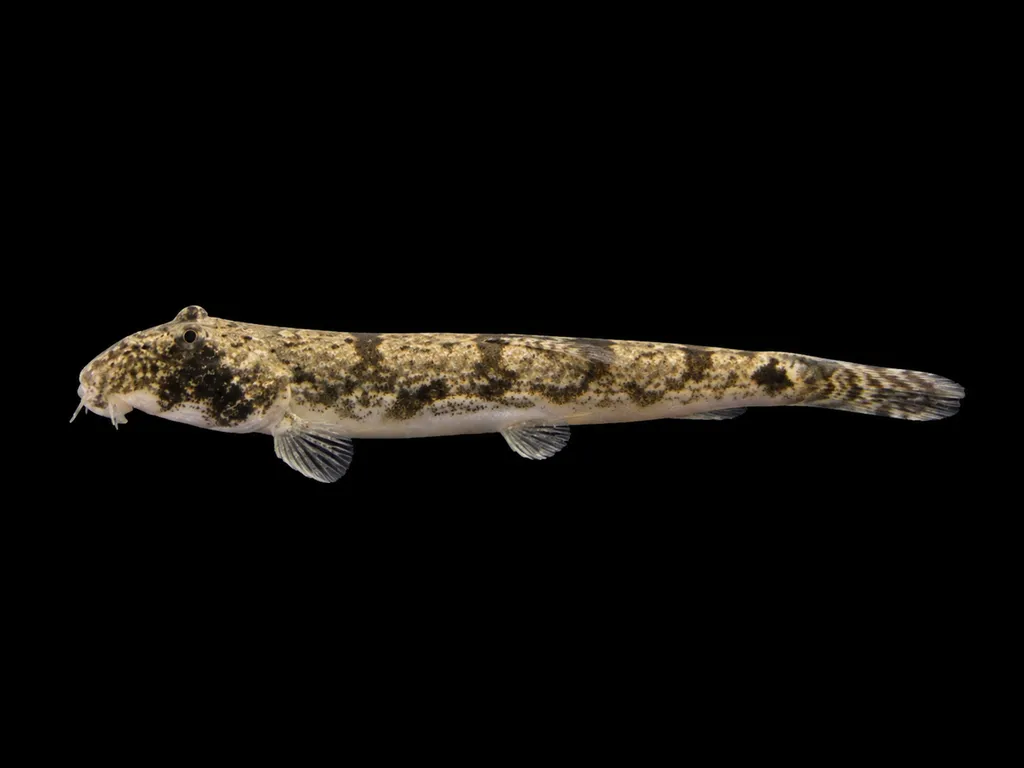
Gongota loach
Canthophrys gongota
Freshwater5.1 in (13 cm) · 42 gal (160 L)70–81°F (21–27°C)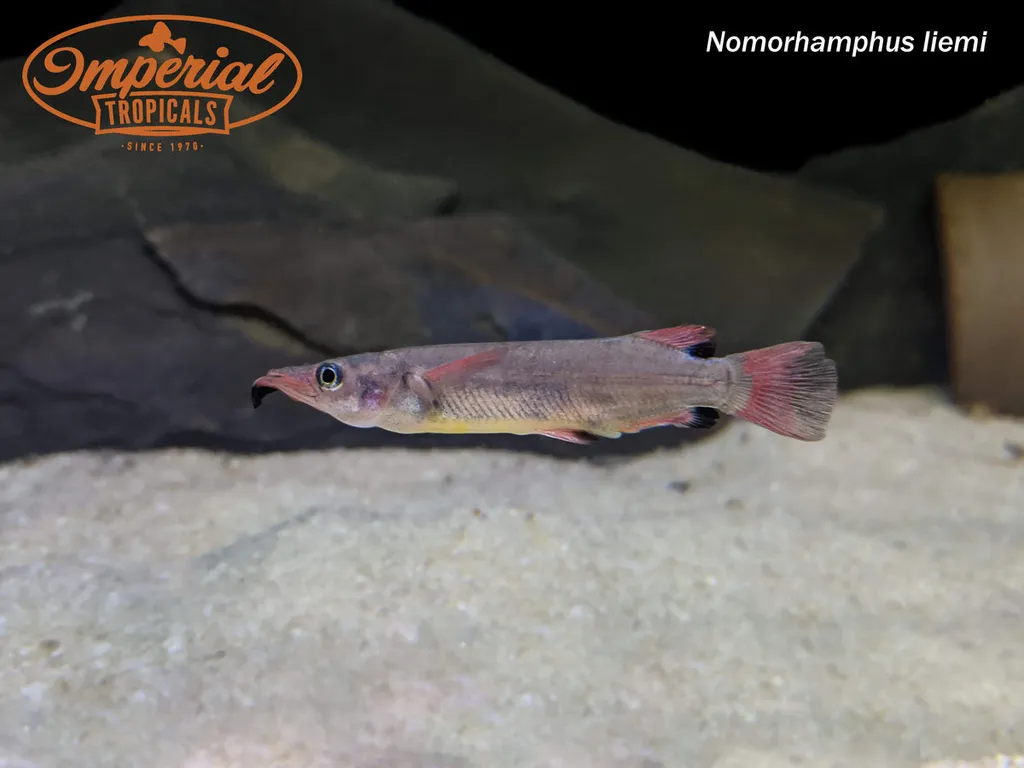
Celebes halfbeak
Nomorhamphus liemi
Freshwater3.5 in (9 cm) · 40 gal (150 L)68–77°F (20–25°C)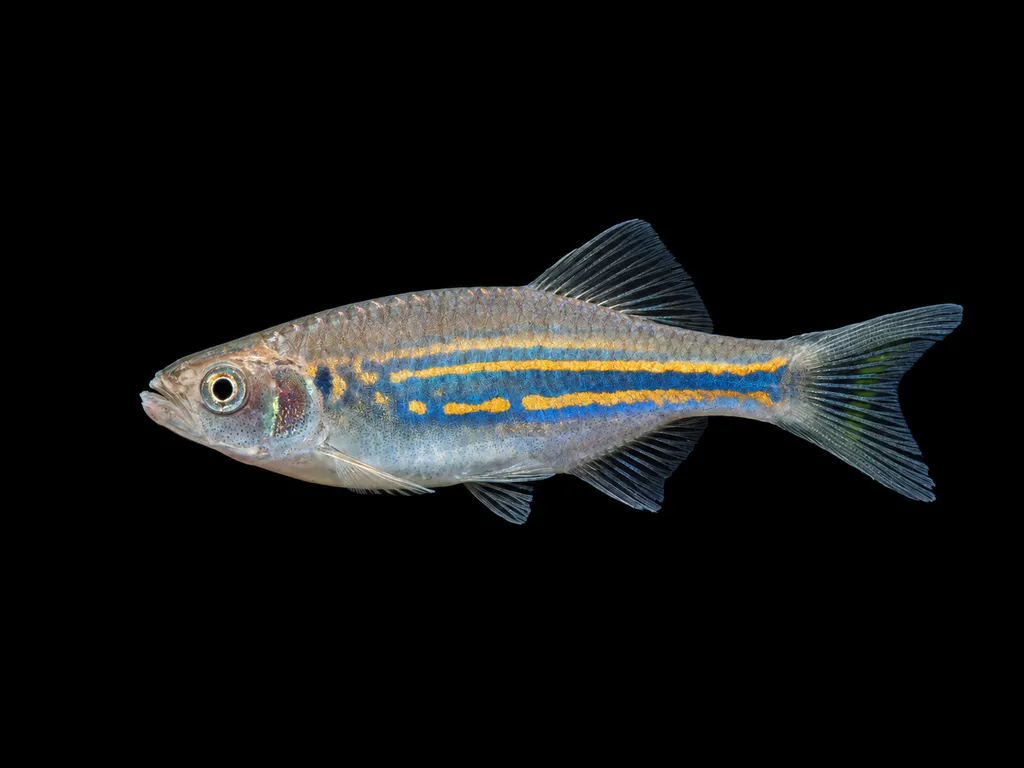
Laos giant danio
Devario acrostomus
Freshwater4.4 in (11.3 cm) · 42 gal (160 L)72–81°F (22–27°C)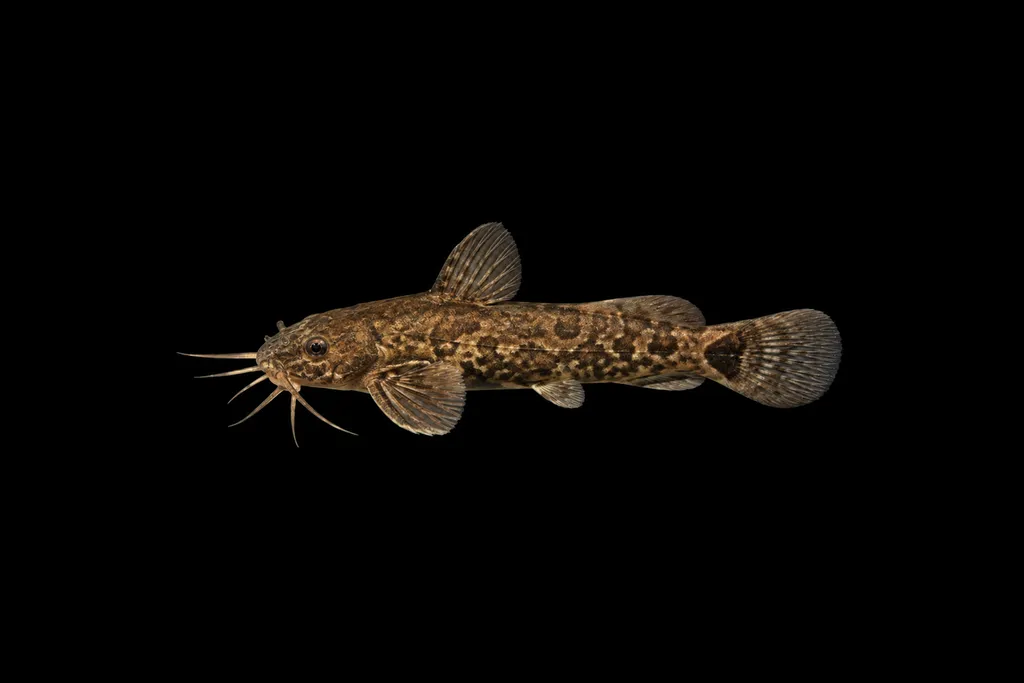
Blotched sisorid catfish
Glyptothorax macromaculatus
Freshwater6.3 in (16 cm) · 42 gal (160 L)68–79°F (20–26°C)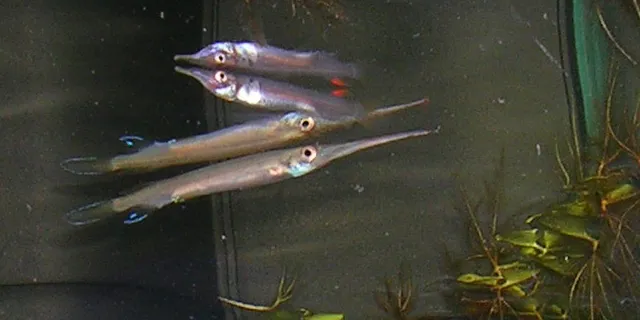
Forest halfbeak
Hemirhamphodon pogonognathus
Freshwater3.5 in (9 cm) · 34 gal (130 L)75–82°F (24–28°C)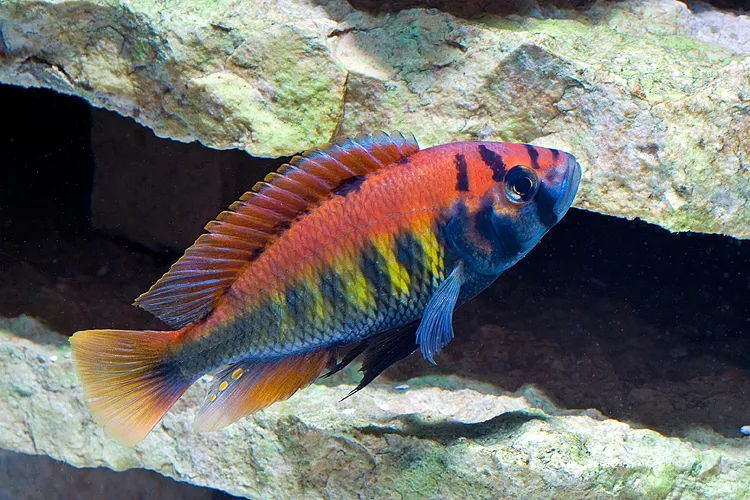
Flameback cichlid
Pundamilia nyererei
Freshwater3.5 in (9 cm) · 42 gal (160 L)73–81°F (23–27°C)
Common questions
What size tank does a porthole rasbora need?
A porthole rasbora needs at least 42 gal (160 L). It spends most of its time in the middle.
What temperature and pH does a porthole rasbora need?
A porthole rasbora is comfortable at 72–81°F (22–27°C) with a pH of 5.0–7.0.
What does a porthole rasbora eat?
A porthole rasbora takes all the usual foods, such as quality flake and pellets plus frozen and live items.
How big does a porthole rasbora get?
An adult porthole rasbora reaches about 5.1 in (13 cm).
Does a porthole rasbora need a group?
Yes. A porthole rasbora is a schooling species and should be kept in a group, not singly.
How does a porthole rasbora breed?
Porthole rasboras have no documented breeding in aquaria. Like their relatives, they are presumed to scatter their eggs.
Related species
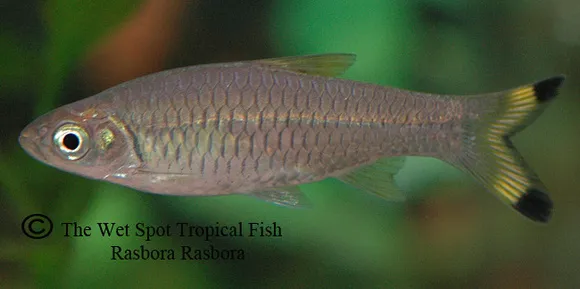 5.1 in (13 cm)42 gal (160 L)72–81°F (22–27°C)
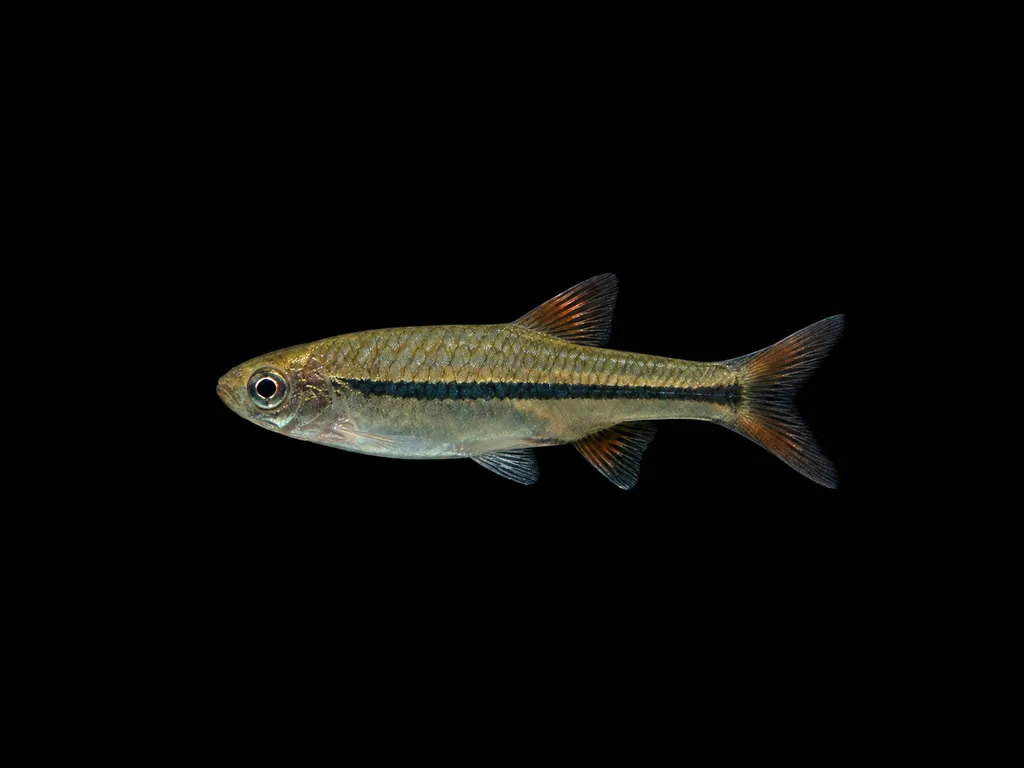
Gangetic scissortail rasbora
Rasbora rasbora
5.1 in (13 cm) · 42 gal (160 L)
 5.1 in (13 cm)42 gal (160 L)72–81°F (22–27°C)
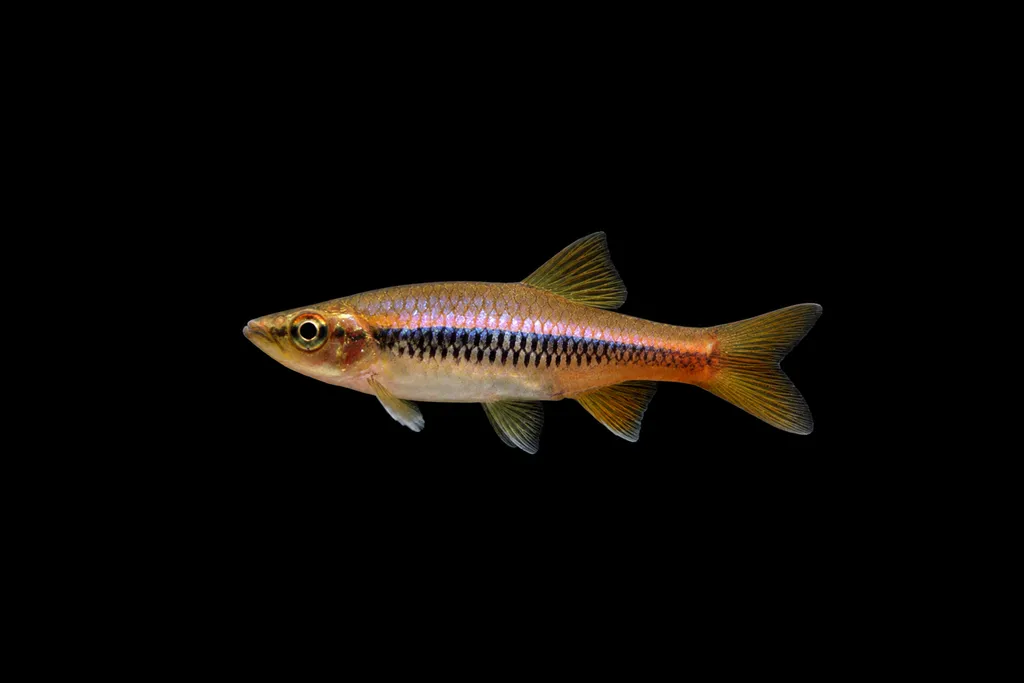
Sumatran rasbora
Rasbora sumatrana
5.1 in (13 cm) · 42 gal (160 L)
 3.3 in (8.5 cm)29 gal (110 L)73–81°F (23–27°C)
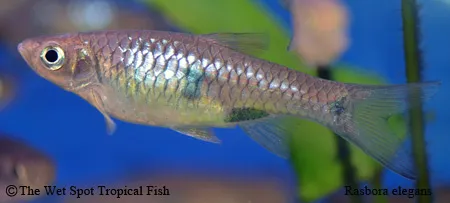
Wilpita rasbora
Rasbora wilpita
3.3 in (8.5 cm) · 29 gal (110 L)
 7.9 in (20 cm)53 gal (200 L)72–81°F (22–27°C)
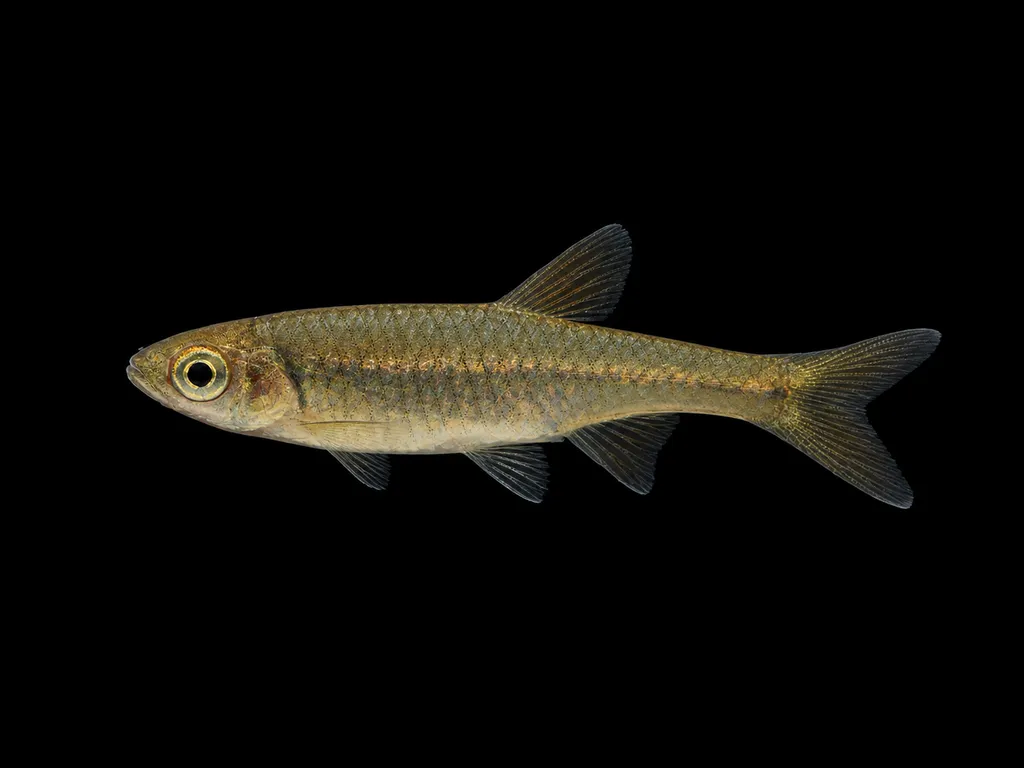
Twospot rasbora
Rasbora elegans
7.9 in (20 cm) · 53 gal (200 L)
 2.8 in (7 cm)24 gal (90 L)72–81°F (22–27°C)
Bangka rasbora
Rasbora bankanensis
2.8 in (7 cm) · 24 gal (90 L)
 2.8 in (7 cm)24 gal (90 L)73–81°F (23–27°C)
Yap's rasbora
Rasbora patrickyapi
2.8 in (7 cm) · 24 gal (90 L)