Pearl-spotted angel pleco
Hypancistrus margaritatus
Also known as L404, Pearl hypancistrus
FreshwaterFish
Care at a glance
- Temperature
- 79–86°F
- 26–30°C
- pH
- 5.5–7.2
- Adult size
- 2.4 in
- 6 cm
- Minimum tank
- 42 gal
- 160 L
- Temperament
- Peaceful
- Social behavior
- Solitary
- Swim level
- Bottom
- Diet
- Carnivore
- Difficulty
- Medium
- Breeding
- Cave spawner · Medium
- Rarity
- Rare
- Family
- Loricariidae
- Origin
- Takutu drainage, Guyana-Brazil border
Overview
The pearl-spotted angel pleco is a genuinely small Hypancistrus for a calm community tank. It suits a keeper with some experience.
Did you know
The pearl-spotted angel pleco's species name, margaritatus, is Latin for adorned with pearls. For so small a fish, it wears the dense pale spotting of a fish several times its size. That spotting is why collectors prize it.
Caring for the pearl-spotted angel pleco
Give the pearl-spotted angel pleco at least 42 gal (160 L), which is ample for a pair with caves. Build a scape of stacked stone and driftwood full of tight caves, set over sand. It lives on the bottom among the rock and wood and wants its own cave to claim.
Keep the water soft and warm, at 79 to 86°F (26 to 30°C) with a pH of 5.5 to 7.2. Give it gentle current and clean, well-filtered conditions. A little tannin from leaf litter suits its blackwater origin.
It shares the carnivorous bent of its genus, so feed meaty sinking foods rather than relying on algae. Offer frozen bloodworm, baby brine shrimp and good carnivore pellets.
Keep a single fish or a compatible breeding pair rather than a group, since adults defend cave space. It is peaceful toward other fish and pairs well with small, gentle community species.
Breeding is of moderate difficulty and follows the usual Hypancistrus way. The male guards the eggs in a cave until the young emerge.
Good to know
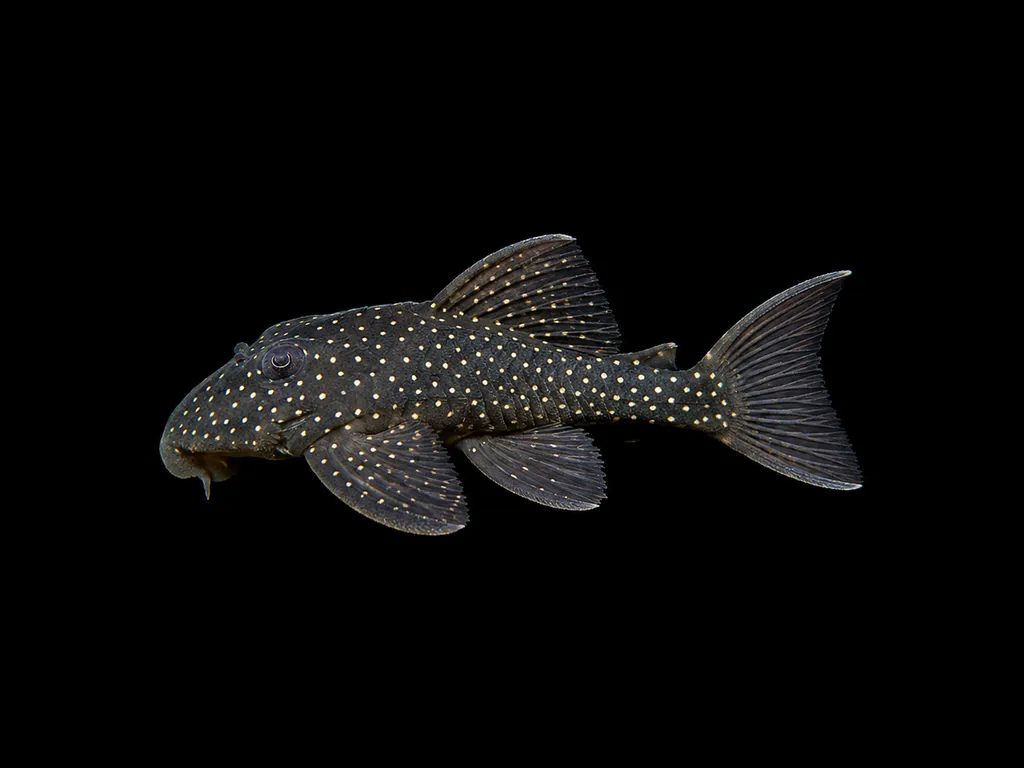
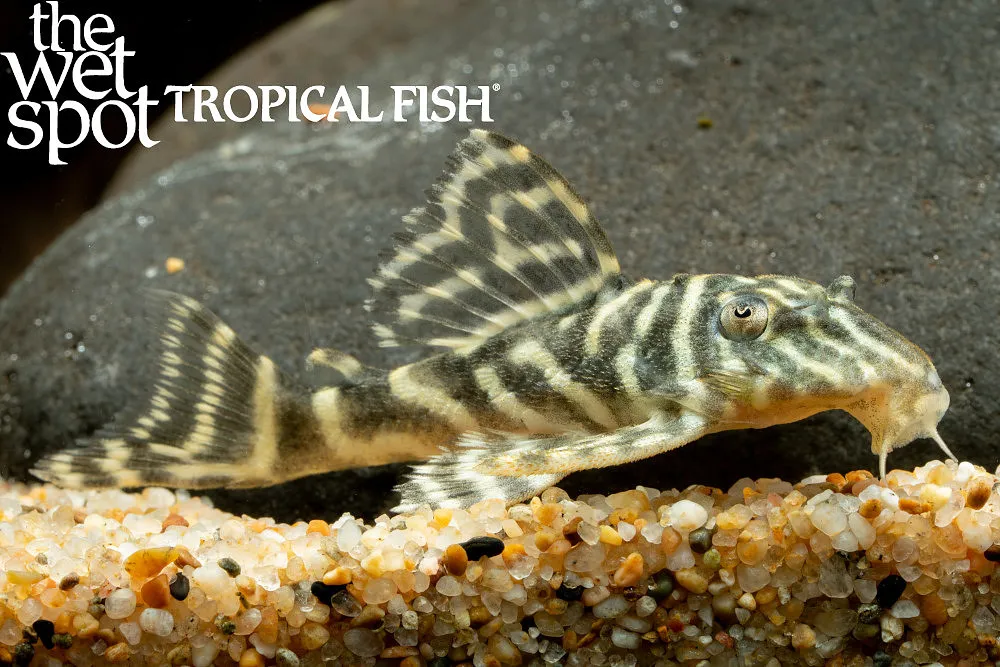
Hypancistrus margaritatus is a dwarf member of the family Loricariidae, dark charcoal sprinkled with close-set pale spots. Milton Tan and Jonathan Armbruster described it in 2016.
In the wild
The pearl-spotted angel pleco was found in the Takutu drainage on the border of Guyana and Brazil. It lives in warm, rocky creeks of the Rupununi lowlands.
Weekly picks
Tank mates
The pearl-spotted angel pleco is a peaceful, solitary species that keeps to the bottom. These picks share a community profile with it, are safe together in both directions, and overlap on water type, temperature and pH.
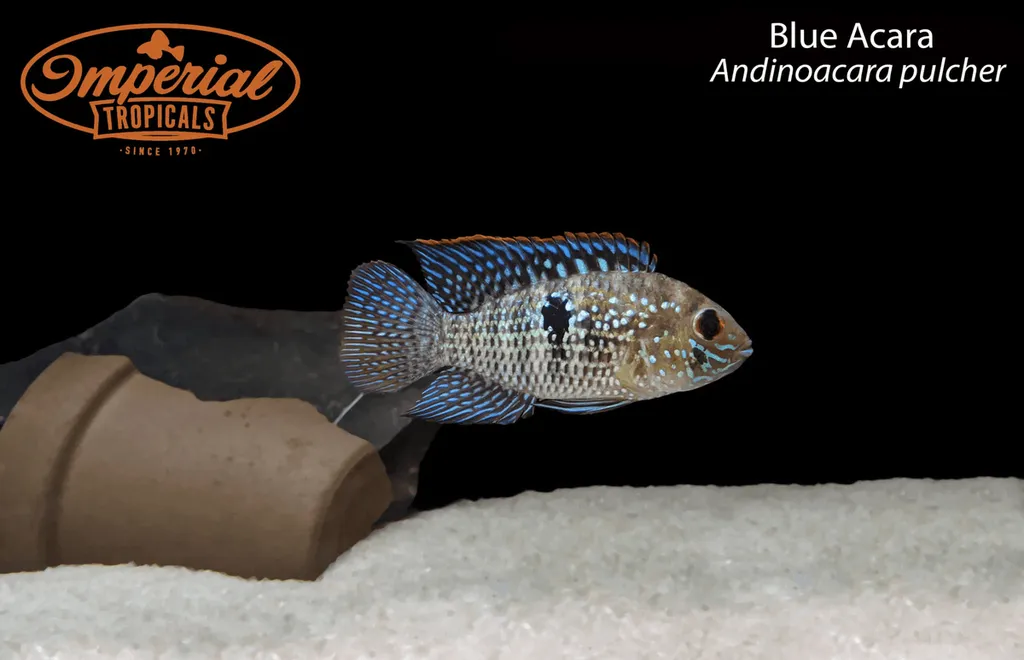
Blue acara
Andinoacara pulcher
Freshwater5.9 in (15 cm) · 42 gal (160 L)72–82°F (22–28°C)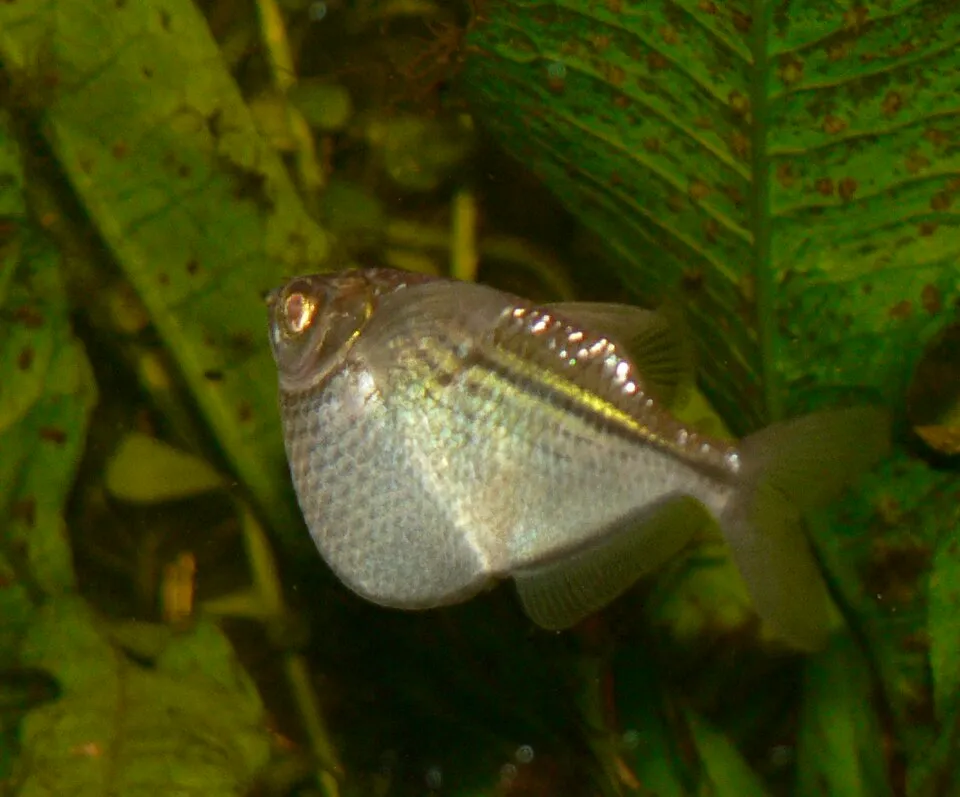
Common hatchetfish
Gasteropelecus sternicla
Freshwater1.6 in (4 cm) · 33 gal (125 L)68–82°F (20–28°C)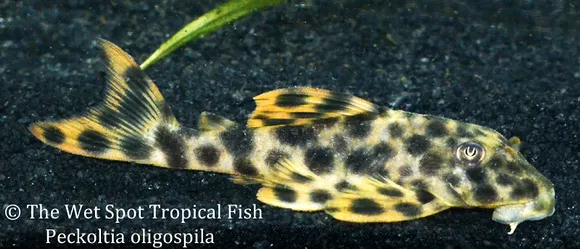
Brown dot peckoltia
Peckoltia oligospila
Freshwater5.9 in (15 cm) · 42 gal (160 L)77–84°F (25–29°C)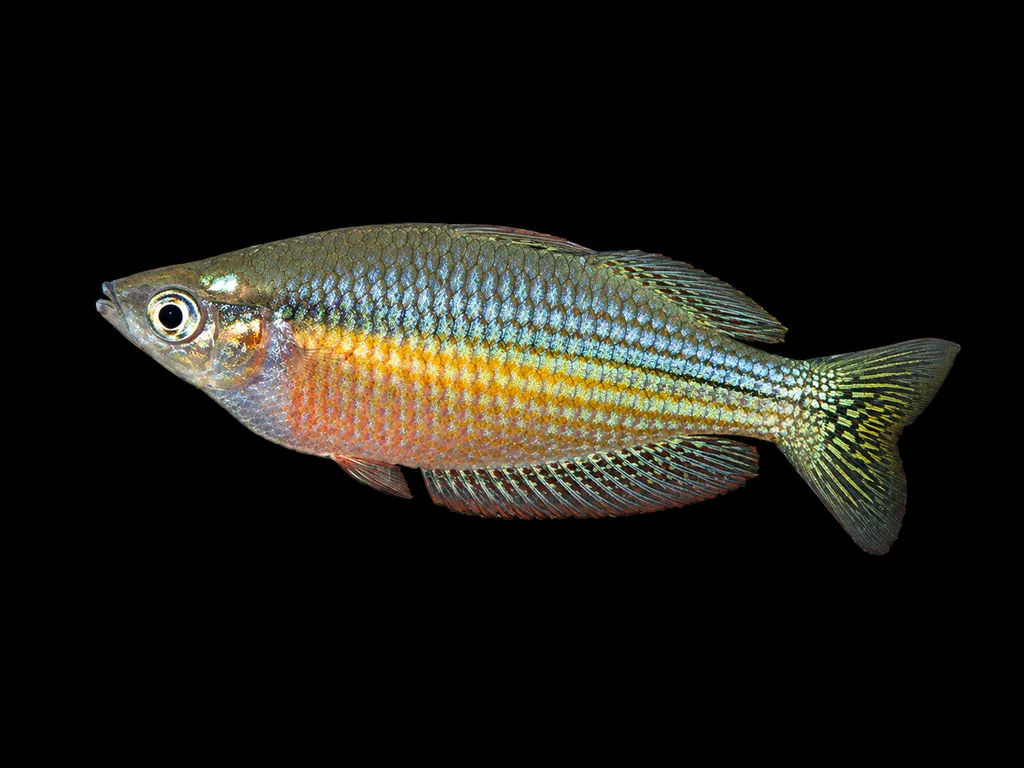
Desert rainbowfish
Melanotaenia splendida tatei
Freshwater3.9 in (10 cm) · 42 gal (160 L)64–86°F (18–30°C)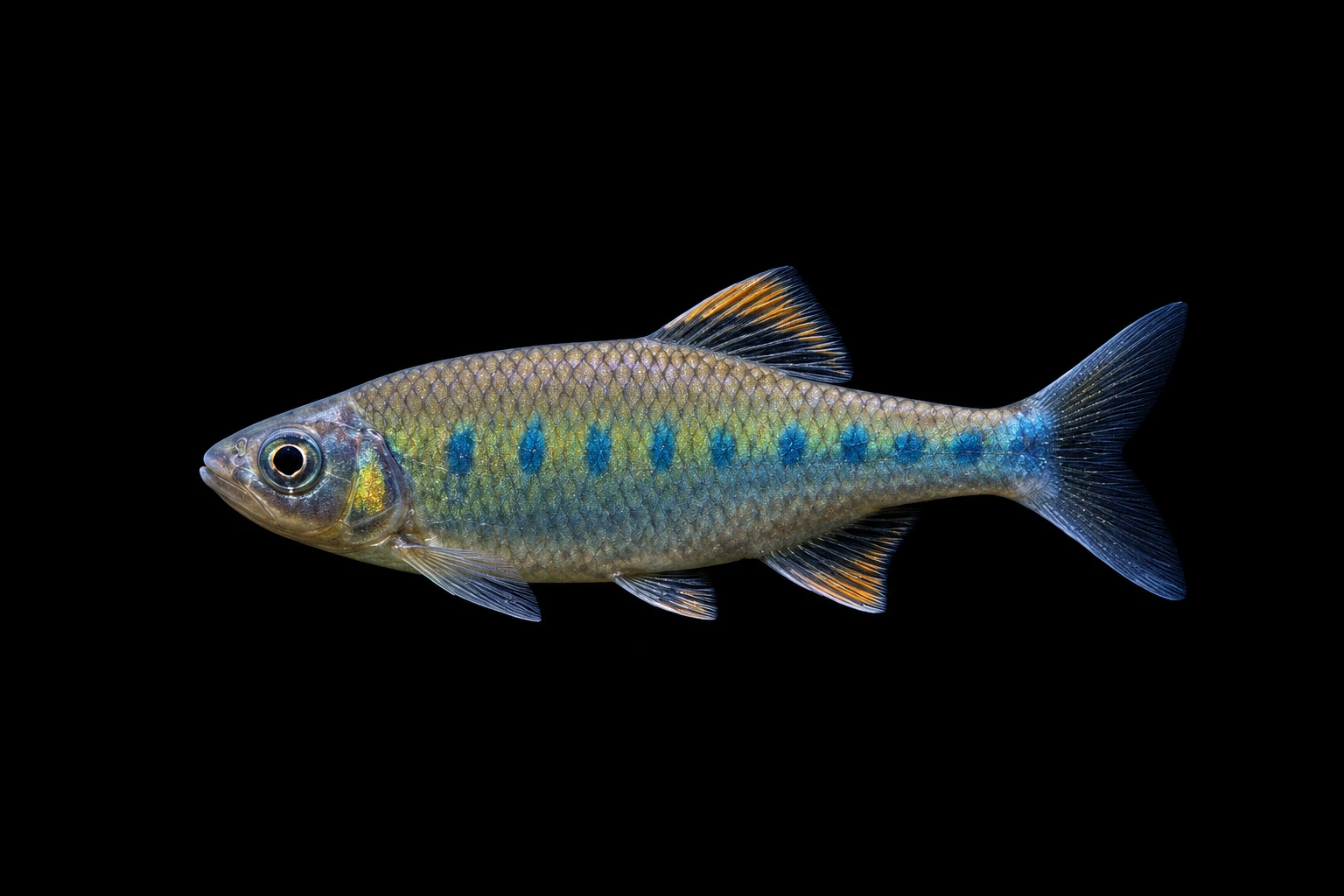
Blue spotted hill trout
Barilius bakeri
Freshwater5.1 in (13 cm) · 53 gal (200 L)64–79°F (18–26°C)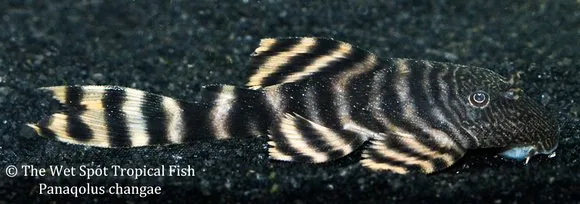
Iquitos tiger pleco
Panaqolus changae
Freshwater3.9 in (10 cm) · 42 gal (160 L)77–84°F (25–29°C)
Common questions
What size tank does a pearl-spotted angel pleco need?
A pearl-spotted angel pleco needs at least 42 gal (160 L). It spends most of its time in the bottom.
What temperature and pH does a pearl-spotted angel pleco need?
A pearl-spotted angel pleco is comfortable at 79–86°F (26–30°C) with a pH of 5.5–7.2.
What does a pearl-spotted angel pleco eat?
A pearl-spotted angel pleco eats meaty sinking foods such as frozen bloodworm, baby brine shrimp and good carnivore pellets. Do not rely on algae to feed it.
How big does a pearl-spotted angel pleco get?
An adult pearl-spotted angel pleco reaches about 2.4 in (6 cm).
How does a pearl-spotted angel pleco breed?
The pearl-spotted angel pleco breeds in the usual Hypancistrus way, in a cave. The male guards the eggs there until the young emerge. Breeding is of moderate difficulty.
Related species
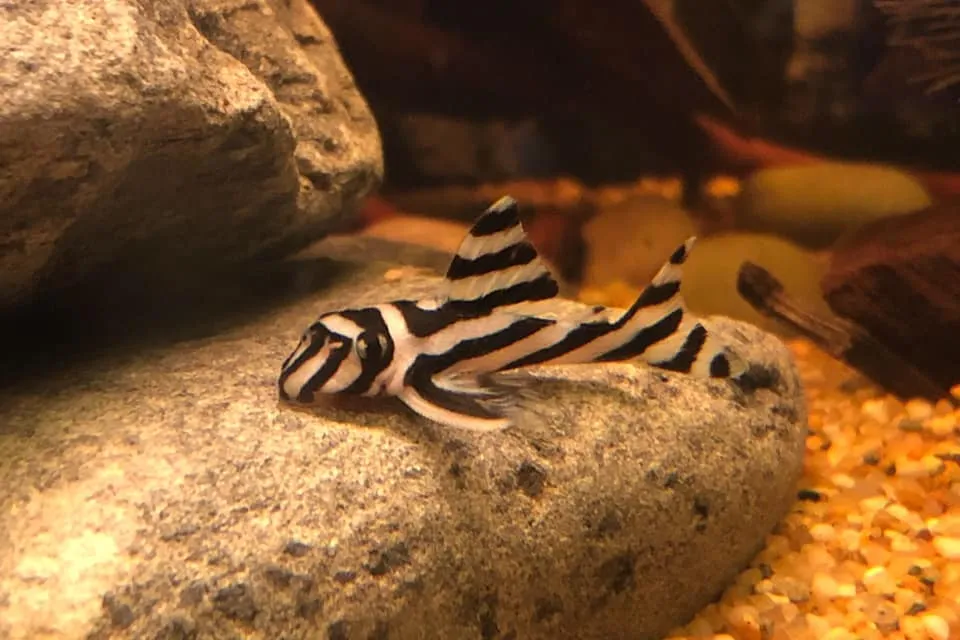 3.1 in (8 cm)15 gal (55 L)79–86°F (26–30°C)
Zebra pleco
Hypancistrus zebra
3.1 in (8 cm) · 15 gal (55 L)
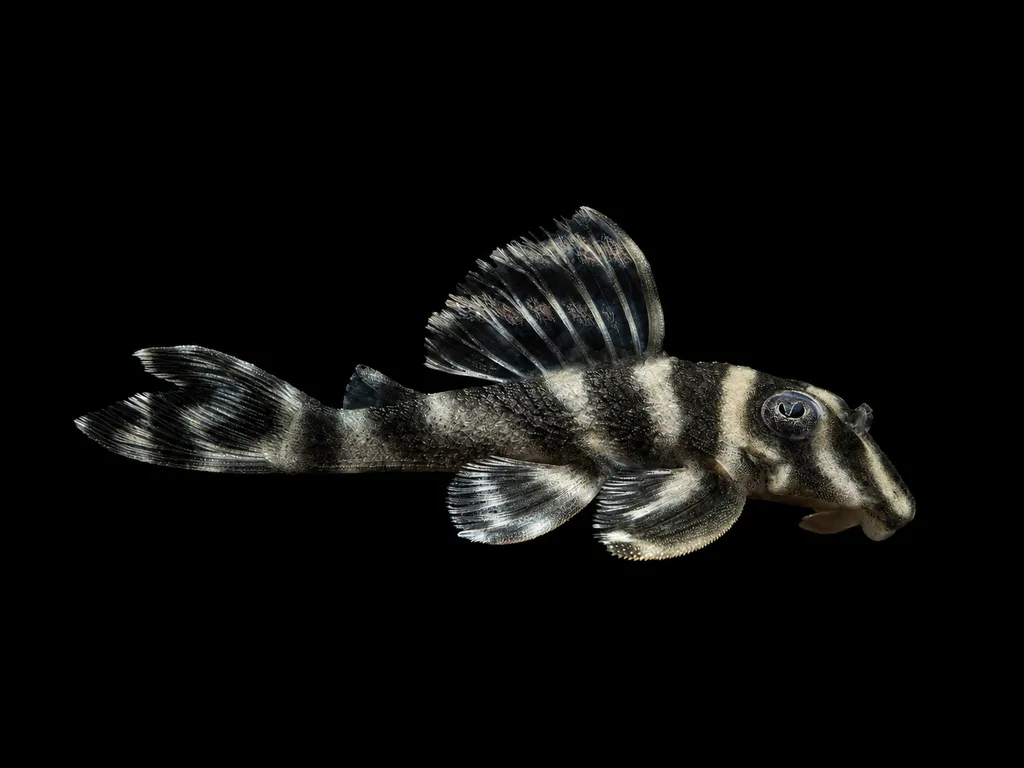 3.9 in (10 cm)42 gal (160 L)79–86°F (26–30°C)
Bandit pleco
Hypancistrus furunculus
3.9 in (10 cm) · 42 gal (160 L)
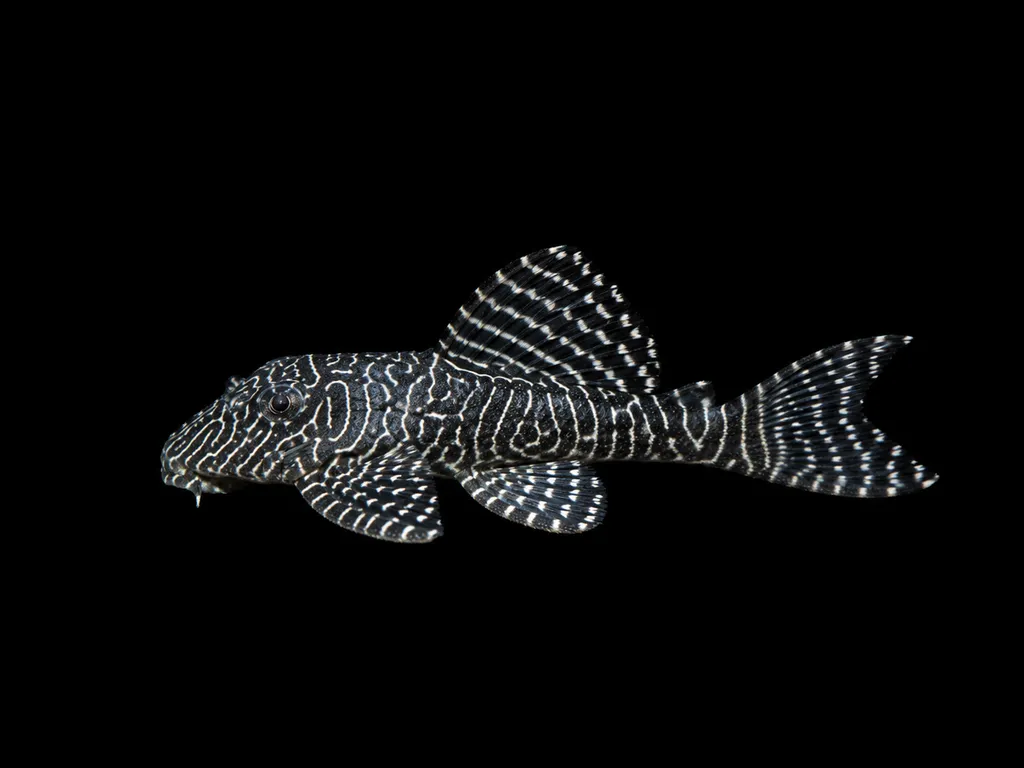 3.9 in (10 cm)20 gal (75 L)79–86°F (26–30°C)
Queen arabesque pleco (L260)
Hypancistrus sp. L260
3.9 in (10 cm) · 20 gal (75 L)
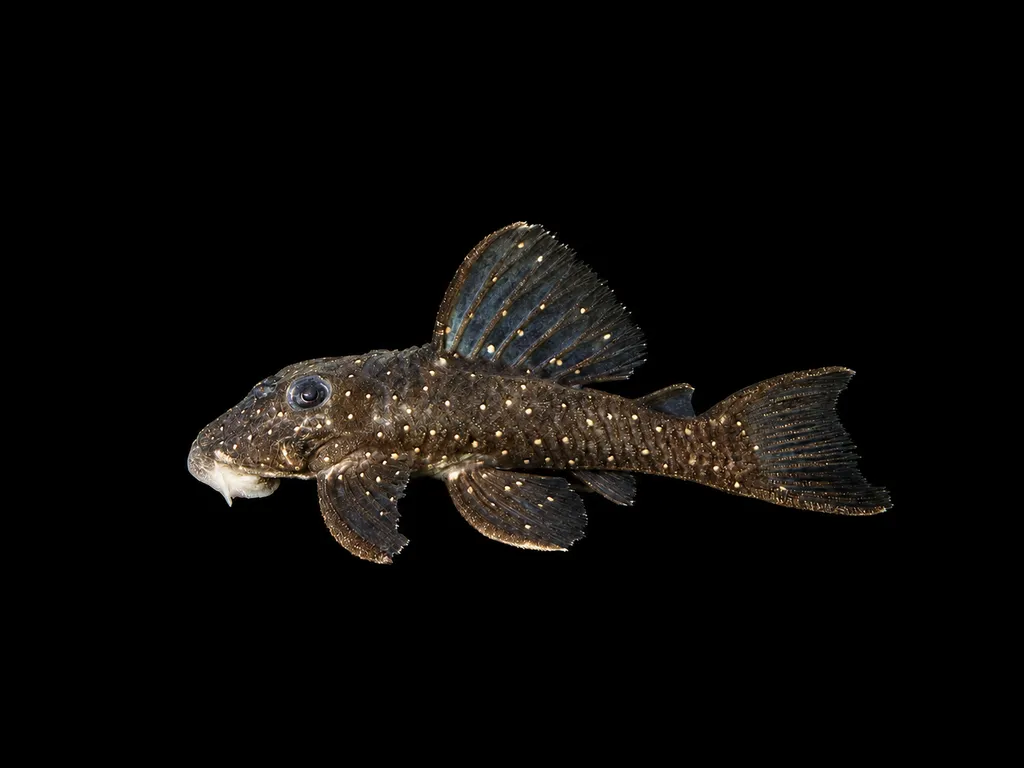 3.9 in (10 cm)42 gal (160 L)79–86°F (26–30°C)
Tiny spot pleco
Hypancistrus lunaorum
3.9 in (10 cm) · 42 gal (160 L)
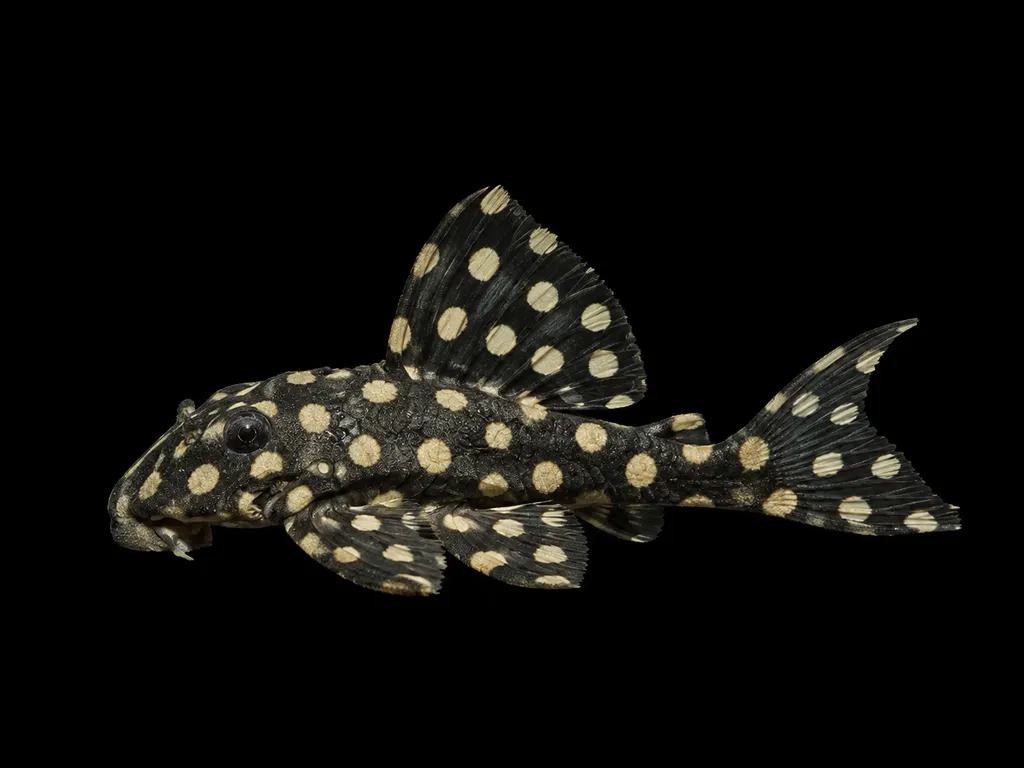 4.7 in (12 cm)42 gal (160 L)79–86°F (26–30°C)
Orinoco polka-dot pleco
Hypancistrus contradens
4.7 in (12 cm) · 42 gal (160 L)
 3.5 in (9 cm)20 gal (75 L)79–86°F (26–30°C)
Colombian zebra pleco (L129)
Hypancistrus debilittera
3.5 in (9 cm) · 20 gal (75 L)