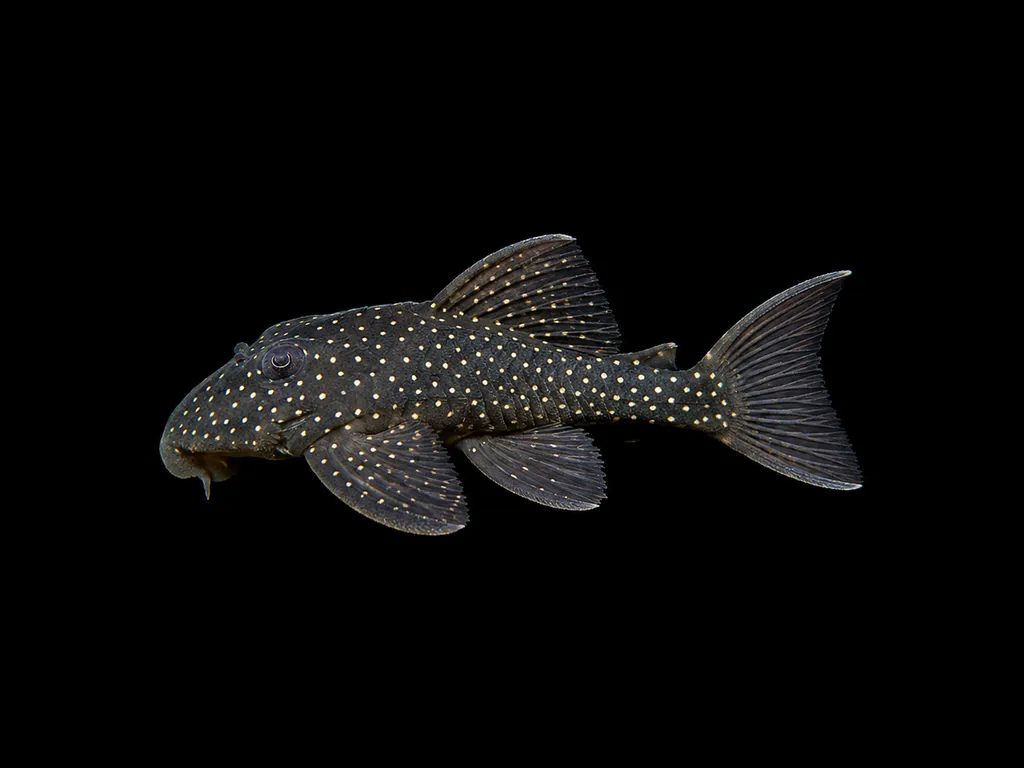
Orinoco polka-dot pleco
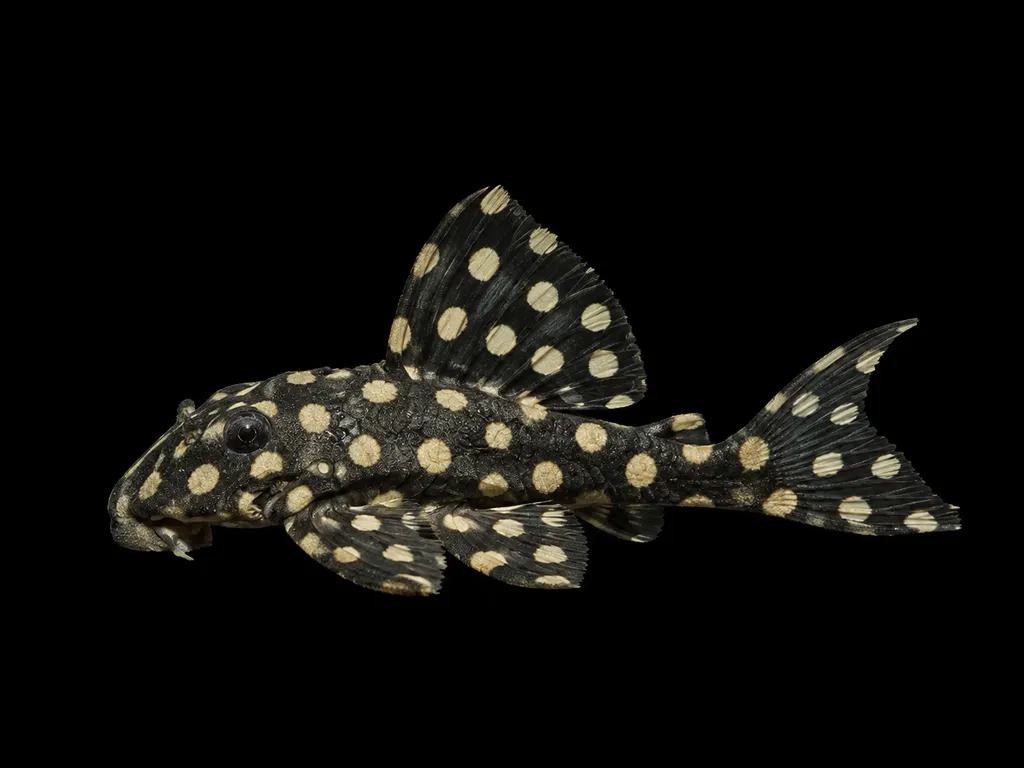
Hypancistrus contradens
Also known as L201 group, Contradens pleco
FreshwaterFish
Care at a glance
- Temperature
- 79–86°F
- 26–30°C
- pH
- 5.5–7.2
- Adult size
- 4.7 in
- 12 cm
- Minimum tank
- 42 gal
- 160 L
- Temperament
- Peaceful
- Social behavior
- Solitary
- Swim level
- Bottom
- Difficulty
- Medium
- Breeding
- Cave spawner · Medium
- Rarity
- Rare
- Family
- Loricariidae
- Origin
- Ventuari and upper Orinoco, Venezuela
Overview
The Orinoco polka-dot pleco is a solitary Hypancistrus for the bottom of a peaceful community tank. It suits a keeper with some experience.
Did you know
The Orinoco polka-dot pleco barely touches algae, though most plecos are algae grazers. Like other Hypancistrus, it uses its famous suckermouth to hold station in current and to take animal prey. That makes Hypancistrus one of the few meat-leaning genera in a family built on rasping wood and rock.
Caring for the Orinoco polka-dot pleco
Give an Orinoco polka-dot pleco at least 42 gal (160 L), which suits a single adult. Arrange smooth rock and driftwood into caves and shaded gaps over sand. It stays on the bottom among the rock and wood and comes out after dark.
Keep the water warm and soft, at 79 to 86°F (26 to 30°C) with a pH of 5.5 to 7.2. Use good filtration for steady flow and high oxygen. Tannin-stained water from leaf litter or wood suits it well.
Feed meaty sinking foods such as frozen bloodworm, brine shrimp and good sinking carnivore pellets, with only the occasional vegetable. It is peaceful toward other fish and mixes well with small, calm midwater community species. Pick tank mates that will not strip the food before it settles.
Keep one to a tank and give it a cave of its own to hold. Two adults will bicker over territory unless you are deliberately pairing them to breed.
Breeding is of moderate difficulty. A male holds a narrow cave, and the female lays her eggs inside. He guards and fans the eggs until they hatch.
Good to know
Hypancistrus contradens belongs to the armored catfish family Loricariidae and is marked with pale domino spots on a chocolate ground. Its species name ends in the Latin dens, meaning tooth, a nod to its dentition. Like all Hypancistrus, it carries the reduced teeth of a meat eater rather than an algae scraper.
In the wild
The Orinoco polka-dot pleco lives in the warm, rocky reaches of the Ventuari and upper Orinoco in Venezuela. There it wedges itself into crevices between stones.
Weekly picks
Tank mates
The Orinoco polka-dot pleco is a peaceful, solitary species that keeps to the bottom. These picks share a community profile with it, are safe together in both directions, and overlap on water type, temperature and pH.
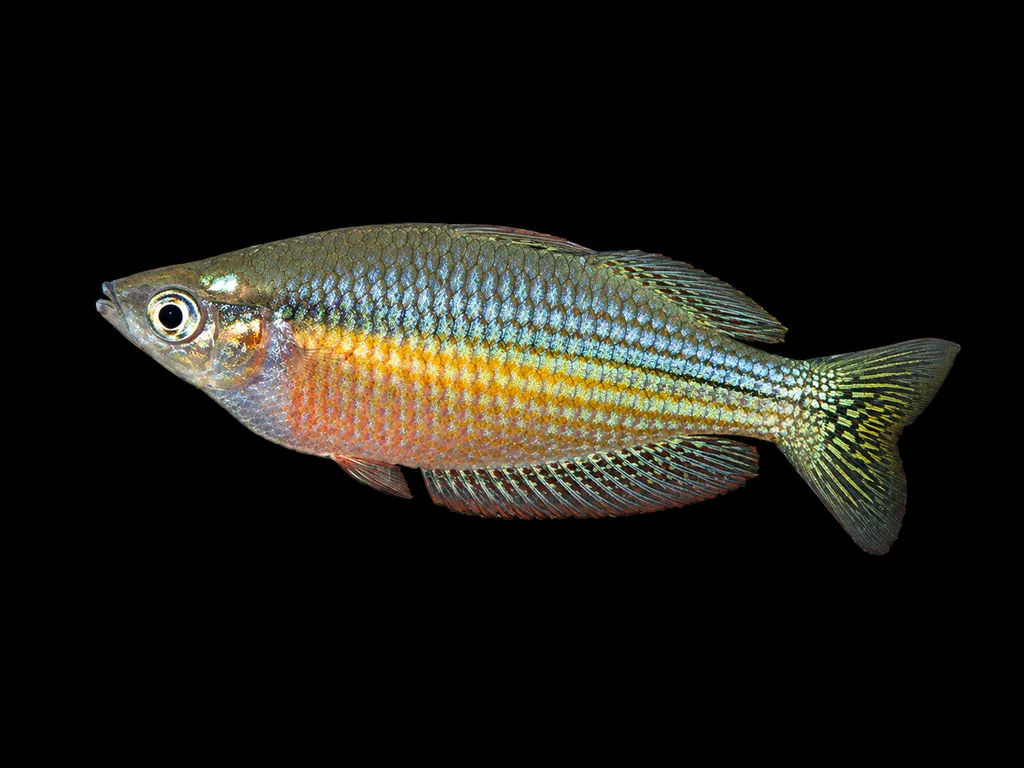
Desert rainbowfish
Melanotaenia splendida tatei
Freshwater3.9 in (10 cm) · 42 gal (160 L)64–86°F (18–30°C)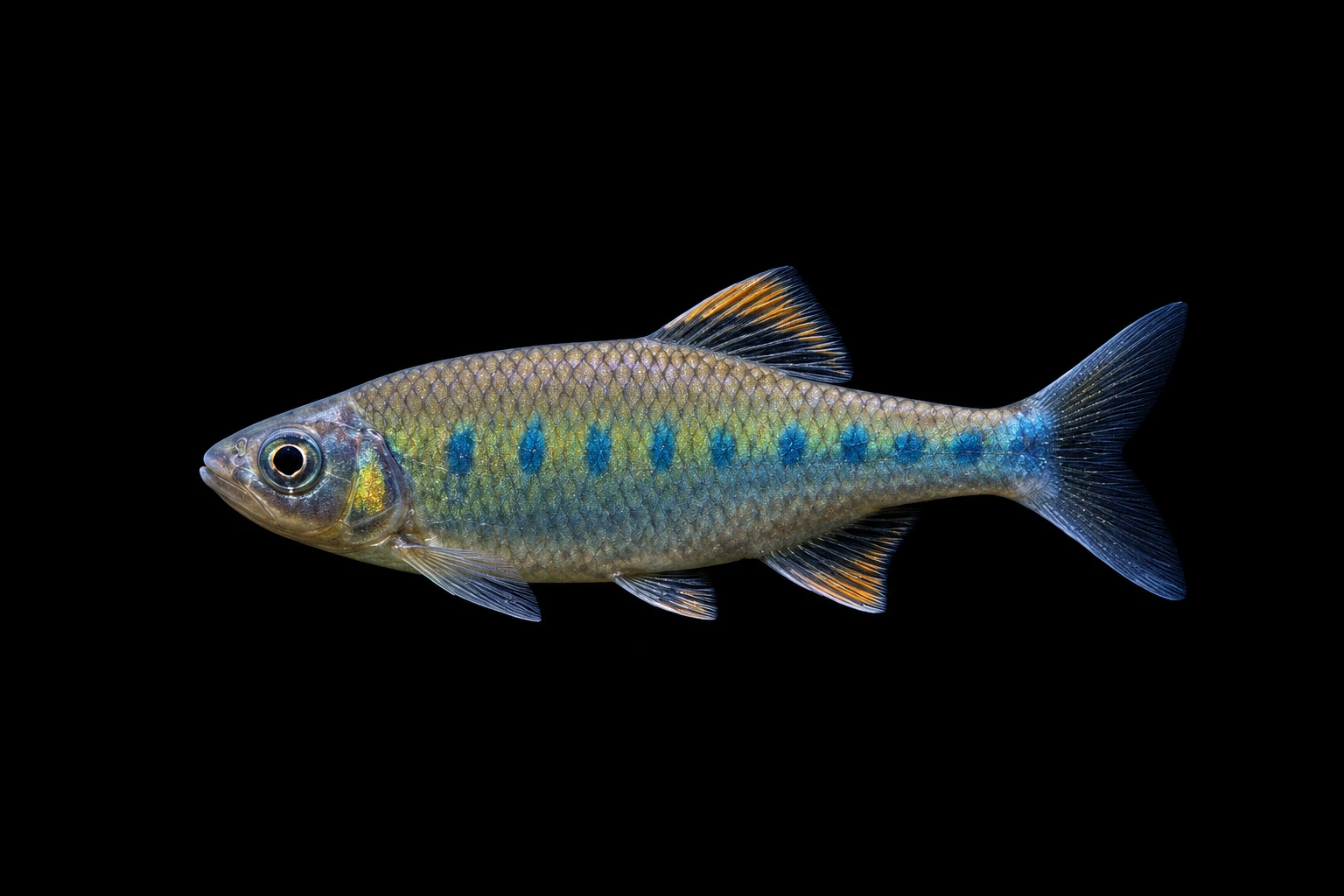
Blue spotted hill trout
Barilius bakeri
Freshwater5.1 in (13 cm) · 53 gal (200 L)64–79°F (18–26°C)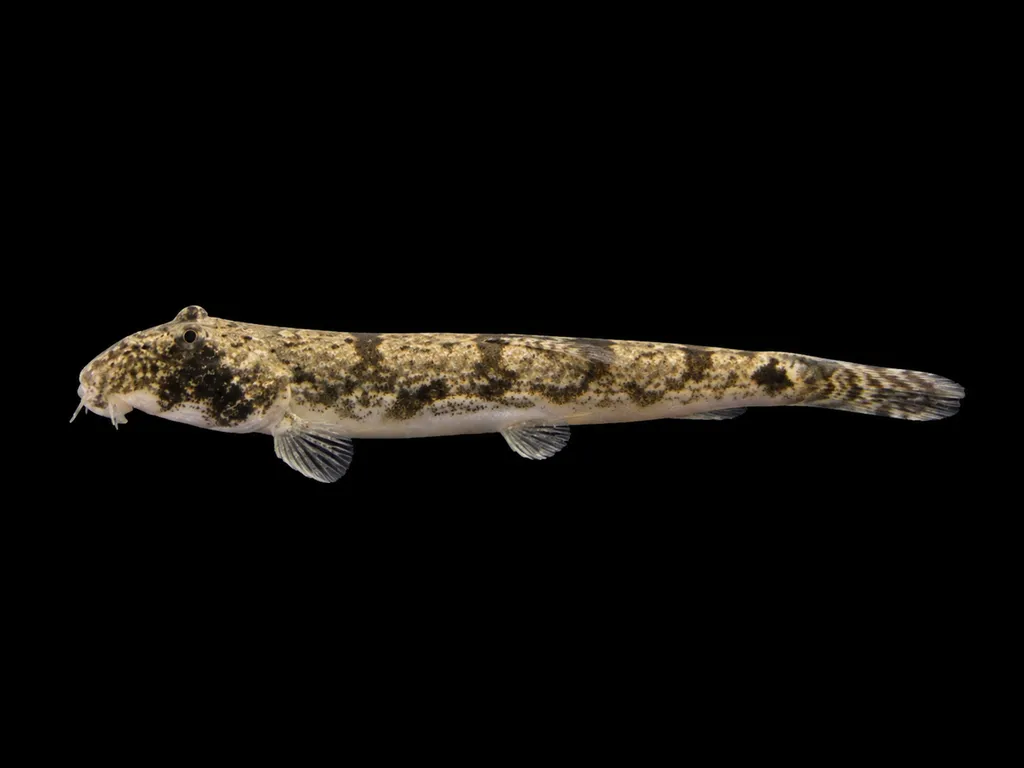
Gongota loach
Canthophrys gongota
Freshwater5.1 in (13 cm) · 42 gal (160 L)70–81°F (21–27°C)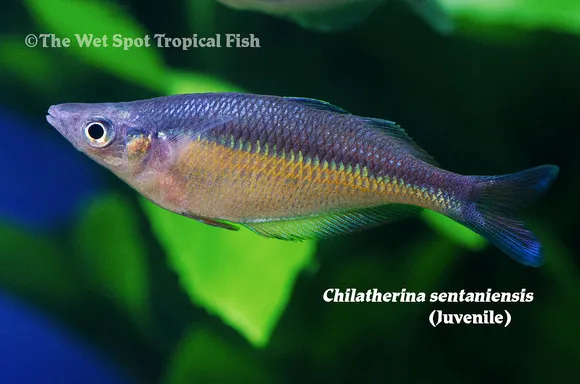
Sentani rainbowfish
Chilatherina sentaniensis
Freshwater4.5 in (11.5 cm) · 42 gal (160 L)77–86°F (25–30°C)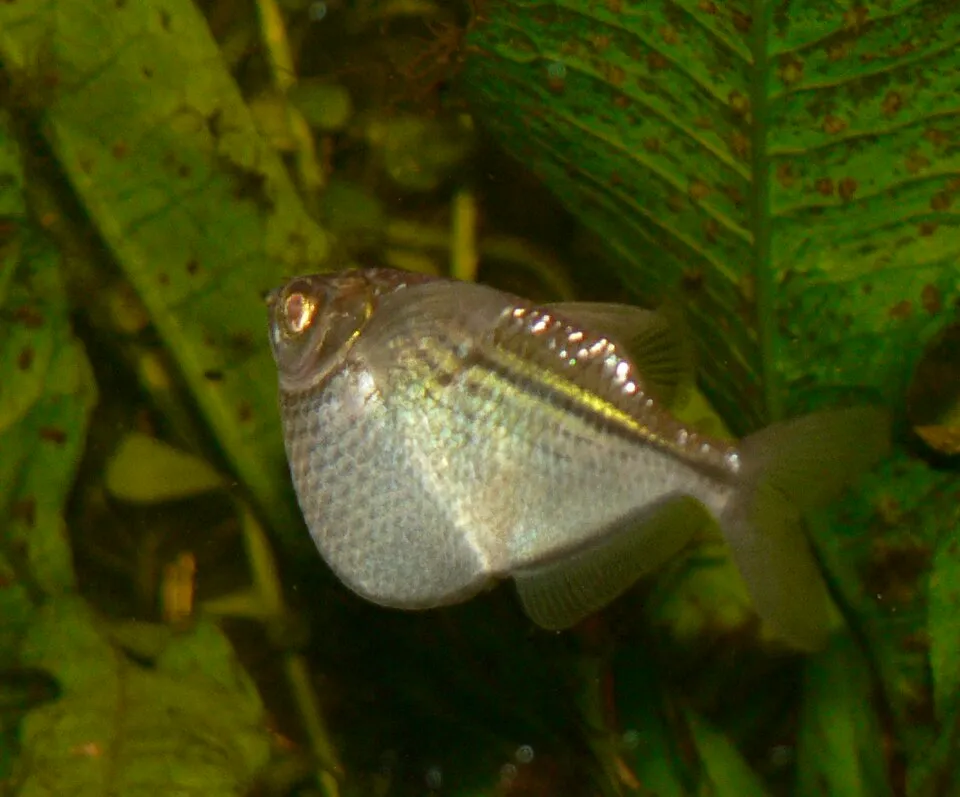
Common hatchetfish
Gasteropelecus sternicla
Freshwater1.6 in (4 cm) · 33 gal (125 L)68–82°F (20–28°C)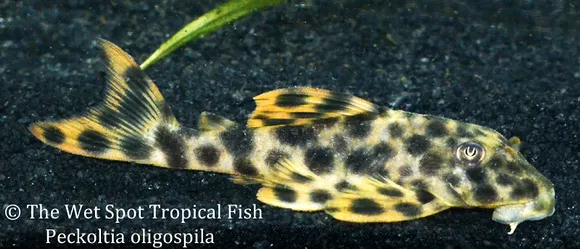
Brown dot peckoltia
Peckoltia oligospila
Freshwater5.9 in (15 cm) · 42 gal (160 L)77–84°F (25–29°C)
Common questions
What size tank does an Orinoco polka-dot pleco need?
An Orinoco polka-dot pleco needs at least 42 gal (160 L). It spends most of its time in the bottom.
What temperature and pH does an Orinoco polka-dot pleco need?
An Orinoco polka-dot pleco is comfortable at 79–86°F (26–30°C) with a pH of 5.5–7.2.
What does an Orinoco polka-dot pleco eat?
An Orinoco polka-dot pleco eats meaty sinking foods such as frozen bloodworm, brine shrimp and good sinking carnivore pellets. Give it only the occasional vegetable.
How big does an Orinoco polka-dot pleco get?
An adult Orinoco polka-dot pleco reaches about 4.7 in (12 cm).
How does an Orinoco polka-dot pleco breed?
The Orinoco polka-dot pleco spawns in a cave. A male holds a narrow cave where the female lays, then guards and fans the eggs until they hatch. Breeding is of moderate difficulty.
Related species
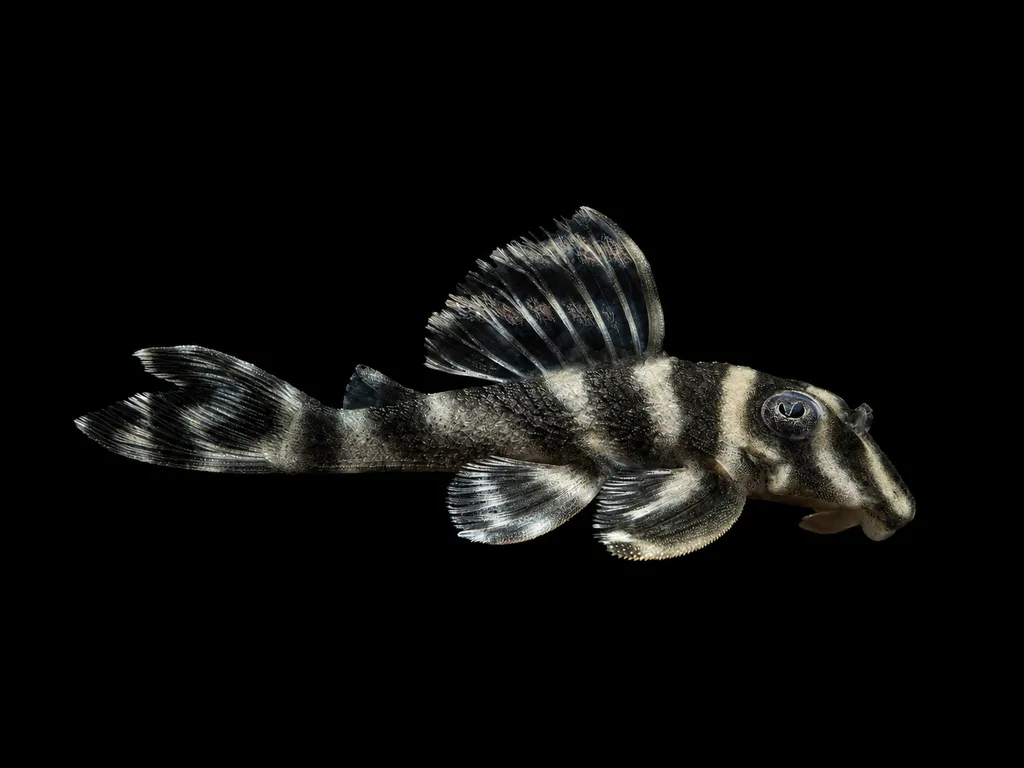 3.9 in (10 cm)42 gal (160 L)79–86°F (26–30°C)
Bandit pleco
Hypancistrus furunculus
3.9 in (10 cm) · 42 gal (160 L)
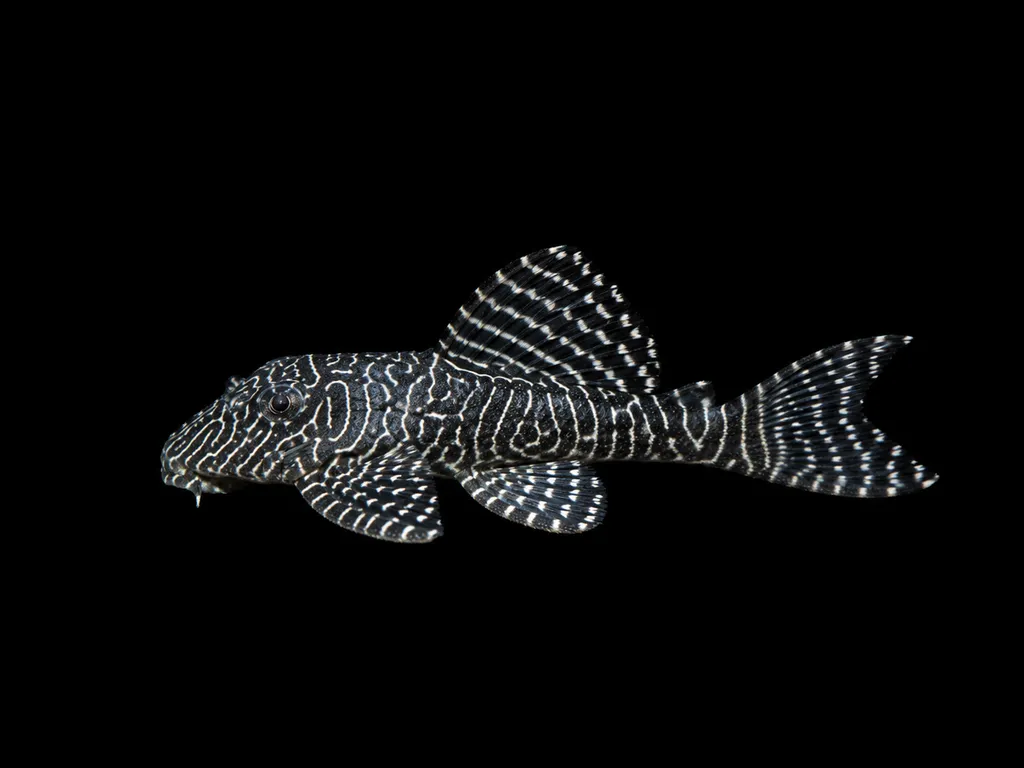 3.9 in (10 cm)20 gal (75 L)79–86°F (26–30°C)
Queen arabesque pleco (L260)
Hypancistrus sp. L260
3.9 in (10 cm) · 20 gal (75 L)
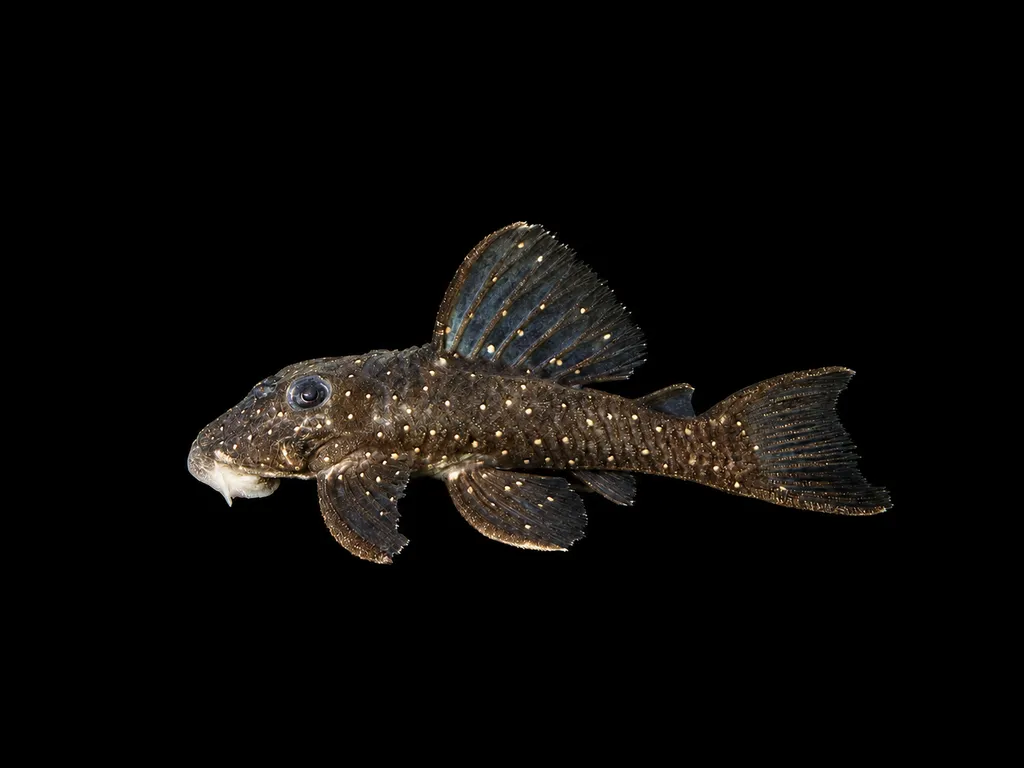 3.9 in (10 cm)42 gal (160 L)79–86°F (26–30°C)
Tiny spot pleco
Hypancistrus lunaorum
3.9 in (10 cm) · 42 gal (160 L)
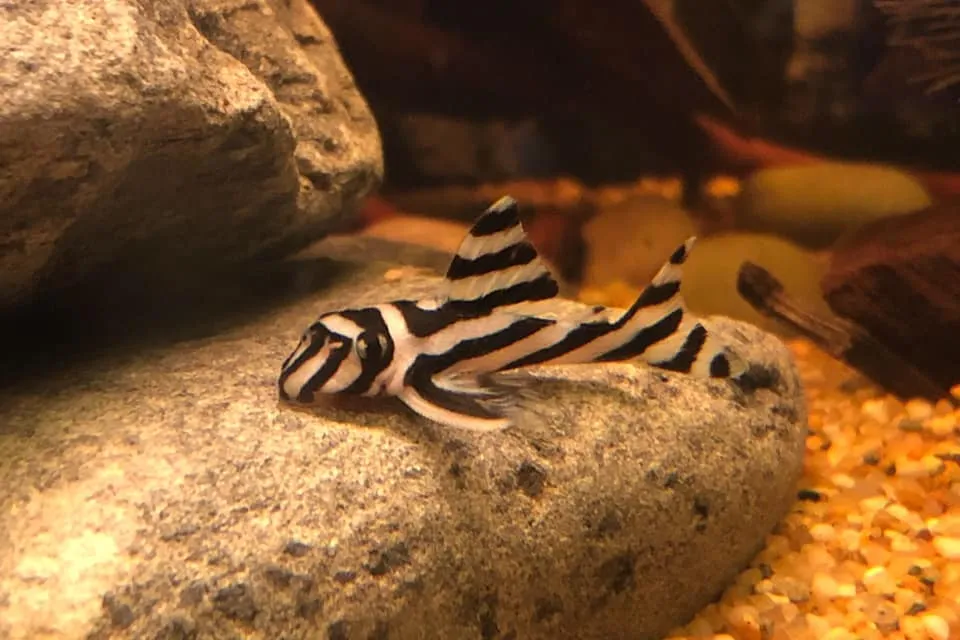 3.1 in (8 cm)15 gal (55 L)79–86°F (26–30°C)
Zebra pleco
Hypancistrus zebra
3.1 in (8 cm) · 15 gal (55 L)
 5.1 in (13 cm)40 gal (150 L)79–84°F (26–29°C)
King tiger pleco (L066)
Hypancistrus seideli
5.1 in (13 cm) · 40 gal (150 L)
 2.4 in (6 cm)42 gal (160 L)79–86°F (26–30°C)
Pearl-spotted angel pleco
Hypancistrus margaritatus
2.4 in (6 cm) · 42 gal (160 L)