Julii cory
Hoplisoma julii
Also known as Corydoras julii, Leopard cory
FreshwaterFish
Care at a glance
- Temperature
- 68–79°F
- 20–26°C
- pH
- 6.0–7.5
- Adult size
- 2.2 in
- 5.5 cm
- Minimum tank
- 20 gal
- 75 L
- Temperament
- Peaceful
- Social behavior
- Shoaling
- Swim level
- Bottom
- Difficulty
- Medium
- Breeding
- Hard
- Rarity
- Very rare
- Family
- Callichthyidae
- Origin
- Brazil
Overview
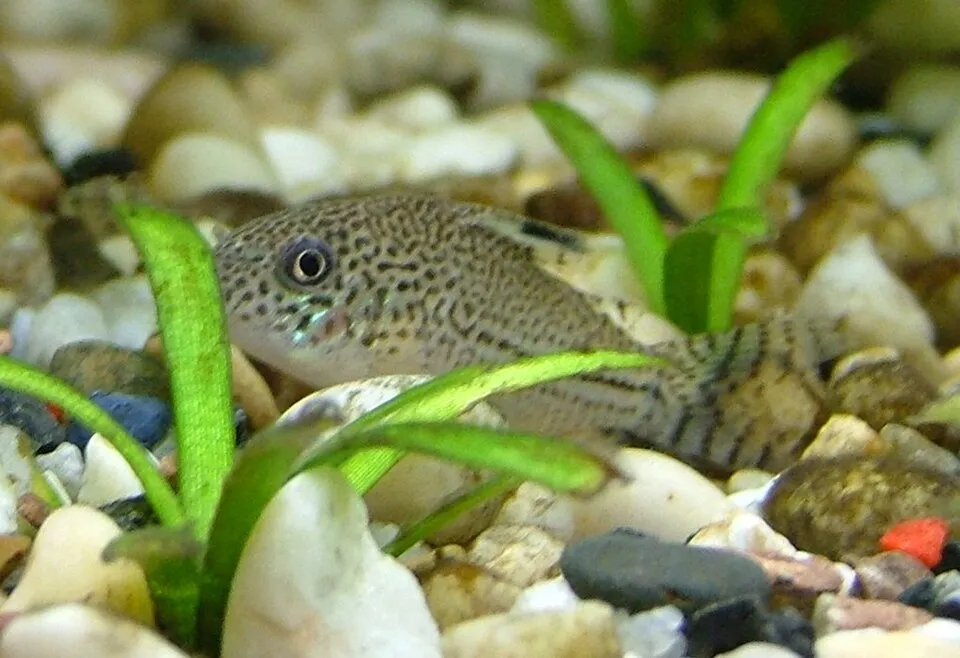
The julii cory is a peaceful, spotted shoaler that should be kept in a group of at least six. It forages across the sandy bottom with its barbels and mixes well with small, calm community fish that leave the floor clear at feeding time. Feed sinking pellets, frozen bloodworm and daphnia, and a little wafer, checking that the food settles where it can reach it. A group is comfortable in a tank of around 75 liters or larger with soft sand to sift.
In the wild
The true Corydoras julii comes from clear coastal rivers of northeastern Brazil, living over sand in warm, soft, slightly acidic water. Give it a soft sand bed, driftwood, dried leaves, and shaded planting, with clean, gently filtered water. Keep the temperature between 20 and 26 C and the pH from about 6.0 to 7.5. Regular water changes keep this delicate cory in good condition.
Good to know
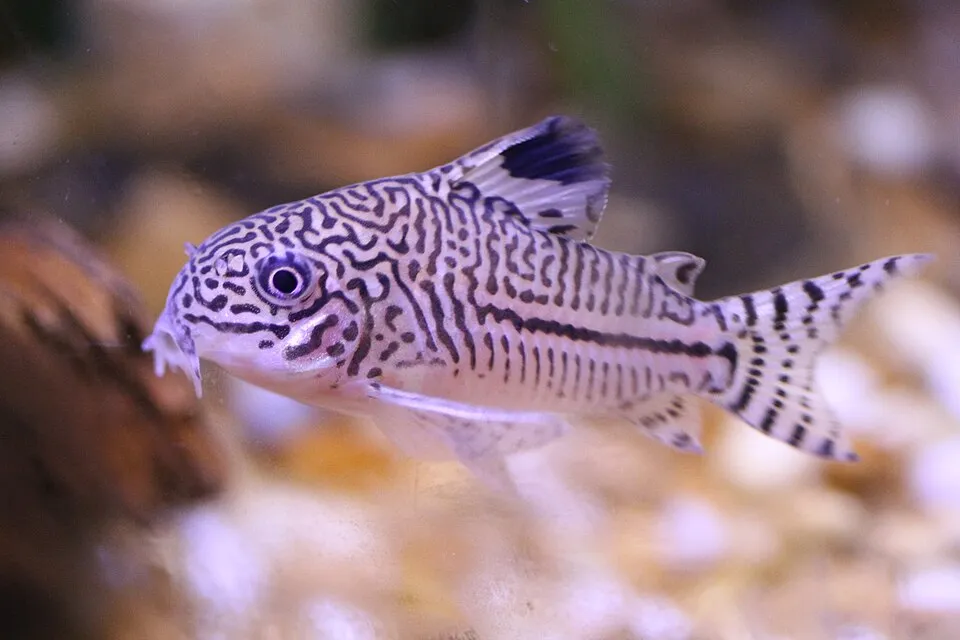
This armored catfish of the family Callichthyidae reaches about 5.5 cm and wears a pattern of small, separate dark spots that do not join into lines on the head. It has been bred in aquaria but is rated difficult. True C. julii is rarely imported, and most fish sold under the name are actually a look alike, the three line cory Corydoras trilineatus.
Did you know
Almost every fish sold as a julii cory is really the three line cory, Corydoras trilineatus. The true julii wears fine, separate leopard spots on the head, while trilineatus shows those marks joined into maze like lines.
Weekly picks
Tank mates
Julii cory is a peaceful, shoaling species that keeps to the bottom. These picks share a community profile with it, are safe together in both directions, and overlap on water type, temperature and pH.
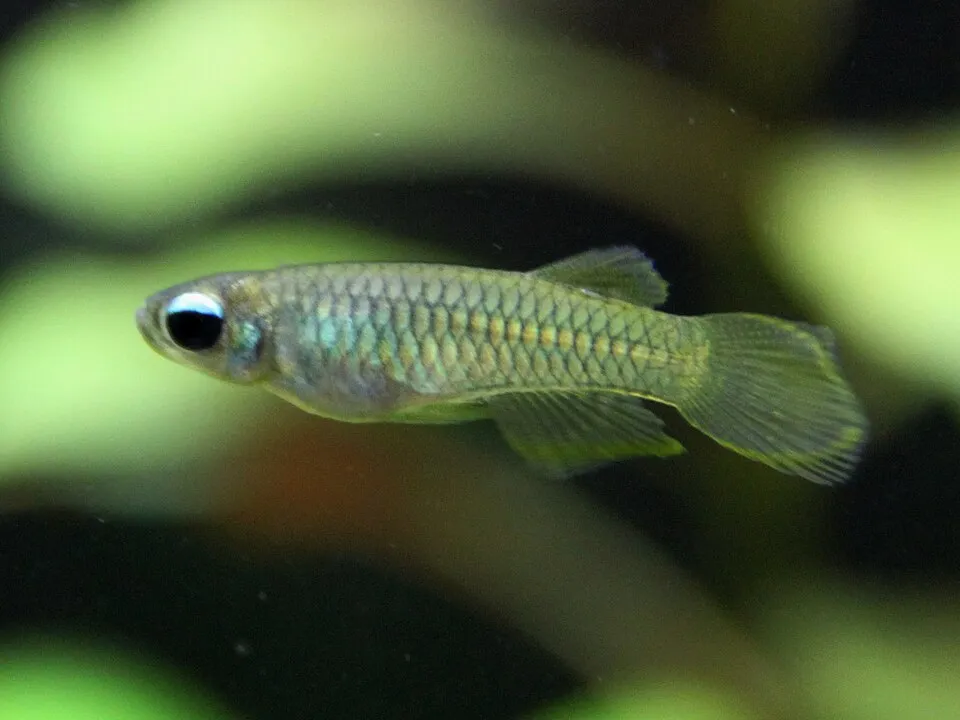
Norman's lampeye
Poropanchax normani
Freshwater1.6 in (4 cm) · 20 gal (75 L)72–79°F (22–26°C)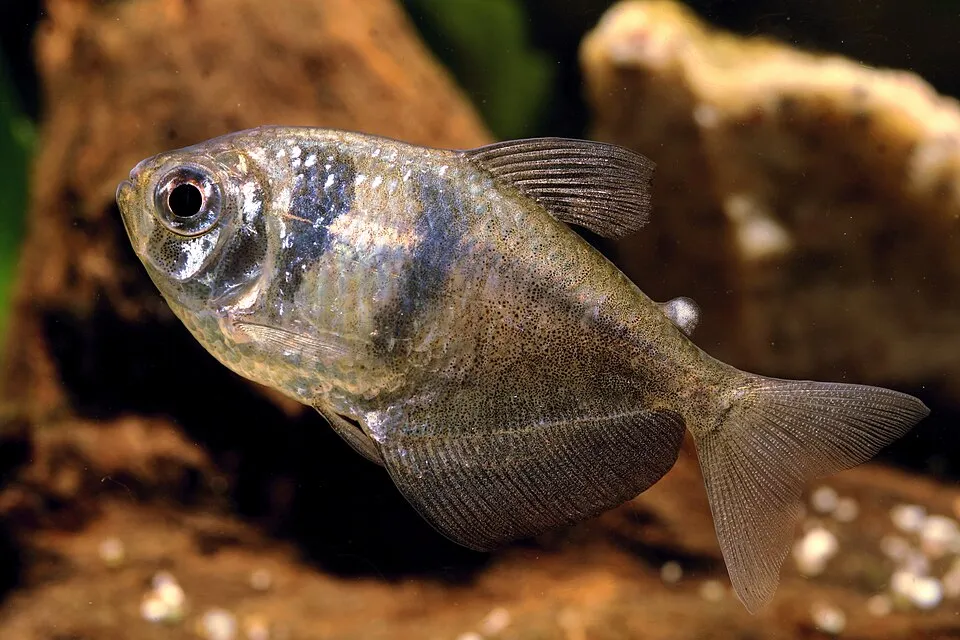
Black widow tetra
Gymnocorymbus ternetzi
Freshwater2.4 in (6 cm) · 20 gal (75 L)68–79°F (20–26°C)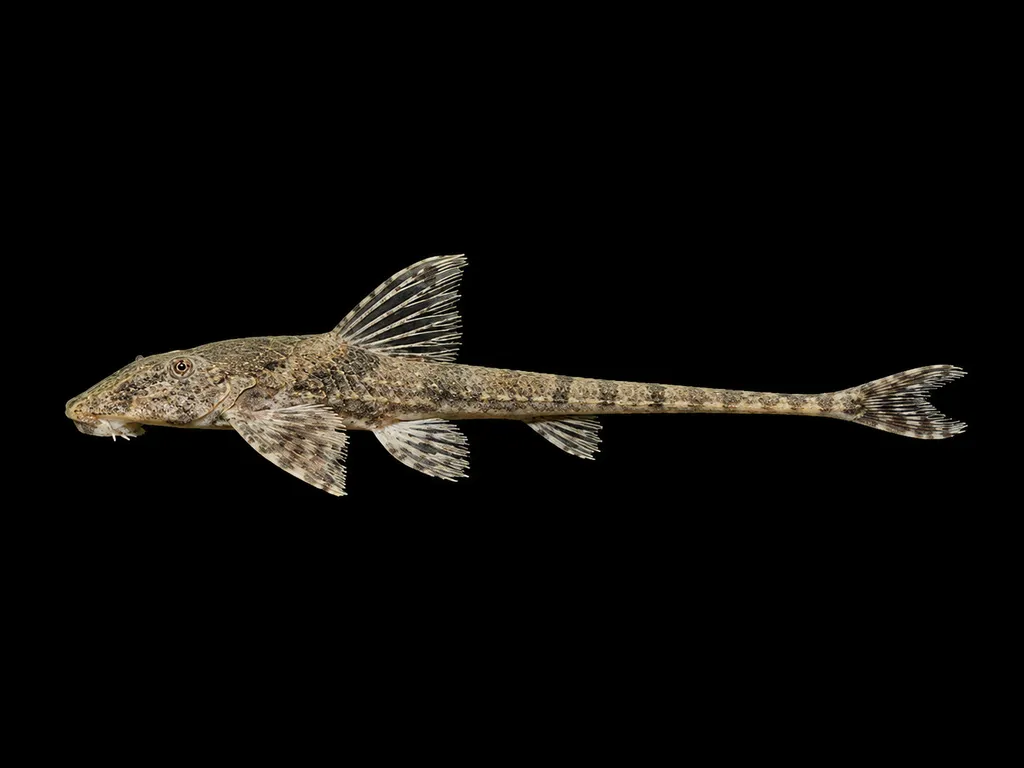
Common whiptail
Rineloricaria parva
Freshwater4.7 in (12 cm) · 20 gal (75 L)68–79°F (20–26°C)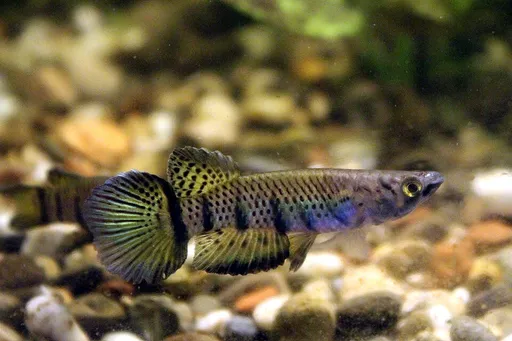
Six-barred panchax
Epiplatys sexfasciatus
Freshwater3.9 in (10 cm) · 20 gal (75 L)72–81°F (22–27°C)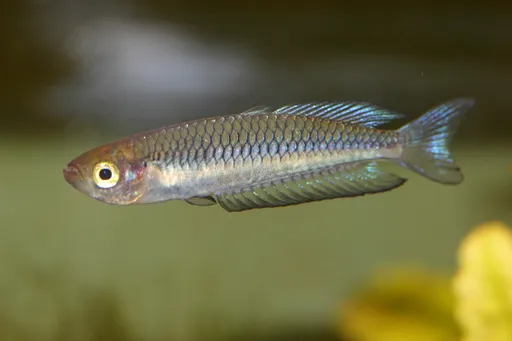
Ornate rainbowfish
Rhadinocentrus ornatus
Freshwater2.4 in (6 cm) · 20 gal (75 L)64–82°F (18–28°C)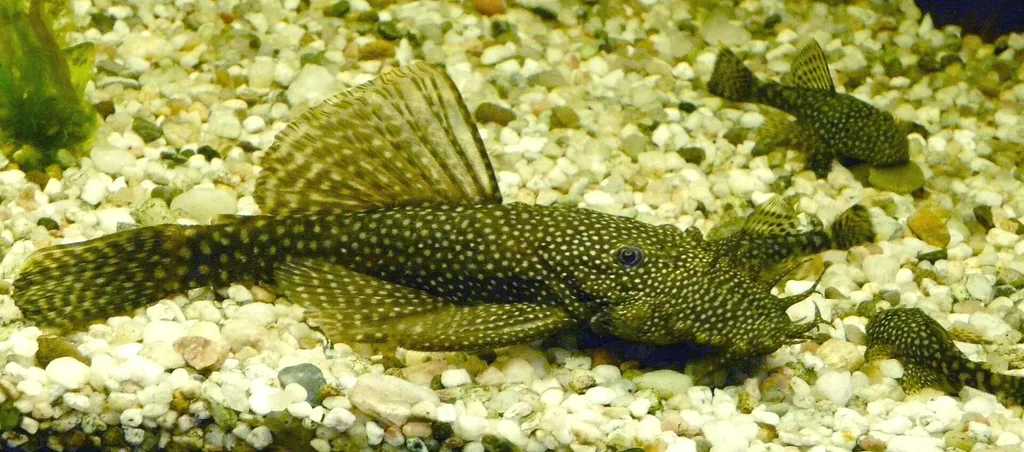
Bristlenose pleco
Ancistrus sp.
Freshwater4.9 in (12.5 cm) · 20 gal (75 L)70–79°F (21–26°C)
Common questions
What size tank does a Julii cory need?
A Julii cory needs at least 20 gal (75 L). It spends most of its time in the bottom.
What temperature and pH does a Julii cory need?
A Julii cory is comfortable at 68–79°F (20–26°C) with a pH of 6.0–7.5.
How big does a Julii cory get?
An adult Julii cory reaches about 2.2 in (5.5 cm).
Does a Julii cory need a group?
Yes. A Julii cory is a shoaling species and should be kept in a group, not singly.
Related species
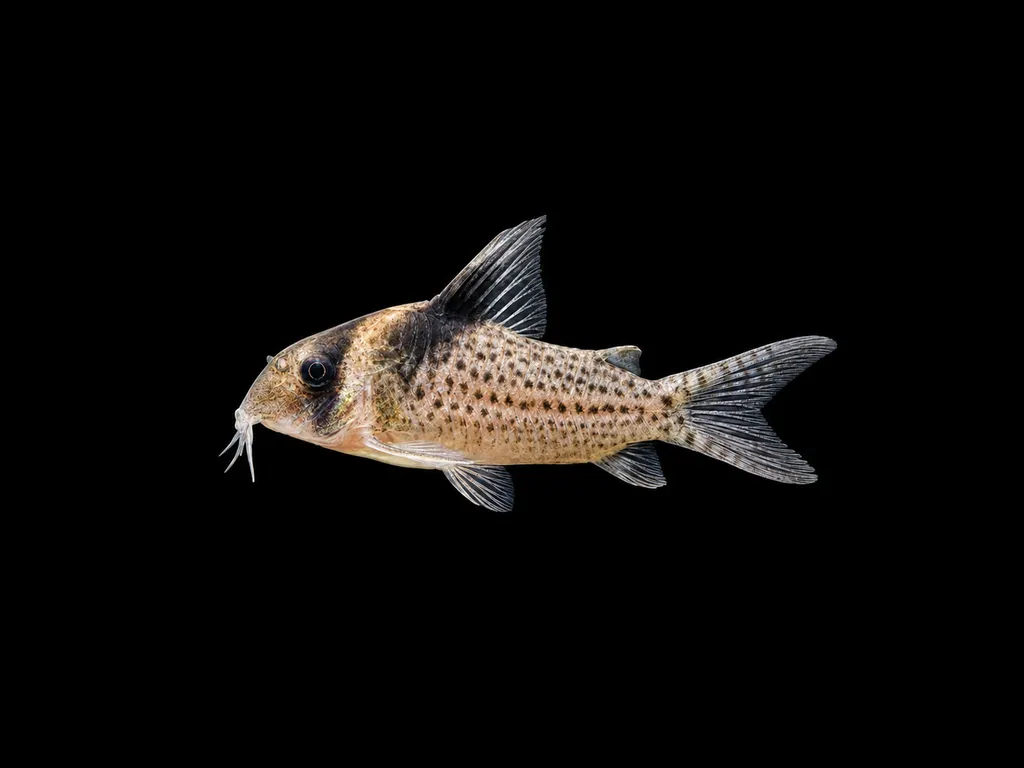 2.2 in (5.5 cm)16 gal (60 L)72–79°F (22–26°C)
Bluespotted cory
Hoplisoma melanistium
2.2 in (5.5 cm) · 16 gal (60 L)
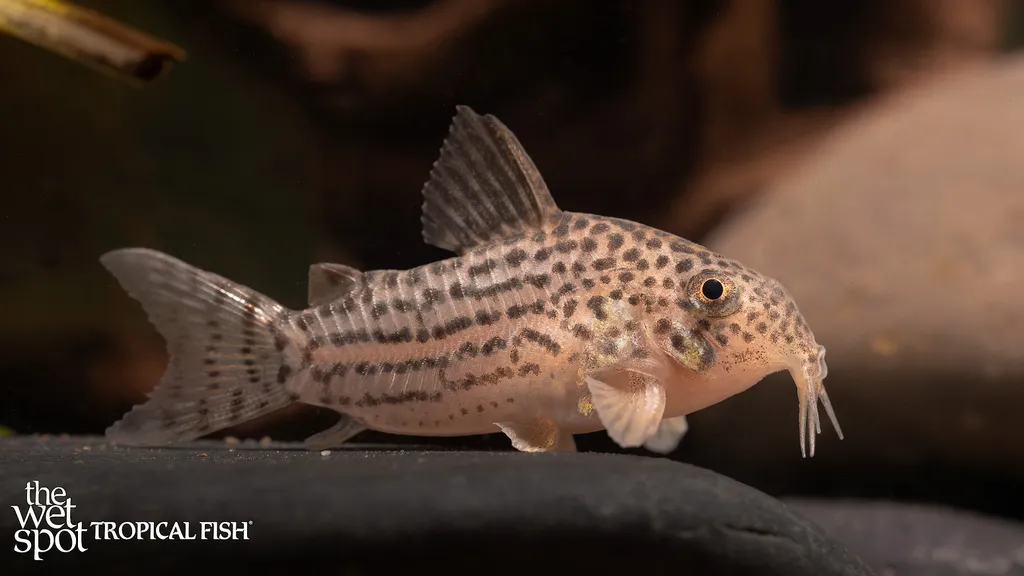 2.2 in (5.5 cm)16 gal (60 L)73–81°F (23–27°C)
Boeseman's cory
Hoplisoma boesemani
2.2 in (5.5 cm) · 16 gal (60 L)
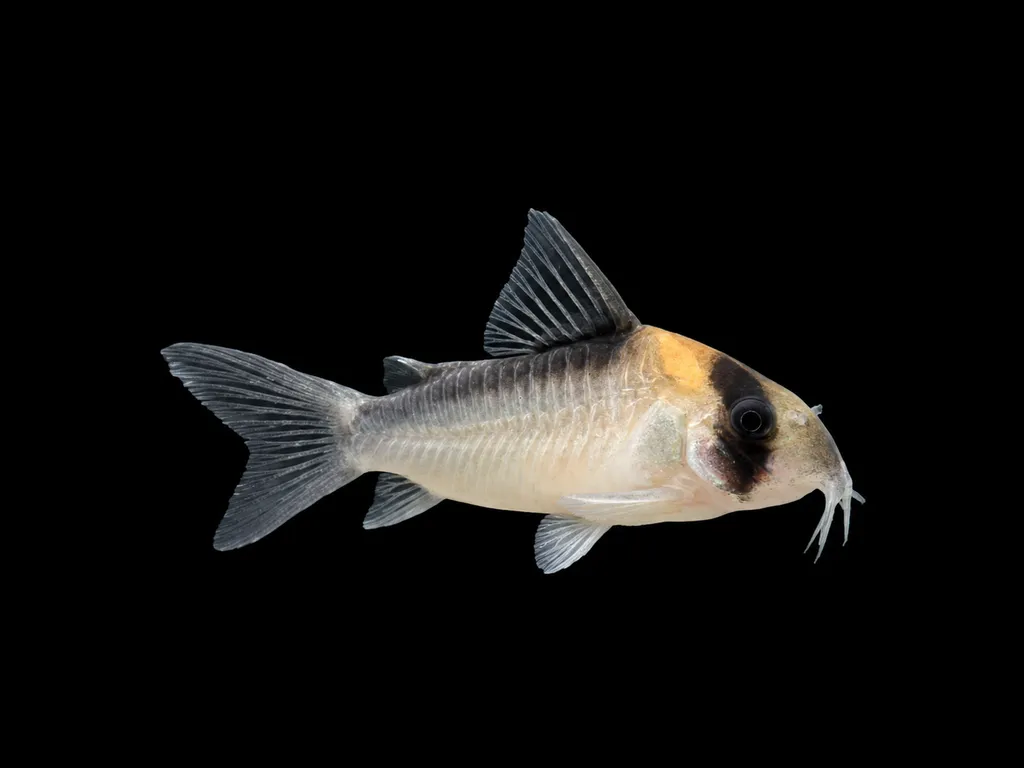 2.2 in (5.5 cm)20 gal (75 L)72–79°F (22–26°C)
Burgess's cory
Hoplisoma burgessi
2.2 in (5.5 cm) · 20 gal (75 L)
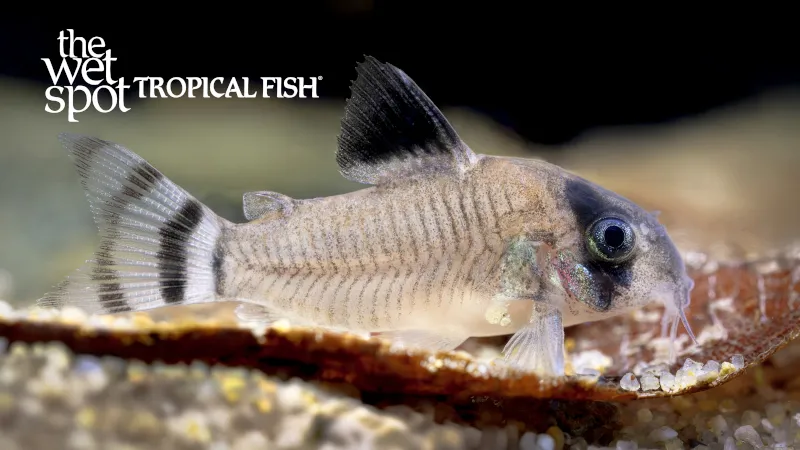 2.2 in (5.5 cm)20 gal (75 L)73–79°F (23–26°C)
Oiapoque cory
Hoplisoma oiapoquense
2.2 in (5.5 cm) · 20 gal (75 L)
 2.2 in (5.5 cm)16 gal (60 L)73–81°F (23–27°C)
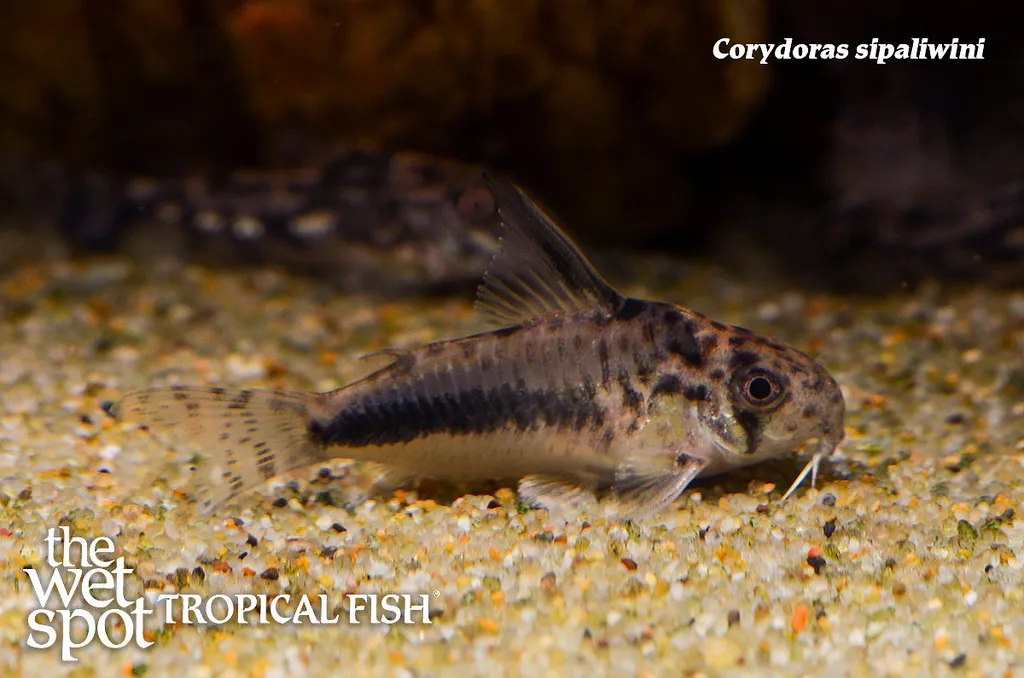
Sipaliwini cory
Hoplisoma sipaliwini
2.2 in (5.5 cm) · 16 gal (60 L)
 2.2 in (5.5 cm)16 gal (60 L)72–81°F (22–27°C)
Threestripe cory
Hoplisoma trilineatum
2.2 in (5.5 cm) · 16 gal (60 L)