Threestripe cory
Hoplisoma trilineatum
Also known as Corydoras trilineatus, leopard catfish, Reticulated Julii Cory
FreshwaterFish
Care at a glance
- Temperature
- 72–81°F
- 22–27°C
- pH
- 6.0–7.5
- Adult size
- 2.2 in
- 5.5 cm
- Minimum tank
- 16 gal
- 60 L
- Temperament
- Peaceful
- Social behavior
- Shoaling
- Swim level
- Bottom
- Difficulty
- Medium
- Breeding
- Medium
- Rarity
- Common
- Family
- Callichthyidae
- Origin
- Colombia, Peru, Brazil
Overview
Keep it in a school of six or more on the bottom of a tank around 60 liters or larger. Water should be soft to neutral, pH 6 to 7.5, at 22 to 27 C. Feed sinking pellets, frozen foods, and the occasional algae wafer, and don't count on it to clean up after other fish; it needs its own food. It is peaceful and busy, a good active bottom group for a community tank.
In the wild
The threestripe cory comes from the upper Amazon in Colombia, Peru, and Brazil, living over sand and fine sediment in slow, warm tributaries. It forages the bottom by sifting mouthfuls of sand. Give it a fine sand substrate so it can dig safely, plus driftwood, plants, or leaf litter for shade. Keep the water warm, roughly 22 to 27 C.
Good to know
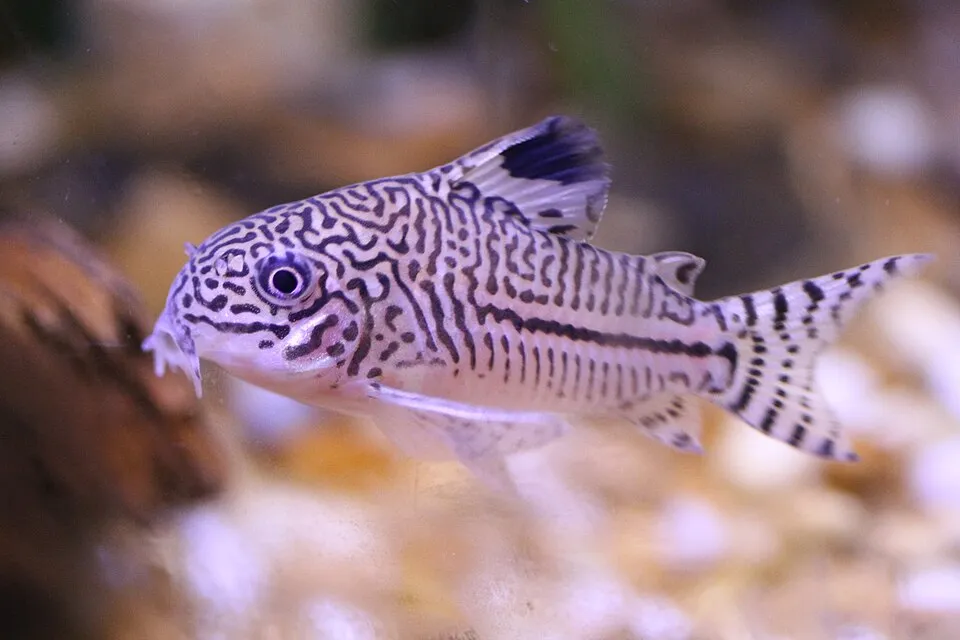
This is an armored catfish in the family Callichthyidae, reaching about 5.5 cm. It is often confused with the false julii cory; the threestripe is told apart by its reticulated, net-like head pattern and the stripe down the side. It is an egg-layer that spawns in the typical cory fashion, and it breeds with moderate effort. Like its relatives it has bony plates and stiff fin spines.
Did you know
It is often sold mixed up with the false julii cory because their markings are so similar. The reliable tell is the pattern on the head: the threestripe shows connected, maze-like lines, while the false julii shows separate spots. Worth checking if you care which one you're actually buying.
Weekly picks
Tank mates
Threestripe cory is a peaceful, shoaling species that keeps to the bottom. These picks share a community profile with it, are safe together in both directions, and overlap on water type, temperature and pH.
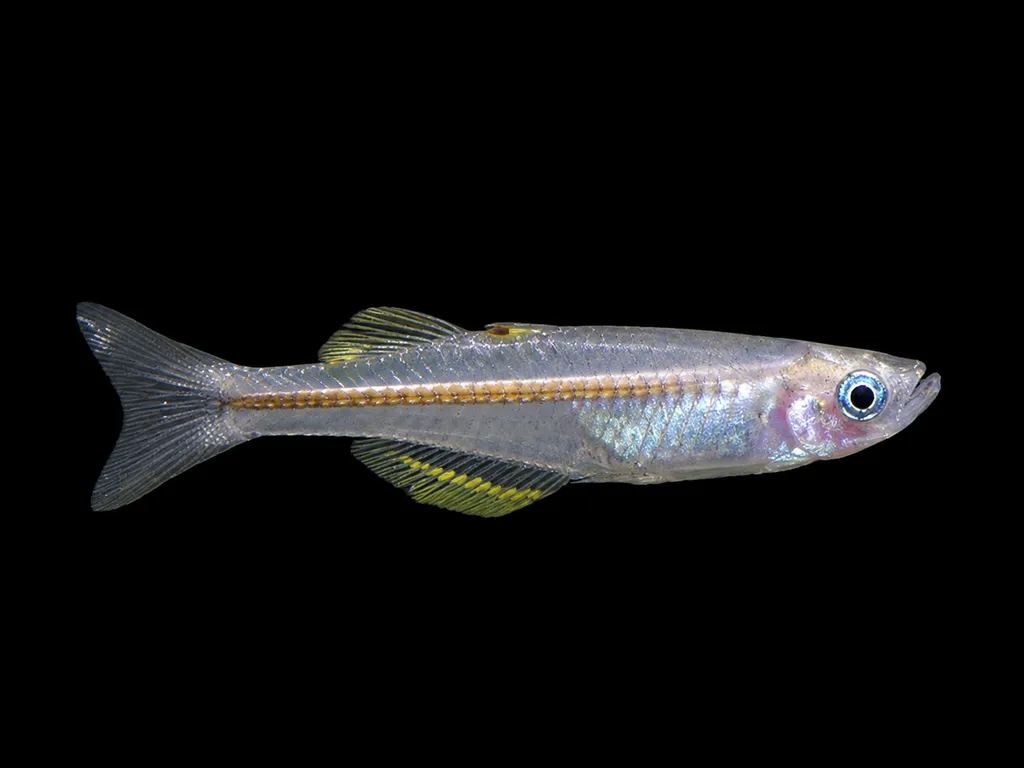
New Guinea blue-eye
Pseudomugil novaeguineae
Freshwater1.8 in (4.5 cm) · 15 gal (55 L)79–86°F (26–30°C)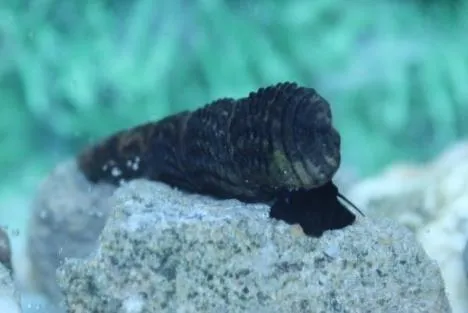
White spotted rabbit snail
Tylomelania towutica
Freshwater4.3 in (11 cm) · 16 gal (60 L)75–84°F (24–29°C)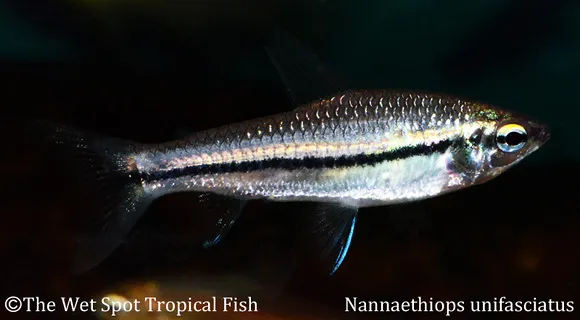
African oneline tetra
Nannaethiops unitaeniatus
Freshwater2.6 in (6.5 cm) · 16 gal (60 L)72–79°F (22–26°C)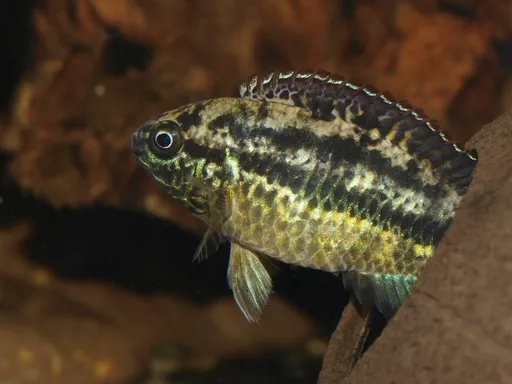
Golden dwarf cichlid
Nannacara anomala
Freshwater3.1 in (8 cm) · 16 gal (60 L)72–82°F (22–28°C)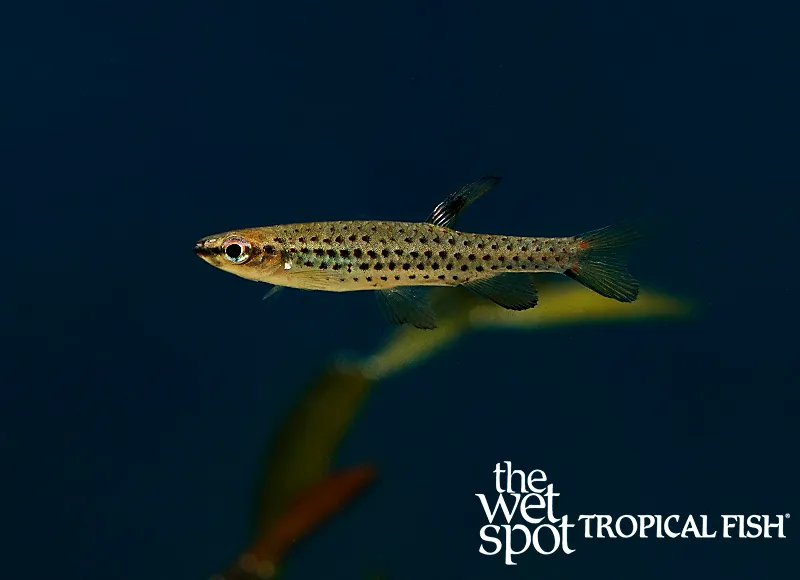
Spotted splash tetra
Copella nattereri
Freshwater2 in (5 cm) · 16 gal (60 L)75–82°F (24–28°C)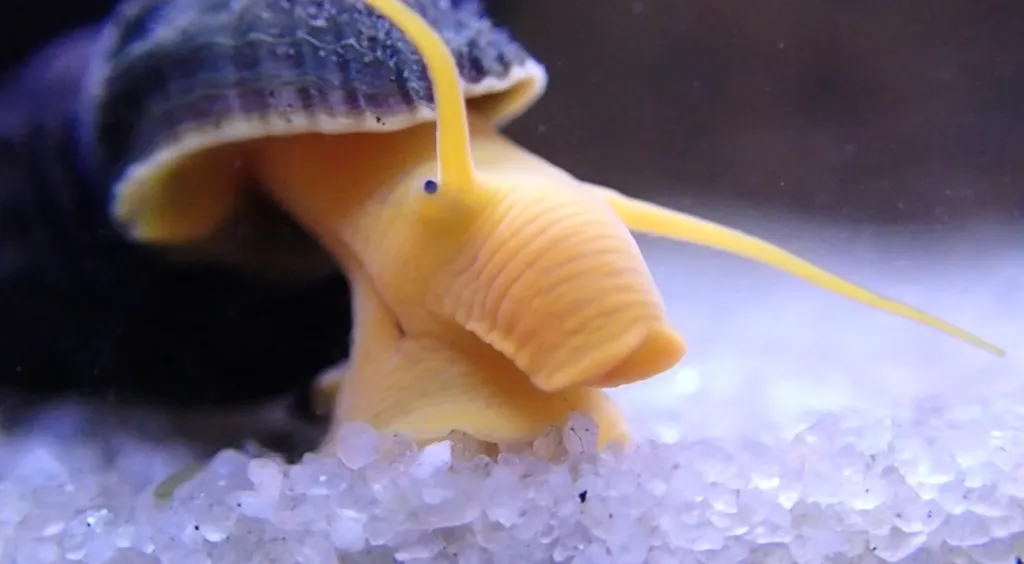
Gold rabbit snail
Tylomelania gemmifera
Freshwater2.8 in (7 cm) · 16 gal (60 L)75–82°F (24–28°C)
Common questions
What size tank does a Threestripe cory need?
A Threestripe cory needs at least 16 gal (60 L). It spends most of its time in the bottom.
What temperature and pH does a Threestripe cory need?
A Threestripe cory is comfortable at 72–81°F (22–27°C) with a pH of 6.0–7.5.
How big does a Threestripe cory get?
An adult Threestripe cory reaches about 2.2 in (5.5 cm).
Does a Threestripe cory need a group?
Yes. A Threestripe cory is a shoaling species and should be kept in a group, not singly.
Related species
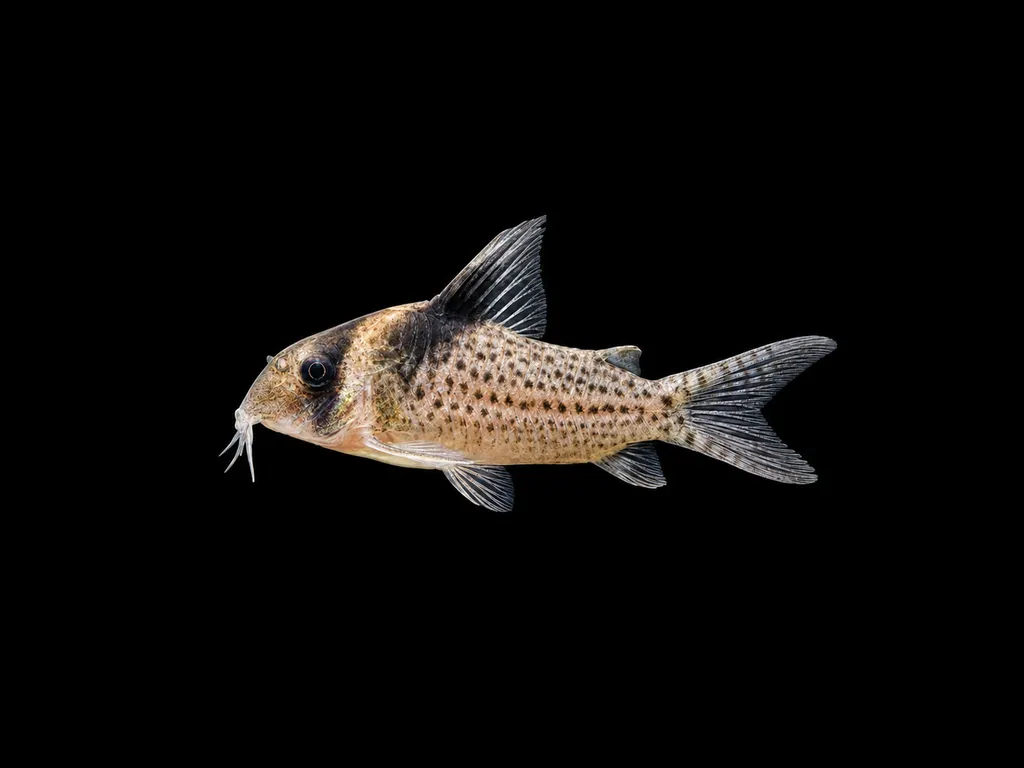 2.2 in (5.5 cm)16 gal (60 L)72–79°F (22–26°C)
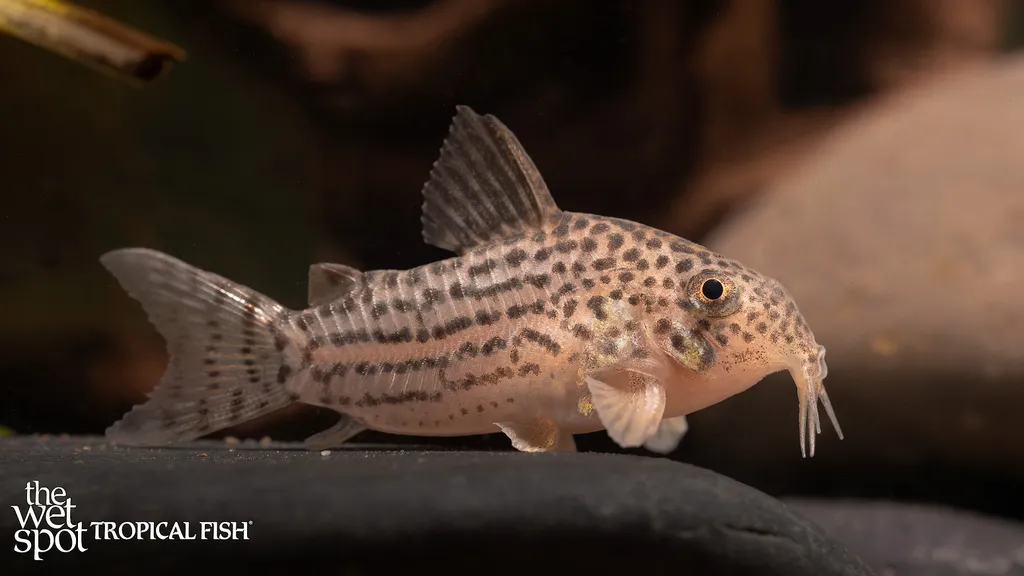
Bluespotted cory
Hoplisoma melanistium
2.2 in (5.5 cm) · 16 gal (60 L)
 2.2 in (5.5 cm)16 gal (60 L)73–81°F (23–27°C)
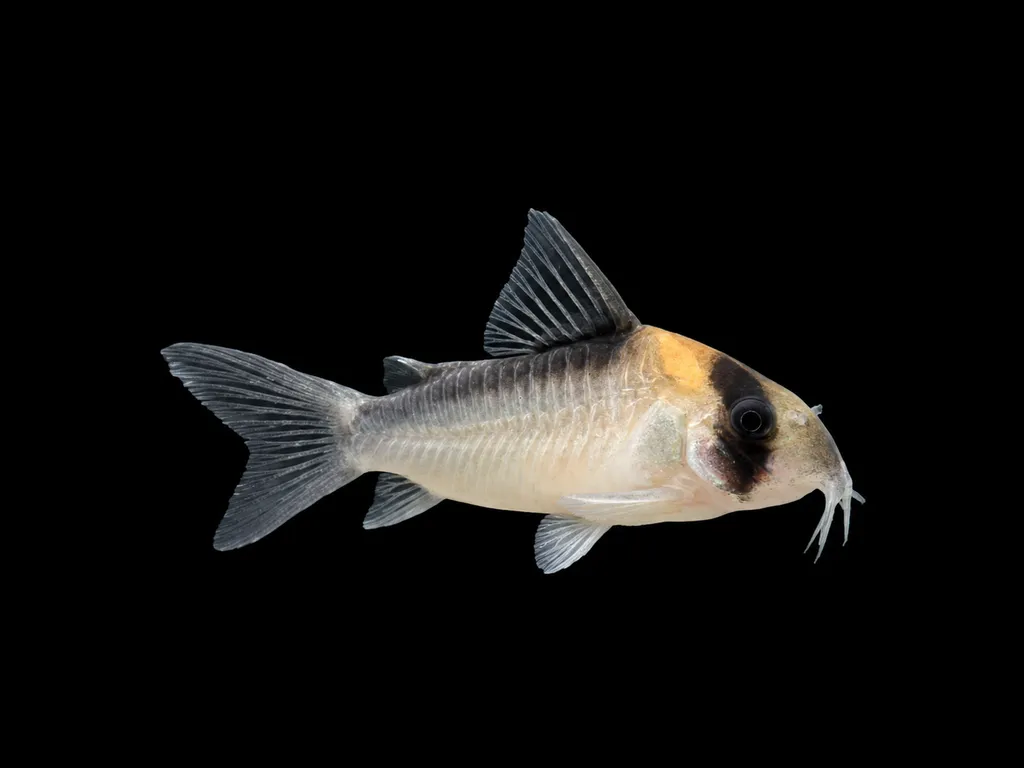
Boeseman's cory
Hoplisoma boesemani
2.2 in (5.5 cm) · 16 gal (60 L)
 2.2 in (5.5 cm)20 gal (75 L)72–79°F (22–26°C)
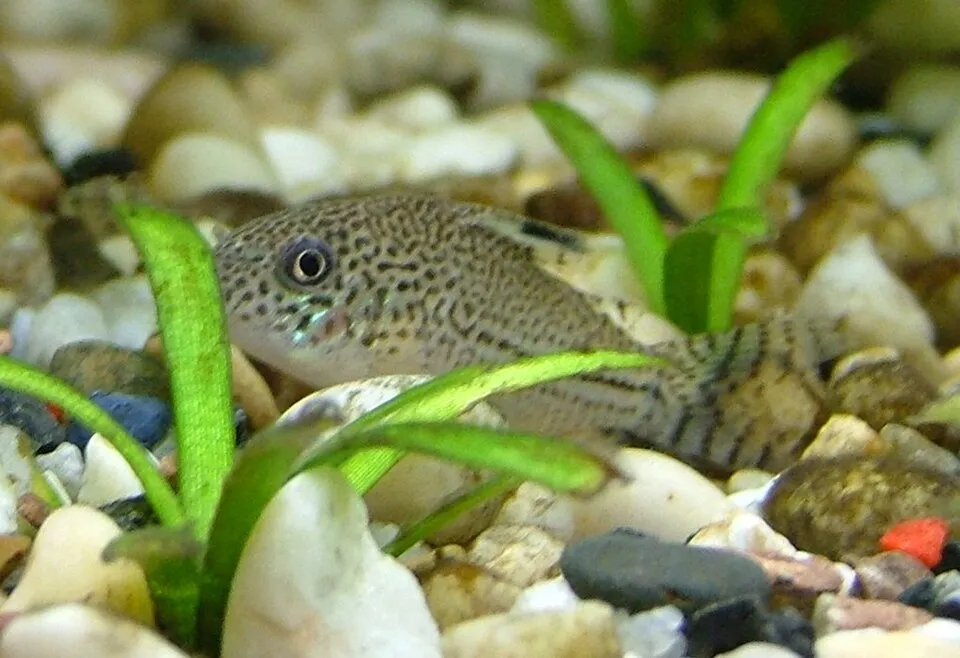
Burgess's cory
Hoplisoma burgessi
2.2 in (5.5 cm) · 20 gal (75 L)
 2.2 in (5.5 cm)20 gal (75 L)68–79°F (20–26°C)
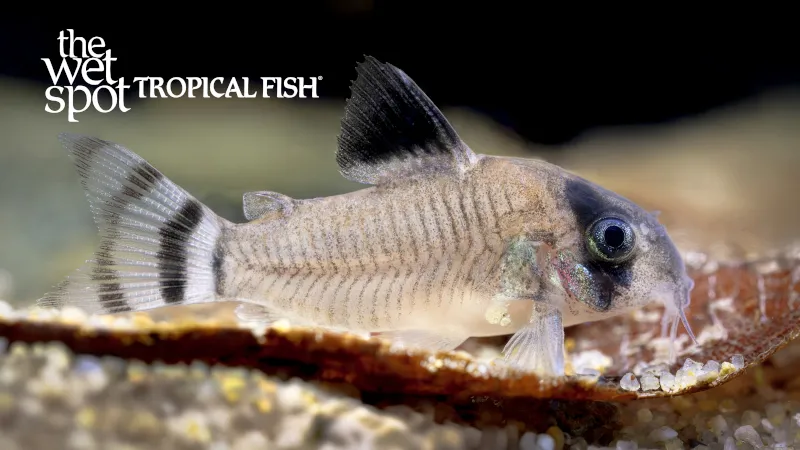
Julii cory
Hoplisoma julii
2.2 in (5.5 cm) · 20 gal (75 L)
 2.2 in (5.5 cm)20 gal (75 L)73–79°F (23–26°C)
Oiapoque cory
Hoplisoma oiapoquense
2.2 in (5.5 cm) · 20 gal (75 L)
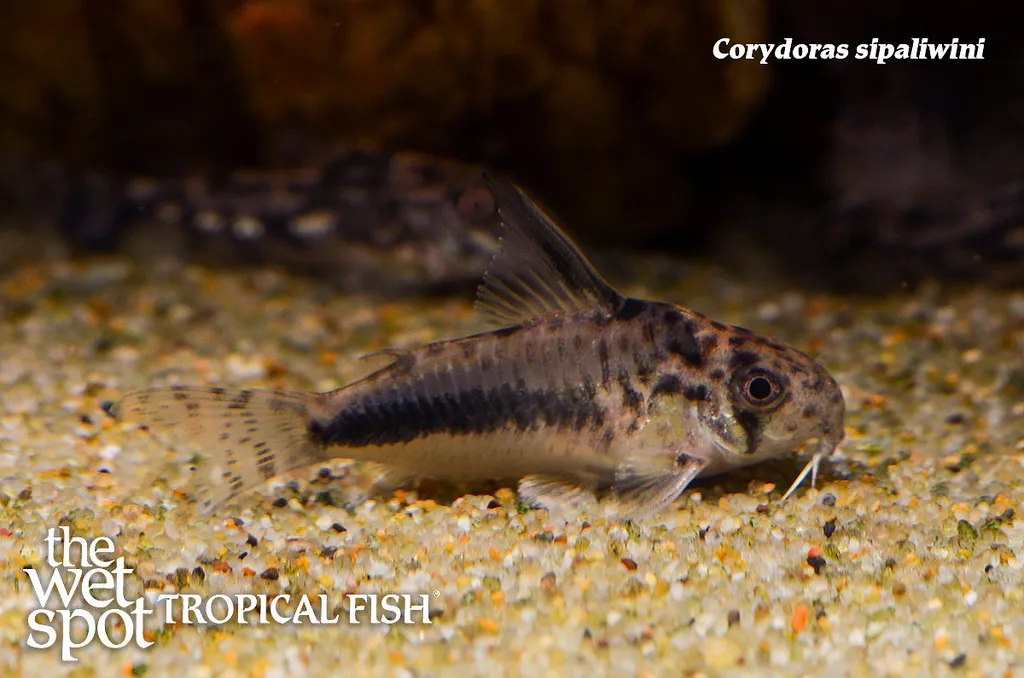 2.2 in (5.5 cm)16 gal (60 L)73–81°F (23–27°C)
Sipaliwini cory
Hoplisoma sipaliwini
2.2 in (5.5 cm) · 16 gal (60 L)